DriveQuiz drivequiz.com

UT DMV PERMİT PRACTİCE TEST 18

Utah
Duration: 23 min
|
Questions: 25
Student Name:
Date:
Correct:      Incorrect:      Score:      
1.
What should you do if your rear wheels start to skid?
A) Steer left if your rear wheels slide right.
B) If the vehicle has ABS, pump the pedal carefully.
C) Turn the steering wheel in the direction the vehicle is trying to go.
2.
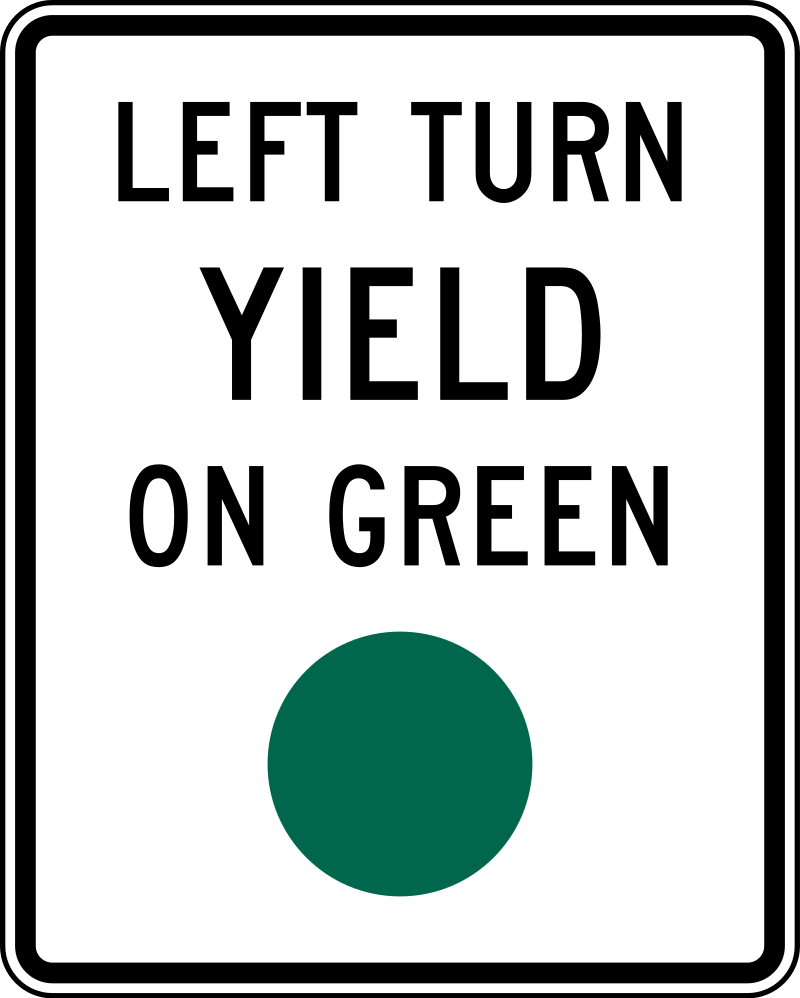
When turning left at a circular green light, you must yield right-of-way to oncoming traffic and pedestrians before completing your turn.
This white sign means you:
A) may turn left on a green light when it is safe to do so.
B) may turn left only on a green arrow.
C) must wait for the solid green light before you turn left.
3.
Drivers must be prepared for anything coming up in the road ahead. They should:
A) scan the road for traffic conditions and possible hazards.
B) drive with the right foot resting lightly on the brake pedal.
C) stare straight ahead at all times.
D) maintain focus toward the left of the road.
4.
When entering a crowded freeway, to merge into traffic you should:
A) yield to vehicles already on the freeway.
B) use the acceleration lane to adjust your speed to the same speed as freeway traffic.
C) check your blind spots.
D) All of the above.
5.
If an approaching driver does not dim the headlights, you should:
A) move your eyes to the left to help avoid the glare of approaching high beams.
B) move your eyes to the right and avoid looking directly at the bright lights.
C) flash your headlights to low beam for a second, then return to high beam.
6.
You face a green light, but traffic on the other side of the intersection does not allow you to travel all the way through the intersection. What must you do?
A) Enter the intersection and wait until traffic ahead clears.
B) Wait for the next green light.
C) Wait until traffic ahead clears, so you do not block the intersection.
7.
When you approach a railroad crossing without flashing warning signals or crossing gates, you should:
A) always stop.
B) cross the tracks as slowly as possible.
C) yield to all trains at the crossing.
D) speed up to beat the train.
8.
When driving on major highways you should:
A) be ready to react to road hazards.
B) stay alert.
C) keep your eyes moving.
D) All of the above.
9.
Posted on the far side of a sharp curve or T-intersection to indicate a sharp change in direction of travel.
This sign means:
A) Not enter
B) Detour to the right
C) The road to the right is for one-way traffic only
10.
If your car breaks down on the highway, you should:
A) use your four-way flashers to warn other drivers.
B) sound your horn to warn passing vehicles.
C) flash your headlights at oncoming traffic.
D) stop in the right lane.
11.
In heavy rain, tires can begin to ride on the water that is on top of the road pavement. This is called:
A) rideplaning.
B) hydroplaning.
C) pavement-planing.
D) waterplaning.
12.
A steep downhill grade is ahead. Trucks and heavy vehicles should downshift to a lower gear to prevent brake overheating.
This sign warns of a ________ ahead.
A) hill
B) no passing zone
C) soft shoulder
13.
Indicates a series of three or more consecutive sharp turns or curves ahead. Reduce speed and maintain lane control.
This sign warns drivers that:
A) they must turn either to the right or left.
B) there is a double curve ahead.
C) there is a winding road ahead.
14.
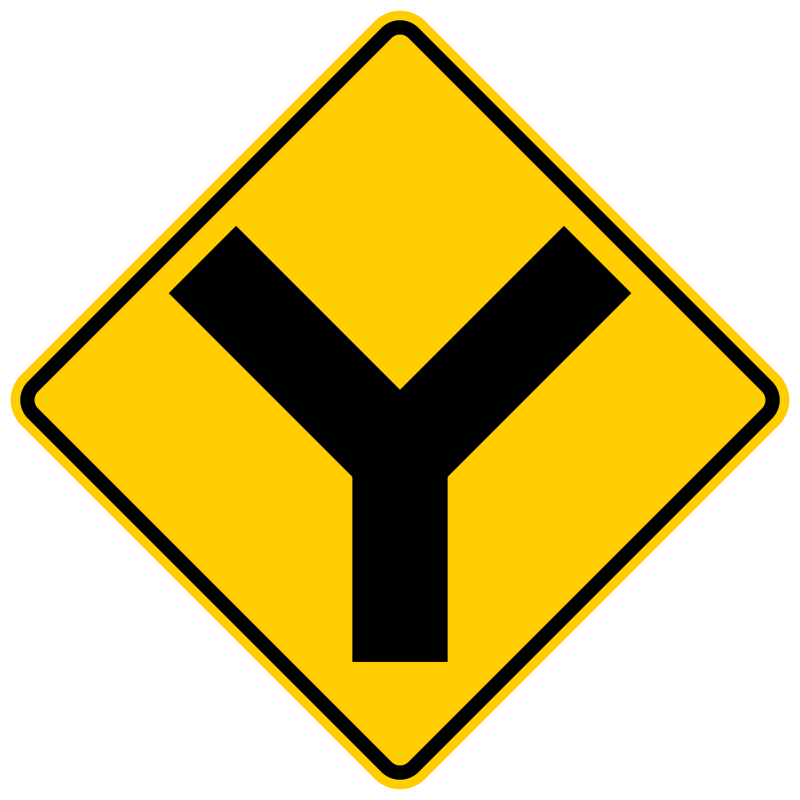
The road splits into a Y configuration ahead. Bear left or right depending on your destination and yield where marked.
This road sign means:
A) The road ends ahead
B) A four-way intersection is ahead
C) “Y” intersection ahead
D) A road joins from the right
15.
Vehicle stopping distance never depends on:
A) the condition of your vehicle's brakes.
B) your own reaction time.
C) the time of day.
D) the condition and type of vehicle tires.
16.
You should never depend on your mirrors when you prepare to change lanes. Why?
A) Mirrors leave “blind spots” behind both sides of vehicles.
B) Mirrors need to be adjusted.
C) Mirrors are useless.
17.
Designated school crosswalk location. You must yield to all schoolchildren and pedestrians in the crossing.
When you approach this sign, you must:
A) stop if necessary.
B) watch for workers crossing the road.
C) None of the above.
18.
When driving in fog:
A) turn on your hazard lights.
B) do not drive over 10 MPH.
C) turn on your low beams.
D) drive the speed limit.
19.
If your brakes are wet, you can dry them by:
A) riding the pedal lightly.
B) pull over to the right and wait until it stops raining.
C) having them checked by a mechanic.
20.
Alerts drivers to an upcoming crosswalk where pedestrians frequently cross. Slow down and yield right-of-way to anyone in or about to enter the roadway.
This sign means:
A) Railroad crossing
B) No Passing Zone
C) The road ends ahead
21.
Railroad crossings should always be considered:
A) safe when railroad crossing lights are active.
B) a place where stopping is required.
C) safe to cross.
D) dangerous.
22.
On average, how long does it take your body to remove the alcohol contained in 5 ounces of wine?
A) one hour.
B) 30 minutes.
C) 3 hours.
23.
When a hazard is seen ahead, reaction distance:
A) is the sum of perception distance and braking distance.
B) equals total stopping distance minus perception distance.
C) is how far a vehicle will continue to travel, in ideal conditions, before the driver hits the brakes.
24.
Which sign has white letters on a red background?
A) Stop
B) School zone
C) Yield
25.
When driving through a curve, you should:
A) speed up as you enter, slow down as you exit.
B) stay near the right of your lane.
C) maintain constant speed.
D) slow as you enter, speed up as you exit.
ANSWER KEY Check answers after completing the test.
1 C
2 A
3 A
4 D
5 B
6 C
7 C
8 D
9 B
10 A
11 B
12 A
13 C
14 C
15 C
16 A
17 A
18 C
19 A
20 A
21 D
22 A
23 C
24 A
25 D