Question 1:
What should you do if your rear wheels start to skid?
A
Steer left if your rear wheels slide right.
B
If the vehicle has ABS, pump the pedal carefully.
C
Turn the steering wheel in the direction the vehicle is trying to go.
The correct driving rule is: turn the steering wheel in the direction the vehicle is trying to go. Following standard DMV road rules and practicing defensive driving ensures safety for all road users.
Question 2:
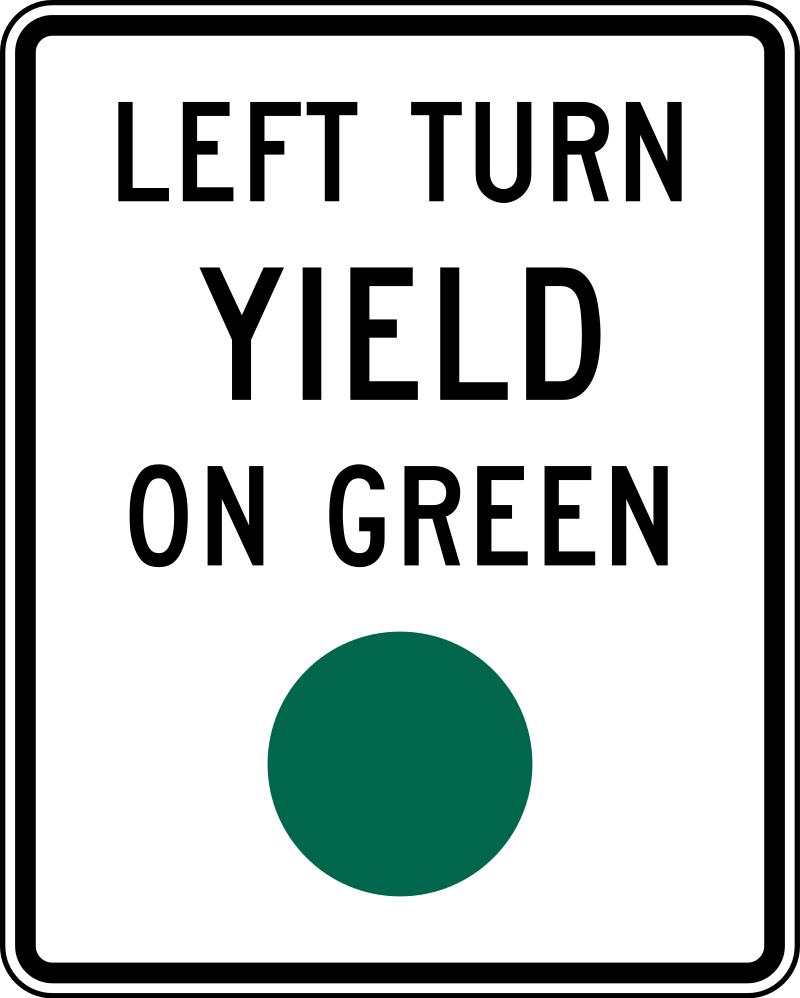 This white sign means you:
A
may turn left on a green light when it is safe to do so.
B
may turn left only on a green arrow.
C
must wait for the solid green light before you turn left.
This traffic sign indicates: may turn left on a green light when it is safe to do so. Observing and obeying all roadway signs ensures safe traffic flow and legal driving.
Question 3:
Drivers must be prepared for anything coming up in the road ahead. They should:
A
scan the road for traffic conditions and possible hazards.
B
drive with the right foot resting lightly on the brake pedal.
C
stare straight ahead at all times.
D
maintain focus toward the left of the road.
The correct driving rule is: scan the road for traffic conditions and possible hazards. Following standard DMV road rules and practicing defensive driving ensures safety for all road users.
Question 4:
When entering a crowded freeway, to merge into traffic you should:
A
yield to vehicles already on the freeway.
B
use the acceleration lane to adjust your speed to the same speed as freeway traffic.
C
check your blind spots.
D
All of the above.
Defensive driving best practices include: yield to vehicles already on the freeway; use the acceleration lane to adjust your speed to the same speed as freeway traffic; check your blind spots. Staying alert and maintaining spacing prevents unexpected hazards.
Question 5:
If an approaching driver does not dim the headlights, you should:
A
move your eyes to the left to help avoid the glare of approaching high beams.
B
move your eyes to the right and avoid looking directly at the bright lights.
C
flash your headlights to low beam for a second, then return to high beam.
The correct driving rule is: move your eyes to the right and avoid looking directly at the bright lights. Following standard DMV road rules and practicing defensive driving ensures safety for all road users.
Question 6:
You face a green light, but traffic on the other side of the intersection does not allow you to travel all the way through the intersection. What must you do?
A
Enter the intersection and wait until traffic ahead clears.
B
Wait for the next green light.
C
Wait until traffic ahead clears, so you do not block the intersection.
According to standard right-of-way regulations: wait until traffic ahead clears, so you do not block the intersection. Yielding appropriately prevents intersection collisions and maintains safe traffic flow.
Question 7:
When you approach a railroad crossing without flashing warning signals or crossing gates, you should:
A
always stop.
B
cross the tracks as slowly as possible.
C
yield to all trains at the crossing.
D
speed up to beat the train.
The correct driving rule is: yield to all trains at the crossing. Following standard DMV road rules and practicing defensive driving ensures safety for all road users.
Question 8:
When driving on major highways you should:
A
be ready to react to road hazards.
B
stay alert.
C
keep your eyes moving.
D
All of the above.
All of the listed points are essential driving requirements: be ready to react to road hazards; stay alert; keep your eyes moving. Practicing each ensures compliance with DMV safety laws.
Question 9:
 This sign means:
A
Not enter
B
Detour to the right
C
The road to the right is for one-way traffic only
This traffic sign indicates: Detour to the right. Observing and obeying all roadway signs ensures safe traffic flow and legal driving.
Question 10:
If your car breaks down on the highway, you should:
A
use your four-way flashers to warn other drivers.
B
sound your horn to warn passing vehicles.
C
flash your headlights at oncoming traffic.
D
stop in the right lane.
Defensive driving guidelines state that: use your four-way flashers to warn other drivers. Anticipating road hazards and communicating maneuvers keeps traffic predictable and safe.
Question 11:
In heavy rain, tires can begin to ride on the water that is on top of the road pavement. This is called:
A
rideplaning.
B
hydroplaning.
C
pavement-planing.
D
waterplaning.
When hydroplaning on water: hydroplaning. Gently ease off the accelerator and hold the steering wheel straight without sudden braking.
Question 12:
 This sign warns of a ________ ahead.
A
hill
B
no passing zone
C
soft shoulder
This traffic sign indicates: hill. Observing and obeying all roadway signs ensures safe traffic flow and legal driving.
Question 13:
 This sign warns drivers that:
A
they must turn either to the right or left.
B
there is a double curve ahead.
C
there is a winding road ahead.
This traffic sign indicates: there is a winding road ahead. Observing and obeying all roadway signs ensures safe traffic flow and legal driving.
Question 14:
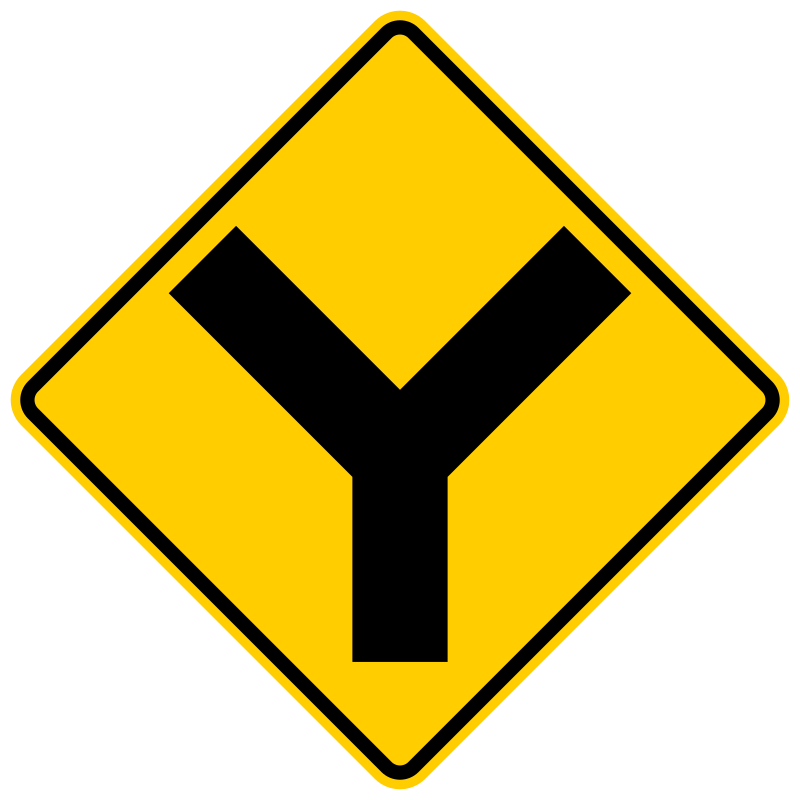 This road sign means:
A
The road ends ahead
B
A four-way intersection is ahead
C
“Y” intersection ahead
D
A road joins from the right
This traffic sign indicates: “Y” intersection ahead. Observing and obeying all roadway signs ensures safe traffic flow and legal driving.
Question 15:
Vehicle stopping distance never depends on:
A
the condition of your vehicle's brakes.
B
your own reaction time.
C
the time of day.
D
the condition and type of vehicle tires.
For safe speed and stopping control: the time of day. Adjusting speed to match visibility and road traction prevents loss of steering grip.
Question 16:
You should never depend on your mirrors when you prepare to change lanes. Why?
A
Mirrors leave “blind spots” behind both sides of vehicles.
B
Mirrors need to be adjusted.
C
Mirrors are useless.
The correct driving rule is: Mirrors leave “blind spots” behind both sides of vehicles. Following standard DMV road rules and practicing defensive driving ensures safety for all road users.
Question 17:
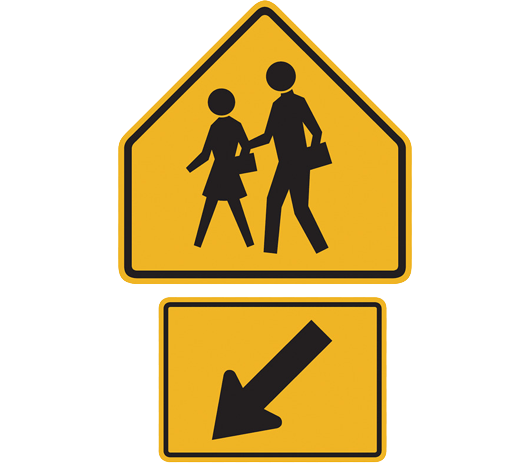 When you approach this sign, you must:
A
stop if necessary.
B
watch for workers crossing the road.
C
None of the above.
This traffic sign indicates: stop if necessary. Observing and obeying all roadway signs ensures safe traffic flow and legal driving.
Question 18:
When driving in fog:
A
turn on your hazard lights.
B
do not drive over 10 MPH.
C
turn on your low beams.
D
drive the speed limit.
Always use low-beam headlights in fog, heavy rain, or snow. High beams reflect off moisture droplets and bounce glare back into your eyes.
Question 19:
If your brakes are wet, you can dry them by:
A
riding the pedal lightly.
B
pull over to the right and wait until it stops raining.
C
having them checked by a mechanic.
The correct driving rule is: riding the pedal lightly. Following standard DMV road rules and practicing defensive driving ensures safety for all road users.
Question 20:
 This sign means:
A
Railroad crossing
B
No Passing Zone
C
The road ends ahead
Circular signs with an 'X' and 'RR' designate a Railroad Advance Warning: Railroad crossing. Drivers must slow down, look both ways, listen for trains, and be prepared to stop.
Question 21:
Railroad crossings should always be considered:
A
safe when railroad crossing lights are active.
B
a place where stopping is required.
C
safe to cross.
D
dangerous.
The correct driving rule is: dangerous. Following standard DMV road rules and practicing defensive driving ensures safety for all road users.
Question 22:
On average, how long does it take your body to remove the alcohol contained in 5 ounces of wine?
A
one hour.
B
30 minutes.
C
3 hours.
Under state DUI and traffic safety laws: one hour. Alcohol degrades judgment, slows reaction times, and distorts depth perception.
Question 23:
When a hazard is seen ahead, reaction distance:
A
is the sum of perception distance and braking distance.
B
equals total stopping distance minus perception distance.
C
is how far a vehicle will continue to travel, in ideal conditions, before the driver hits the brakes.
For safe speed and stopping control: is how far a vehicle will continue to travel, in ideal conditions, before the driver hits the brakes. Adjusting speed to match visibility and road traction prevents loss of steering grip.
Question 24:
Which sign has white letters on a red background?
A
Stop
B
School zone
C
Yield
The correct driving rule is: stop. Following standard DMV road rules and practicing defensive driving ensures safety for all road users.
Question 25:
When driving through a curve, you should:
A
speed up as you enter, slow down as you exit.
B
stay near the right of your lane.
C
maintain constant speed.
D
slow as you enter, speed up as you exit.
The correct driving rule is: slow as you enter, speed up as you exit. Following standard DMV road rules and practicing defensive driving ensures safety for all road users.