DriveQuiz drivequiz.com

UT DMV PERMİT PRACTİCE TEST 16

Utah
Duration: 23 min
|
Questions: 25
Student Name:
Date:
Correct:      Incorrect:      Score:      
1.
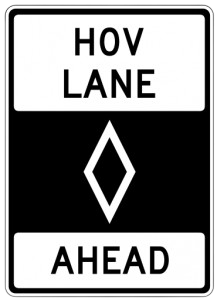
High-Occupancy Vehicle (HOV) diamond lane ahead. Only vehicles carrying the minimum required number of passengers (usually 2 or more) may use this lane.
This road sign indicates that:
A) a lane is reserved for certain purposes or certain vehicles.
B) buses and car pools may not travel in the restricted lane.
C) vehicles cannot go straight ahead. Cars must turn either to the right or left.
2.
The traffic light is green and you want to drive straight through an intersection. If a car is already in the intersection and is making a turn, you must:
A) enter the intersection and then stop.
B) drive through the intersection. You have the right-of-way.
C) let that car complete its turn before you enter the intersection.
3.
If the entrance lane is too short to allow acceleration to highway speed, you should:
A) go to the next entrance ramp.
B) stop and wait for a large gap in traffic, then enter the highway and accelerate quickly.
C) merge into highway traffic as soon as possible.
4.
You must yield to other drivers:
A) when it helps to prevent collisions.
B) when they are driving a truck.
C) when the other drivers are on your left and you have reached an unmarked intersection at the same time.
D) when your traffic signal is a green.
5.
Who is most at risk?
A) Drivers who are fatigued.
B) Drivers who are driving on long, boring roads.
C) All of the above.
6.
If a traffic officer signals you to drive through a red light:
A) you must do it.
B) you must wait for the red light to turn green.
C) you must not obey the officer. Signs and signals take precedence over directions given by traffic officers.
7.
If a vehicle starts to skid on water the driver should quickly apply the brakes.
A) True
B) False
8.
Green and white signs:
A) give information about directions and distances.
B) are mainly used at intersections and driveways.
C) warn drivers of unexpected road conditions.
9.
________ is the only effective way to reduce your Blood Alcohol Content (BAC).
A) Time
B) Drinking coffee
C) Taking a cold shower
D) Eating food
10.
Your ability to drive safely can be impaired by:
A) alcohol.
B) lack of sleep.
C) drugs, even if they are over-the-counter.
D) All of the above.
11.
A sharp curve is ahead with a recommended safe speed plate. Slow down before entering the curve to prevent vehicle rollover.
This sign indicates that:
A) the highest safe speed drivers should travel around the curve ahead is 25 MPH.
B) the safe speed around the curve ahead is at least 25 MPH.
C) drivers may not turn right if traveling at 25 MPH or less.
12.
Warns drivers that two separate lanes moving in the same direction are merging into one. Drivers in the right lane must adjust speed and merge smoothly with existing traffic.
This road sign means:
A) Lane shifting
B) Traffic is entering from another road, drive with caution
C) Stop for other traffic
D) Yield right-of-way
13.
_________________ your mirrors when you prepare to change lanes.
A) Never depend on
B) Never use
C) Always rely on
14.
Prohibits drivers from making a 180-degree turn to travel in the opposite direction at this intersection or stretch of road.
This road sign means:
A) Left turns are not allowed where this sign is displayed.
B) Drivers cannot make a complete turn to go in the opposite direction.
C) Vehicles turning left must make a U-turn.
15.
Indicates the maximum bridge or underpass vertical clearance. Vehicles taller than the posted height must not proceed.
This sign indicates:
A) the maximum width of a vehicle allowed on the highway.
B) the maximum legal height allowed in this State.
C) the overpass ahead has a low clearance.
D) a steep grade
16.
If your front wheels start to skid, the first thing you should do is:
A) Take your foot off the gas pedal and shift to neutral.
B) Immediately turn in the direction you want to go.
C) Speed up, pump your brakes and steer in the direction the vehicle is trying to go.
17.
When approaching a railroad crossing that has no warning signals (such as electric flashing lights or gates) a driver should look, listen and slow down.
A) False
B) True
18.
Passing is prohibited:
A) when a school bus is stopped to load or unload children on a public road.
B) at intersections.
C) whenever a solid line marks the left side of your lane.
D) All of the above.
19.
Object marker used to mark obstacles or bridge abutments near the edge of the road to alert drivers at night.
When they see a yellow X signal, drivers should:
A) come to a complete stop at the marked stop line.
B) turn off the ignition.
C) prepare to leave the lane safely.
20.
From top to bottom, traffic lights are:
A) green, red and yellow.
B) green, yellow and red.
C) red, yellow and green.
21.
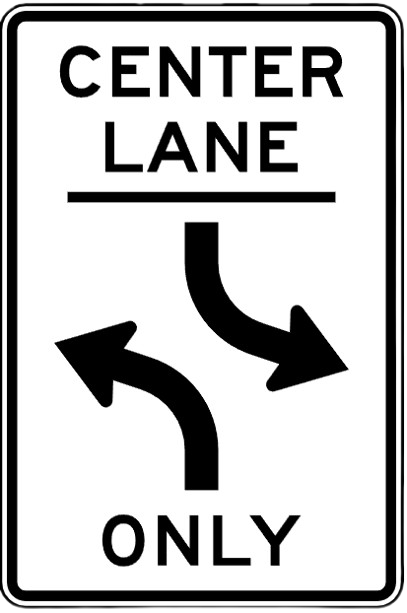
Indicates a two-way left-turn lane in the center of the road. Must only be used to make left turns or U-turns (where permitted), not for regular travel or passing.
This sign means:
A) The center lane is shared for left turns.
B) Left turns in both directions of travel are not permitted.
C) Vehicles may only turn left.
22.
The road makes a sharp 90-degree right turn ahead. Slow down considerably before entering the turn.
This road sign means:
A) One way
B) No right turn
C) Exit
D) Sharp right turn ahead
23.
The roadway becomes particularly slippery during wet or rainy conditions. Reduce your speed, increase following distance, and avoid abrupt braking or steering.
This road sign means:
A) Slow down, slippery when wet
B) Detour ahead
C) Road curves ahead
24.
Warning signs normally are:
A) rectangles.
B) triangles.
C) diamond-shaped.
25.
Proceed with caution. You do not need to stop unless pedestrians or hazards are present in the intersection.
A flashing yellow light:
A) warns drivers to proceed with caution.
B) is used at dangerous intersections.
C) All of the above.
ANSWER KEY Check answers after completing the test.
1 A
2 C
3 B
4 A
5 C
6 A
7 B
8 A
9 A
10 D
11 A
12 B
13 A
14 B
15 C
16 A
17 B
18 D
19 C
20 C
21 A
22 D
23 A
24 C
25 C