Question 1:
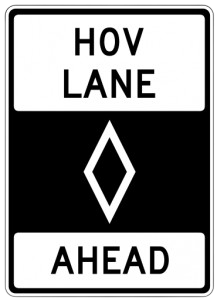 This road sign indicates that:
A
a lane is reserved for certain purposes or certain vehicles.
B
buses and car pools may not travel in the restricted lane.
C
vehicles cannot go straight ahead. Cars must turn either to the right or left.
This traffic sign indicates: a lane is reserved for certain purposes or certain vehicles. Observing and obeying all roadway signs ensures safe traffic flow and legal driving.
Question 2:
The traffic light is green and you want to drive straight through an intersection. If a car is already in the intersection and is making a turn, you must:
A
enter the intersection and then stop.
B
drive through the intersection. You have the right-of-way.
C
let that car complete its turn before you enter the intersection.
According to standard right-of-way regulations: let that car complete its turn before you enter the intersection. Yielding appropriately prevents intersection collisions and maintains safe traffic flow.
Question 3:
If the entrance lane is too short to allow acceleration to highway speed, you should:
A
go to the next entrance ramp.
B
stop and wait for a large gap in traffic, then enter the highway and accelerate quickly.
C
merge into highway traffic as soon as possible.
For safe speed and stopping control: stop and wait for a large gap in traffic, then enter the highway and accelerate quickly. Adjusting speed to match visibility and road traction prevents loss of steering grip.
Question 4:
You must yield to other drivers:
A
when it helps to prevent collisions.
B
when they are driving a truck.
C
when the other drivers are on your left and you have reached an unmarked intersection at the same time.
D
when your traffic signal is a green.
The correct driving rule is: when it helps to prevent collisions. Following standard DMV road rules and practicing defensive driving ensures safety for all road users.
Question 5:
Who is most at risk?
A
Drivers who are fatigued.
B
Drivers who are driving on long, boring roads.
C
All of the above.
All of the listed points are essential driving requirements: Drivers who are fatigued; Drivers who are driving on long, boring roads. Practicing each ensures compliance with DMV safety laws.
Question 6:
If a traffic officer signals you to drive through a red light:
A
you must do it.
B
you must wait for the red light to turn green.
C
you must not obey the officer. Signs and signals take precedence over directions given by traffic officers.
According to standard right-of-way regulations: you must do it. Yielding appropriately prevents intersection collisions and maintains safe traffic flow.
Question 7:
If a vehicle starts to skid on water the driver should quickly apply the brakes.
A
True
B
False
The correct driving rule is: False. Following standard DMV road rules and practicing defensive driving ensures safety for all road users.
Question 8:
Green and white signs:
A
give information about directions and distances.
B
are mainly used at intersections and driveways.
C
warn drivers of unexpected road conditions.
The correct driving rule is: give information about directions and distances. Following standard DMV road rules and practicing defensive driving ensures safety for all road users.
Question 9:
________ is the only effective way to reduce your Blood Alcohol Content (BAC).
A
Time
B
Drinking coffee
C
Taking a cold shower
D
Eating food
Under state DUI and traffic safety laws: Time. Alcohol degrades judgment, slows reaction times, and distorts depth perception.
Question 10:
Your ability to drive safely can be impaired by:
A
alcohol.
B
lack of sleep.
C
drugs, even if they are over-the-counter.
D
All of the above.
All of the listed points are essential driving requirements: alcohol; lack of sleep; drugs, even if they are over-the-counter. Practicing each ensures compliance with DMV safety laws.
Question 11:
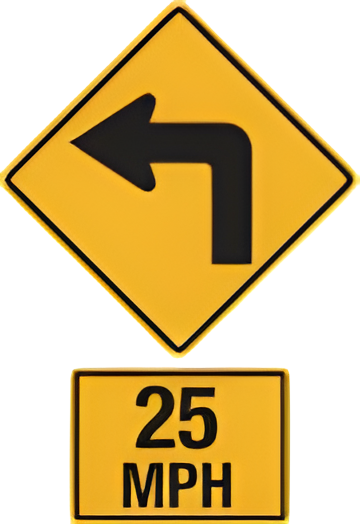 This sign indicates that:
A
the highest safe speed drivers should travel around the curve ahead is 25 MPH.
B
the safe speed around the curve ahead is at least 25 MPH.
C
drivers may not turn right if traveling at 25 MPH or less.
This traffic sign indicates: the highest safe speed drivers should travel around the curve ahead is 25 MPH. Observing and obeying all roadway signs ensures safe traffic flow and legal driving.
Question 12:
 This road sign means:
A
Lane shifting
B
Traffic is entering from another road, drive with caution
C
Stop for other traffic
D
Yield right-of-way
This traffic sign indicates: traffic is entering from another road, drive with caution. Observing and obeying all roadway signs ensures safe traffic flow and legal driving.
Question 13:
_________________ your mirrors when you prepare to change lanes.
A
Never depend on
B
Never use
C
Always rely on
The correct driving rule is: Never depend on. Following standard DMV road rules and practicing defensive driving ensures safety for all road users.
Question 14:
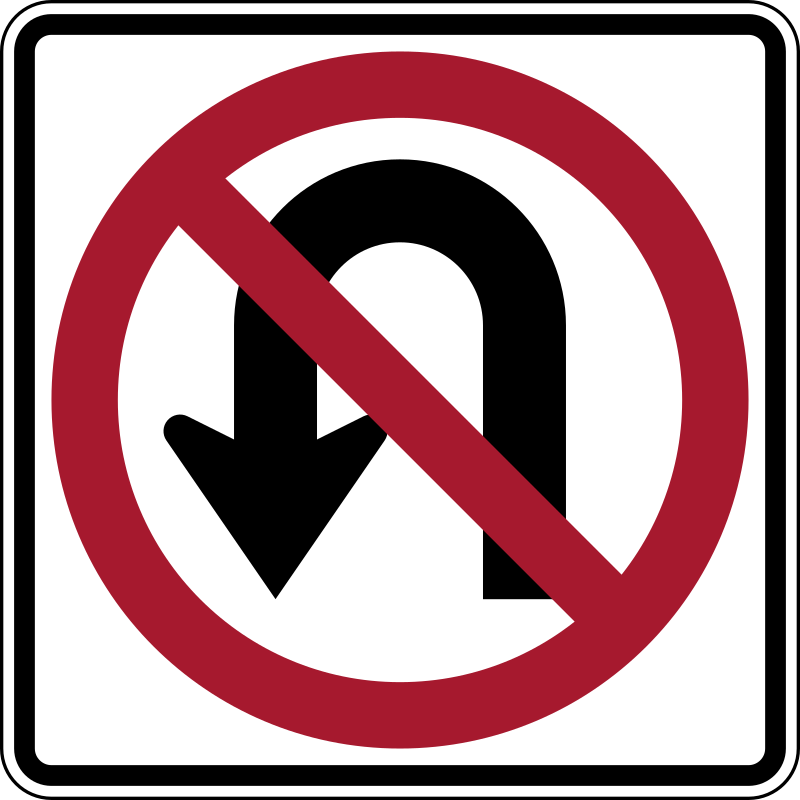 This road sign means:
A
Left turns are not allowed where this sign is displayed.
B
Drivers cannot make a complete turn to go in the opposite direction.
C
Vehicles turning left must make a U-turn.
This traffic sign indicates: drivers cannot make a complete turn to go in the opposite direction. Observing and obeying all roadway signs ensures safe traffic flow and legal driving.
Question 15:
 This sign indicates:
A
the maximum width of a vehicle allowed on the highway.
B
the maximum legal height allowed in this State.
C
the overpass ahead has a low clearance.
D
a steep grade
This traffic sign indicates: the overpass ahead has a low clearance. Observing and obeying all roadway signs ensures safe traffic flow and legal driving.
Question 16:
If your front wheels start to skid, the first thing you should do is:
A
Take your foot off the gas pedal and shift to neutral.
B
Immediately turn in the direction you want to go.
C
Speed up, pump your brakes and steer in the direction the vehicle is trying to go.
The correct driving rule is: take your foot off the gas pedal and shift to neutral. Following standard DMV road rules and practicing defensive driving ensures safety for all road users.
Question 17:
When approaching a railroad crossing that has no warning signals (such as electric flashing lights or gates) a driver should look, listen and slow down.
A
False
B
True
The correct driving rule is: True. Following standard DMV road rules and practicing defensive driving ensures safety for all road users.
Question 18:
Passing is prohibited:
A
when a school bus is stopped to load or unload children on a public road.
B
at intersections.
C
whenever a solid line marks the left side of your lane.
D
All of the above.
Defensive driving best practices include: when a school bus is stopped to load or unload children on a public road; at intersections; whenever a solid line marks the left side of your lane. Staying alert and maintaining spacing prevents unexpected hazards.
Question 19:
 When they see a yellow X signal, drivers should:
A
come to a complete stop at the marked stop line.
B
turn off the ignition.
C
prepare to leave the lane safely.
State laws require signaling your intention: prepare to leave the lane safely. Signal at least 100 feet before making a turn or changing lanes.
Question 20:
From top to bottom, traffic lights are:
A
green, red and yellow.
B
green, yellow and red.
C
red, yellow and green.
The correct driving rule is: red, yellow and green. Following standard DMV road rules and practicing defensive driving ensures safety for all road users.
Question 21:
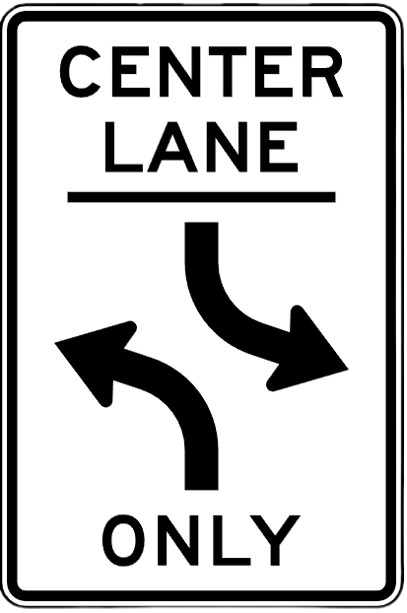 This sign means:
A
The center lane is shared for left turns.
B
Left turns in both directions of travel are not permitted.
C
Vehicles may only turn left.
This traffic sign indicates: The center lane is shared for left turns. Observing and obeying all roadway signs ensures safe traffic flow and legal driving.
Question 22:
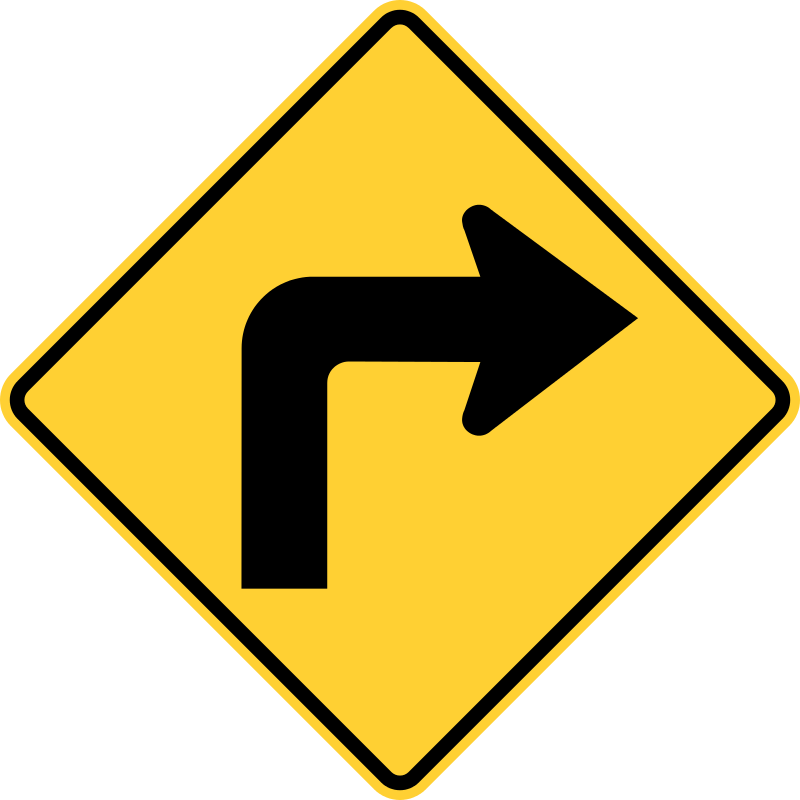 This road sign means:
A
One way
B
No right turn
C
Exit
D
Sharp right turn ahead
This traffic sign indicates: Sharp right turn ahead. Observing and obeying all roadway signs ensures safe traffic flow and legal driving.
Question 23:
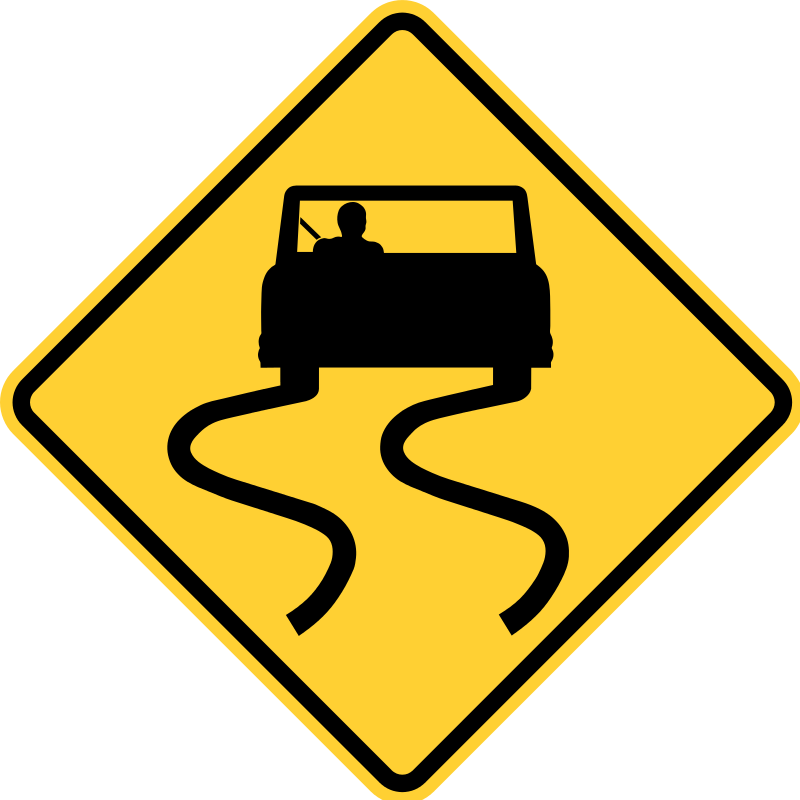 This road sign means:
A
Slow down, slippery when wet
B
Detour ahead
C
Road curves ahead
This traffic sign indicates: slow down, slippery when wet. Observing and obeying all roadway signs ensures safe traffic flow and legal driving.
Question 24:
Warning signs normally are:
A
rectangles.
B
triangles.
C
diamond-shaped.
The correct driving rule is: diamond-shaped. Following standard DMV road rules and practicing defensive driving ensures safety for all road users.
Question 25:
 A flashing yellow light:
A
warns drivers to proceed with caution.
B
is used at dangerous intersections.
C
All of the above.
Safe navigation at intersections requires following all established rules: warns drivers to proceed with caution; is used at dangerous intersections. Always yield right-of-way properly to prevent collisions.