Question 1:
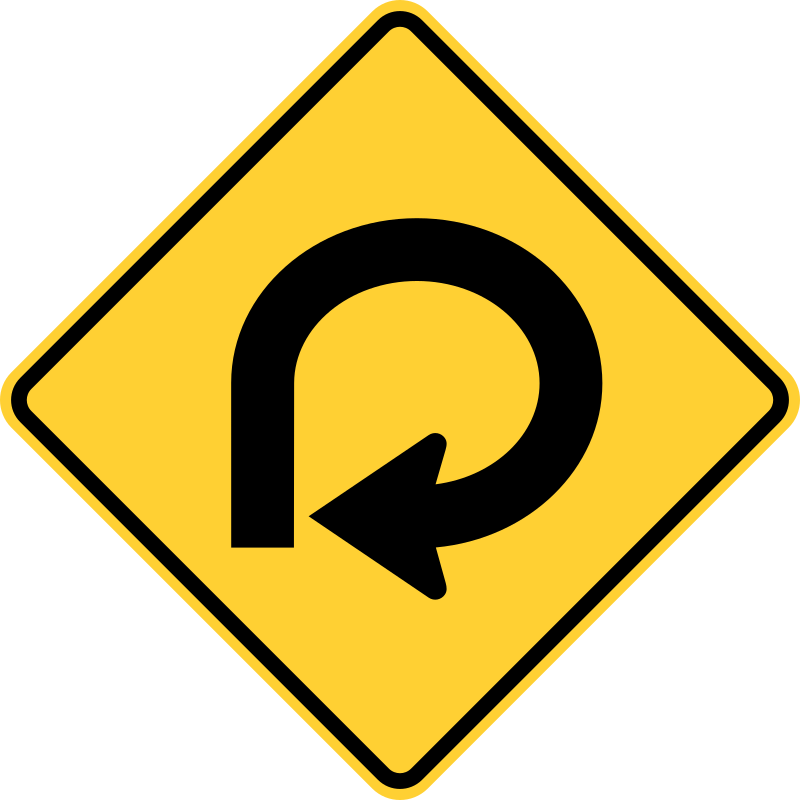 This sign means:
A
Roundabout ahead.
B
270 degree turn ahead.
C
Wrong way; Turn around immediately.
This traffic sign indicates: 270 degree turn ahead. Observing and obeying all roadway signs ensures safe traffic flow and legal driving.
Question 2:
Unless otherwise posted, the speed limit on primary and secondary state and federal highways is:
A
65 MPH
B
70 MPH
C
55 MPH
For safe speed and stopping control: 55 MPH. Adjusting speed to match visibility and road traction prevents loss of steering grip.
Question 3:
When following motorcycles, drivers should:
A
reduce the minimum following distance.
B
try to pass them as they have different braking capabilities than other motor vehicles.
C
keep more space in front of their vehicle.
The correct driving rule is: keep more space in front of their vehicle. Following standard DMV road rules and practicing defensive driving ensures safety for all road users.
Question 4:
If you meet a stopped school bus with the lights flashing and the signal arm extended, you should:
A
proceed at 15 MPH or less, if no children are present.
B
stop.
C
watch for children and proceed at normal speed.
When a school bus displays flashing red lights and extended stop sign: stop. Traffic in both directions must come to a full stop on undivided roads until children are clear.
Question 5:
When driving at night with no other vehicles ahead, a driver should use:
A
high beam lights.
B
low-beam lights.
C
parking lights.
The correct driving rule is: high beam lights. Following standard DMV road rules and practicing defensive driving ensures safety for all road users.
Question 6:
Continuous hard braking on ice and snow often:
A
is the best option during winter.
B
keeps the brakes from freezing.
C
causes the front wheels to lock.
For safe speed and stopping control: causes the front wheels to lock. Adjusting speed to match visibility and road traction prevents loss of steering grip.
Question 7:
On average, how long does it take your body to remove the alcohol contained in 5 ounces of wine?
A
one hour.
B
30 minutes.
C
3 hours.
Under state DUI and traffic safety laws: one hour. Alcohol degrades judgment, slows reaction times, and distorts depth perception.
Question 8:
Who has a greater risk of being involved in a traffic crash?
A
Drivers who are driving alone.
B
Young people.
C
All of the above.
All of the listed points are essential driving requirements: Drivers who are driving alone; Young people. Practicing each ensures compliance with DMV safety laws.
Question 9:
In the following situations, drivers should increase their following interval:
A
When following vehicles that are required to come to a stop at railroad crossings.
B
When it is hard to see ahead because of bad weather.
C
All of the above.
All of the listed points are essential driving requirements: When following vehicles that are required to come to a stop at railroad crossings; When it is hard to see ahead because of bad weather. Practicing each ensures compliance with DMV safety laws.
Question 10:
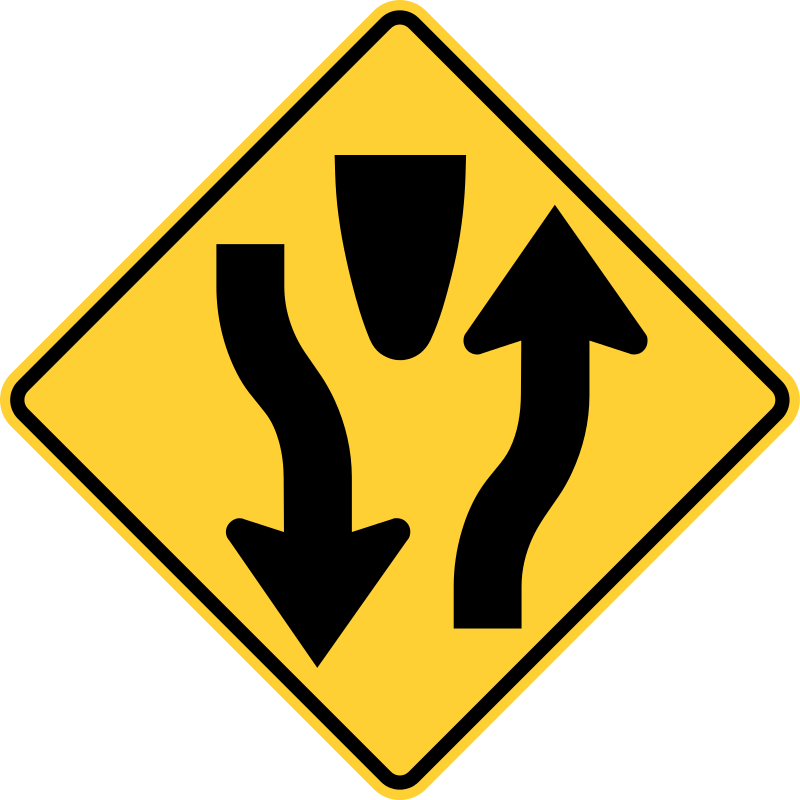 This road sign means:
A
Divided highway ahead - stay to the right
B
Do not enter
C
Do not pass
This traffic sign indicates: Divided highway ahead - stay to the right. Observing and obeying all roadway signs ensures safe traffic flow and legal driving.
Question 11:
If you have had three beers in the past hour, about how long will it take for all the alcohol to leave your blood stream?
A
Two hours.
B
Three hours.
C
One hour.
Under state DUI and traffic safety laws: Three hours. Alcohol degrades judgment, slows reaction times, and distorts depth perception.
Question 12:
Service signs are ____ with ____ letters and symbols.
A
blue; white
B
white; black
C
green; white
The correct driving rule is: blue; white. Following standard DMV road rules and practicing defensive driving ensures safety for all road users.
Question 13:
You should never depend on your mirrors when you prepare to change lanes. Why?
A
Mirrors leave “blind spots” behind both sides of vehicles.
B
Mirrors need to be adjusted.
C
Mirrors are useless.
The correct driving rule is: Mirrors leave “blind spots” behind both sides of vehicles. Following standard DMV road rules and practicing defensive driving ensures safety for all road users.
Question 14:
Which of the following drugs could affect your ability to drive?
A
A cold remedy.
B
Marijuana.
C
All of the above.
Alcohol and impairing substances degrade all critical driving functions: A cold remedy; Marijuana. Driving while impaired carries severe criminal and safety penalties.
Question 15:
A defensive driver:
A
never drives below the speed limit.
B
knows when it is safe to pass other vehicles.
C
considers what other drivers might do and is always prepared to act.
The correct driving rule is: considers what other drivers might do and is always prepared to act. Following standard DMV road rules and practicing defensive driving ensures safety for all road users.
Question 16:
 Vertical rectangles tell drivers:
A
the law.
B
what is not allowed.
C
the direction they should travel.
The correct driving rule is: the law. Following standard DMV road rules and practicing defensive driving ensures safety for all road users.
Question 17:
 This road sign means the road you're driving on:
A
turns sharply to the left and then right
B
turns to the right and then the left
C
turns only to the left
This traffic sign indicates: turns to the right and then the left. Observing and obeying all roadway signs ensures safe traffic flow and legal driving.
Question 18:
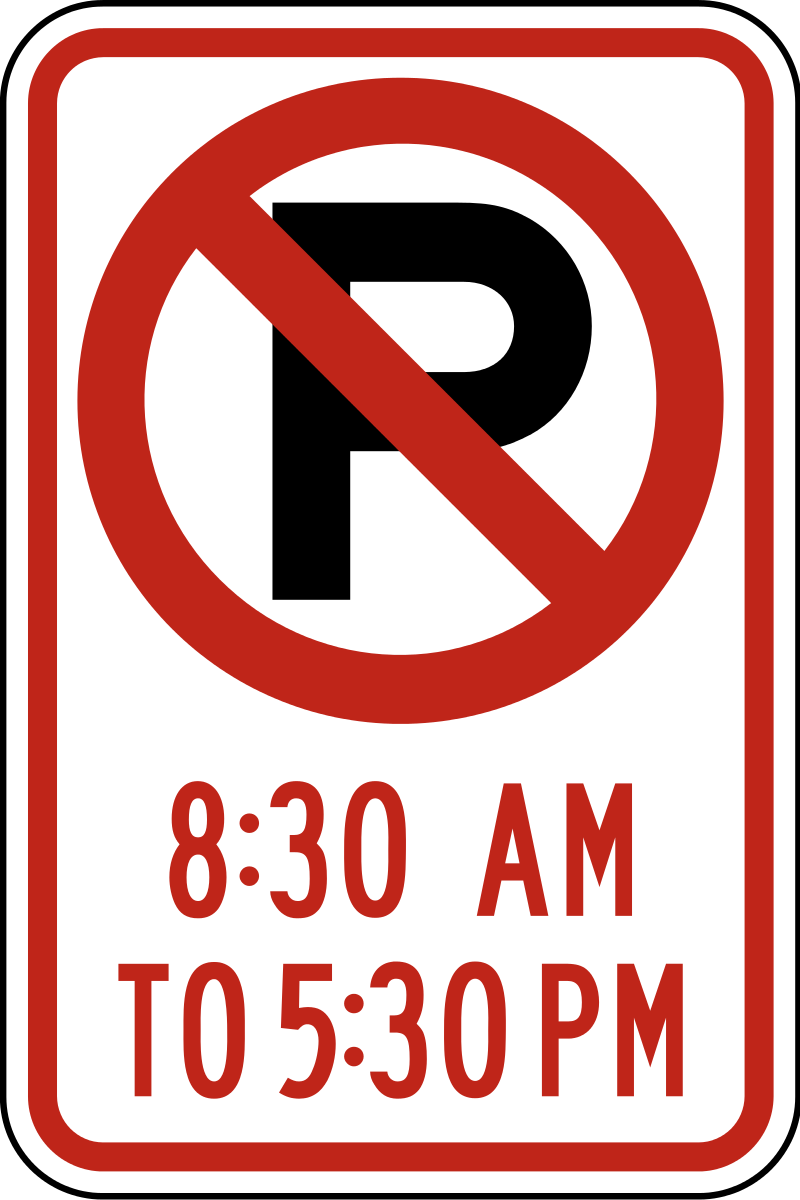 This sign means:
A
You can only park between 8:30 AM and 5:30 PM.
B
Parking is not allowed at 8:30 AM and at 5:30 PM
C
No parking between 8:30 AM and 5:30 PM.
This traffic sign indicates: No parking between 8:30 AM and 5:30 PM. Observing and obeying all roadway signs ensures safe traffic flow and legal driving.
Question 19:
On what three conditions does your blood alcohol content (BAC) depend?
A
Your weight. How much alcohol you drink. How much time passes between drinks.
B
Your weight. The type of beverage you drink. How fit you are.
C
Your height. How much alcohol you drink. The type of beverage you drink.
Under state DUI and traffic safety laws: Your weight. How much alcohol you drink. How much time passes between drinks. Alcohol degrades judgment, slows reaction times, and distorts depth perception.
Question 20:
What is the first thing to do when you make a three-point turn?
A
Signal with your left turn signal, then check carefully for traffic coming toward you.
B
Signal with your right turn signal, then pull over to the right and stop.
C
Turn left, go across the road so you come to a stop while you face the edge of the road.
The correct driving rule is: signal with your right turn signal, then pull over to the right and stop. Following standard DMV road rules and practicing defensive driving ensures safety for all road users.
Question 21:
A solid yellow line on your side of the center line means:
A
Stop
B
Pass with caution
C
Do not pass
The correct driving rule is: Do not pass. Following standard DMV road rules and practicing defensive driving ensures safety for all road users.
Question 22:
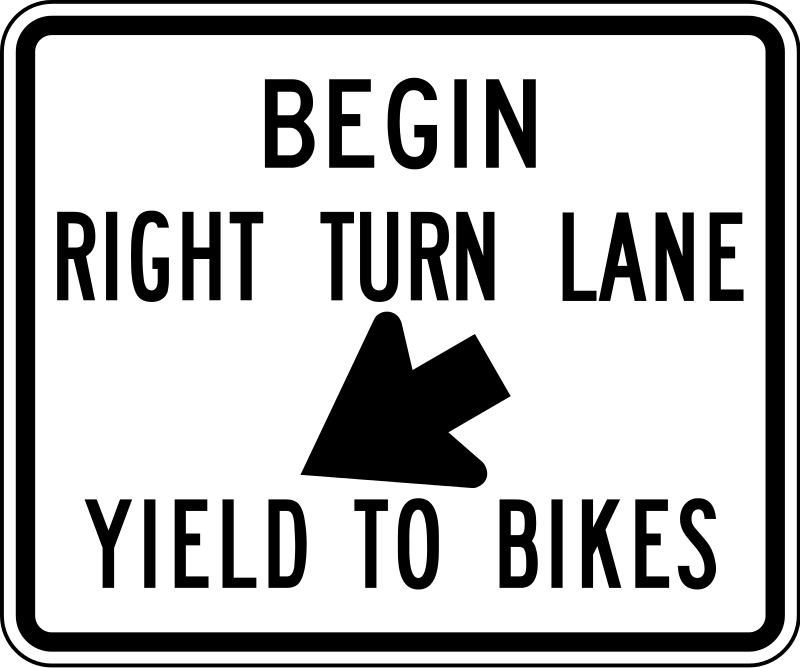 What does this road sign indicate?
A
Drivers have the right of way over bikes turning left.
B
Vehicles turning left must yield to bikes entering a right turn lane.
C
Motor vehicles entering an exclusive right-turn lane must weave across bicycle traffic in bicycle lanes.
This traffic sign indicates: Motor vehicles entering an exclusive right-turn lane must weave across bicycle traffic in bicycle lanes. Observing and obeying all roadway signs ensures safe traffic flow and legal driving.
Question 23:
Drivers should use the turn signal ________ before making a turn.
A
25 feet
B
15 feet
C
50 feet
State laws require signaling your intention: 50 feet. Signal at least 100 feet before making a turn or changing lanes.
Question 24:
If a vehicle is coming towards you at night with its high beams on, making it hard to see the road ahead, you should:
A
look straight ahead towards the middle of the lane.
B
look ahead towards the left edge of your lane.
C
look ahead towards the right edge of your lane.
The correct driving rule is: look ahead towards the right edge of your lane. Following standard DMV road rules and practicing defensive driving ensures safety for all road users.
Question 25:
 This road sign means:
A
You have the right of way
B
No Passing Zone
C
Yield the right-of-way
A triangular Yield sign requires drivers to slow down and give right-of-way to other traffic: yield the right-of-way. Proceed only when there is a safe opening.
Question 26:
 The octagonal shape is used:
A
for stop signs and railroad advance warning signs.
B
exclusively for stop signs.
C
to warn drivers of existing or possible hazards on roadways.
An octagonal Stop sign requires a full and complete stop before the stop line or crosswalk: exclusively for stop signs. Proceed only after yielding to all cross traffic and pedestrians.
Question 27:
Alcohol is:
A
A stimulant.
B
A depressant.
C
A dopant.
Under state DUI and traffic safety laws: A depressant. Alcohol degrades judgment, slows reaction times, and distorts depth perception.
Question 28:
Two drivers reach an uncontrolled intersection at the same time. Who has the right of way?
A
The driver on the left.
B
No one.
C
The driver on the right.
At an uncontrolled intersection or 4-way stop where vehicles arrive at the same time: The driver on the right. The driver on the left must always yield to the driver on the right.
Question 29:
 This sign means:
A
Railroad crossing
B
No Passing Zone
C
The road ends ahead
Circular signs with an 'X' and 'RR' designate a Railroad Advance Warning: Railroad crossing. Drivers must slow down, look both ways, listen for trains, and be prepared to stop.
Question 30:
The traffic light is green and you want to drive straight through an intersection. If a car is already in the intersection and is making a turn, you must:
A
enter the intersection and then stop.
B
drive through the intersection. You have the right-of-way.
C
let that car complete its turn before you enter the intersection.
According to standard right-of-way regulations: let that car complete its turn before you enter the intersection. Yielding appropriately prevents intersection collisions and maintains safe traffic flow.