Question 1:
Speed limit signs are:
A
service signs
B
regulation signs (regulatory signs)
C
warning signs
For safe speed and stopping control: regulation signs (regulatory signs). Adjusting speed to match visibility and road traction prevents loss of steering grip.
Question 2:
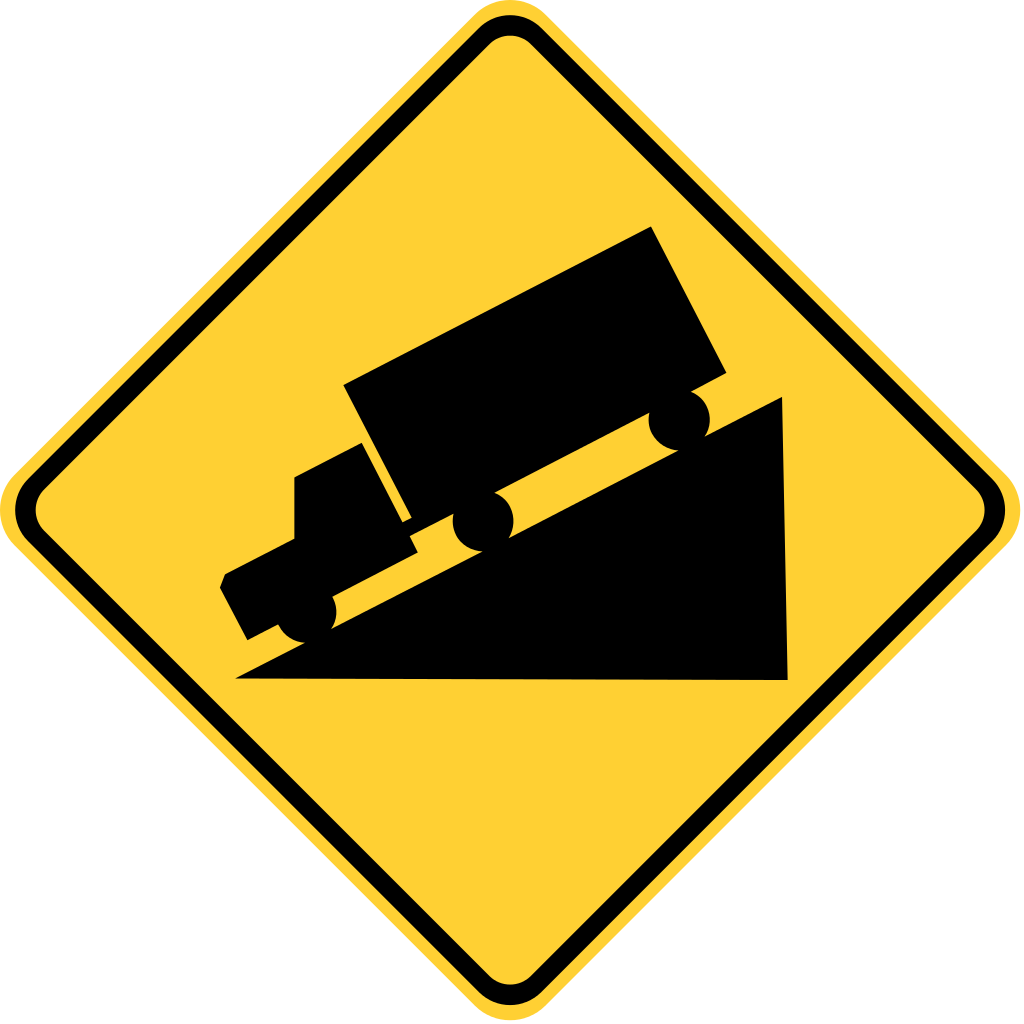 This road sign means:
A
Truck stop ahead
B
No trucks allowed
C
Hill or downgrade up ahead
This traffic sign indicates: Hill or downgrade up ahead. Observing and obeying all roadway signs ensures safe traffic flow and legal driving.
Question 3:
 When you see this sign you should:
A
increase your speed and try to pass other vehicles.
B
slow your speed and be prepared to stop.
C
slow your speed and do not pass other vehicles.
This traffic sign indicates: slow your speed and do not pass other vehicles. Observing and obeying all roadway signs ensures safe traffic flow and legal driving.
Question 4:
A driver license may be suspended or revoked for:
A
fraudulently altering a driver license.
B
allowing another individual to use your license or identification.
C
All of the above.
All of the listed points are essential driving requirements: fraudulently altering a driver license; allowing another individual to use your license or identification. Practicing each ensures compliance with DMV safety laws.
Question 5:
You are driving and you are feeling drowsy. You should:
A
avoid drinking coffee.
B
turn on the radio to keep you awake.
C
find a safe place to stop for a break.
Under state DUI and traffic safety laws: find a safe place to stop for a break. Alcohol degrades judgment, slows reaction times, and distorts depth perception.
Question 6:
Diamond-shaped signs:
A
are used to warn of hazards on roadways.
B
indicate no pass zones.
C
typically provide guidance to drivers.
The correct driving rule is: are used to warn of hazards on roadways. Following standard DMV road rules and practicing defensive driving ensures safety for all road users.
Question 7:
When passing a motorcycle you must:
A
give the motorcyclist the right hand part of his traffic lane.
B
give the motorcyclist the entire traffic lane as if the motorcycle was a car.
C
sound your horn to alert the motorcyclist.
Motorcycles can stop rapidly and are easily hidden in vehicle blind spots: give the motorcyclist the entire traffic lane as if the motorcycle was a car. Always allow an increased following distance of at least 3 to 4 seconds.
Question 8:
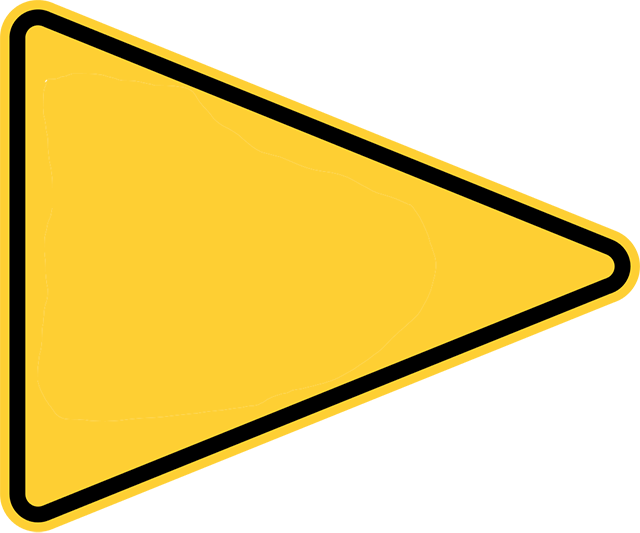 This road sign means:
A
Slow-moving vehicle
B
Sharp curve ahead
C
No Passing Zone
This traffic sign indicates: No Passing Zone. Observing and obeying all roadway signs ensures safe traffic flow and legal driving.
Question 9:
If the rear of your vehicle is skidding to the right, you should:
A
steer to the left.
B
steer to the right.
C
hold the steering wheel tightly and shift into neutral to bring the front of the vehicle back in line.
The correct driving rule is: steer to the right. Following standard DMV road rules and practicing defensive driving ensures safety for all road users.
Question 10:
What type of pavement marking shows you which lane you must use for a turn?
A
Edge line
B
Diamond
C
Crosswalk Lines
D
Arrows
This traffic sign indicates: Arrows. Observing and obeying all roadway signs ensures safe traffic flow and legal driving.
Question 11:
When a pedestrian carrying a white cane is at the corner ready to cross the street in front of you, before making your right turn, you should:
A
use your horn to help the pedestrian cross the street.
B
turn off the ignition until the person crosses the street.
C
yield the right-of-way and wait until the pedestrian crosses the street.
Drivers must always yield the right-of-way to pedestrians crossing at intersections and crosswalks: yield the right-of-way and wait until the pedestrian crosses the street. Stop and allow them to clear the lane safely.
Question 12:
___________ normally are white rectangles with black letters or symbols.
A
Warning signs
B
Destination signs (guide signs)
C
Regulation signs (regulatory signs)
The correct driving rule is: Regulation signs (regulatory signs). Following standard DMV road rules and practicing defensive driving ensures safety for all road users.
Question 13:
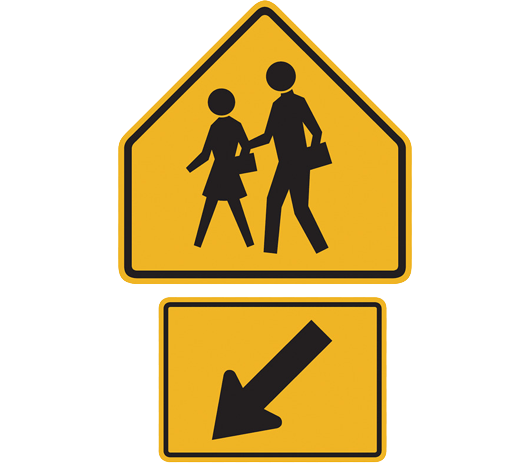 When they approach this sign, drivers must:
A
slow down and watch for children crossing the road.
B
obey signals from crossing guards.
C
stop if necessary.
D
All of the above.
This sign alerts drivers to several mandatory requirements: slow down and watch for children crossing the road, obey signals from crossing guards, stop if necessary. Obeying all posted traffic control instructions is required by law.
Question 14:
 This road sign means:
A
Merging traffic from the right
B
Sharp curves ahead
C
Intersection ahead
This traffic sign indicates: Merging traffic from the right. Observing and obeying all roadway signs ensures safe traffic flow and legal driving.
Question 15:
When they see this sign, drivers should:
A
be ready to brake sharply and stop.
B
be ready to shift to lower gear.
C
yield to trucks coming from the hill on the right.
This traffic sign indicates: be ready to shift to lower gear. Observing and obeying all roadway signs ensures safe traffic flow and legal driving.
Question 16:
Which signs have black letters on a yellow or orange background?
A
Warning signs (diamond)
B
Regulatory signs (vertical rectangle)
C
Railroad advance warning signs (round)
The correct driving rule is: Warning signs (diamond). Following standard DMV road rules and practicing defensive driving ensures safety for all road users.
Question 17:
As you drive on the expressway, make sure:
A
you cut off vehicles behind you when you change lanes.
B
to signal all lane changes.
C
your directional signal goes off before you change lanes.
The correct driving rule is: to signal all lane changes. Following standard DMV road rules and practicing defensive driving ensures safety for all road users.
Question 18:
Roads are the most slippery:
A
the first rain after a dry spell.
B
after it has been raining for an hour or more.
C
for the first 2 hours of a rain storm.
For safe speed and stopping control: the first rain after a dry spell. Adjusting speed to match visibility and road traction prevents loss of steering grip.
Question 19:
You can reduce the chance of a collision with a large vehicle if you:
A
delay near it.
B
cut abruptly in front of it.
C
pay close attention to the turn signals.
The correct driving rule is: pay close attention to the turn signals. Following standard DMV road rules and practicing defensive driving ensures safety for all road users.
Question 20:
__________ are blue with white letters and symbols.
A
Warning signs
B
Service signs
C
Destination signs (guide signs)
The correct driving rule is: Service signs. Following standard DMV road rules and practicing defensive driving ensures safety for all road users.
Question 21:
 This road sign warns drivers that:
A
they are coming to a point where another traffic lane joins the one they are on.
B
a divided highway is ahead.
C
the one-way street or roadway is about to change to two-way traffic.
This traffic sign indicates: the one-way street or roadway is about to change to two-way traffic. Observing and obeying all roadway signs ensures safe traffic flow and legal driving.
Question 22:
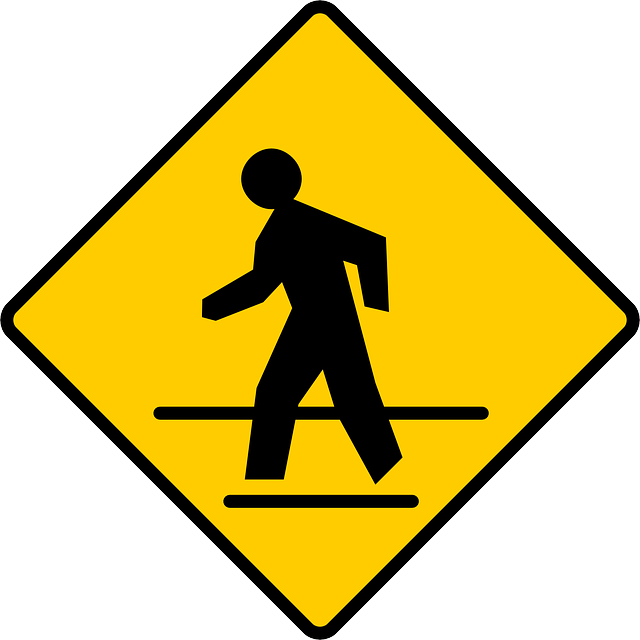 This road sign means:
A
Pedestrian crossing
B
School zone
C
School crossing
This traffic sign indicates: Pedestrian crossing. Observing and obeying all roadway signs ensures safe traffic flow and legal driving.
Question 23:
You should use turn signals to indicate your intention with sufficient time to allow other drivers to see the signal:
A
if it’s raining.
B
AFTER you move.
C
BEFORE you move.
State laws require signaling your intention: BEFORE you move. Signal at least 100 feet before making a turn or changing lanes.
Question 24:
A red arrow on a traffic light means:
A
You may not turn in the direction of the arrow until a green light or arrow light goes on.
B
You may turn in in the direction of the arrow after coming to a complete stop.
C
You must stop and then proceed when the way is clear.
The correct driving rule is: you may not turn in the direction of the arrow until a green light or arrow light goes on. Following standard DMV road rules and practicing defensive driving ensures safety for all road users.
Question 25:
What should you do if a vehicle is approaching head-on in your lane?
A
Pull over to the left and use your emergency lights to stop the other driver.
B
Decrease speed, pull over to the right and sound your horn to warn the other driver.
C
Turn off the ignition if your vehicle has power steering.
The correct driving rule is: Decrease speed, pull over to the right and sound your horn to warn the other driver. Following standard DMV road rules and practicing defensive driving ensures safety for all road users.
Question 26:
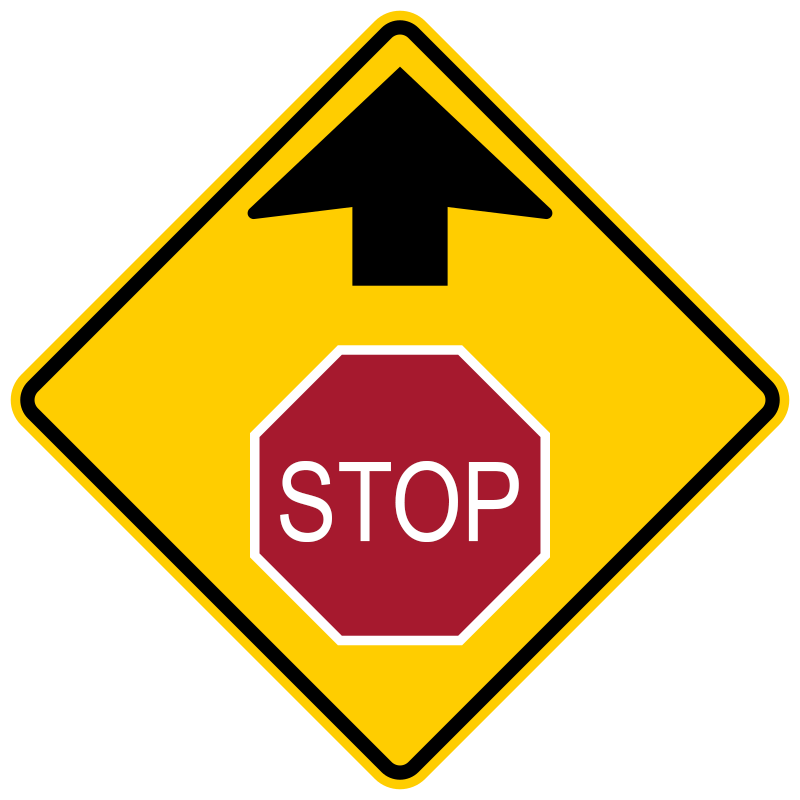 When drivers come to this sign, they must:
A
be ready to stop at the stop sign.
B
warn other drivers that a stop sign is ahead.
C
brake sharply and come to a complete stop.
This traffic sign indicates: be ready to stop at the stop sign. Observing and obeying all roadway signs ensures safe traffic flow and legal driving.
Question 27:
This sign warns ____________ ahead.
A
of two-way traffic
B
of a reduction of lanes
C
that a divided highway ends
This traffic sign indicates: of two-way traffic. Observing and obeying all roadway signs ensures safe traffic flow and legal driving.
Question 28:
___________ are green with white letters and symbols.
A
Warning signs
B
Destination signs (guide signs)
C
Regulation signs (regulatory signs)
The correct driving rule is: Destination signs (guide signs). Following standard DMV road rules and practicing defensive driving ensures safety for all road users.
Question 29:
What is the only effective method to reduce your BAC?
A
Eating before or while you drink.
B
Not drinking over a period of time.
C
Drinking coffee.
Under state DUI and traffic safety laws: Not drinking over a period of time. Alcohol degrades judgment, slows reaction times, and distorts depth perception.
Question 30:
When driving on the freeway behind large trucks, you should:
A
move to the right of the truck and pass it quickly.
B
drive closer behind the truck than for a passenger vehicle.
C
increase your following distance.
Defensive driving guidelines state that: increase your following distance. Anticipating road hazards and communicating maneuvers keeps traffic predictable and safe.