 drivequiz.com
 Question 1
When approaching a railroad crossing that has no warning signals (such as electric flashing lights or gates) a driver should look, listen and slow down.
A
False
B
True
No explanation available.
Question 2
Bicyclists must:
A
ride in a bicycle lane, if available.
B
remain to the right when they prepare for a left turn.
C
remain near the left edge of the road.
No explanation available.
Question 3
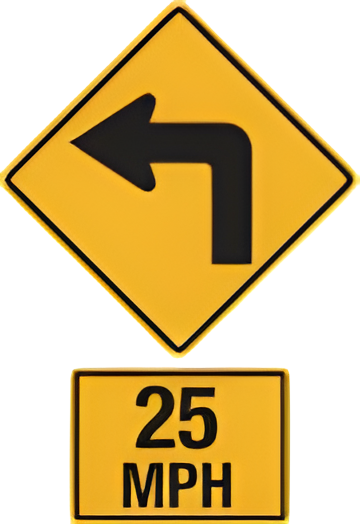 This road sign means:
A
Merge, then slow down to the safe speed indicated
B
The road ahead curves right; slow down to indicated speed
C
Winding road ahead; slow down to the indicated speed
D
Divided highway begins. Slow down to the safe speed indicated
No explanation available.
Question 4
Large trucks:
A
have large blind spots.
B
can stop quicker than passenger vehicles.
C
do not need more room to maneuver.
D
All of the above.
No explanation available.
Question 5
When approaching a curve, remember to:
A
accelerate slightly before entering the curve.
B
drive at the posted speed limit throughout the curve.
C
slow down before entering the curve.
D
drive at the posted speed limit as you enter the curve, then slow down gradually.
No explanation available.
Question 6
Regulatory signs are:
A
white.
B
yellow.
C
green.
No explanation available.
Question 7
A driver who's being passed on the right and the left by many vehicles while driving in the center lane of an highway should:
A
take the next exit.
B
move to the lane on their right.
C
move to the lane on their left.
No explanation available.
Question 8
When a driver has their left arm and hand extended upward, the driver plans to:
A
go straight ahead.
B
turn right.
C
turn left.
D
come to a stop.
No explanation available.
Question 9
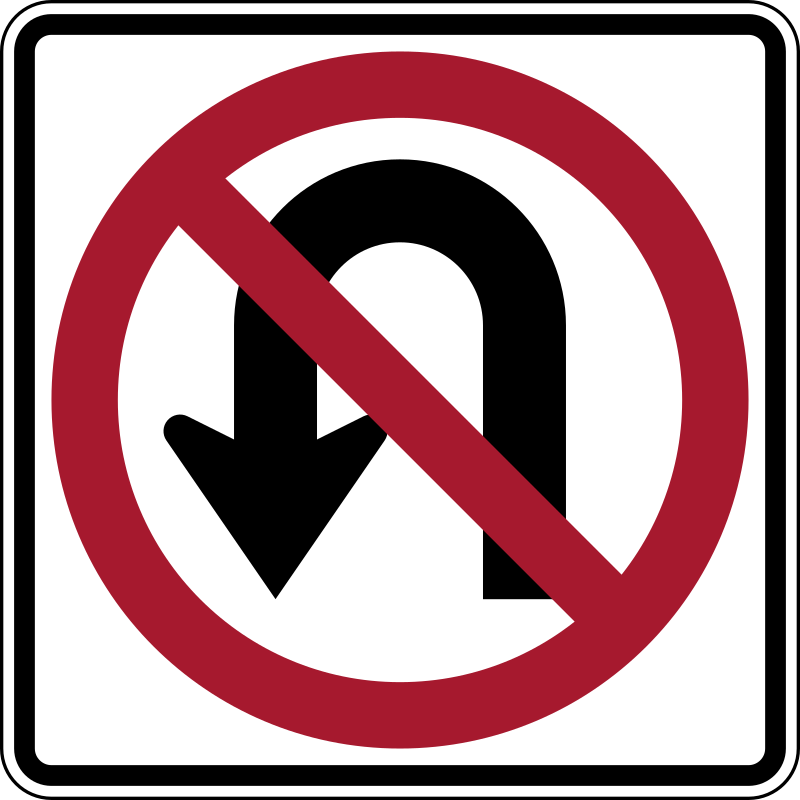 This road sign means:
A
No left turn
B
No U-turn
C
Detour ahead
No explanation available.
Question 10
 This road sign means:
A
Wrong Way
B
Merging Traffic
C
Curve ahead
No explanation available.
Question 11
The best way to avoid loss of control in wet conditions is pump your brakes.
A
False
B
True
No explanation available.
Question 12
Are bicyclists required to obey traffic laws and signs?
A
No, bicyclists are considered pedestrians when it comes to the rules of the road.
B
Yes.
C
Yes, but only if they are riding in a bicycle lane.
No explanation available.
Question 13
 A 4-way stop sign means:
A
The first vehicle to reach the intersection should move forward first.
B
Traffic from all four directions must stop.
C
There are four stop signs at the intersection.
D
All of the above.
No explanation available.
Question 14
The effects of alcohol on driving include:
A
None of the above.
B
Improved coordination
C
Better reflexes
D
Improved judgement
No explanation available.
Question 15
If you are continually being passed on the right, you should:
A
move into the right lane and allow other vehicles to pass you on the left.
B
move into the left lane and allow other vehicles to pass you on the right.
C
increase your speed immediately.
No explanation available.
Question 16
Which of the following does NOT affect the distance that it takes to stop your vehicle?
A
Perception time.
B
Braking distance.
C
Reaction distance.
D
Steering ability.
No explanation available.
Question 17
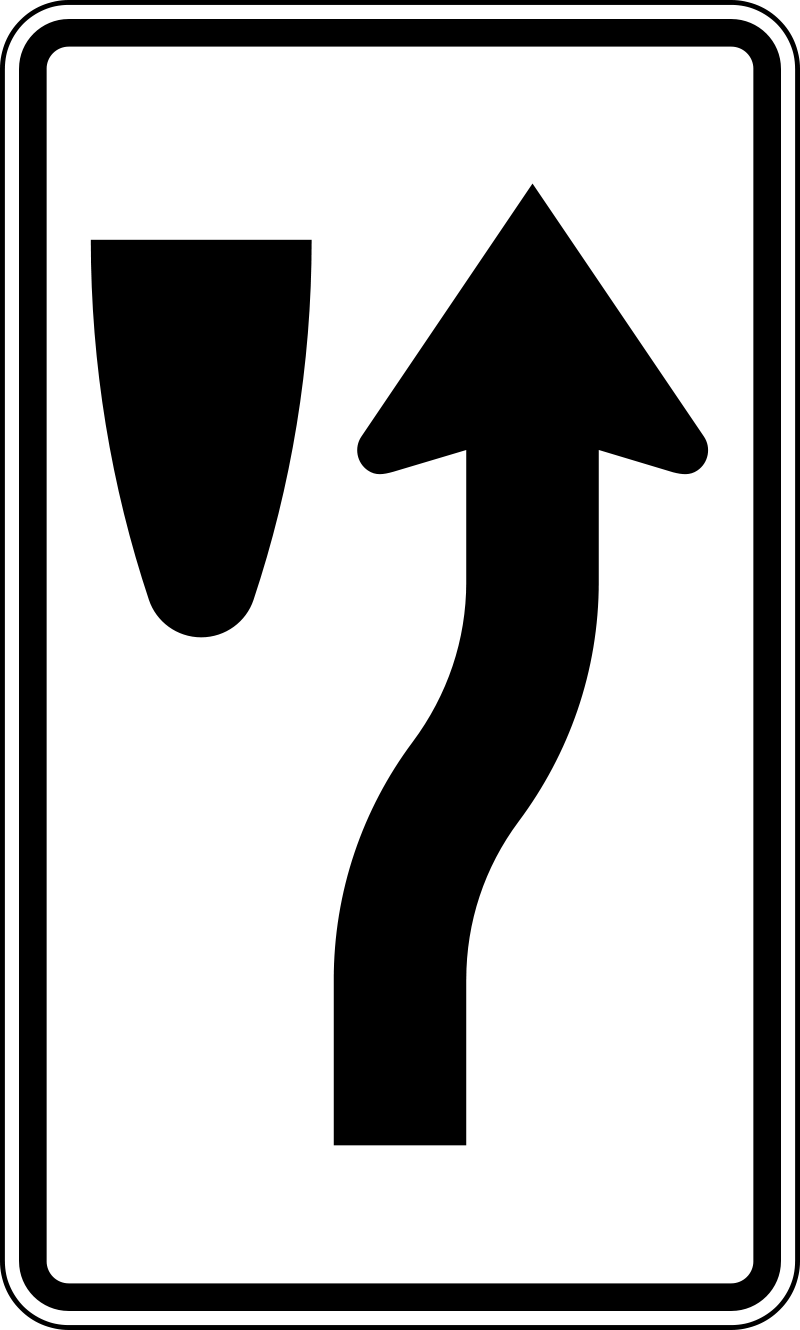 This sign tells drivers that:
A
there is a right turn ahead.
B
they must stay on the right side of the divider
C
a divided highway ends ahead.
No explanation available.
Question 18
When you make a left turn from a two-way road into a four-lane highway, you must:
A
enter the left lane, to the right of the center line.
B
enter the right lane, to the left of the center line.
C
go straight through the intersection, and then make the turn.
No explanation available.
Question 19
 What does this road sign indicate?
A
Hospital service
B
Area reserved for people with disabilities
C
Interstate highway
No explanation available.
Question 20
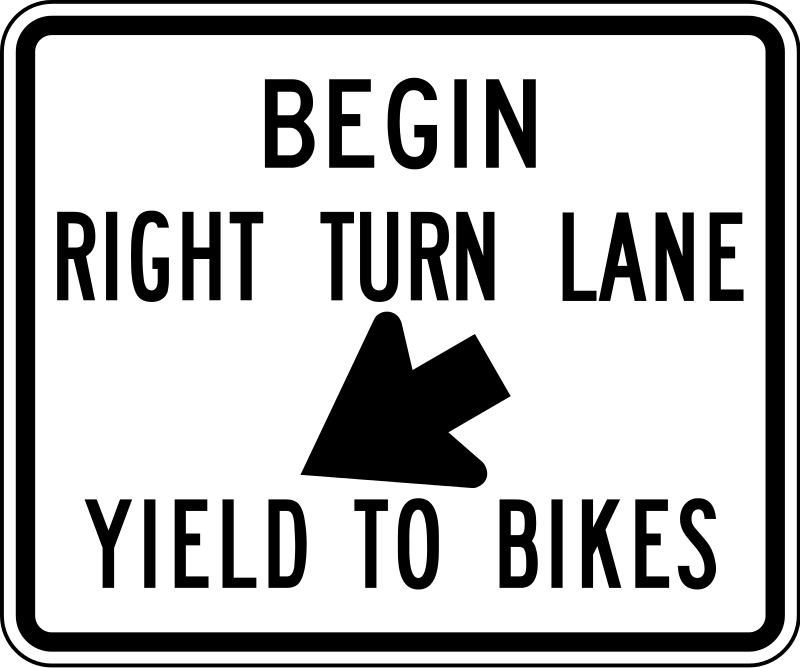 What does this road sign indicate?
A
Drivers have the right of way over bikes turning left.
B
Vehicles turning left must yield to bikes entering a right turn lane.
C
Motor vehicles entering an exclusive right-turn lane must weave across bicycle traffic in bicycle lanes.
No explanation available.
Question 21
When getting ready to change lanes, you should:
A
check your rearview mirror.
B
quickly turn your head to check for other vehicles.
C
check your side view mirror.
D
All of the above.
No explanation available.
Question 22
 When you see this sign you should:
A
increase your speed and try to pass other vehicles.
B
slow your speed and be prepared to stop.
C
slow your speed and do not pass other vehicles.
No explanation available.
Question 23
Motorists are not required to yield to pedestrians when approaching or exiting a roundabout.
A
True
B
False
No explanation available.
Question 24
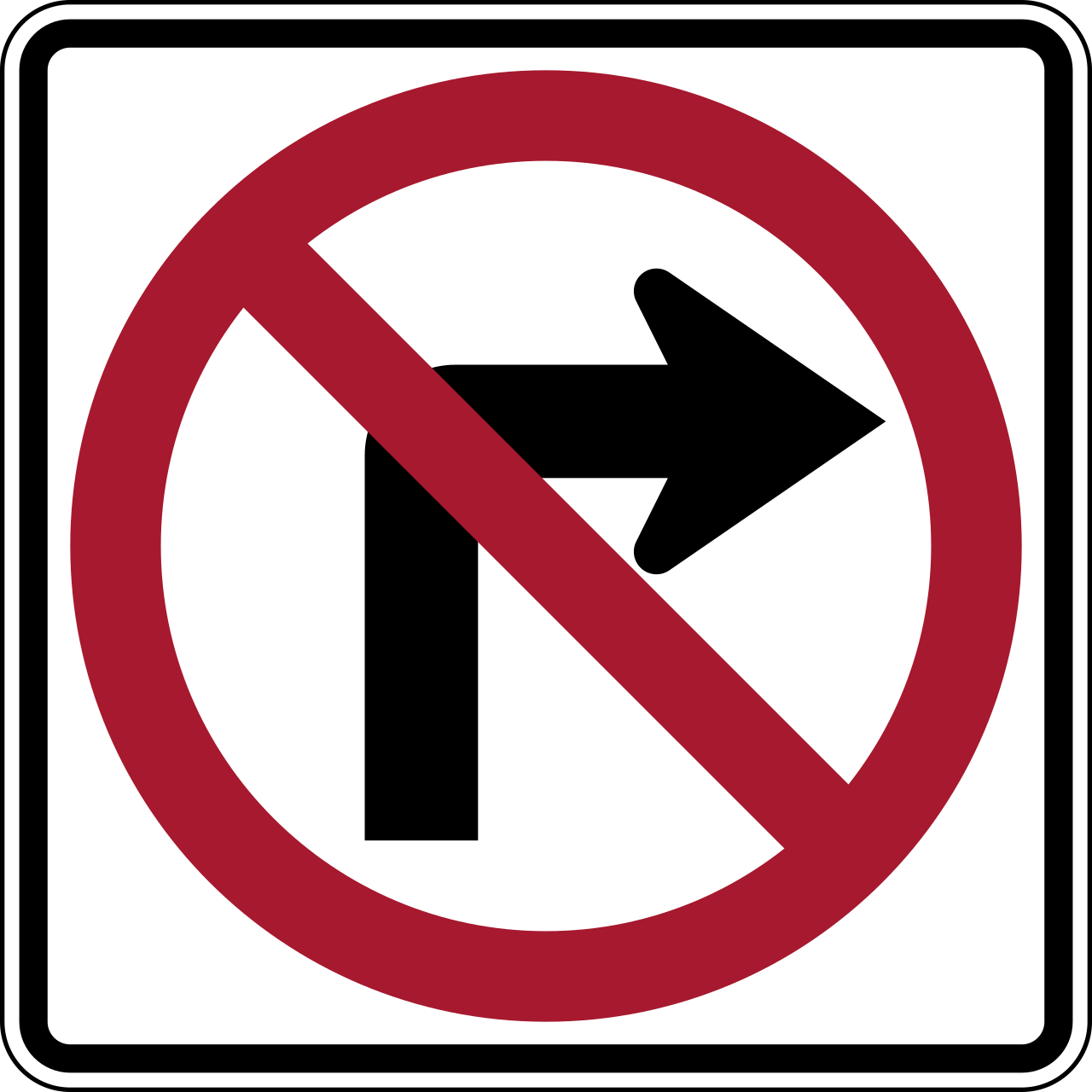 This road sign means:
A
Right turn is not permitted
B
Left turns are permitted
C
You may turn right after yielding the right-of-way to oncoming traffic
No explanation available.
Question 25
Unlike passenger cars, trucks have blind spots:
A
on the right.
B
directly behind them.
C
on the front.
No explanation available.