 drivequiz.com
 Question 1
A driver cuts off another vehicle, or threatens another motorist or a pedestrian. These are examples of:
A
excessive driving
B
road rage
C
defensive driving
No explanation available.
Question 2
 What does this sign indicate?
A
The highway ahead is divided into two one-way roadways.
B
Winding road ahead. Drive with caution.
C
Drivers will soon be on a roadway with two-way traffic.
No explanation available.
Question 3
You should never depend on your mirrors when you prepare to change lanes. Why?
A
Mirrors leave “blind spots” behind both sides of vehicles.
B
Mirrors need to be adjusted.
C
Mirrors are useless.
No explanation available.
Question 4
If your gas pedal is stuck, you should:
A
hook your shoe under the pedal and see if you can free it. If not, shift into neutral and use the brake to slow your vehicle and get off the road.
B
ease your foot off the gas pedal and brake gently.
C
turn off the ignition if your vehicle has power steering.
No explanation available.
Question 5
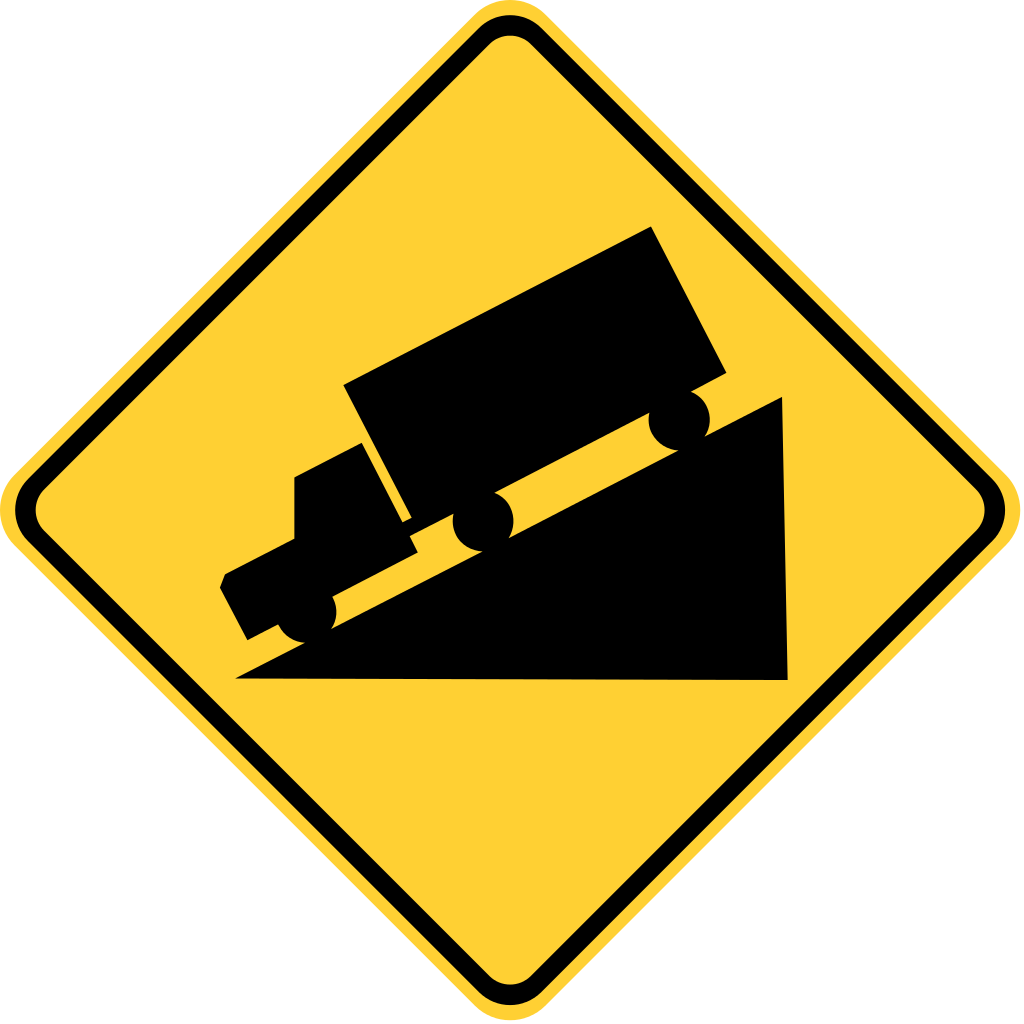 This road sign means:
A
Truck stop ahead
B
No trucks allowed
C
Hill or downgrade up ahead
No explanation available.
Question 6
Driving under the influence of any medication which impairs your driving ability is permitted:
A
under no circumstances.
B
if it is prescribed by a physician.
C
if you dont feel drowsy.
No explanation available.
Question 7
To make a left turn, drivers should:
A
make the turn from the right lane.
B
make the turn from the left lane.
C
make the turn from the center lane.
No explanation available.
Question 8
When you are angry or upset you should:
A
listen to loud music while driving.
B
take a few minutes to cool off before you drive.
C
drive fast to let off steam.
No explanation available.
Question 9
Before you change lanes, you should:
A
look for other traffic by turning your head and looking behind you for oncoming traffic.
B
check your left mirror.
C
keep other vehicles out of your blind spots.
No explanation available.
Question 10
Slowing down just to look at collisions or anything else out of ordinary:
A
causes traffic congestion.
B
improves traffic flow.
C
helps prevent rear-end collisions.
No explanation available.
Question 11
Following a motorcycle too closely is dangerous because:
A
motorcycles do not follow the same rules as other motor vehicles.
B
motorcycles can stop much faster than other motor vehicles.
C
motorcycles brake more slowly than other motor vehicles.
No explanation available.
Question 12
Are bicyclists required to obey traffic laws and signs?
A
No, bicyclists are considered pedestrians when it comes to the rules of the road.
B
Yes.
C
Yes, but only if they are riding in a bicycle lane.
No explanation available.
Question 13
Traffic lights are normally ____________ from the top to bottom or left to right.
A
red, green and yellow
B
green, yellow and red
C
red, yellow and green
No explanation available.
Question 14
When riding in a vehicle equipped with air bags is, children ages 12 and under are safer:
A
buckled up in the back seat.
B
in the bed of a pick-up truck.
C
buckled up in the front seat.
No explanation available.
Question 15
__________________ is a safe driving technique.
A
Using your high beam lights in the fog
B
Starring at the road ahead of your vehicle
C
Checking your rearview mirrors frequently
No explanation available.
Question 16
An octagonal sign means that drivers must:
A
respect the posted speed limit.
B
come to a complete stop at the marked stop line.
C
be aware possible hazards ahead.
No explanation available.
Question 17
Seat belts:
A
are not necessary if your vehicle has an air bag.
B
should not worn by the driver of a vehicle equipped with air bags.
C
keep you from being thrown from the vehicle in the event of an accident.
No explanation available.
Question 18
Left turns on a red light are allowed:
A
from a one-way street into a one-way street.
B
Never.
C
at intersections, after stopping, if the way is clear.
No explanation available.
Question 19
You should increase your following distance:
A
at night or if it is raining.
B
when the roads are slippery.
C
All of the above.
No explanation available.
Question 20
If cars approaching from opposite directions reach an intersection at the same time:
A
a car that moves straight must yield to cars that turn left.
B
a car that turns left must yield to cars that move straight or turn right.
C
a car that turns right must yield to cars that move straight or turn left.
No explanation available.
Question 21
This sign warns of a ________ ahead.
A
hill
B
no passing zone
C
soft shoulder
No explanation available.
Question 22
What should you do as you prepare to turn right at an intersection?
A
Honk your horn.
B
Yield to bicyclists coming from the opposite direction.
C
Signal your turn, check for bicyclists, and do not turn directly in front of a bicyclist.
No explanation available.
Question 23
When merging onto an interstate highway, drivers should:
A
always stop before entering the highway.
B
select a safe gap and merge into the lane of traffic.
C
turn on their emergency flashers right before merging.
No explanation available.
Question 24
What is the first thing to do when you make a three-point turn?
A
Signal with your left turn signal, then check carefully for traffic coming toward you.
B
Signal with your right turn signal, then pull over to the right and stop.
C
Turn left, go across the road so you come to a stop while you face the edge of the road.
No explanation available.
Question 25
 This road sign means:
A
You have the right of way
B
No Passing Zone
C
Yield the right-of-way
No explanation available.