 drivequiz.com
 Question 1
You may legally block an intersection:
A
During rush hour traffic.
B
When you entered the intersection on the green light.
C
Under no circumstances.
No explanation available.
Question 2
If it starts to rain on a hot day, the road is most slippery:
A
for the first few minutes.
B
after it has stopped raining.
C
after it has been raining for a few hours.
No explanation available.
Question 3
What is the only effective method to reduce your BAC?
A
Eating before or while you drink.
B
Not drinking over a period of time.
C
Drinking coffee.
No explanation available.
Question 4
You are entering a roundabout with multiple lanes, and you need to turn left at the intersection. You must:
A
choose either lane, and exit in the lane you entered.
B
choose the left-hand lane and exit.
C
choose the right-hand lane and exit in the left-hand lane.
No explanation available.
Question 5
Bicyclists:
A
have the same rights and responsibilities as motorized vehicles.
B
are entitled to share the road with motor vehicles.
C
All of the above.
No explanation available.
Question 6
It is illegal to park your vehicle:
A
in a bicycle lane.
B
within three feet of a private driveway.
C
in an unmarked crosswalk.
No explanation available.
Question 7
You want to turn left at an upcoming corner. Give the right-of-way to:
A
pedestrians on the sidewalk waiting for a “walk” signal.
B
oncoming vehicles also turning left.
C
all approaching vehicles.
No explanation available.
Question 8
Which of these is a safe driving practice?
A
Checking your rearview mirrors frequently.
B
Using the high-beam lights in the fog.
C
Staring at the road ahead of your vehicle.
No explanation available.
Question 9
To avoid tailgating, drivers should:
A
look into their rear view mirror.
B
use the “three-second rule”.
C
leave at least 25 feet between their vehicle and the vehicle ahead.
No explanation available.
Question 10
If another vehicle passes you on the left, you must:
A
increase your speed slightly and keep to the right.
B
decrease your speed, then pull over to the right and stop.
C
decrease your speed slightly and keep to the right.
No explanation available.
Question 11
Which of these statements is true about drinking alcohol and driving?
A
If you can walk a straight line after drinking, it is safe to drive.
B
Alcohol affects judgement, which is needed for safe driving.
C
If you are under the legal blood alcohol concentration limit, your driving isn’t impaired.
No explanation available.
Question 12
At intersections marked with stop lines, drivers must:
A
come to a complete stop.
B
slow down and enter the intersection.
C
signal other vehicles to stop.
No explanation available.
Question 13
You may drive in a bike lane:
A
if you drive slower than 15 MPH.
B
no more than 200 feet before making a right turn.
C
whenever bicyclists are not present.
No explanation available.
Question 14
When you prepare to make a left turn from a one-way road into a two-way road, you must:
A
enter the two-way road to the left of its center line.
B
approach the turn in the right lane or from the right side of a single lane.
C
approach the turn in the left lane or from the left side of a single lane.
No explanation available.
Question 15
California's 'Basic Speed Law' says:
A
You should never drive faster than is safe for current conditions.
B
The maximum speed limit in California is 70 MPH on certain freeways.
C
You should never drive faster than posted speed limits.
No explanation available.
Question 16
If the entrance lane is too short to allow acceleration to highway speed, you should:
A
go to the next entrance ramp.
B
stop and wait for a large gap in traffic, then enter the highway and accelerate quickly.
C
merge into highway traffic as soon as possible.
No explanation available.
Question 17
If the driver ahead of you stops at a crosswalk, you should:
A
change lanes, scan the road ahead, and pass the stopped vehicles.
B
stop, then proceed when all pedestrians have crossed.
C
cautiously pass the vehicle at 10 MPH or less.
No explanation available.
Question 18
What is the speed limit for a blind intersection?
A
35 MPH
B
15 MPH
C
25 MPH
No explanation available.
Question 19
Yellow traffic signs:
A
guide drivers.
B
when combined with an octagonal shape, tell drivers they must come to a complete stop at the marked stop line.
C
warn drivers.
No explanation available.
Question 20
 The picture shows:
A
a railroad advance warning sign.
B
a speeding fines doubled sign.
C
a reversible road sign.
No explanation available.
Question 21
A safety zone is a specially marked area for passengers to get on or off buses or trolleys. You may not drive through a safety zone:
A
at any time for any reason.
B
only when a bus or trolley is present.
C
only when a bus or trolley is unloading passengers.
No explanation available.
Question 22
Two vehicles are approaching an uncontrolled “T” intersection. One vehicle is on the through road and the other is on the road that ends. Who has the right-of-way at the intersection?
A
The vehicle on the right.
B
The vehicle that arrives first.
C
The vehicle on the through road.
No explanation available.
Question 23
If you remain in the back blind spot of a large vehicle:
A
you increase the chance of a crash.
B
the large vehicle will take much longer to stop.
C
you can reduce fuel consumption.
No explanation available.
Question 24
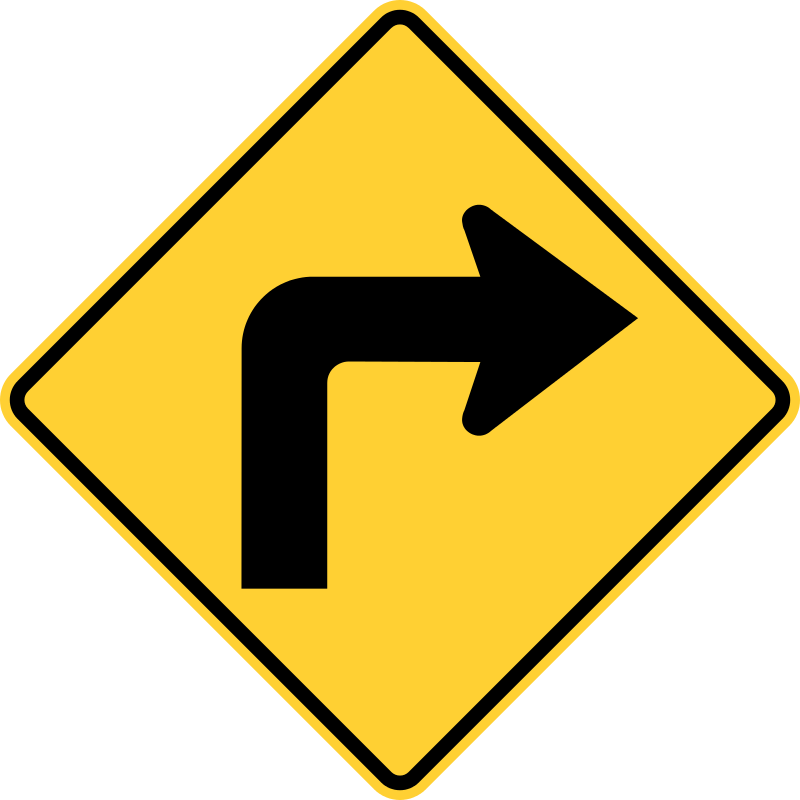 This sign warns drivers that:
A
the road will make a sharp turn to the right.
B
right turns are not allowed.
C
another road enters the highway from the direction shown.
No explanation available.
Question 25
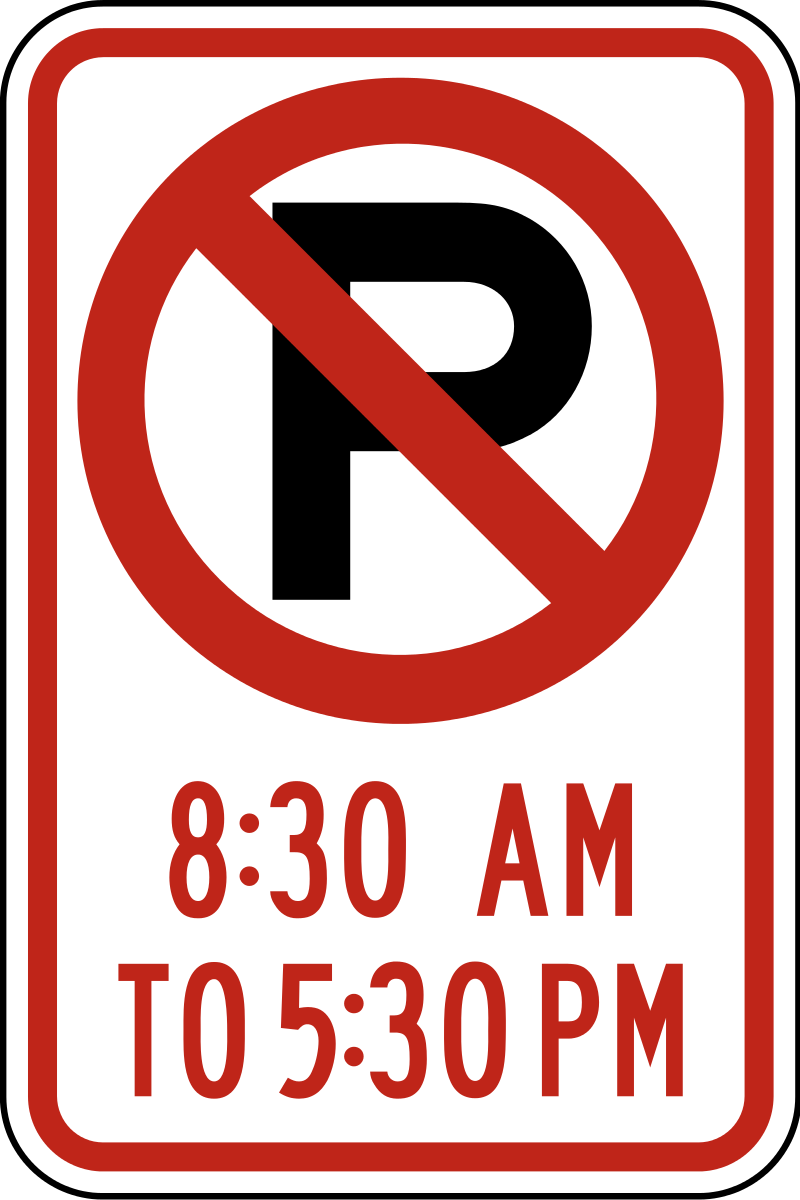 It's 10 AM. This sign tells you that:
A
you are allowed to park until 5:30 PM.
B
you must display a special permit in order to park here.
C
you are not allowed to park here.
No explanation available.
Question 26
Unless otherwise posted, the speed limit in residential areas is:
A
15 MPH
B
25 MPH
C
20 MPH
No explanation available.
Question 27
What type of pavement marking shows you which lane you must use for a turn?
A
Edge line
B
Diamond
C
Crosswalk Lines
D
Arrows
No explanation available.
Question 28
 When you see this sign you should:
A
increase your speed and try to pass other vehicles.
B
slow your speed and be prepared to stop.
C
slow your speed and do not pass other vehicles.
No explanation available.
Question 29
Based on the DMV handbook, you should never park your vehicle within __ feet of a fire station driveway.
A
25
B
15
C
10
No explanation available.
Question 30
 A 4-way stop sign means:
A
The first vehicle to reach the intersection should move forward first.
B
Traffic from all four directions must stop.
C
There are four stop signs at the intersection.
D
All of the above.
No explanation available.
Question 31
You are driving on a five-lane freeway in the lane closest to the center divider. To exit the freeway on the right you should:
A
change lanes one at a time until you are in the proper lane.
B
slow before beginning each lane change.
C
carefully cross all the lanes at one time.
No explanation available.
Question 32
Which of these statements is true about large trucks:
A
they all have air brakes which allow them to stop quickly.
B
they are more maneuverable than passenger vehicles.
C
they take longer to stop than passenger vehicles.
No explanation available.
Question 33
You must notify law enforcement and file a Report Traffic Accident Occurring in California (SR 1) with DMV when:
A
you have a collision and there is an injury or death.
B
you intend to file a certificate of non-operation for your vehicle.
C
your vehicle is towed for parking illegally.
No explanation available.
Question 34
After you stop for a school bus, you must:
A
turn off your engine.
B
pass the bus before the red lights stop flashing.
C
None of the above.
No explanation available.
Question 35
Which of these statements is true about child passengers:
A
Children 1 or older and over 20 pounds should ride in the front seat.
B
The front seat is generally the safest place in the vehicle for children six years of age and older.
C
Children under age one should not ride in the front seat in airbag-equipped vehicles.
No explanation available.
Question 36
Destination signs are ______ with ____ letters and symbols.
A
green; white
B
blue; white
C
white; black
No explanation available.