 drivequiz.com
 Question 1
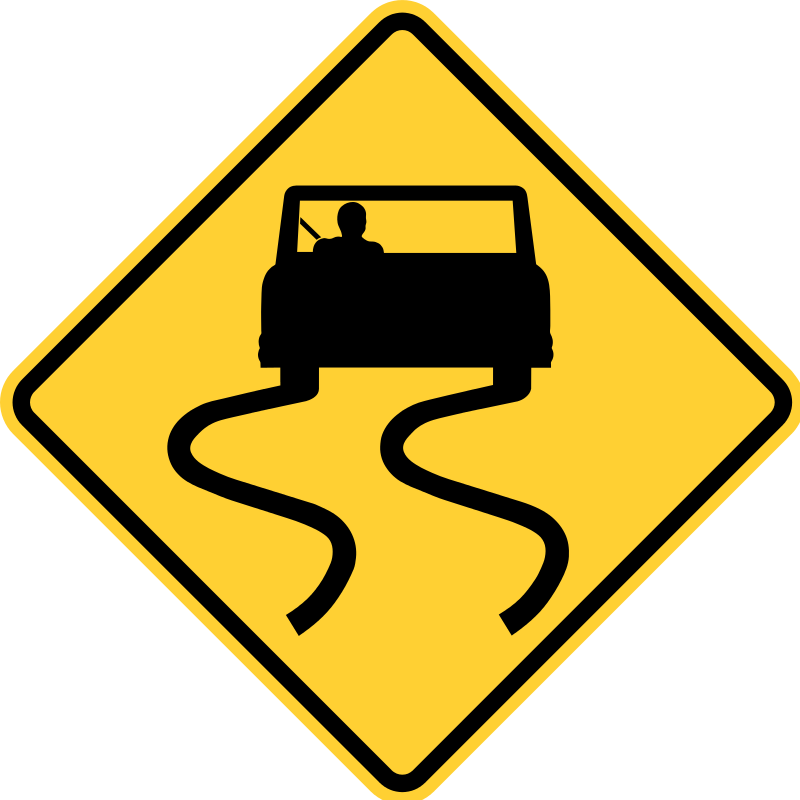 When they see this sign, drivers:
A
should be prepared to make sharp turns at a high speed.
B
need to be prepared to turn right and then left quickly.
C
should not speed up or brake quickly.
No explanation available.
Question 2
Which shape is a speed limit sign?
A
Round
B
Pentagon
C
Vertical rectangle
No explanation available.
Question 3
 This sign means:
A
A road crosses the main highway ahead.
B
The divided highway on which drivers are traveling ends ahead.
C
Drivers are coming to a point where another traffic lane joins the one they are on.
No explanation available.
Question 4
Which shape is a yield sign?
A
Vertical rectangle
B
Upside-down triangle
C
Diamond
No explanation available.
Question 5
Traffic lights are normally ____________ from the top to bottom or left to right.
A
red, green and yellow
B
green, yellow and red
C
red, yellow and green
No explanation available.
Question 6
When driving through a curve, you should:
A
speed up as you enter, slow down as you exit.
B
stay near the right of your lane.
C
maintain constant speed.
D
slow as you enter, speed up as you exit.
No explanation available.
Question 7
Parking is not allowed:
A
in an intersection, unless permitted by signs.
B
within 300 feet of a pedestrian safety area.
C
on public roads
No explanation available.
Question 8
When you make a left turn from a two-way road into a four-lane highway, you must:
A
enter the left lane, to the right of the center line.
B
enter the right lane, to the left of the center line.
C
go straight through the intersection, and then make the turn.
No explanation available.
Question 9
When a hazard is seen ahead, reaction distance:
A
is the sum of perception distance and braking distance.
B
equals total stopping distance minus perception distance.
C
is how far a vehicle will continue to travel, in ideal conditions, before the driver hits the brakes.
No explanation available.
Question 10
If another vehicle is approaching you head-on in your lane, you should _______, sound your horn and brake.
A
steer right
B
None of the other answers is correct.
C
steer left
D
stay in the center of your lane
No explanation available.
Question 11
Streets and highways are most slippery:
A
on the day before it starts to rain.
B
just after it starts to rain.
C
when it's been raining for one hour or more.
D
while it is raining.
No explanation available.
Question 12
A steady green light at intersections means:
A
You may drive through the intersection if the road is clear
B
You must increase your speed
C
You may not turn right
No explanation available.
Question 13
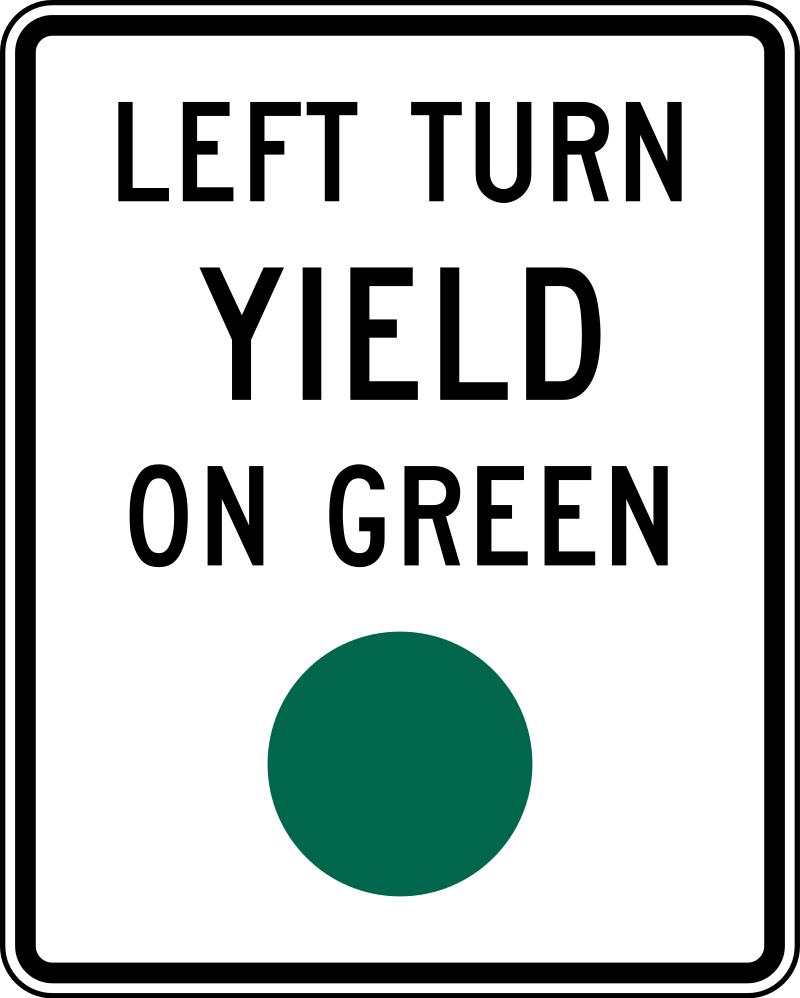 This white sign means you:
A
may turn left on a green light when it is safe to do so.
B
may turn left only on a green arrow.
C
must wait for the solid green light before you turn left.
No explanation available.
Question 14
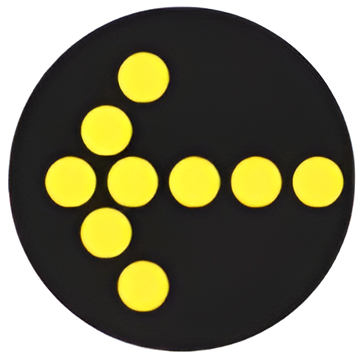 What does a flashing left yellow arrow mean?
A
Vehicles turning left must stop if they can. The light will soon be red.
B
Only right turns are allowed.
C
Left turns are allowed. Yield to oncoming traffic and pedestrians.
D
None of the above.
No explanation available.
Question 15
On slippery roads, drivers should:
A
leave more space in front of their vehicle.
B
increase their speed to avoid hydroplaning.
C
come to a complete stop.
No explanation available.
Question 16
If another driver does not dim his or her lights, you should:
A
look directly into the oncoming headlights.
B
watch the oncoming vehicle out of the corner of your eye.
C
look toward the left edge of your lane.
No explanation available.
Question 17
 This is:
A
a side road sign.
B
a merging traffic sign.
C
a right curve sign.
No explanation available.
Question 18
 This sign means:
A
Reversible lane ahead.
B
The divided highway ends ahead.
C
Drivers are coming to a point where another traffic lane joins the one they are on.
No explanation available.
Question 19
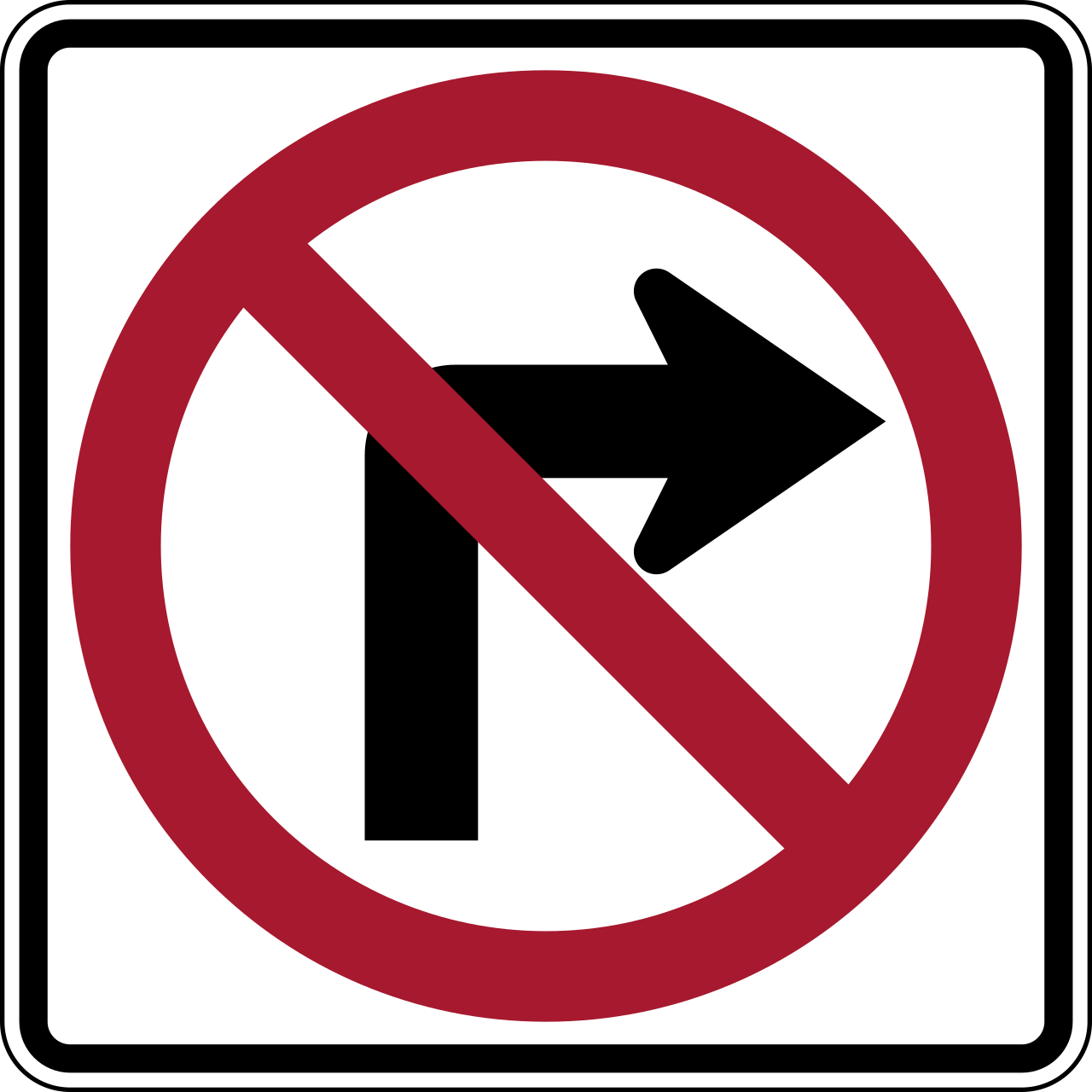 This road sign means:
A
No left turn
B
No right turn
C
No U-turns
No explanation available.
Question 20
A driver cuts off another vehicle, or threatens another motorist or a pedestrian. These are examples of:
A
excessive driving
B
road rage
C
defensive driving
No explanation available.
Question 21
This road sign means:
A
Curves ahead
B
Divided highway ahead
C
Divided highway ends
No explanation available.
Question 22
Drivers can not pass a vehicle on the left if:
A
they approach the top of a hill on a two-way road and can not see over it.
B
they can not safely return to the right lane before they reach a solid yellow center line for the right lane.
C
All of the above.
No explanation available.
Question 23
When entering an interstate highway, you should:
A
drive on the shoulder until you can enter traffic safely.
B
check for cars, speed up to match the flow of traffic, and merge when safe to do so.
C
check for cars and slow down to 25 MPH before merging with the flow of traffic.
D
wait for an opening in traffic on the entrance ramp.
No explanation available.
Question 24
This road sign means:
A
All traffic must turn right
B
Two one-way roads merge ahead
C
A side road enters ahead
D
No right turn
No explanation available.
Question 25
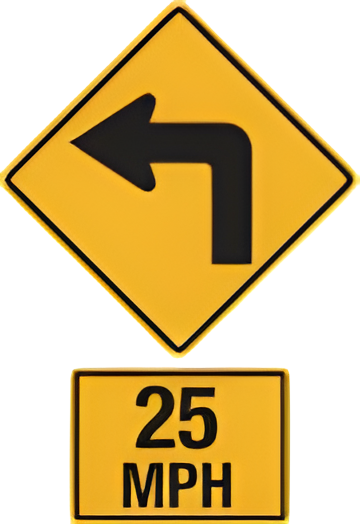 This sign indicates that:
A
the highest safe speed drivers should travel around the curve ahead is 25 MPH.
B
the safe speed around the curve ahead is at least 25 MPH.
C
drivers may not turn right if traveling at 25 MPH or less.
No explanation available.