 drivequiz.com
 Question 1
Speed limit signs are:
A
service signs
B
regulation signs (regulatory signs)
C
warning signs
No explanation available.
Question 2
A large vehicle is backing up to unload goods. You should:
A
enter one of the blind spots and wait.
B
try to pass close behind.
C
be patient and wait until the large vehicle has completed its backup maneuver.
No explanation available.
Question 3
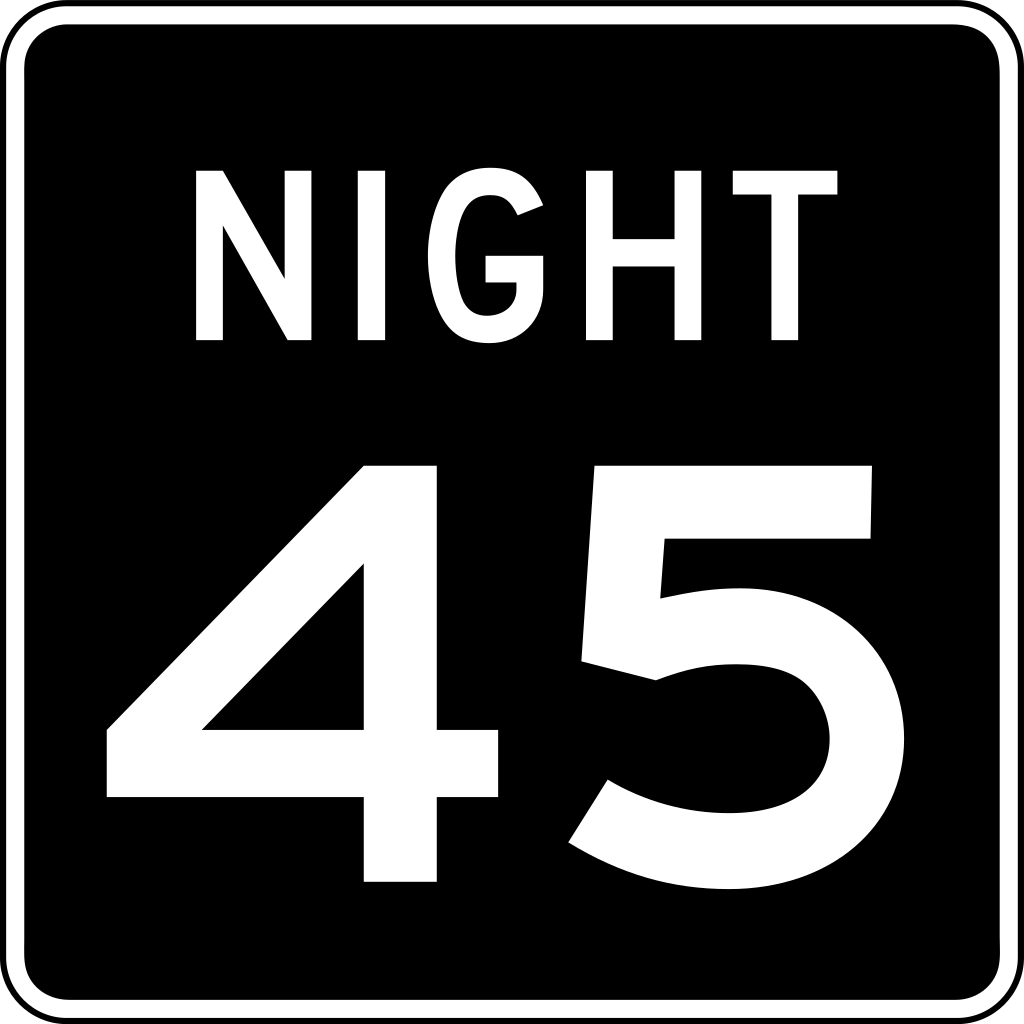 This sign means:
A
Take route 45 if you are driving at night.
B
The night-time speed limit is 45 MPH.
C
The minimum speed limit is 45 MPH.
No explanation available.
Question 4
On slippery roads, drivers should:
A
leave more space in front of their vehicle.
B
increase their speed to avoid hydroplaning.
C
come to a complete stop.
No explanation available.
Question 5
Which of the following may result in an arrest for driving under the influence of intoxicants (DUII)?
A
A controlled substance, such as prescription medicines or illegal drugs.
B
An inhalant, such as glue or paint.
C
Alcohol
D
All of the above.
No explanation available.
Question 6
You are approaching an intersection with a yellow flashing light. You should:
A
stop and wait for the light to change.
B
speed up to beat the red light.
C
prepare to stop; the light is about to turn red.
D
proceed with caution through the intersection.
No explanation available.
Question 7
When you approach a railroad crossing, but you do not see a train. You must stop:
A
if a stop sign is posted.
B
if the crossing lights are flashing.
C
if a crossing gate is lowered.
D
All of the above.
No explanation available.
Question 8
With conventional brakes, the correct way to stop in an emergency situation where traction is lost and the car slides is by pumping the brakes.
A
True
B
False
No explanation available.
Question 9
 A four-way stop sign means:
A
traffic from all four directions must stop.
B
if two vehicles reach the intersection at the same time, the driver on the left yields to the driver on the right.
C
All of the above.
No explanation available.
Question 10
If another car has stopped in an adjacent lane in the same direction of travel, you should:
A
speed up and pass the vehicle on the right.
B
pass the car on the left.
C
be careful in case the other vehicle has stopped for a pedestrian.
D
tap your horn to let the other driver know you are passing.
No explanation available.
Question 11
If your vehicle starts to hydroplane you should:
A
apply the brakes firmly to prevent your vehicle from sliding.
B
slow down gradually and do not apply the brakes.
C
maintain your current speed to gain better traction.
D
All of the above.
No explanation available.
Question 12
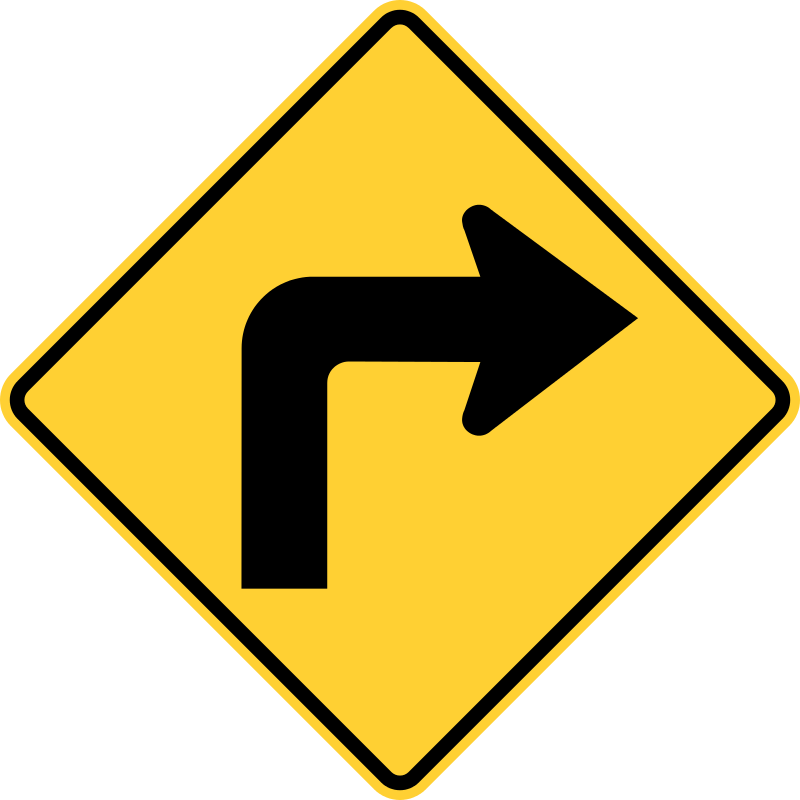 This road sign means:
A
School zone ahead
B
Side road
C
Construction zone ahead
D
Sharp turn, slow down
No explanation available.
Question 13
To drive defensively, you must:
A
avoid scanning the road ahead.
B
keep one hand on the steering wheel.
C
keep your eyes moving.
No explanation available.
Question 14
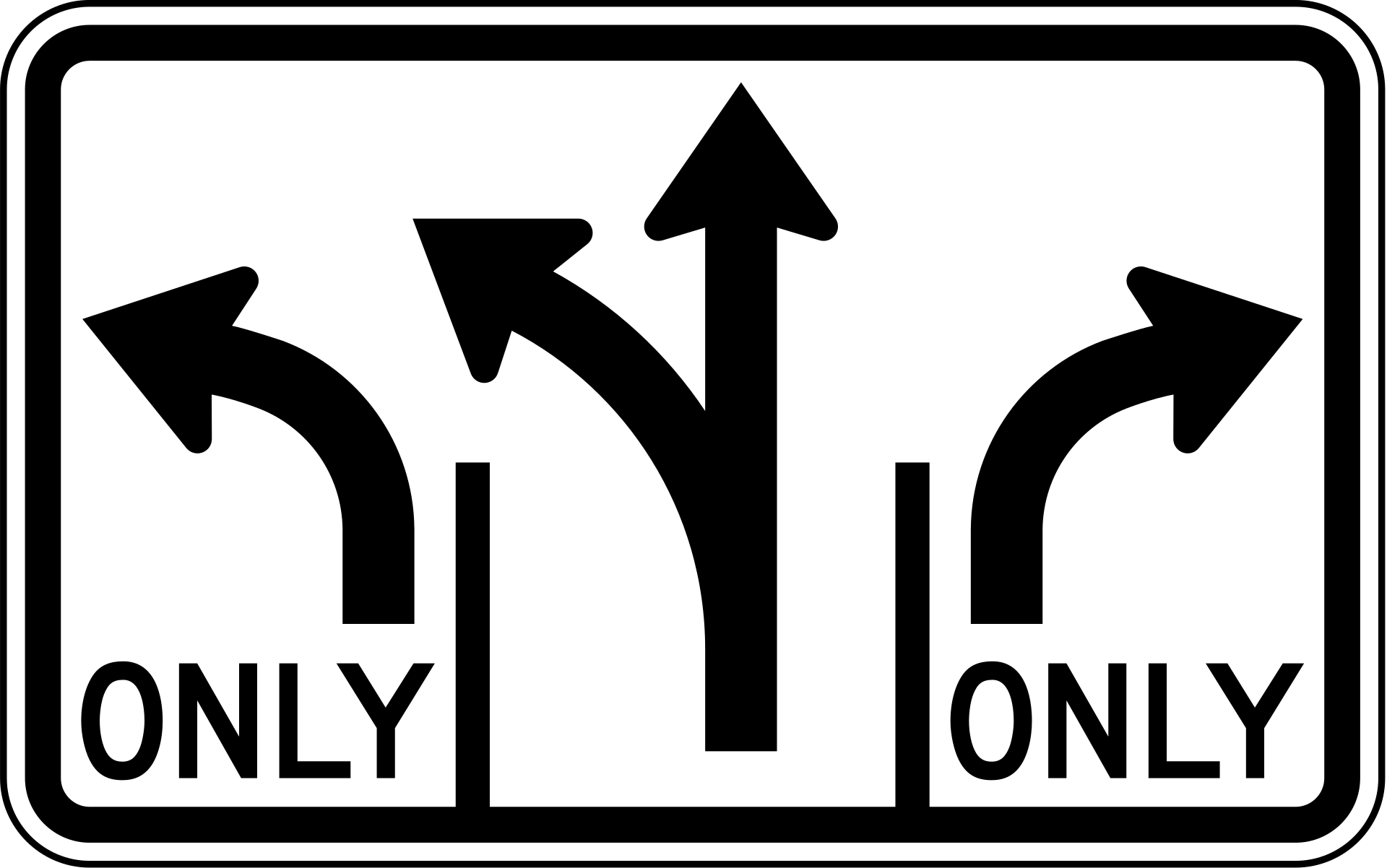 This regulatory sign tells drivers that:
A
traffic in the left lane must turn left at the intersection ahead.
B
all vehicles must turn left immediately.
C
traffic in the right lane must go straight.
No explanation available.
Question 15
If you remain in the back blind spot of a large vehicle:
A
you increase the chance of a crash.
B
the large vehicle will take much longer to stop.
C
you can reduce fuel consumption.
No explanation available.
Question 16
You reach an intersection that is not controlled at the same time as a driver on your right, and both of you prepare to go straight. Who has the right-of-way?
A
You.
B
No one.
C
The other driver.
No explanation available.
Question 17
 This road sign means:
A
Merging traffic from the right
B
Sharp curves ahead
C
Intersection ahead
No explanation available.
Question 18
When two cars arrive at an intersection with no signs or signals at the same time, which car has the right-of-way?
A
The car that is traveling faster.
B
The car approaching from the right.
C
The car approaching from the left.
D
The car in which the driver sounds the horn.
No explanation available.
Question 19
If your car starts to skid, turn your steering wheel:
A
in the direction you want to go.
B
in the opposite direction of the skid.
C
to keep the front wheels straight.
D
in any direction. It doesnt matter.
No explanation available.
Question 20
When the driver behind you wants to pass, you should:
A
change lanes.
B
speed up.
C
use your brake lights.
D
slow down to allow room for the other driver to complete the pass safely.
No explanation available.
Question 21
ABS is the acronym for:
A
Anti-Braking System
B
Average-Beam System
C
Anti-Locking Brake System
No explanation available.
Question 22
Drivers may pass on a two-lane roadway marked with a single solid yellow line on their side of the center line.
A
False
B
True
No explanation available.
Question 23
If a vehicle using high beams comes toward you, look towards __________ of the road.
A
either side
B
the center
C
the right side
D
the left side
No explanation available.
Question 24
 The picture shows:
A
a railroad advance warning sign.
B
a speeding fines doubled sign.
C
a reversible road sign.
No explanation available.
Question 25
 This sign warns drivers of:
A
low clearance.
B
a narrow bridge ahead.
C
a low place in the road.
No explanation available.