 drivequiz.com
 Question 1
If you are continually being passed on the right, you should:
A
move into the right lane and allow other vehicles to pass you on the left.
B
move into the left lane and allow other vehicles to pass you on the right.
C
increase your speed immediately.
No explanation available.
Question 2
 This road sign means:
A
Curves ahead
B
Divided highway ahead
C
Divided highway ends
No explanation available.
Question 3
When meeting a car with blinding headlights, you should:
A
look toward the right side of the road.
B
dim your lights, then speed up and pass quickly.
C
use your emergency flashers to warn the other driver.
D
look toward the left side of the road.
No explanation available.
Question 4
You go with a group of friends to a social event, and you plan to have a few drinks. You should:
A
make alcohol the focus of the event.
B
avoid alternating between drinks with alcohol and drinks without any alcohol.
C
arrange to ride home with a friend who does not drink.
No explanation available.
Question 5
When making a turn, drivers must _____ their speed.
A
reduce
B
maintain
C
increase
D
double
No explanation available.
Question 6
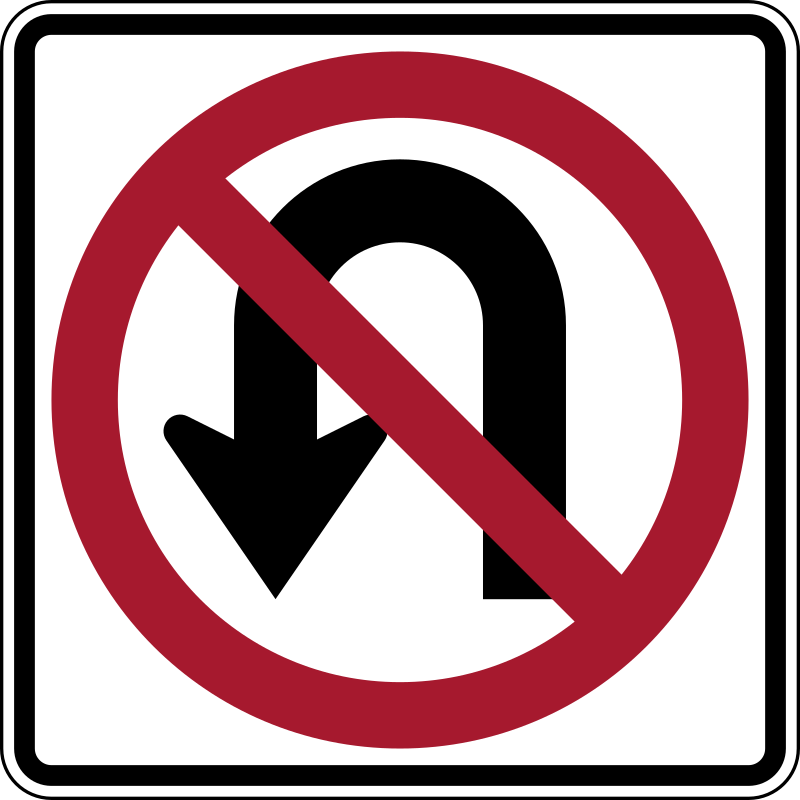 This road sign means:
A
No left turn
B
No U-turn
C
Detour ahead
No explanation available.
Question 7
Drivers can not pass a vehicle on the left if:
A
they approach the top of a hill on a two-way road and can not see over it.
B
they can not safely return to the right lane before they reach a solid yellow center line for the right lane.
C
All of the above.
No explanation available.
Question 8
When approaching a curve, remember to:
A
accelerate slightly before entering the curve.
B
drive at the posted speed limit throughout the curve.
C
slow down before entering the curve.
D
drive at the posted speed limit as you enter the curve, then slow down gradually.
No explanation available.
Question 9
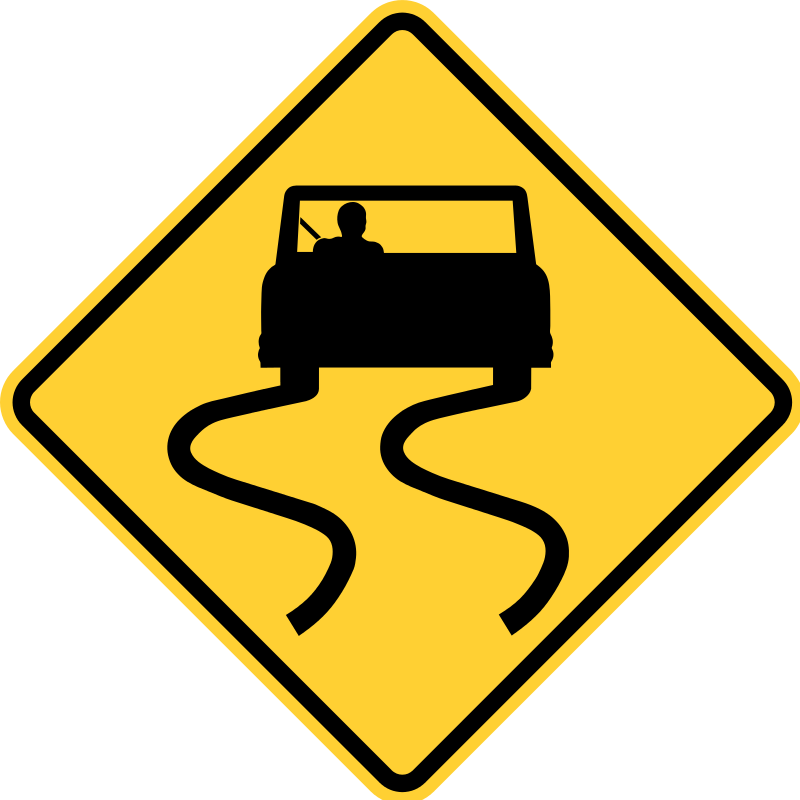 This sign means:
A
The road will curve to the right, then to the left.
B
Road slippery when wet. Drive slowly.
C
Winding road ahead. Drive with caution.
No explanation available.
Question 10
 This sign means drivers should:
A
not drive in this lane.
B
give the right-of-way to traffic on the road they wish to enter.
C
proceed at normal speed through the upcoming intersection.
D
come to a complete stop and check for oncoming traffic before proceeding.
No explanation available.
Question 11
When approaching someone using a white cane, you should proceed with caution because:
A
the pedestrian might be using a guide dog.
B
the pedestrian might be blind.
C
the pedestrian is deaf.
D
the pedestrian is blind.
No explanation available.
Question 12
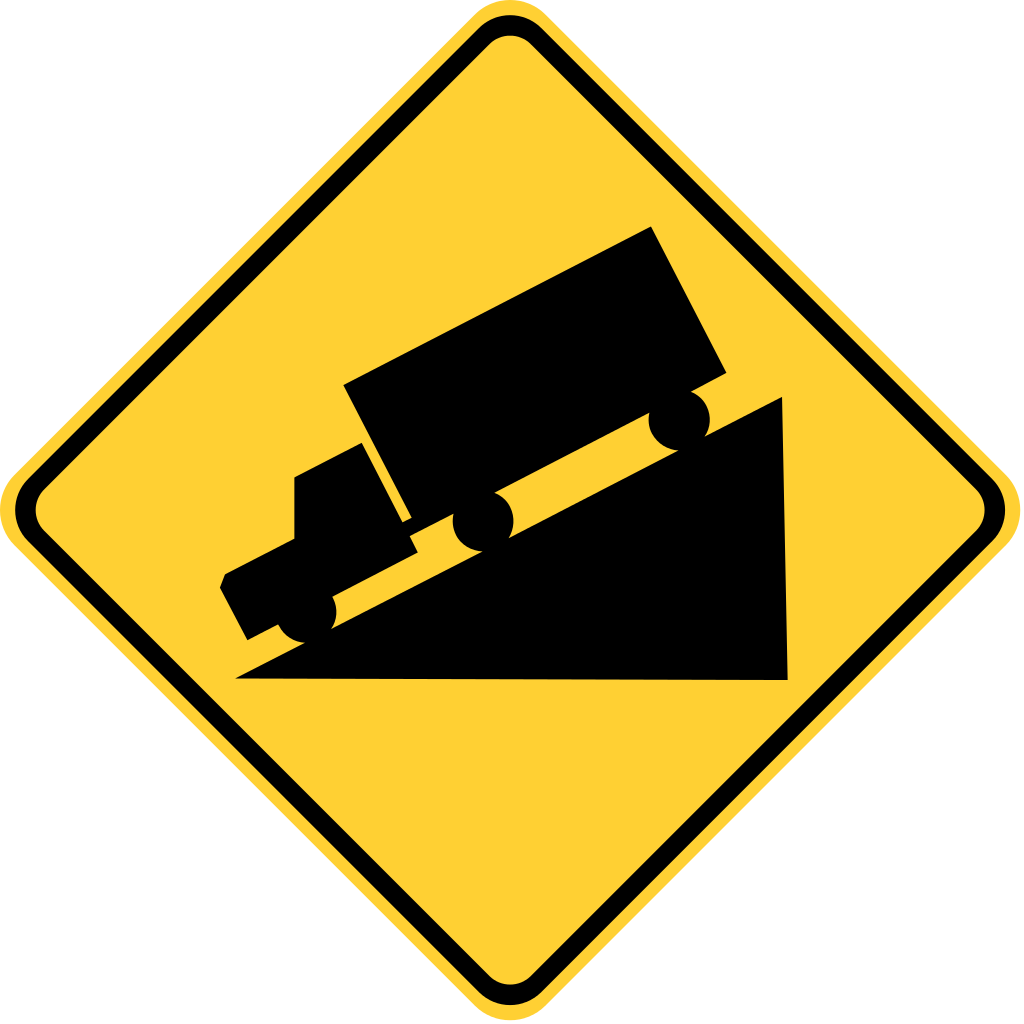 This road sign means:
A
Merging traffic
B
Steep grade ahead
C
Intersection ahead
No explanation available.
Question 13
When you prepare to make a left turn from a one-way road into a two-way road, you must:
A
enter the two-way road to the left of its center line.
B
approach the turn in the right lane or from the right side of a single lane.
C
approach the turn in the left lane or from the left side of a single lane.
No explanation available.
Question 14
Drivers should use the horn:
A
if a driver is moving slowly, and you want them to drive faster.
B
only when necessary, to avoid collisions.
C
when feeling angry or upset.
D
to alert other drivers that they made a mistake.
No explanation available.
Question 15
A vehicle that enters a road from a driveway:
A
has the right-of-way.
B
must yield to traffic approaching from the right, while it has the right-of-way over vehicles approaching from the left.
C
must stop and yield the right-of-way to traffic on the roadway and to pedestrians.
No explanation available.
Question 16
It is important for drivers to know that trucks:
A
are easier for the driver to operate.
B
require more space for turning movements.
C
take longer than cars to stop.
D
require less time to pass on an incline than cars.
No explanation available.
Question 17
The picture shows a _________ sign.
A
no U-turn
B
no left turn
C
sharp turn
No explanation available.
Question 18
When a ‘Road Closed’ sign is displayed, drivers must:
A
make a U-turn.
B
look for a detour or another route.
C
come to a complete stop and wait for the lights to turn green.
No explanation available.
Question 19
Drivers may cross solid yellow lines:
A
at any time.
B
only to pass traffic moving in the same direction.
C
when making turns.
D
during daylight hours only.
No explanation available.
Question 20
As you approach an intersection, the traffic light changes from green to yellow. You should:
A
apply the brakes sharply and come to a complete stop.
B
be prepared to stop before the intersection.
C
be prepared to stop in the middle of the intersection.
D
speed up to beat the red light.
No explanation available.
Question 21
Anything that requires you to _______ could cause you to crash.
A
take your hands off the wheel
B
take your attention away from driving
C
take your eyes off the road
D
All of the above.
No explanation available.
Question 22
Drivers are required to stop:
A
when a traffic officer orders them to stop.
B
where there is a red light.
C
at an intersection with a stop sign.
D
All of the above.
No explanation available.
Question 23
When driving in heavy traffic, you should:
A
drive with the flow of traffic.
B
maintain a constant speed.
C
drive faster than the flow of traffic.
D
drive slower than the flow of traffic.
No explanation available.
Question 24
 When they see a yellow X signal, drivers should:
A
come to a complete stop at the marked stop line.
B
turn off the ignition.
C
prepare to leave the lane safely.
No explanation available.
Question 25
If the entrance lane is too short to allow acceleration to highway speed, you should:
A
go to the next entrance ramp.
B
stop and wait for a large gap in traffic, then enter the highway and accelerate quickly.
C
merge into highway traffic as soon as possible.
No explanation available.
Question 26
A broken yellow line alongside a solid yellow line means:
A
Passing is permitted on the side of the broken yellow line
B
Passing is not permitted in either direction
C
Passing on the right is permitted in either direction
No explanation available.
Question 27
What should drivers do when the red lights begin to flash?
A
Stop.
B
Yield.
C
Slow down.
No explanation available.
Question 28
When the road is slippery, you should:
A
brake suddenly carefully.
B
pump your brakes.
C
press your brakes in slow, steady strokes.
No explanation available.
Question 29
 This road sign warns drivers that:
A
the road surface ahead changes to a low-type surface or earth road.
B
vehicles must leave the pavement immediately.
C
the dirt on the side of the road is soft.
No explanation available.
Question 30
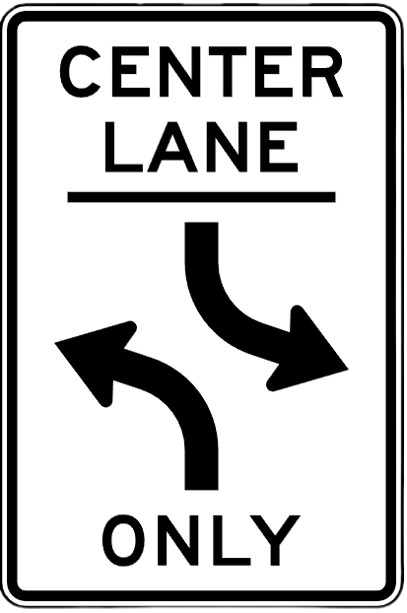 This sign means:
A
The center lane is shared for left turns.
B
Left turns in both directions of travel are not permitted.
C
Vehicles may only turn left.
No explanation available.