 drivequiz.com
 Question 1
When driving on a roadway with a single broken white line:
A
you may cross the broken white line to change lanes.
B
you may change lanes only if you are in the right lane.
C
you may not cross the broken white line.
No explanation available.
Question 2
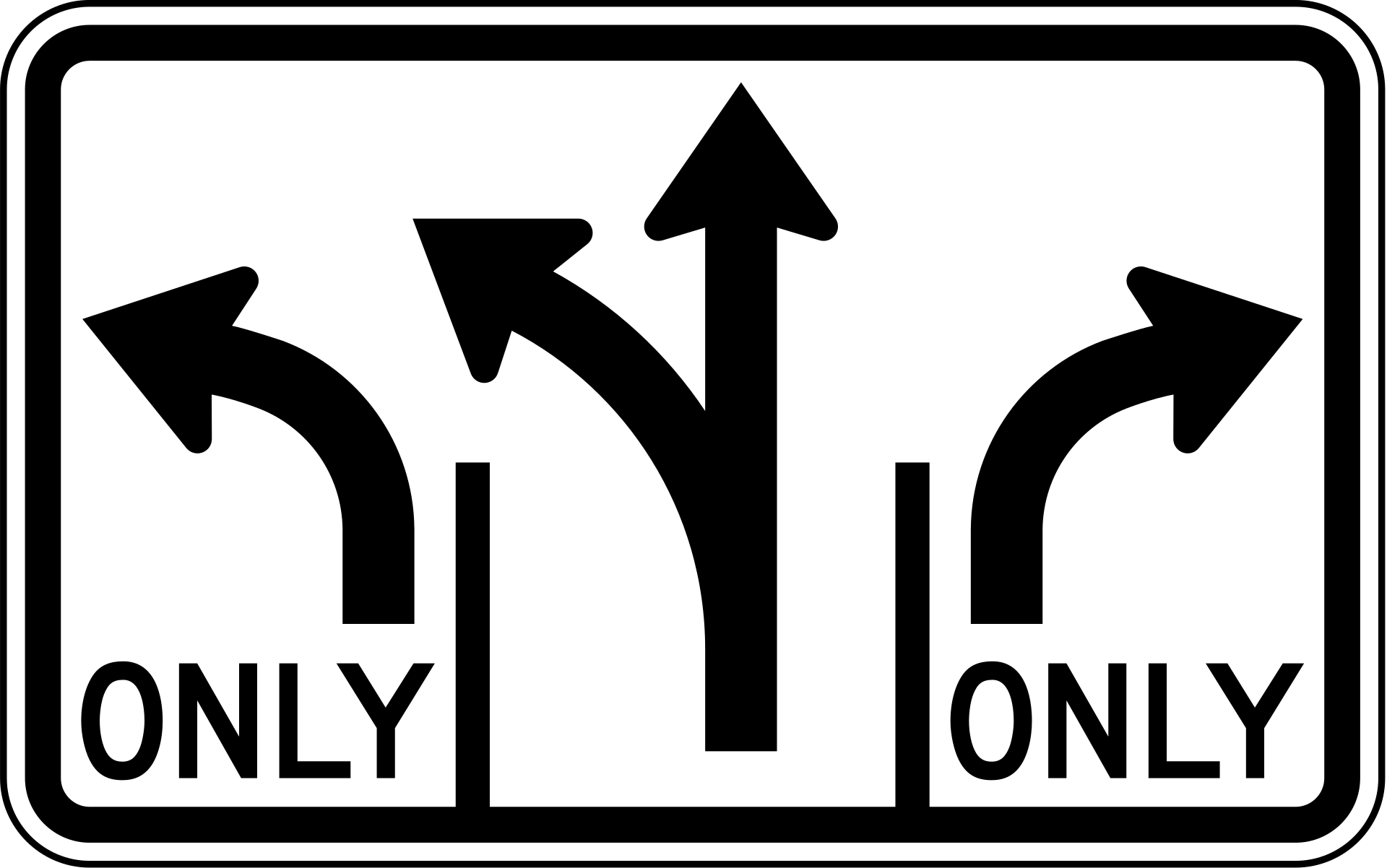 This regulatory sign tells drivers that:
A
traffic in the left lane must turn left at the intersection ahead.
B
all vehicles must turn left immediately.
C
traffic in the right lane must go straight.
No explanation available.
Question 3
Which signs have black letters on a white background?
A
Warning signs (diamond)
B
Regulatory signs (vertical rectangle)
C
Guide signs (horizontal rectangle)
No explanation available.
Question 4
Alcohol is:
A
A stimulant.
B
A depressant.
C
A dopant.
No explanation available.
Question 5
Double yellow lines mean you may pass another vehicle from either direction.
A
True
B
False
No explanation available.
Question 6
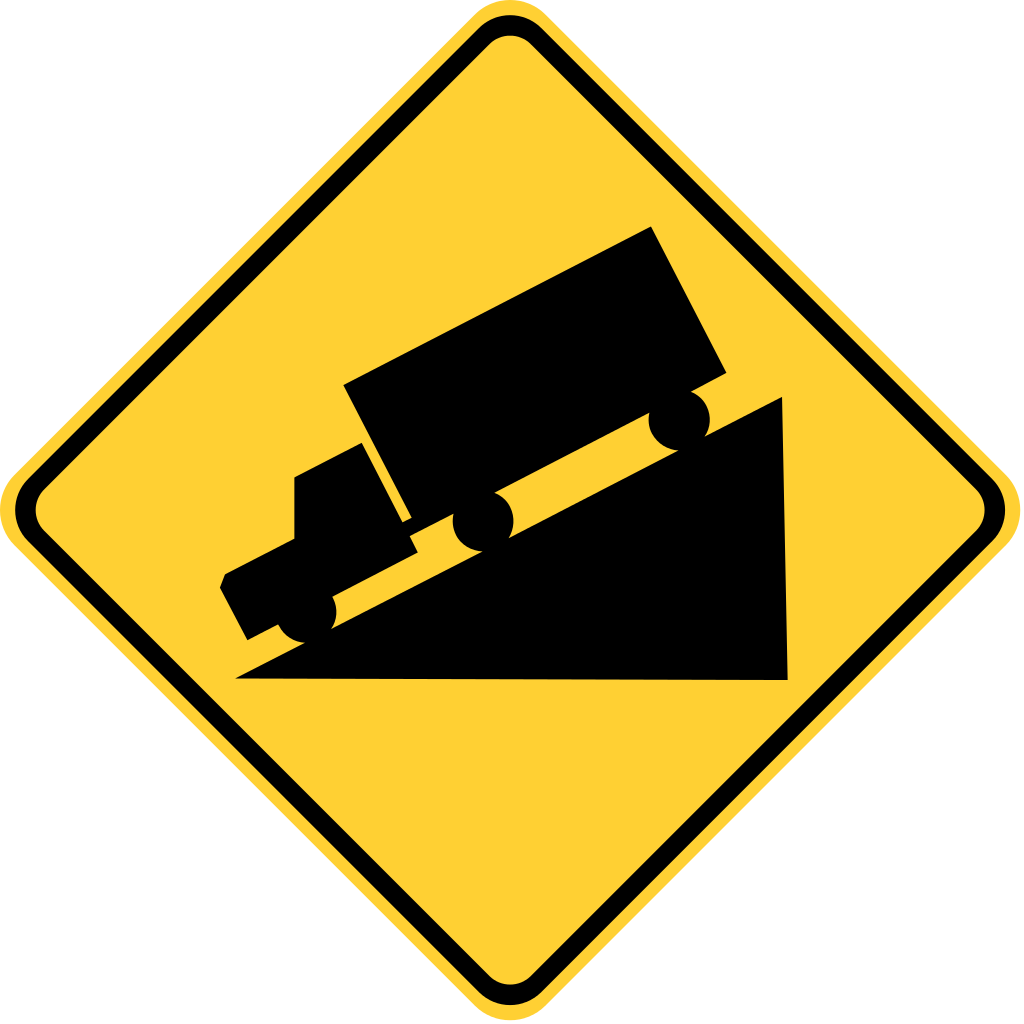 When they see this sign, drivers should:
A
be ready to brake sharply and stop.
B
be ready to shift to lower gear.
C
yield to trucks coming from the hill on the right.
No explanation available.
Question 7
Which statement about commercial vehicles is true?
A
Large vehicles have much larger blind spots than cars.
B
It takes longer to stop and accelerate a large vehicle.
C
All of the above.
No explanation available.
Question 8
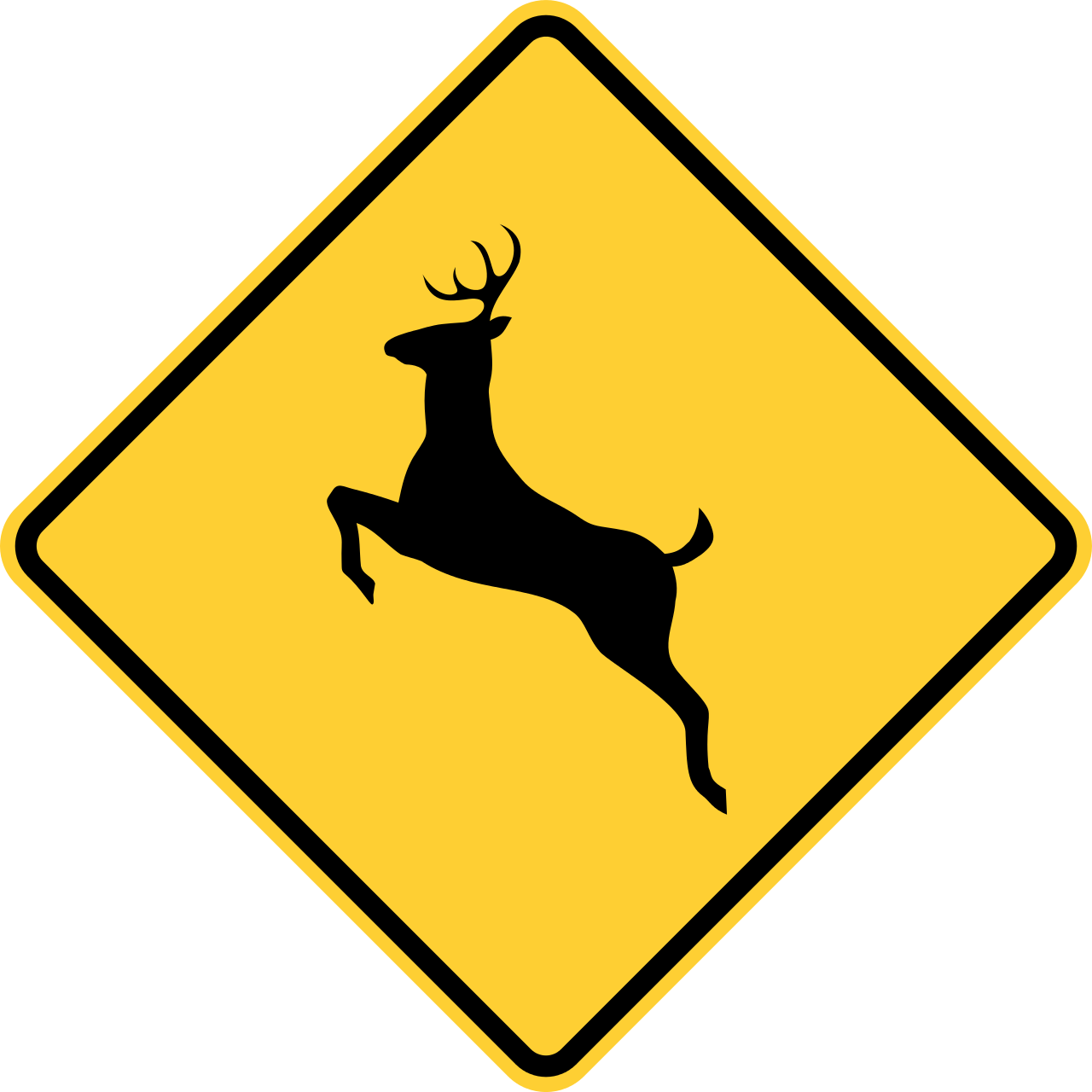 When they see this road sign, drivers should:
A
drive carefully because the animal pictured on the sign is extremely rare in the area.
B
watch for this species crossing the road.
C
park in the zoo area.
No explanation available.
Question 9
Who is most at risk?
A
Drivers who have overslept.
B
Drivers who are driving long distances without rest breaks.
C
Experienced drivers.
No explanation available.
Question 10
When driving in fog, you should never use your high beams because:
A
the light will reflect back into your eyes.
B
vehicles behind you may follow too closely.
C
oncoming vehicles might not see you.
No explanation available.
Question 11
Vehicles stopped behind a school bus when the red lights are flashing must remain stopped until:
A
the flashing lights turn green.
B
the stop arm is retracted and the bus begins moving.
C
all students are off the bus.
No explanation available.
Question 12
Never make a U-turn from:
A
the lane you’re in.
B
the right lane.
C
the left part of the lane nearest to the centerline of the roadway.
No explanation available.
Question 13
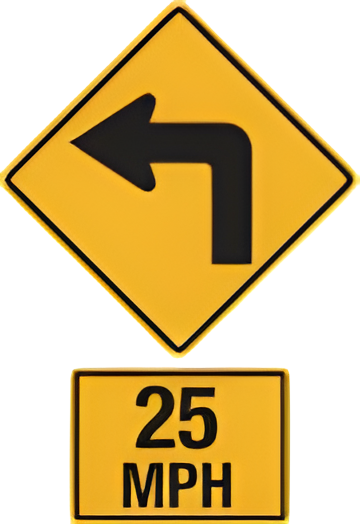 This sign indicates that:
A
the highest safe speed drivers should travel around the curve ahead is 25 MPH.
B
the safe speed around the curve ahead is at least 25 MPH.
C
drivers may not turn right if traveling at 25 MPH or less.
No explanation available.
Question 14
Which of the following is against the law and is punishable by a fine and/or imprisonment?
A
Using your emergency flashers unnecessarily.
B
Speeding.
C
Steering with one hand.
No explanation available.
Question 15
 When they see a yellow X signal, drivers should:
A
come to a complete stop at the marked stop line.
B
turn off the ignition.
C
prepare to leave the lane safely.
No explanation available.
Question 16
Blind spots are:
A
Dangerous intersection where the maximum speed limit is 15 MPH or less.
B
At night, the darkest areas of a road, where emergency flashers should be used.
C
Areas to the side or rear of a vehicle that the driver cannot see with use of mirrors.
No explanation available.
Question 17
When children are close, what should you do before you back out of a driveway?
A
Rely on your mirrors.
B
Get out of the car and check behind the car.
C
Look through your back window for children.
No explanation available.
Question 18
The only effective way to remove alcohol from the body is:
A
taking a cold shower.
B
drinking strong coffee.
C
time.
No explanation available.
Question 19
A flashing red light at an intersection means:
A
Stop and yield the right of way.
B
You have the right-of-way.
C
Stop and wait for the green light
No explanation available.
Question 20
There are two traffic lanes in your direction. You are driving in the left lane and many vehicles are passing you on the right, and the driver behind you wishes to drive faster. You should:
A
stay in your lane and maintain your current speed.
B
drive onto the left shoulder to let the other driver pass.
C
move over into the right lane when safe to do so.
No explanation available.
Question 21
When a stop line is present at a stop sign, drivers must stop:
A
at the line.
B
only if pedestrians are in the crosswalk.
C
only if the traffic signal turns red.
No explanation available.
Question 22
Drivers are required to stop upon meeting a stopped school bus when traveling in the opposite direction on a multi-lane highway.
A
False
B
True
No explanation available.
Question 23
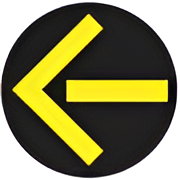 What does a yellow arrow signal mean?
A
The same as the yellow light, but applies only to movement in the direction of the arrow.
B
The same as a green light.
C
Vehicles moving in all directions must stop if they can. The light will soon be red.
No explanation available.
Question 24
The faster the speed, the longer it takes a vehicle to slow down and come to a complete stop.
A
False
B
True
No explanation available.
Question 25
While inside the roundabout, you should:
A
remain in your lane until you are ready to exit.
B
change lanes before you check for vehicles behind you.
C
use your left turn signal if you are in position to exit now.
No explanation available.
Question 26
When meeting a stopped school bus traveling in the opposite direction on a multi-lane highway, drivers are not required to stop.
A
False
B
True
No explanation available.
Question 27
What happens if two vehicles reach at the same time an intersection with four-way stop signs?
A
The driver on the right yields to the driver on the left.
B
The driver on the left yields to the driver on the right.
C
The first vehicle to reach the intersection must yield.
No explanation available.
Question 28
Drivers must stop for a school bus:
A
on any two-lane highway.
B
when the bus is in a passenger loading zone completely off the main travel lanes.
C
only if children are crossing the street.
No explanation available.
Question 29
When you are backing up, it is usually best to:
A
steer with both hands, look into the rearview mirror and back up slowly.
B
steer with one hand, while looking out the rear window.
C
steer with both hands, open the left door and look back.
No explanation available.
Question 30
Can you drive on the shoulder of the road to pass a car?
A
Yes, but only if the shoulder is wide enough.
B
Yes, but only if the vehicle ahead of you is turning left.
C
No.
No explanation available.