 drivequiz.com
 Question 1
If weather requires you to have your lights on, you should use your:
A
low beams.
B
parking lights.
C
high beams.
No explanation available.
Question 2
When you are involved in an accident and your vehicle is blocking traffic, you should:
A
not move your vehicle under any circumstances.
B
wait for the police to arrive before moving your vehicle.
C
move your vehicle off of the travelled portion of the roadway, if possible.
D
None of the above.
No explanation available.
Question 3
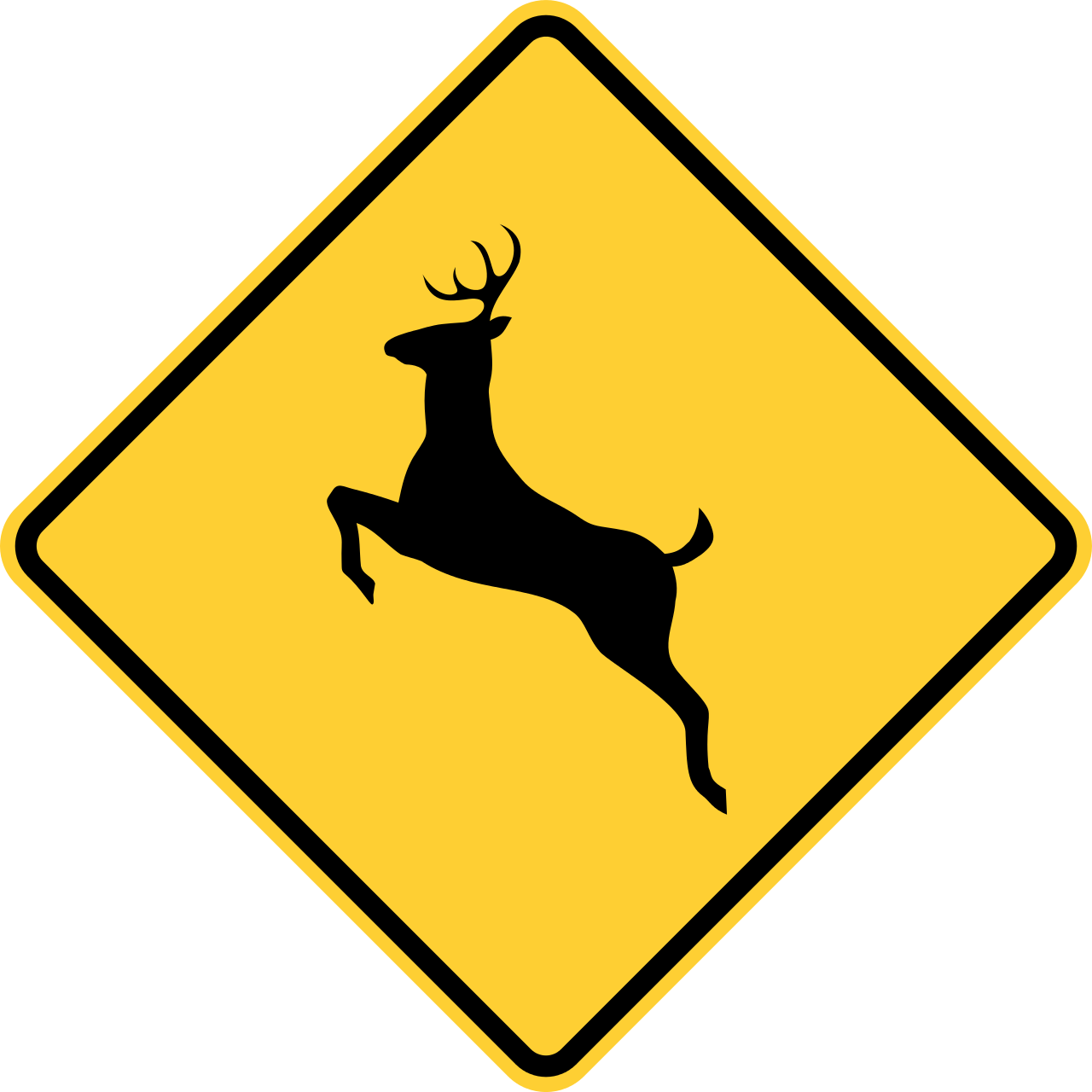 When they see this road sign, drivers should:
A
drive carefully because the animal pictured on the sign is extremely rare in the area.
B
watch for this species crossing the road.
C
park in the zoo area.
No explanation available.
Question 4
To avoid hydroplaning, drivers should:
A
slow down.
B
apply the brakes firmly.
C
drive at a constant speed.
No explanation available.
Question 5
When driving in work zones you should:
A
gradually come to a complete stop and wait for a flagger to guide traffic safely through the work zone.
B
tailgate the vehicle ahead.
C
carefully watch for workers and moving equipment.
No explanation available.
Question 6
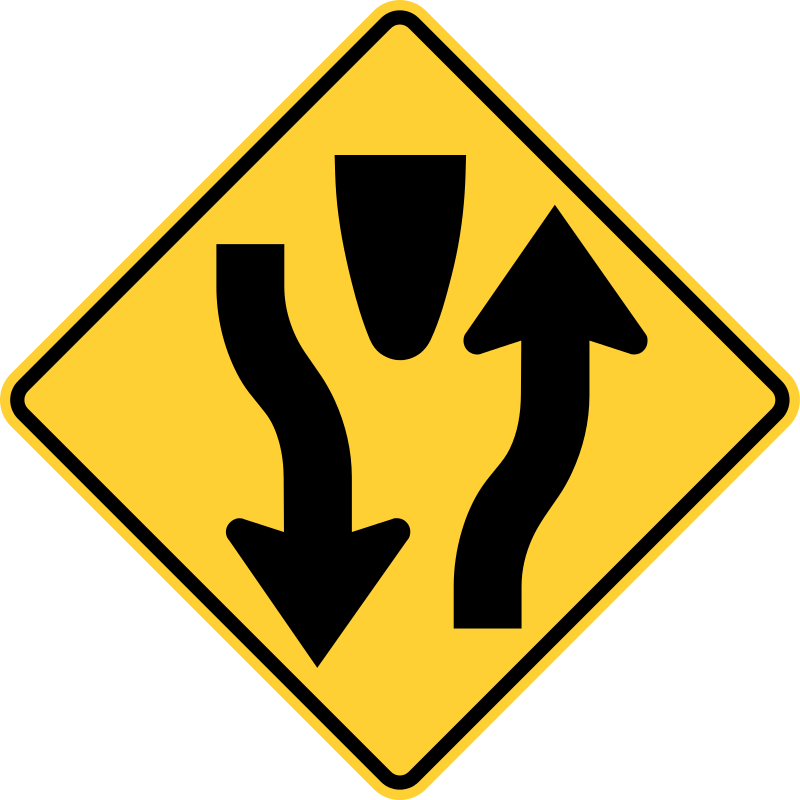 This road sign means:
A
Keep left
B
Divided highway begins
C
Lane ends
No explanation available.
Question 7
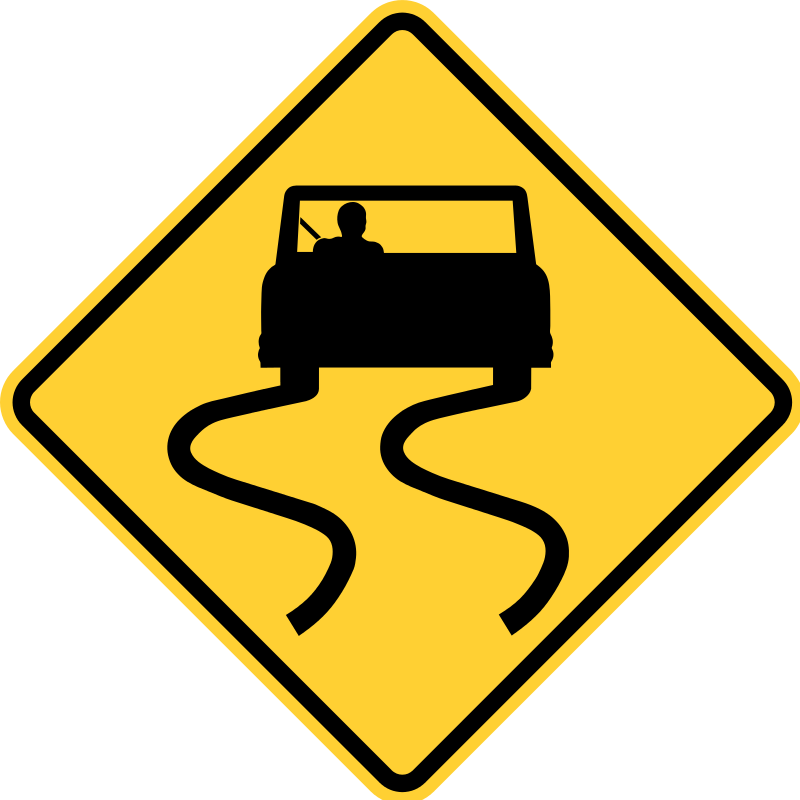 This road sign means:
A
Slow down, slippery when wet
B
Detour ahead
C
Road curves ahead
No explanation available.
Question 8
When approaching a blind person walking with a white cane or guide dog, drivers should yield the right-of-way.
A
False
B
True
No explanation available.
Question 9
What does a red arrow on a traffic light mean?
A
You may proceed slowly through the intersection.
B
You must stop and then proceed when the way is clear.
C
You may turn in the direction of the arrow.
D
You must stop. Do not go in the direction of the arrow until a green light or arrow light goes on.
No explanation available.
Question 10
Before stopping your vehicle on the roadway, drivers should:
A
check their mirrors for traffic.
B
place their foot on the accelerator.
C
pump the brakes to check if they work properly.
No explanation available.
Question 11
Are bicyclists required to obey traffic laws and signs?
A
No, bicyclists are considered pedestrians when it comes to the rules of the road.
B
Yes.
C
Yes, but only if they are riding in a bicycle lane.
No explanation available.
Question 12
At an intersection without stop or yield signs, you should:
A
yield to the vehicle to your left.
B
wait until there are no vehicles at the intersection.
C
yield to the vehicle to your right.
No explanation available.
Question 13
A steady yellow light at an intersection means:
A
Proceed with caution through the intersection
B
Slow down and be prepared to stop
C
Immediately come to a complete stop
D
Yield to other vehicles
No explanation available.
Question 14
Give the right-of-way to any pedestrian:
A
on the opposite side of the street.
B
if you have the green light.
C
in a marked crosswalk.
No explanation available.
Question 15
When in a vehicle, wear a seat belt:
A
at all times.
B
on long trips.
C
on high-speed highways.
No explanation available.
Question 16
You may not pass another vehicle on either side of a _______ centerline.
A
solid or broken yellow
B
single broken white
C
double solid yellow
D
single broken yellow
No explanation available.
Question 17
If a vehicle using high beams comes toward you, look towards __________ of the road.
A
either side
B
the center
C
the right side
D
the left side
No explanation available.
Question 18
When parking uphill on a road with a curb, turn the front wheels:
A
towards the curb.
B
parallel to the curb.
C
straight ahead.
D
away from the curb.
No explanation available.
Question 19
After you stop for a school bus, you must:
A
turn off your engine.
B
pass the bus before the red lights stop flashing.
C
None of the above.
No explanation available.
Question 20
Who has a greater risk of being involved in a traffic crash?
A
Drivers who are driving alone.
B
Young people.
C
All of the above.
No explanation available.
Question 21
A flashing red light means:
A
The same as a STOP sign.
B
The light will soon change to steady red.
C
Drive with caution.
No explanation available.
Question 22
When changing lanes, you can check your blind spot by:
A
using the outside rearview mirror.
B
using the inside rearview mirror.
C
turning your head and glancing over your shoulder.
D
checking the rearview and outside mirrors.
No explanation available.
Question 23
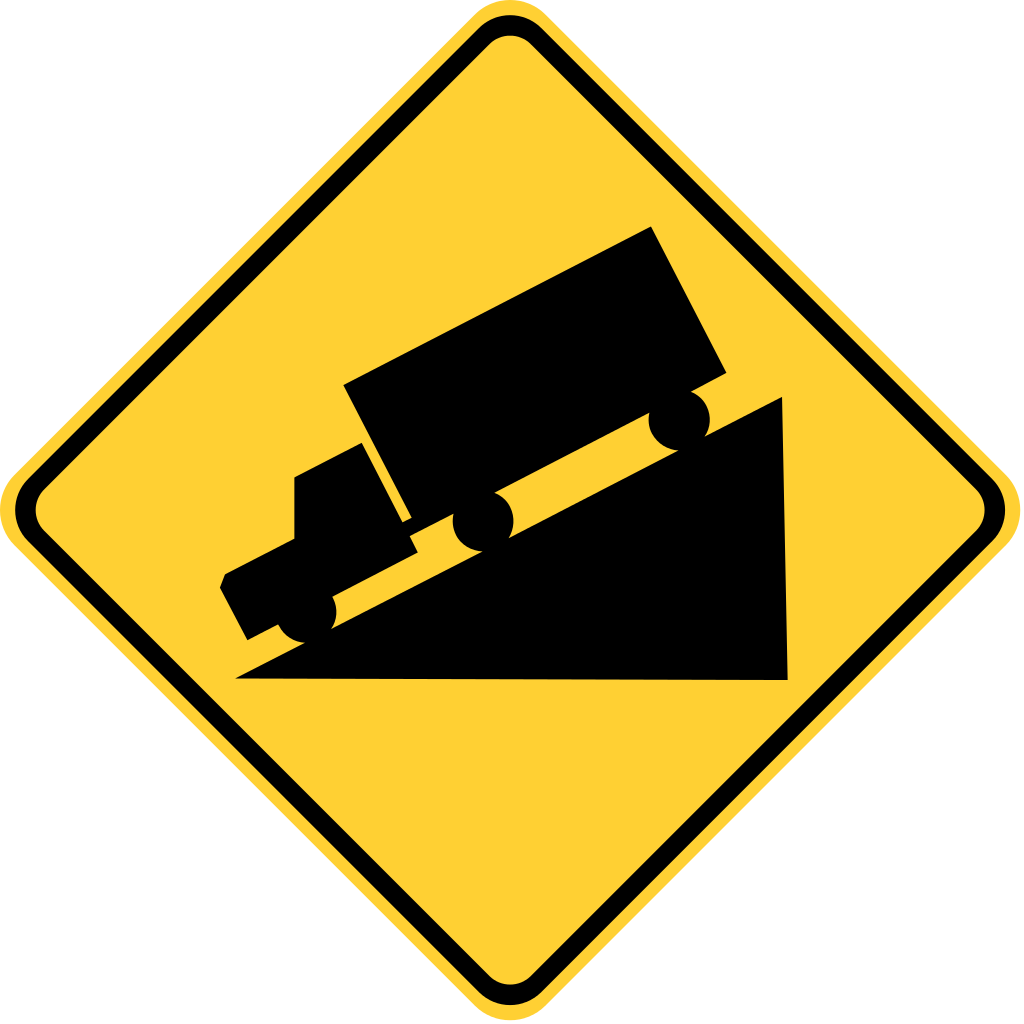 This road sign means:
A
Hill ahead
B
Trucks merging from the right
C
Side road ahead
D
Keep left
No explanation available.
Question 24
Drivers may cross a double yellow line to pass another vehicle if:
A
the yellow line next to the other side of the road is broken.
B
the vehicle ahead moves to the right to let them pass.
C
the yellow line next to their side of the road is broken.
No explanation available.
Question 25
Two drivers reach an uncontrolled intersection at the same time. Who has the right of way?
A
The driver on the left.
B
No one.
C
The driver on the right.
No explanation available.