 drivequiz.com
 Question 1
As long as you don’t leave the road, you may legally pass a vehicle on the right:
A
if you are on a two-lane, two-way road and the other vehicle is turning left.
B
when you are turning into a one-way street with no oncoming traffic.
C
Never.
D
Only during daylight hours.
No explanation available.
Question 2
If you see orange construction signs and cones on a freeway, you must:
A
be prepared for workers and equipment ahead.
B
make a U-turn because the lane ends ahead.
C
maintain your current speed while changing lanes.
No explanation available.
Question 3
When you are involved in an accident, you should:
A
call the police.
B
help the injured.
C
stop immediately.
D
All of the above.
No explanation available.
Question 4
While inside the roundabout, you should:
A
remain in your lane until you are ready to exit.
B
change lanes before you check for vehicles behind you.
C
use your left turn signal if you are in position to exit now.
No explanation available.
Question 5
If a tire blows out, drivers should:
A
apply the brake firmly and hold it.
B
hold the steering wheel tightly and use the brakes lightly.
C
pull over quickly.
No explanation available.
Question 6
When following motorcycles, drivers should:
A
reduce the minimum following distance.
B
try to pass them as they have different braking capabilities than other motor vehicles.
C
keep more space in front of their vehicle.
No explanation available.
Question 7
 This road sign means:
A
Merge right
B
Stop sign ahead
C
Reduction in lanes
No explanation available.
Question 8
Which signs have black letters on a white background?
A
Warning signs (diamond)
B
Regulatory signs (vertical rectangle)
C
Guide signs (horizontal rectangle)
No explanation available.
Question 9
When dust is blowing across the roadway making it difficult to see other vehicles, you should drive slower and turn on your:
A
headlights.
B
parking lights.
C
emergency flashers.
No explanation available.
Question 10
Warning signs normally are:
A
rectangles.
B
triangles.
C
diamond-shaped.
No explanation available.
Question 11
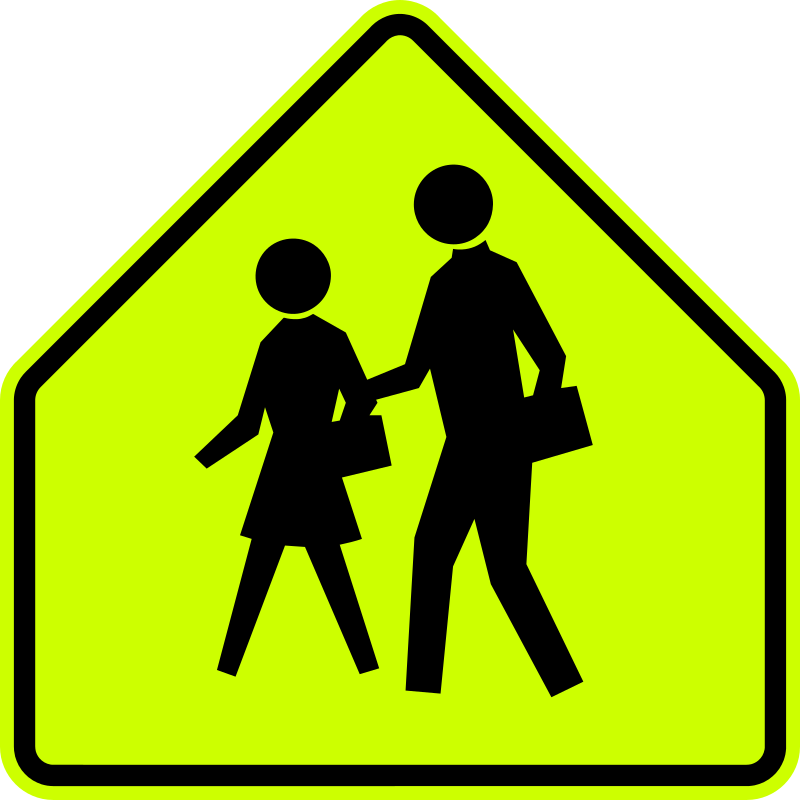 This warning sign means:
A
You are approaching a school
B
Watch out for children crossing the street
C
Slow down, drive with caution and watch for children
D
All of the above.
No explanation available.
Question 12
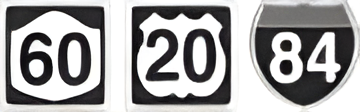 These are:
A
route signs.
B
miles-left signs.
C
speed limit signs.
No explanation available.
Question 13
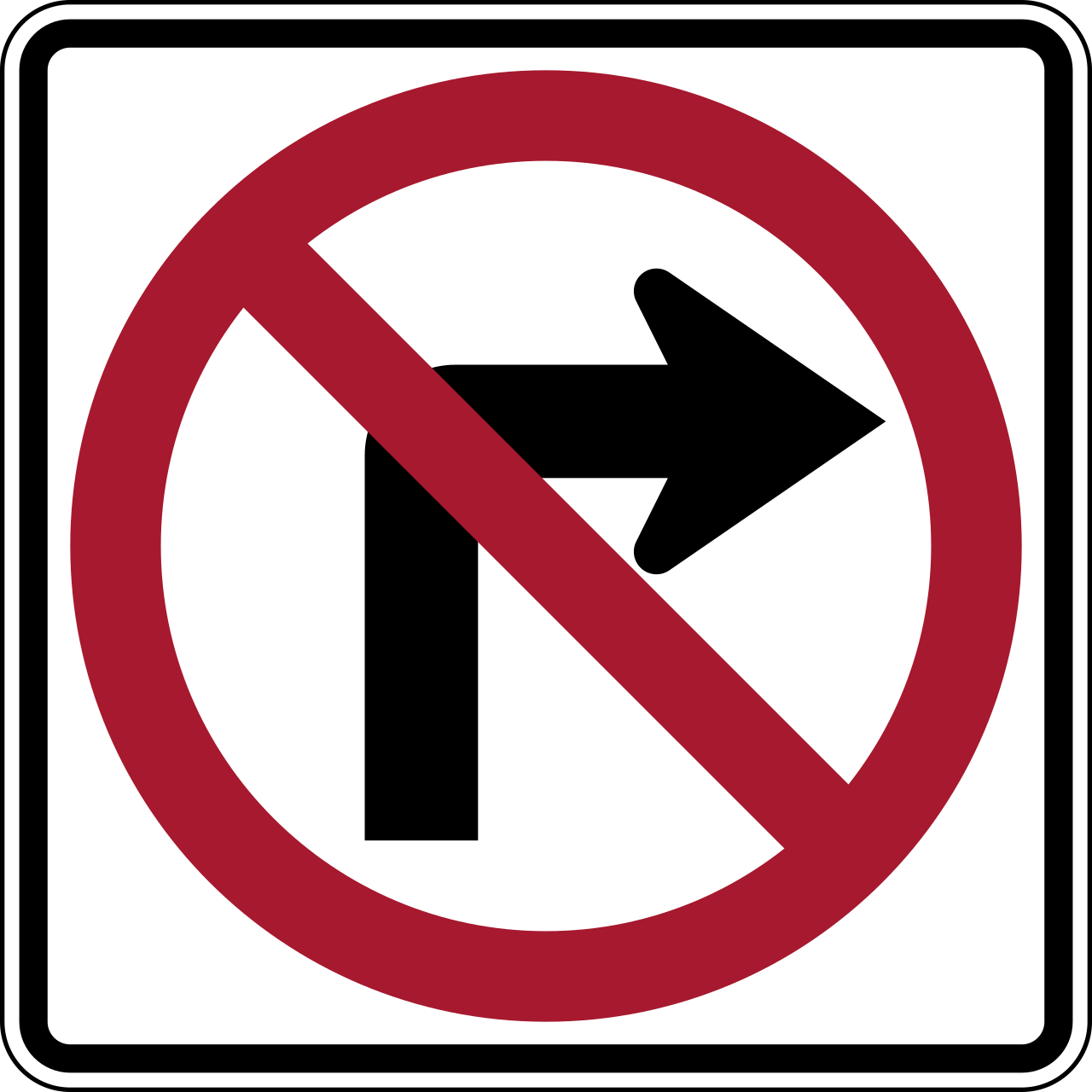 This road sign means:
A
Right turn permitted on red light
B
Drivers must turn right
C
No U-turns
D
No right turn permitted
No explanation available.
Question 14
Drivers should always look carefully for motorcycles before changing lanes because:
A
motorcycles are not permitted to share traffic lanes.
B
motorcycles are smaller and harder to see.
C
motorcycles always have the right-of-way at intersections.
D
All of the above.
No explanation available.
Question 15
Where must you position your vehicle when you prepare to make a left turn from a two-way roadway into a one-way roadway?
A
As far to the right as possible.
B
On the right curb.
C
As close as possible to the center line.
No explanation available.
Question 16
After passing a vehicle, it is safe to return to your lane:
A
when you can no longer see the vehicle over your right shoulder.
B
after about five seconds.
C
when you see the front bumper of the other vehicle in your mirror.
No explanation available.
Question 17
While driving you come upon a sign which says, “reduced speed 35 MPH”. You as a driver should know:
A
that the new 35 MPH speed zone begins at the next “speed limit” sign.
B
that the sign is put there to harass “good” drivers.
C
that the new 35 MPH speed zone begins at this sign.
D
that you have plenty of time to slow down before the speed zone.
No explanation available.
Question 18
 This road sign means:
A
Divided highway ahead
B
Two-way traffic ahead
C
Four-lane traffic ahead
No explanation available.
Question 19
If you hear a thumping sound while driving, you should:
A
hook your shoe under the gas pedal and see if you can free it.
B
get off the road and check your tires.
C
try your emergency lights.
No explanation available.
Question 20
Keeping a space cushion between you and the other vehicles around you is important because it:
A
gives you time to react to situations.
B
prevents distractions from other vehicles.
C
keeps other drivers alert.
D
keeps traffic flowing at a safe pace.
No explanation available.
Question 21
If you drive slower than the flow of traffic, you will most likely:
A
help create a safe driving environment.
B
improve traffic flow.
C
interfere with traffic and receive a ticket.
No explanation available.
Question 22
Drivers must yield for emergency vehicles:
A
Never.
B
only when other vehicles yield.
C
when they see a flashing red or blue light or hear a siren.
D
None of the above.
No explanation available.
Question 23
A flashing red light at an intersection means:
A
Stop and yield the right of way.
B
You have the right-of-way.
C
Stop and wait for the green light
No explanation available.
Question 24
This road sign means:
A
No left turn
B
No right turn
C
No U-turns
No explanation available.
Question 25
Drivers can proceed through an intersection with a stop sign, but no stop line or crosswalk:
A
after slowing down to at least 15 MPH before proceeding.
B
after coming to a complete stop, when it is safe to proceed.
C
after stopping at least 50 feet prior to the intersection.
D
after slowing down to ensure there is no cross-traffic.
No explanation available.