 drivequiz.com
 Question 1
When a hazard is seen ahead, reaction distance:
A
is the sum of perception distance and braking distance.
B
equals total stopping distance minus perception distance.
C
is how far a vehicle will continue to travel, in ideal conditions, before the driver hits the brakes.
No explanation available.
Question 2
If you remain in the back blind spot of a large vehicle:
A
you increase the chance of a crash.
B
the large vehicle will take much longer to stop.
C
you can reduce fuel consumption.
No explanation available.
Question 3
What type of pavement marking shows you which lane you must use for a turn?
A
Edge line
B
Diamond
C
Crosswalk Lines
D
Arrows
No explanation available.
Question 4
 This road sign warns drivers that:
A
the road surface ahead changes to a low-type surface or earth road.
B
vehicles must leave the pavement immediately.
C
the dirt on the side of the road is soft.
No explanation available.
Question 5
___________ are green with white letters and symbols.
A
Warning signs
B
Destination signs (guide signs)
C
Regulation signs (regulatory signs)
No explanation available.
Question 6
Drivers may pass another vehicle if the line dividing two lanes is a ________ line.
A
broken white
B
double solid yellow
C
solid yellow
D
solid white
No explanation available.
Question 7
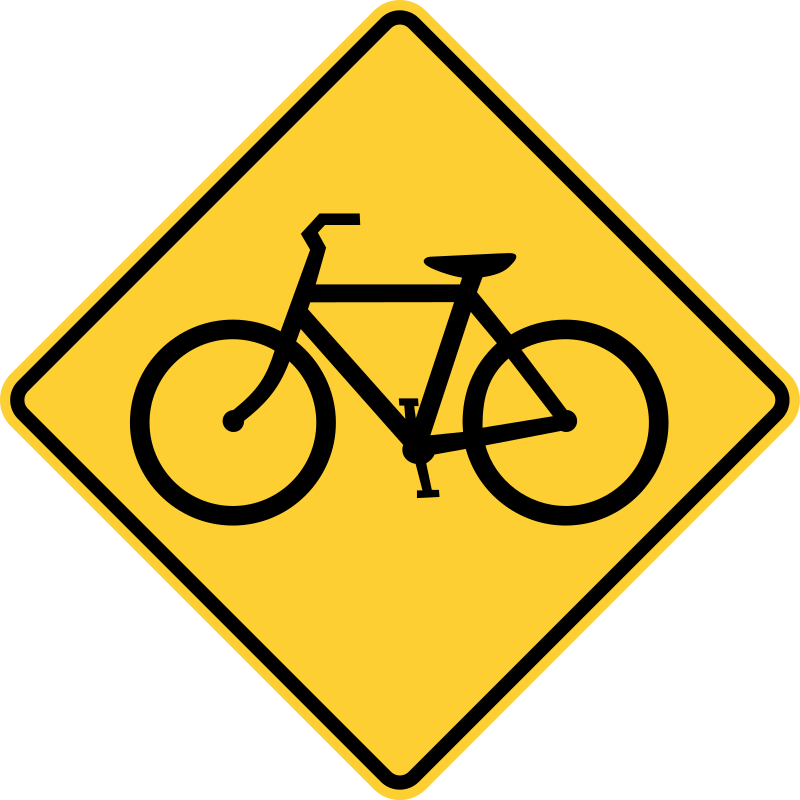 This road sign means:
A
Yield right-of-way to bicycles
B
Bicycles cross or ride beside traffic
C
Yield to motorcyles, but not to bicycles
D
Bicycles have the same rights as other vehicles
No explanation available.
Question 8
When approaching a highway-rail intersection, the first sign drivers see is usually:
A
an RXR round sign on a yellow background.
B
a stop sign.
C
a yield sign.
No explanation available.
Question 9
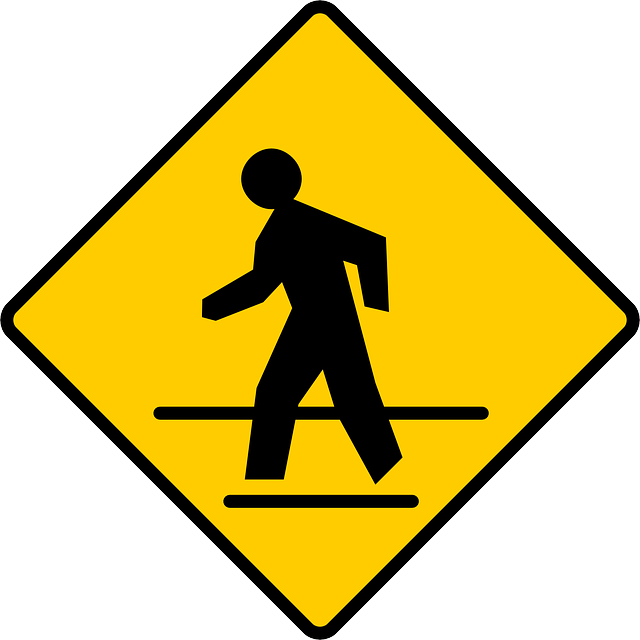 This road sign means:
A
School zone ahead
B
Pedestrians must not cross here
C
Pedestrian crossing ahead
No explanation available.
Question 10
At a light rail intersection, you should always:
A
share the road with pedestrians and bicyclists.
B
look both ways before crossing the tracks.
C
be alert and obey all traffic signals.
D
All of the above.
No explanation available.
Question 11
 This sign warns drivers of:
A
a reduction of lanes.
B
a dip in the road. Drivers should be ready to stop if the dip is filled with water.
C
a bridge ahead, wide enough to accommodate two lanes of traffic, but with very little clearance.
No explanation available.
Question 12
 This road sign means:
A
Pavement ends
B
Winding road
C
Double curve ahead
No explanation available.
Question 13
If another car has stopped in an adjacent lane in the same direction of travel, you should:
A
speed up and pass the vehicle on the right.
B
pass the car on the left.
C
be careful in case the other vehicle has stopped for a pedestrian.
D
tap your horn to let the other driver know you are passing.
No explanation available.
Question 14
 This road sign means:
A
No parking
B
Yield
C
No left turn
D
Divided highway
No explanation available.
Question 15
 This sign means:
A
You may make a U-turn.
B
Hairpin corner ahead.
C
You must make a U-turn.
No explanation available.
Question 16
Alcohol:
A
makes you less aware of what is happening to your driving abilities.
B
makes it easier to make correct decisions.
C
improves your reaction time.
No explanation available.
Question 17
At intersections marked with stop lines, drivers must:
A
come to a complete stop.
B
slow down and enter the intersection.
C
signal other vehicles to stop.
No explanation available.
Question 18
What happens if two vehicles reach at the same time an intersection with four-way stop signs?
A
The driver on the right yields to the driver on the left.
B
The driver on the left yields to the driver on the right.
C
The first vehicle to reach the intersection must yield.
No explanation available.
Question 19
 This is:
A
a side road sign.
B
a merging traffic sign.
C
a right curve sign.
No explanation available.
Question 20
Warning signs normally are:
A
rectangles.
B
triangles.
C
diamond-shaped.
No explanation available.
Question 21
Yellow traffic signs:
A
guide drivers.
B
when combined with an octagonal shape, tell drivers they must come to a complete stop at the marked stop line.
C
warn drivers.
No explanation available.
Question 22
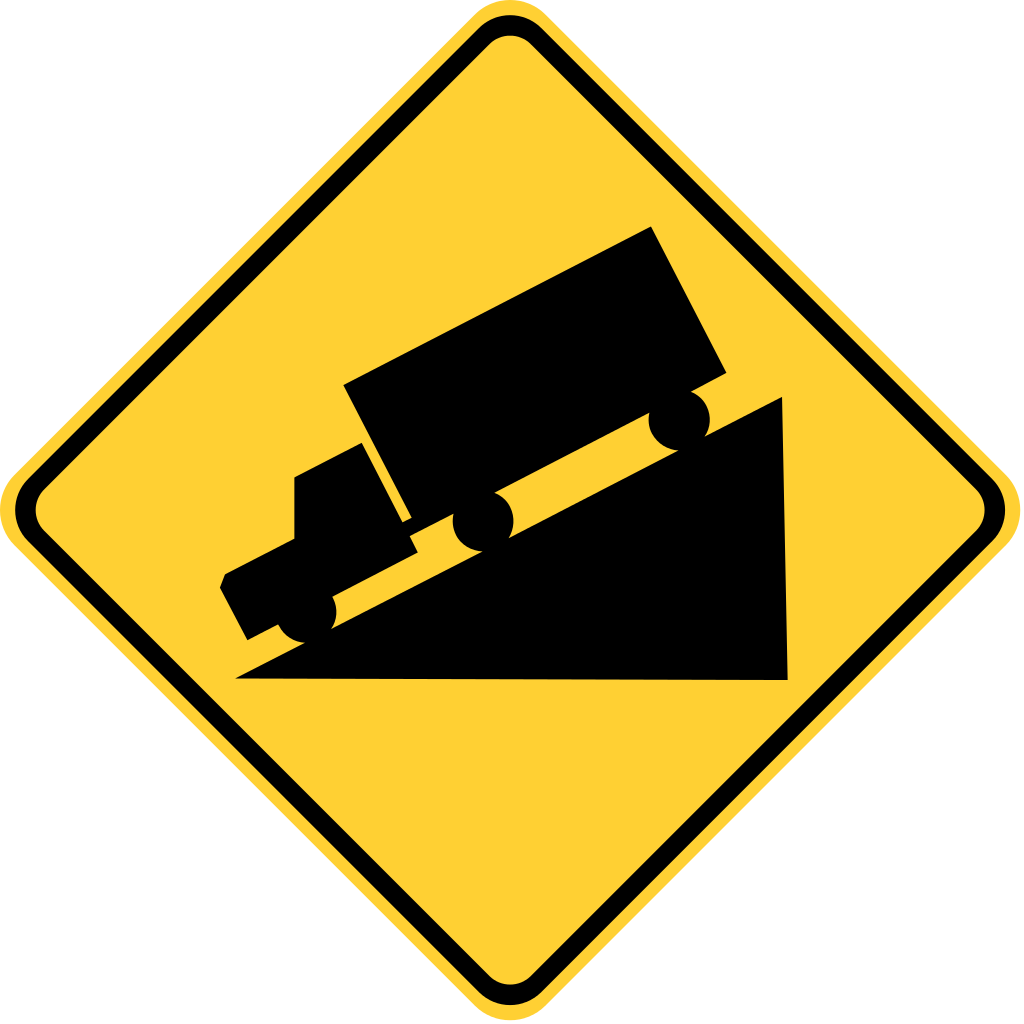 This road sign means:
A
Do not pass trucks
B
Truck must back up
C
Steep downgrade ahead
No explanation available.
Question 23
To reduce their chances of colliding with an animal, drivers should:
A
scan the sides of the road to watch for the reflection of vehicle headlights in the eyes of animals.
B
look well down the road and far off to each side.
C
All of the above.
No explanation available.
Question 24
When driving in fog, drivers should:
A
not use high beam headlights.
B
use low beam headlights to better illuminate the road ahead.
C
slow down and drive cautiously.
D
All of the above.
No explanation available.
Question 25
Never make a U-turn from:
A
the lane you’re in.
B
the right lane.
C
the left part of the lane nearest to the centerline of the roadway.
No explanation available.