 drivequiz.com
 Question 1
You are stopped at a stop sign and you are going to go straight through the intersection. A car on the cross road has stopped at a stop sign on your right and is going to go straight. Who has the right-of-way?
A
Whoever enters the intersection first.
B
You.
C
The car on your right.
No explanation available.
Question 2
What is a likely effect when you take another drug while you drink alcohol?
A
The effects of the alcohol and the drug are enhanced.
B
There are no effects, unless the drug is prescription only.
C
If the drug is over-the-counter, there are no effects.
No explanation available.
Question 3
ABS is the acronym for:
A
Anti-Braking System
B
Average-Beam System
C
Anti-Locking Brake System
No explanation available.
Question 4
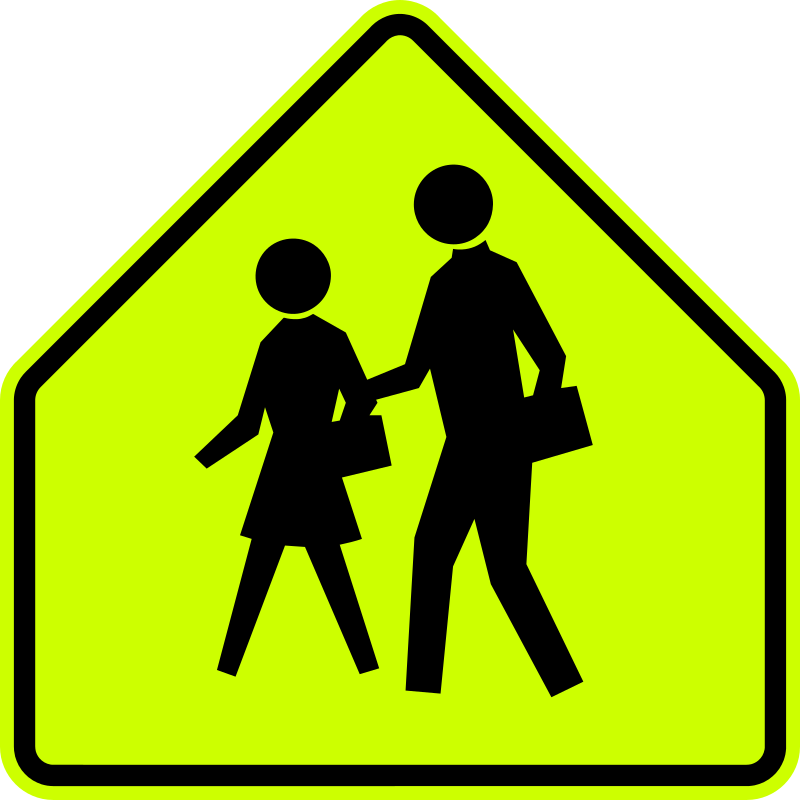 When you see this sign, you should:
A
be prepared to stop if children are in the crosswalk.
B
slow down, proceed with caution and watch for blind people.
C
always stop at the crosswalk.
No explanation available.
Question 5
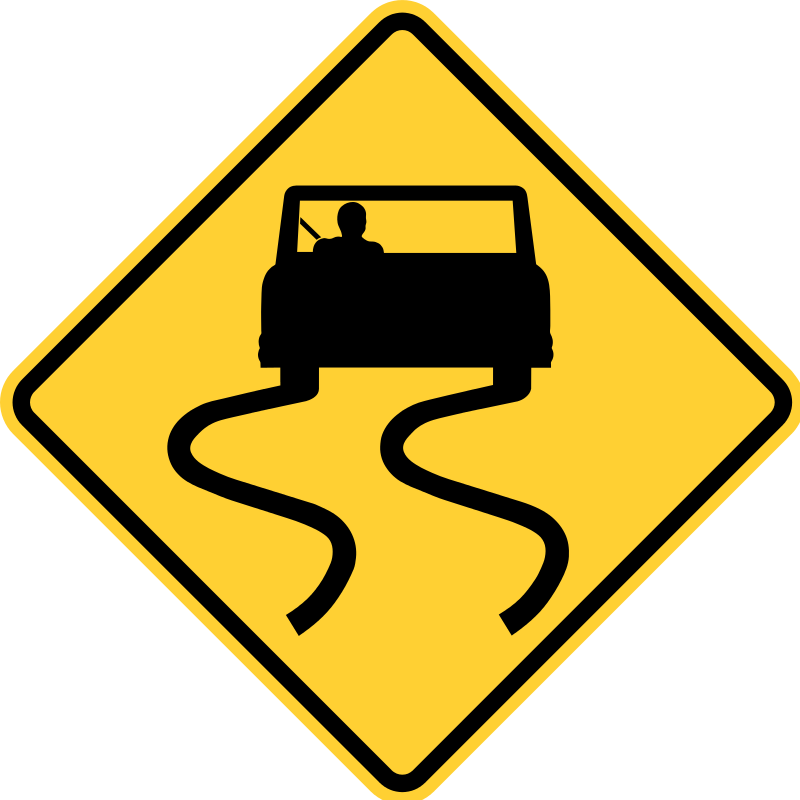 This sign means:
A
The road will curve to the right, then to the left.
B
Road slippery when wet. Drive slowly.
C
Winding road ahead. Drive with caution.
No explanation available.
Question 6
After parking, are you allowed to open a door on the road side of your vehicle?
A
Yes, always.
B
Yes, but only if it does not interfere with bicyclists and other traffic.
C
No, never.
No explanation available.
Question 7
Warning signs normally are:
A
rectangles.
B
triangles.
C
diamond-shaped.
No explanation available.
Question 8
 What does this sign indicate?
A
The highway ahead is divided into two one-way roadways.
B
Winding road ahead. Drive with caution.
C
Drivers will soon be on a roadway with two-way traffic.
No explanation available.
Question 9
When you prepare to make a left turn from a one-way road into a one-way road, you must:
A
move into the right lane, or to the left side of a single lane.
B
move into the right lane, or to the right side of a single lane.
C
move into the left lane, or to the left side of a single lane.
No explanation available.
Question 10
When the traffic light is green, but traffic is blocking the intersection, drivers should:
A
enter the intersection and wait for traffic to clear.
B
not enter the intersection until they can get completely across.
C
honk their horn to establish their right-of-way.
No explanation available.
Question 11
What should you do if your brakes fail?
A
Hook your shoe under the pedal and see if you can free it.
B
Turn on your cruise control.
C
Try pumping the brake pedal to increase pressure.
No explanation available.
Question 12
When an aggressive driver confronts you, you should:
A
Try to move away safely.
B
Remain calm and relaxed.
C
All of the above.
No explanation available.
Question 13
Where must you position your vehicle when you prepare to make a left turn from a two-way roadway into a one-way roadway?
A
As far to the right as possible.
B
On the right curb.
C
As close as possible to the center line.
No explanation available.
Question 14
If you are feeling tired while driving, you should:
A
stop and get some rest.
B
open a window.
C
drink coffee.
No explanation available.
Question 15
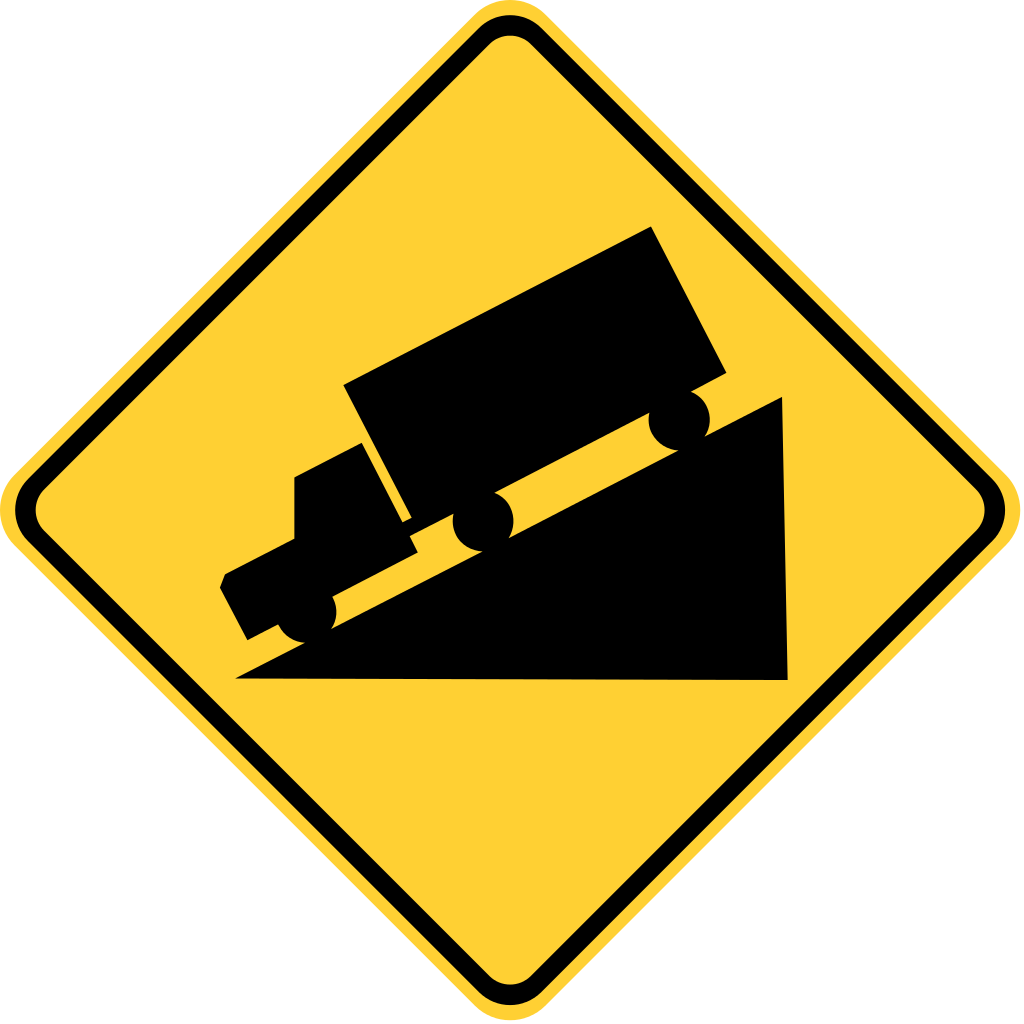 When they see this sign, drivers should:
A
be ready to brake sharply and stop.
B
be ready to shift to lower gear.
C
yield to trucks coming from the hill on the right.
No explanation available.
Question 16
You must come to a full stop at a yield sign:
A
Always.
B
Never.
C
If traffic conditions require it.
No explanation available.
Question 17
If you drive slower than the flow of traffic, you will most likely:
A
improve traffic flow.
B
help create a safe driving environment.
C
interfere with traffic and receive a ticket.
No explanation available.
Question 18
Road signs that point out scenic areas and parks are:
A
brown and white.
B
black and orange.
C
green and white.
No explanation available.
Question 19
A red traffic sign means?
A
Do not enter.
B
Stop.
C
All of the above.
No explanation available.
Question 20
This sign means:
A
Reversible lane ahead.
B
The divided highway ends ahead.
C
Drivers are coming to a point where another traffic lane joins the one they are on.
No explanation available.
Question 21
While inside the roundabout, you should:
A
remain in your lane until you are ready to exit.
B
change lanes before you check for vehicles behind you.
C
use your left turn signal if you are in position to exit now.
No explanation available.
Question 22
This road sign means:
A
Slow down, slippery when wet
B
Detour ahead
C
Road curves ahead
No explanation available.
Question 23
You go with a group of friends to a social event, and you plan to have a few drinks. You should:
A
make alcohol the focus of the event.
B
avoid alternating between drinks with alcohol and drinks without any alcohol.
C
arrange to ride home with a friend who does not drink.
No explanation available.
Question 24
Which signs have black letters on a yellow or orange background?
A
Warning signs (diamond)
B
Regulatory signs (vertical rectangle)
C
Railroad advance warning signs (round)
No explanation available.
Question 25
What do flashing red lights on a school bus indicate?
A
The bus is stopped to load or discharge passengers.
B
Traffic that approaches from either direction may proceed.
C
The bus is about to stop.
No explanation available.
Question 26
Don't be afraid to sound a sharp blast on your horn when:
A
when a child is about to run into the street.
B
another vehicle is in danger of hitting you.
C
All of the above.
No explanation available.
Question 27
Who has a greater risk of being involved in a traffic crash?
A
Drivers who are driving alone.
B
Young people.
C
All of the above.
No explanation available.
Question 28
What should you do as you prepare to turn right at an intersection?
A
Honk your horn.
B
Yield to bicyclists coming from the opposite direction.
C
Signal your turn, check for bicyclists, and do not turn directly in front of a bicyclist.
No explanation available.
Question 29
When the road is slippery, drivers should _________ their following distance.
A
increase
B
maintain
C
decrease
No explanation available.
Question 30
If cars approaching from opposite directions reach an intersection at the same time:
A
a car that moves straight must yield to cars that turn left.
B
a car that turns left must yield to cars that move straight or turn right.
C
a car that turns right must yield to cars that move straight or turn left.
No explanation available.