 drivequiz.com
 Question 1
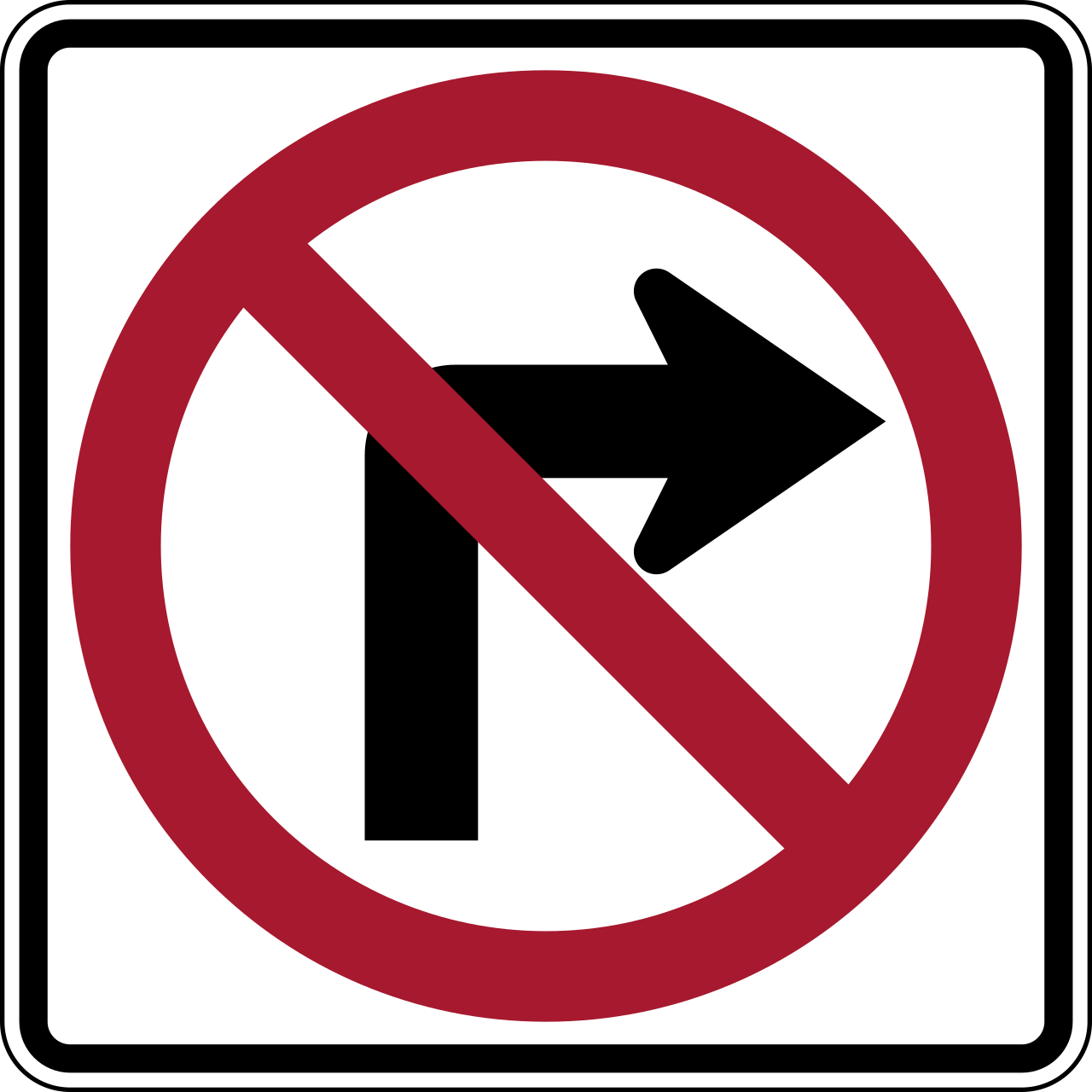 This road sign means:
A
No left turn
B
No right turn
C
No U-turns
No explanation available.
Question 2
An edge line that angles toward the center of the road indicates that:
A
the road is narrower ahead.
B
there’s a narrow bridge ahead.
C
you must turn right.
No explanation available.
Question 3
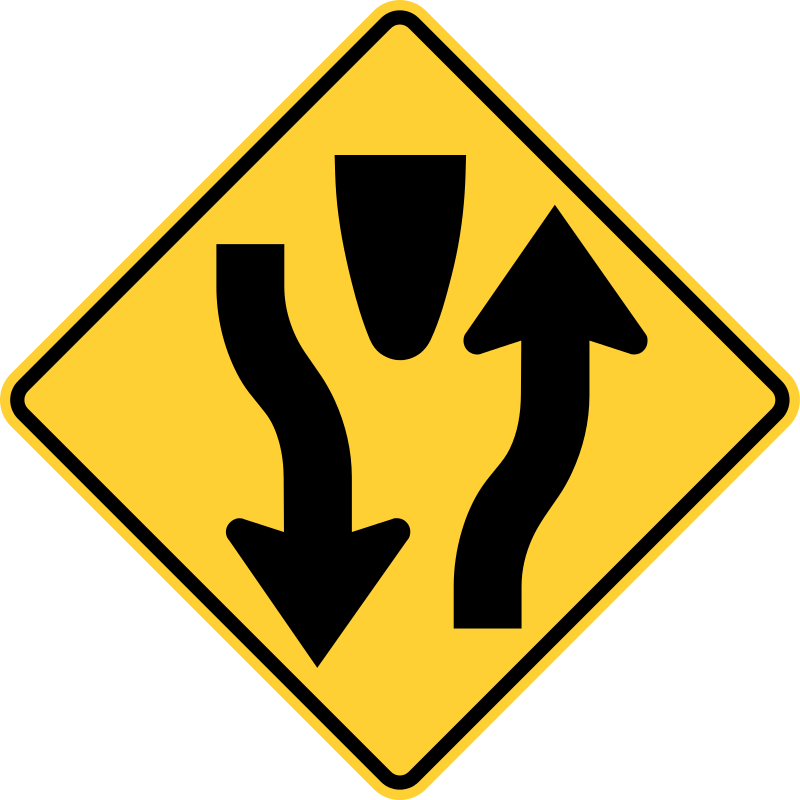 This sign means:
A
The highway ahead is divided into two one-way roadways.
B
Roundabout ahead. Slow down.
C
The divided highway on which drivers are traveling ends ahead.
No explanation available.
Question 4
What do pennant-shaped signs indicate?
A
A school crossing
B
Yield
C
A No Passing Zone
No explanation available.
Question 5
If an approaching driver does not dim the headlights, you should:
A
move your eyes to the left to help avoid the glare of approaching high beams.
B
move your eyes to the right and avoid looking directly at the bright lights.
C
flash your headlights to low beam for a second, then return to high beam.
No explanation available.
Question 6
Before stopping your vehicle on the roadway, drivers should:
A
check their mirrors for traffic.
B
place their foot on the accelerator.
C
pump the brakes to check if they work properly.
No explanation available.
Question 7
Pentagonal signs are used to indicate:
A
possible hazards on roadways.
B
no passing zones.
C
school crossings.
No explanation available.
Question 8
 This is the shape and color of a ________ sign.
A
yield
B
stop
C
do not enter
No explanation available.
Question 9
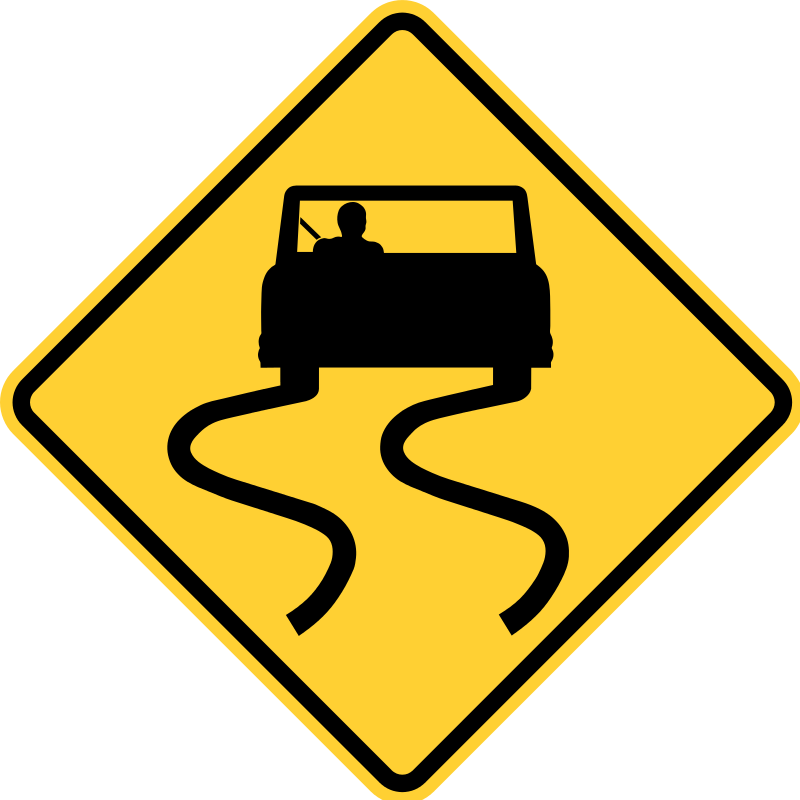 This road sign means:
A
Winding road
B
Side road ahead
C
Slippery when wet
No explanation available.
Question 10
To be able to turn quickly, your hands should be:
A
placed outside of the steering wheel on opposite sides
B
next to each other on the top of the steering wheel.
C
on the steering wheel, so they are at the 6 and 12 o'clock positions.
No explanation available.
Question 11
A steady yellow light means:
A
Be prepared to stop for the red light.
B
Drive with caution.
C
Be prepared to go. The light will soon be green.
No explanation available.
Question 12
Stopping distances:
A
are not affected by vehicle speed.
B
decrease as vehicle speed increases.
C
increase as vehicle speed increases.
No explanation available.
Question 13
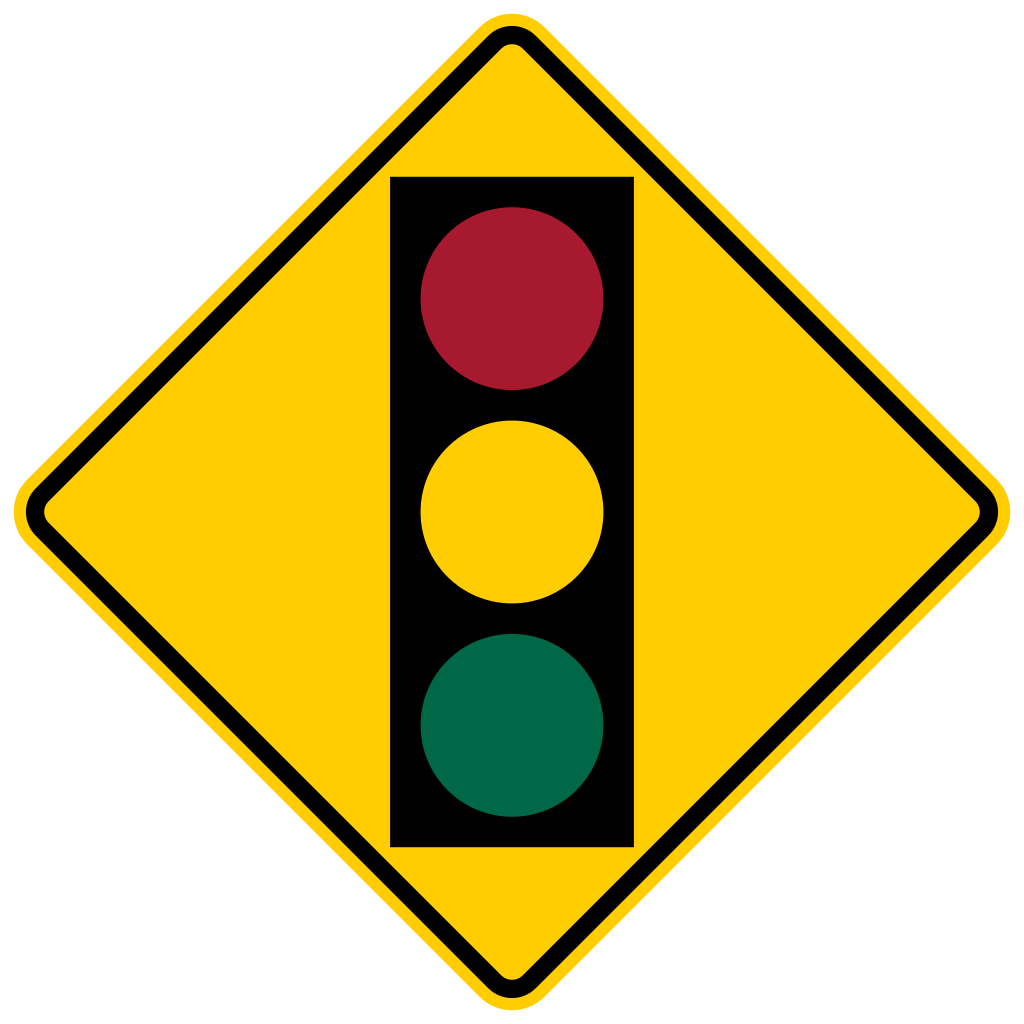 This sign means:
A
No traffic signal ahead
B
Traffic signal ahead
C
Open intersection ahead
No explanation available.
Question 14
What is the purpose of minimum speed limits?
A
To keep a smooth traffic flow.
B
To halt the traffic flow.
C
To allow emergency vehicles with red flashing lights to safely pass other vehicles.
No explanation available.
Question 15
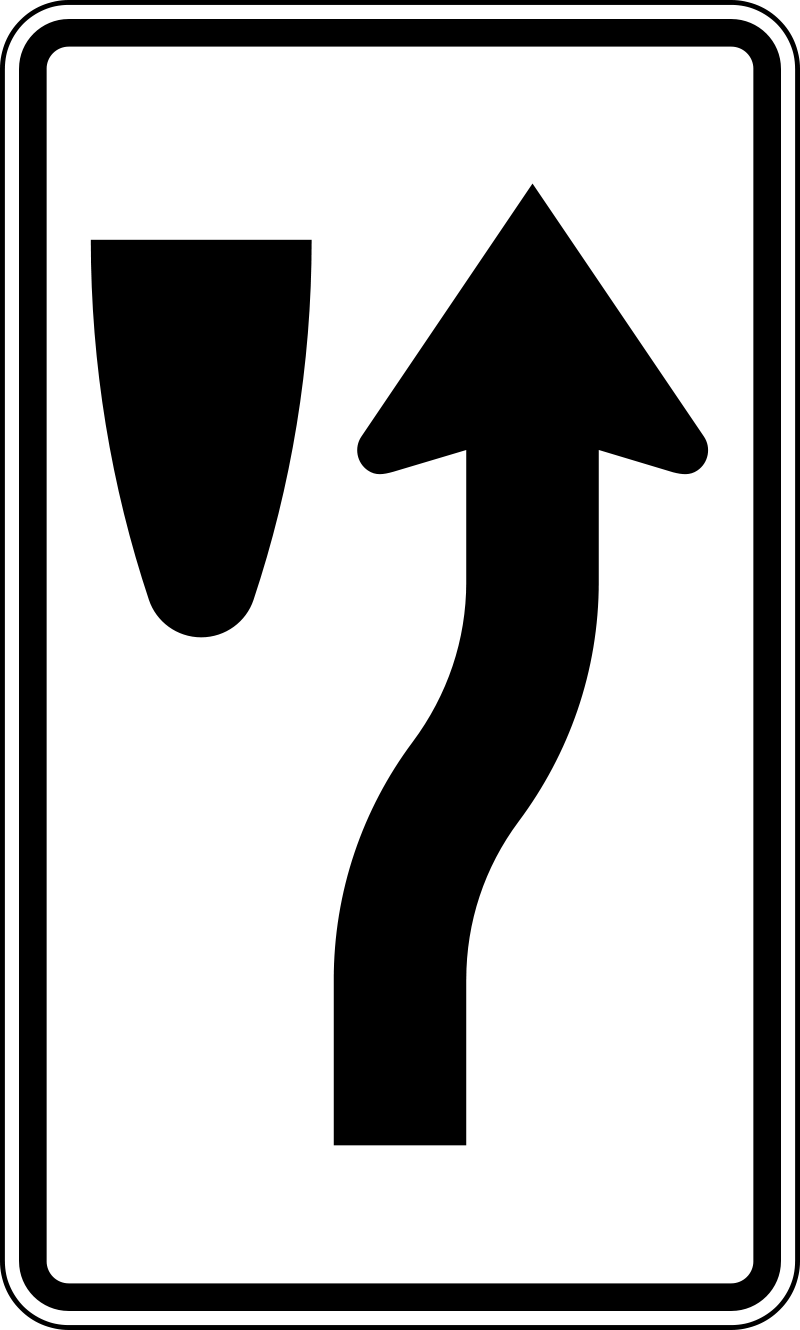 This sign tells drivers that:
A
there is a right turn ahead.
B
they must stay on the right side of the divider
C
a divided highway ends ahead.
No explanation available.
Question 16
 This road sign means:
A
Wrong Way
B
Merging Traffic
C
Curve ahead
No explanation available.
Question 17
When driving in fog, you should never use your high beams because:
A
the light will reflect back into your eyes.
B
vehicles behind you may follow too closely.
C
oncoming vehicles might not see you.
No explanation available.
Question 18
Continuous hard braking on ice and snow often:
A
is the best option during winter.
B
keeps the brakes from freezing.
C
causes the front wheels to lock.
No explanation available.
Question 19
Driver distractions include:
A
Avoiding unnecessary lane changes.
B
Slowing down to look at crash scene.
C
turning your headlights on when rain and fog make it hard to see.
No explanation available.
Question 20
Parking is not allowed:
A
in an intersection, unless permitted by signs.
B
within 300 feet of a pedestrian safety area.
C
on public roads
No explanation available.
Question 21
You are driving in the far right lane of a four lane freeway and notice broken white lines on the left side of your lane. You are driving:
A
on the entrance ramp.
B
in a special lane for slow moving vehicles.
C
in an exit lane.
No explanation available.
Question 22
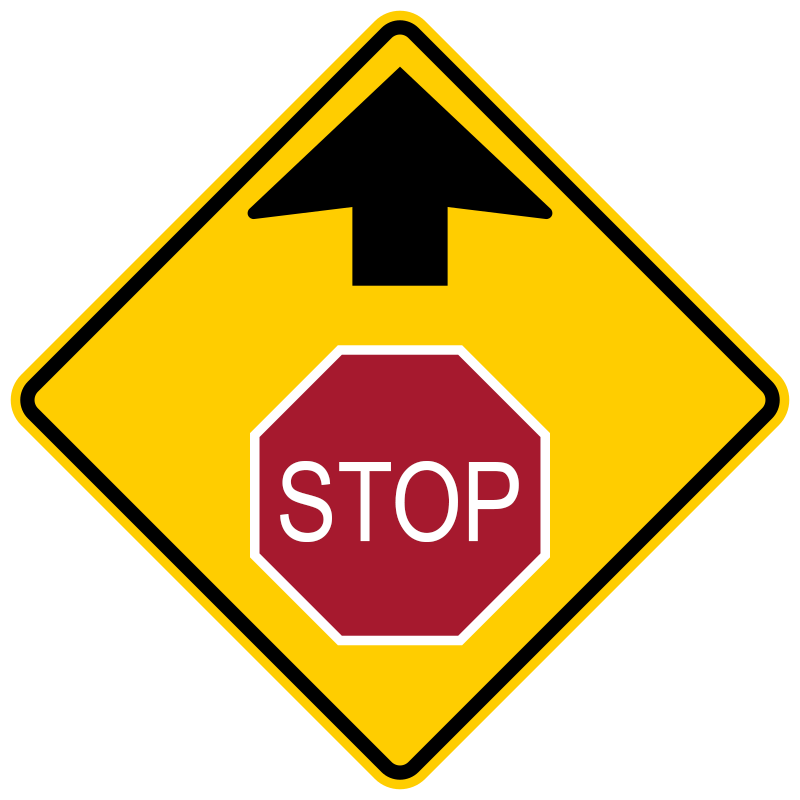 When drivers come to this sign, they must:
A
be ready to stop at the stop sign.
B
warn other drivers that a stop sign is ahead.
C
brake sharply and come to a complete stop.
No explanation available.
Question 23
Blind spots are:
A
Areas to the side or rear of a vehicle that are easy to spot.
B
areas of the road that cannot be seen even when looking into mirrors.
C
traffic control devices.
No explanation available.
Question 24
To prevent a fatigue-related crash while driving:
A
find a safe parking area to take a 15 to 20 minute nap.
B
drive at night when there are not as many vehicles on the roadway.
C
continue driving so you will reach your destination sooner.
No explanation available.
Question 25
If you remain in the back blind spot of a large vehicle:
A
you increase the chance of a crash.
B
the large vehicle will take much longer to stop.
C
you can reduce fuel consumption.
No explanation available.
Question 26
When you change lanes:
A
look over your shoulder in the direction you plan to move.
B
look into the rearview mirror.
C
look in the left side mirror.
No explanation available.
Question 27
Slowing down just to look at collisions or anything else out of ordinary:
A
causes traffic congestion.
B
improves traffic flow.
C
helps prevent rear-end collisions.
No explanation available.
Question 28
After passing a vehicle, it is safe to return to your lane:
A
when you can no longer see the vehicle over your right shoulder.
B
after about five seconds.
C
when you see the front bumper of the other vehicle in your mirror.
No explanation available.
Question 29
To avoid hydroplaning, drivers should:
A
slow down.
B
apply the brakes firmly.
C
drive at a constant speed.
No explanation available.
Question 30
If an emergency vehicle with flashing lights is traveling in the area where you are driving, you must:
A
drive to the right side of the road and stop.
B
proceed slowly and let the vehicle pass.
C
keep driving in your lane.
No explanation available.