 drivequiz.com
 Question 1
When a vehicle is hydroplaning:
A
the windshield wipers cannot keep the windshield clear of rain.
B
the spray from large trucks reduces visibility.
C
the tires lose contact with the road surface.
D
All of the above.
No explanation available.
Question 2
When other vehicles are approaching an uncontrolled intersection at approximately the same time, you should:
A
maintain your speed and proceed through the intersection.
B
come to a complete stop and wait until there are no vehicles at the intersection.
C
watch for vehicles coming from the right and yield the right-of-way, then proceed when safe.
D
increase your speed and get through the intersection.
No explanation available.
Question 3
 This road sign means:
A
Merging traffic from the right
B
Sharp curves ahead
C
Intersection ahead
No explanation available.
Question 4
When you see an emergency vehicle with flashing lights, you must:
A
pull over to the side of the road and stop.
B
increase your speed to provide a clear path for the emergency vehicle.
C
slow down until it passes you.
D
drive with your flashers on.
No explanation available.
Question 5
At dawn you should:
A
drive with your parking lights on.
B
drive with your emergency flashers on.
C
turn on your headlights.
D
avoid turning your vehicle lights on.
No explanation available.
Question 6
To help relieve fatigue on a trip:
A
drink coffee frequently.
B
change feet on the gas pedal.
C
stretch your legs while driving.
D
stop for a rest every two hours.
No explanation available.
Question 7
When being passed by another vehicle, drivers should:
A
slow down.
B
slightly increase their speed.
C
maintain a constant speed.
No explanation available.
Question 8
Some roadway surfaces are more slippery during certain times or at certain places. Which of the following is more likely to be slippery on cold, wet days?
A
Roundabouts and traffic circles.
B
Roads in shady areas.
C
Asphalt rather than concrete roads.
No explanation available.
Question 9
As long as you don’t leave the road, you may legally pass a vehicle on the right:
A
if you are on a two-lane, two-way road and the other vehicle is turning left.
B
when you are turning into a one-way street with no oncoming traffic.
C
Never.
D
Only during daylight hours.
No explanation available.
Question 10
When you are driving, turning your head and looking before changing lanes is:
A
a good driving habit.
B
unnecessary, you should use your rearview mirror instead.
C
a bad driving habit.
D
prohibited.
No explanation available.
Question 11
Never make a U-turn from:
A
the lane you’re in.
B
the right lane.
C
the left part of the lane nearest to the centerline of the roadway.
No explanation available.
Question 12
At intersections, crosswalks, and railroad crossings, drivers should always:
A
look to the sides of their vehicle to see what is coming.
B
slowly pass vehicles the vehicles ahead.
C
stop, listen for oncoming traffic, and proceed with caution.
No explanation available.
Question 13
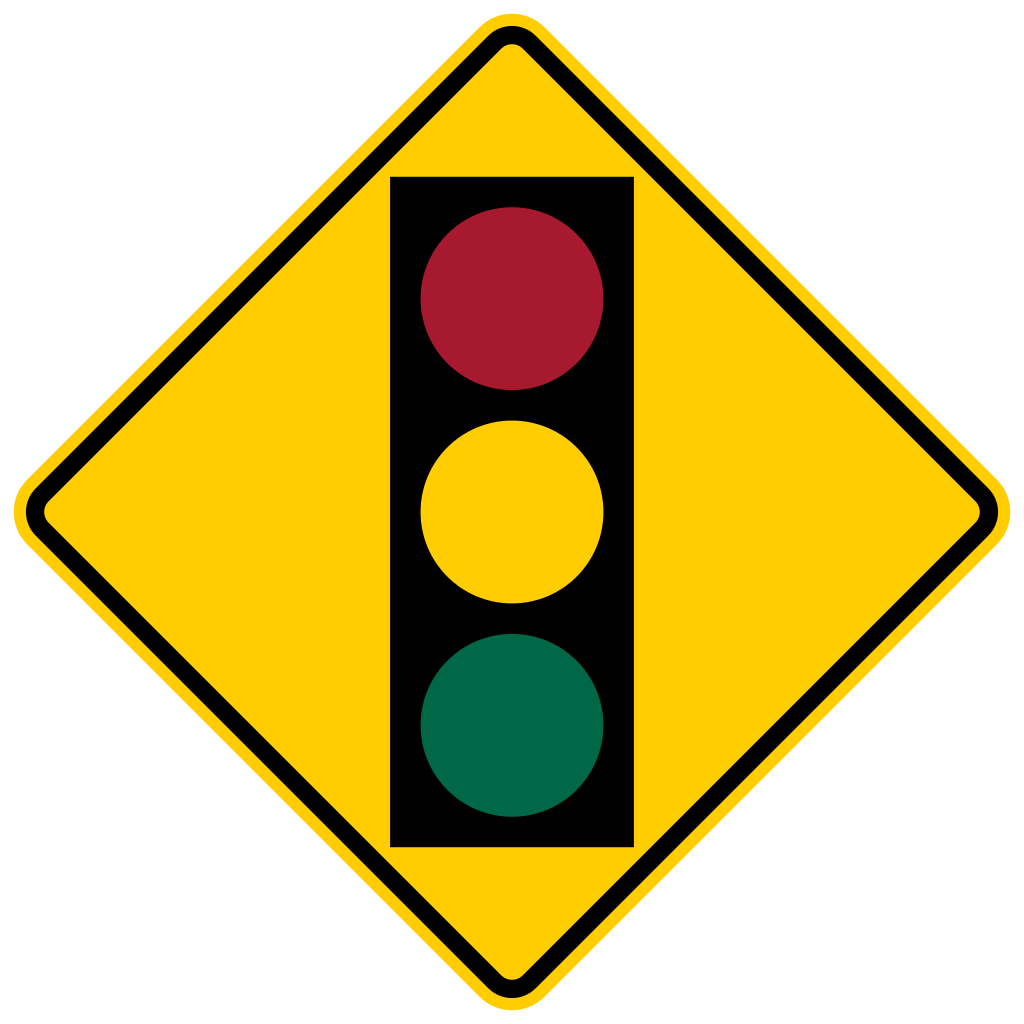 This road sign means:
A
Uncontrolled intersection ahead
B
Don’t park next to the traffic signal
C
The traffic signal ahead is out of order
D
Traffic signals ahead
No explanation available.
Question 14
To avoid the risk of being involved in an alcohol-related crash, you should:
A
decide before you start drinking that you are not going to drive.
B
say 'No, thanks' if someone offers you alcohol.
C
call a taxi if you've been drinking.
D
All of the above.
No explanation available.
Question 15
When approaching a construction site, drivers should:
A
accelerate to get out of the way quickly.
B
slow down and adjust their driving manner.
C
honk their horn to alert construction workers of their presence.
No explanation available.
Question 16
What is the purpose of minimum speed limits?
A
To keep a smooth traffic flow.
B
To halt the traffic flow.
C
To allow emergency vehicles with red flashing lights to safely pass other vehicles.
No explanation available.
Question 17
______________ is an unsafe distraction when driving.
A
Leaving early to drive to an appointment.
B
Texting a message on your cell phone.
C
Controlling an emotion before putting the vehicle in gear.
D
Asking a passenger to enter your mapping request into your GPS.
No explanation available.
Question 18
Drivers should check their rearview mirrors:
A
often to see how traffic is moving behind them.
B
only when slowing down.
C
to see if a truck is in their blind spot.
No explanation available.
Question 19
Your license can be suspended if you are under 21 and drive with a BAC of:
A
0.15% or more.
B
any amount.
C
0.08% or more.
No explanation available.
Question 20
Broken yellow lines:
A
separate lanes of traffic moving in opposite directions.
B
indicate you are in a no passing zone.
C
separate lanes of traffic moving in the same direction.
No explanation available.
Question 21
Having a drivers license is:
A
a requirement.
B
a privilege.
C
a constitutional right.
No explanation available.
Question 22
Drivers should always signal when:
A
pulling into traffic from a parking area or alley.
B
changing lanes.
C
pulling out of a parking space.
D
All of the above.
No explanation available.
Question 23
A broken white line:
A
means passing or crossing is prohibited in that lane.
B
separates two lanes traveling in the same direction.
C
marks the right edge of the roadway.
No explanation available.
Question 24
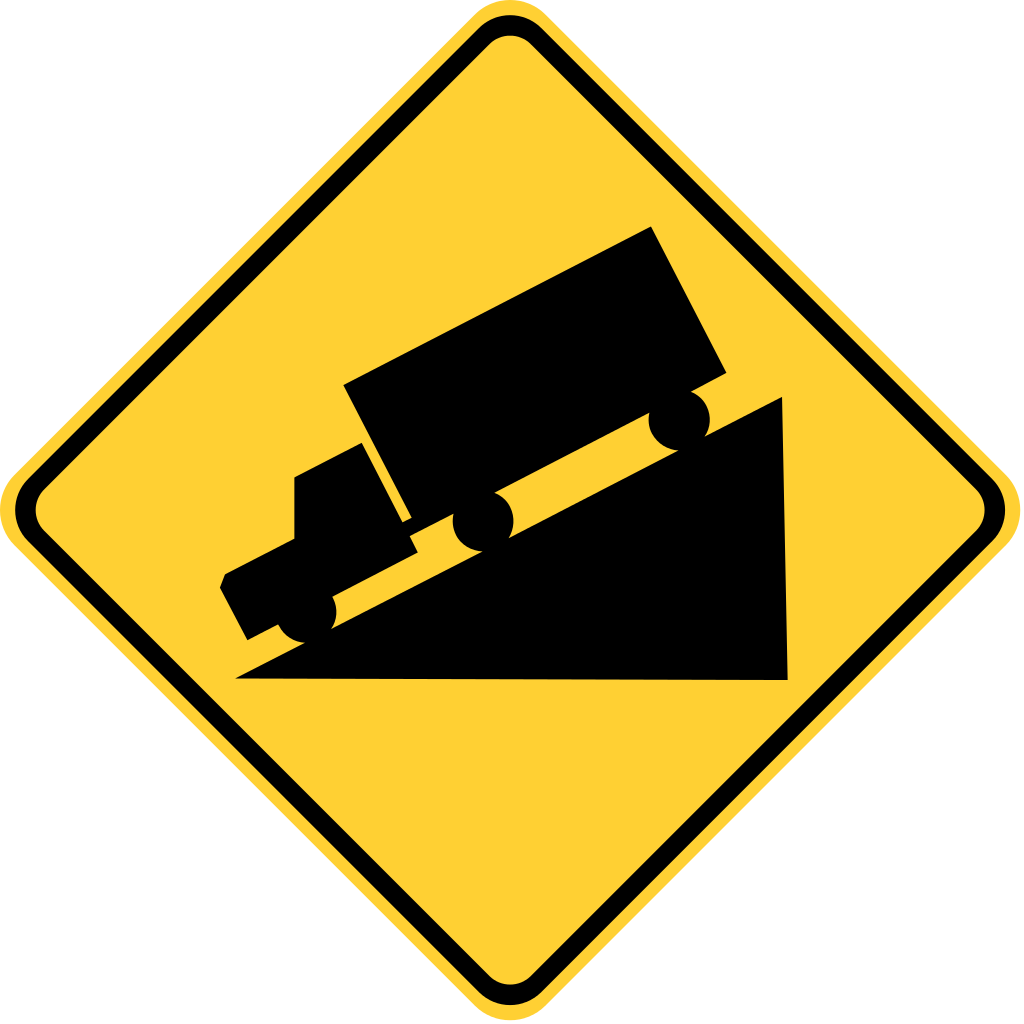 This road sign means:
A
Truck stop ahead
B
No trucks allowed
C
Hill or downgrade up ahead
No explanation available.
Question 25
__________________ give you right-of-way to make a left turn.
A
A green arrow pointing left
B
A flashing red light
C
A flashing yellow light
D
A solid green light
No explanation available.
Question 26
Passing is prohibited:
A
when a school bus is stopped to load or unload children on a public road.
B
at intersections.
C
whenever a solid line marks the left side of your lane.
D
All of the above.
No explanation available.
Question 27
When entering a freeway, you should check traffic by:
A
using both the inside and outside mirrors.
B
using the inside mirror.
C
using the side mirror and looking over your shoulder.
No explanation available.
Question 28
When passing another vehicle, you should return to your lane if:
A
you have passed the other vehicle’s front bumper.
B
you are at least 25 feet in front of the passed vehicle.
C
you can see both headlights in the rearview mirror.
No explanation available.
Question 29
Your BAC depends on:
A
how fit you are.
B
the type of beverage you drink.
C
the amount of alcohol you drink.
No explanation available.
Question 30
This sign means:
A
You must stop ahead
B
Railroad crossing ahead
C
No Passing Zone
D
There is a traffic signal ahead
No explanation available.
Question 31
The amount of alcohol in the blood is measured by:
A
blood alcohol concentration (BAC).
B
Number of Drinks (NOC).
C
Amount of Alcohol Drunk (AAD).
No explanation available.
Question 32
To safely cross a railroad, drivers should:
A
listen and look both ways, then proceed if it is safe to do so.
B
drive across quickly if a train is approaching, or if it is too close, stop and then back up.
C
stop within 10 feet of all railroad crossings.
D
look both ways only if the red light is flashing.
No explanation available.
Question 33
When you make a left turn from a one-way road into a two-way road, you must:
A
enter the two-way road to the left of its center line.
B
make a U-turn into the two-way road.
C
enter the two-way road to the right of its center line.
No explanation available.
Question 34
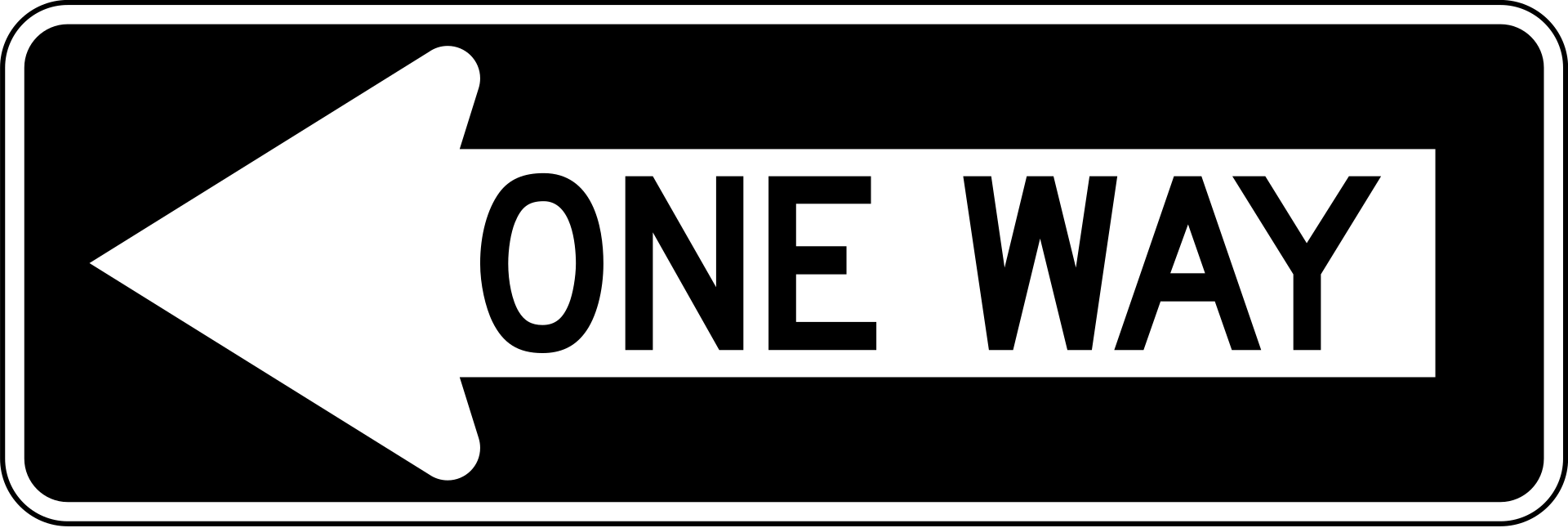 This road sign means:
A
Traffic flows only in the direction of the arrow
B
Turn right or left
C
No right turn
D
Sharp curve ahead
No explanation available.
Question 35
When a school bus is picking up or dropping off children, you must:
A
slow down and pass the bus with caution.
B
stop if you are driving in the same direction.
C
stop regardless of your direction of travel.
No explanation available.
Question 36
When driving in rainy weather, you should:
A
steer and brake smoothly.
B
drive in low gear.
C
steer off the road.
No explanation available.
Question 37
If a bus has signaled and is pulling back onto the roadway, you must:
A
yield.
B
honk to let them know you’re there.
C
move to the left lane.
D
speed up to pass.
No explanation available.
Question 38
Your first response to reduced visibility should be:
A
to look for road edge markings to guide you.
B
to turn on your windshield wipers.
C
to reduce your speed.
D
to turn on your headlights.
No explanation available.
Question 39
You are stopped at a stop sign and you are going to go straight through the intersection. A car on the cross road has stopped at a stop sign on your right and is going to go straight. Who has the right-of-way?
A
Whoever enters the intersection first.
B
You.
C
The car on your right.
No explanation available.
Question 40
In heavy rain, tires can begin to ride on the water that is on top of the road pavement. This is called:
A
rideplaning.
B
hydroplaning.
C
pavement-planing.
D
waterplaning.
No explanation available.
Question 41
To safely cross a railroad, drivers should:
A
drive across quickly if a train is approaching, or if it is too close, stop and then back up.
B
look both ways only if the red light is flashing.
C
listen and look both ways, then proceed if it is safe to do so.
D
stop within 10 feet of all railroad crossings.
No explanation available.
Question 42
When you make a left turn from a one-way road into a two-way road, you must:
A
make a U-turn into the two-way road.
B
enter the two-way road to the left of its center line.
C
enter the two-way road to the right of its center line.
D
turn left into the one-way road.
No explanation available.
Question 43
This road sign means:
A
Traffic flows only in the direction of the arrow
B
No right turn
C
Turn right or left
D
Sharp curve ahead
No explanation available.
Question 44
When a school bus is picking up or dropping off children, you must:
A
stop regardless of your direction of travel.
B
slow down and pass the bus with caution.
C
stop if you are driving in the same direction.
No explanation available.
Question 45
When driving in rainy weather, you should:
A
steer off the road.
B
steer and brake smoothly.
C
drive in low gear.
No explanation available.
Question 46
If a bus has signaled and is pulling back onto the roadway, you must:
A
move to the left lane.
B
speed up to pass.
C
yield.
D
honk to let them know you’re there.
No explanation available.
Question 47
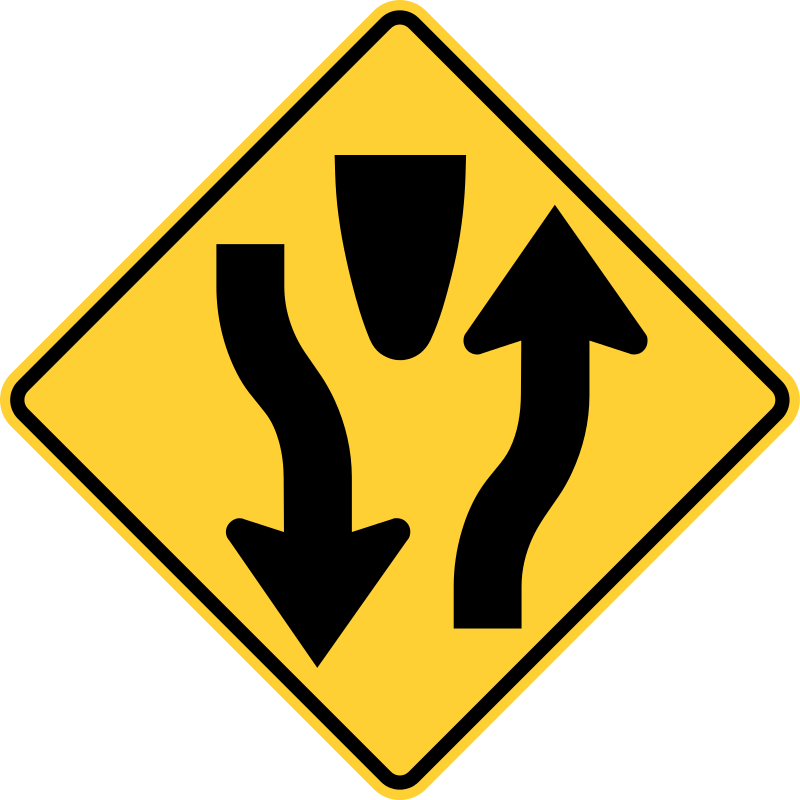 Your first response to reduced visibility should be:
A
to turn on your headlights.
B
to turn on your windshield wipers.
C
to reduce your speed.
D
to look for road edge markings to guide you.
No explanation available.
Question 48
You are stopped at a stop sign and you are going to go straight through the intersection. A car on the cross road has stopped at a stop sign on your right and is going to go straight. Who has the right-of-way?
A
Whoever enters the intersection first.
B
The car on your right.
C
No one.
D
You.
No explanation available.
Question 49
When a stop is required at an intersection with no stop line or crosswalk:
A
Drivers should stop only at a place where the driver can see at least 100 feet on either side.
B
Drivers are required to slow down to make sure crossing traffic is clear.
C
Drivers are not required to stop.
D
Drivers should stop at the point nearest the intersecting roadway where the driver has a view of approaching traffic on the intersecting roadway before actually entering the roadway.
No explanation available.
Question 50
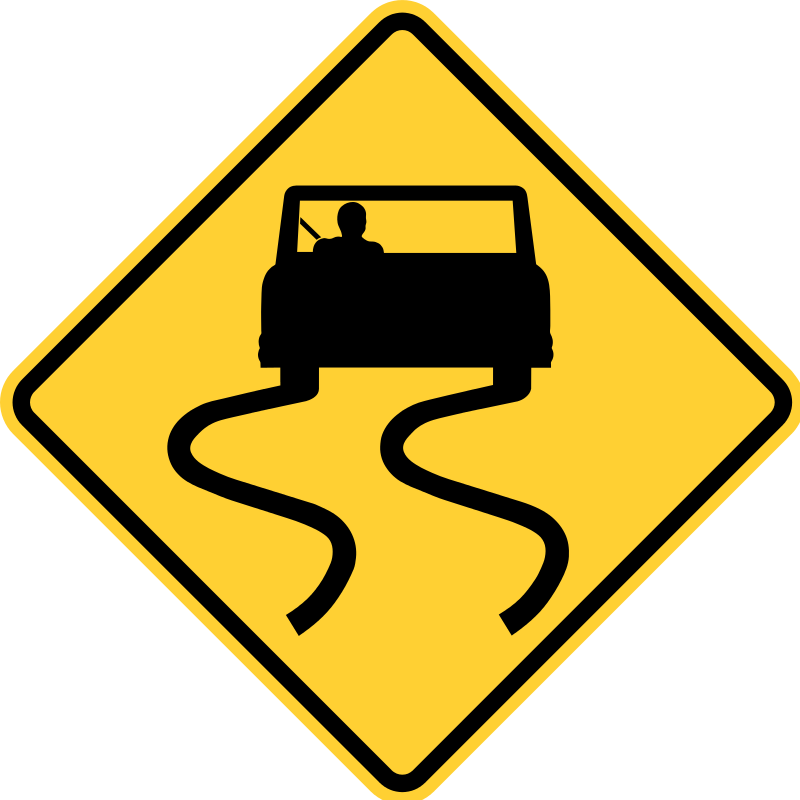 This road sign means:
A
Winding road
B
Side road ahead
C
Slippery when wet
No explanation available.
Question 51
If your vehicle’s right wheels leave the pavement, you should:
A
maintain your current speed to gain better traction.
B
build up brake pressure by pumping the brake pedal several times.
C
take your foot off the gas and when you are slowed down, ease back on the road when it is safe to do so.
D
immediately come to a complete stop.
No explanation available.
Question 52
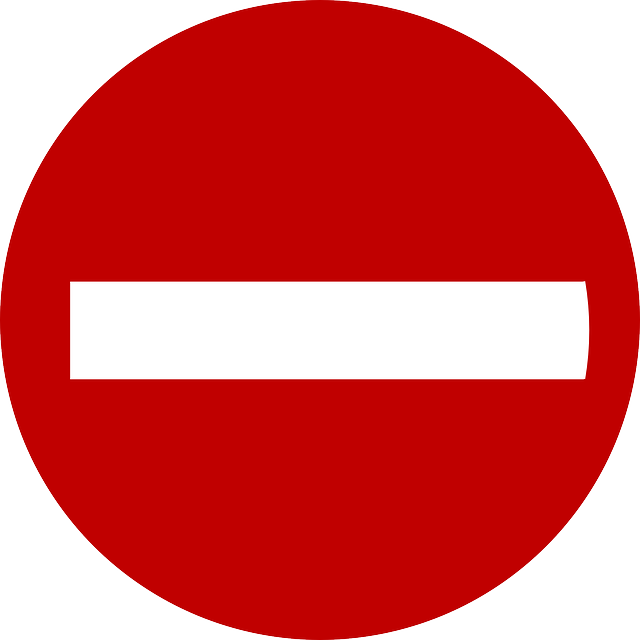 This road sign means:
A
No left turn
B
Lane ends
C
Do not enter
No explanation available.
Question 53
 This road sign means:
A
A road joins from the left
B
The road ahead turns sharply right then sharply left
C
Sharp right turn
D
Winding road ahead
No explanation available.
Question 54
When driving on gravel roads:
A
your tires do not have as much traction.
B
you should use cruise control to increase traction.
C
you should keep your eyes moving.
No explanation available.
Question 55
A broken yellow line alongside a solid yellow line means:
A
Passing is permitted on the side of the broken yellow line
B
Passing is not permitted in either direction
C
Passing on the right is permitted in either direction
No explanation available.
Question 56
If a driver follows you too closely, you should:
A
move to another lane if possible.
B
activate your stop lights.
C
brake suddenly.
No explanation available.
Question 57
 This sign means:
A
narrow road ahead.
B
no turns are allowed on this road.
C
series of curves ahead.
D
the road may be slippery when wet.
No explanation available.
Question 58
To enter a gap in traffic while driving on a highway:
A
check behind, then watch the vehicle ahead.
B
speed up and let vehicles make way.
C
watch only the vehicles behind the gap.
No explanation available.