 drivequiz.com
 Question 1
A yellow arrow means:
A
Do not go in the direction of the arrow.
B
If you intend to turn in the direction of the arrow, be prepared to stop.
C
The same as a steady yellow light.
No explanation available.
Question 2
Drivers should adjust their rearview and side mirrors:
A
whenever they need to use them.
B
before they get into the car.
C
before they start driving.
No explanation available.
Question 3
A school bus ahead of you in your lane is stopped with red lights flashing. You must:
A
stop until all the children have left the bus.
B
stop until the lights stop flashing.
C
reduce your speed, change lanes and pass.
No explanation available.
Question 4
When driving on slick roads, drivers should:
A
accelerate quickly.
B
take turns more slowly.
C
use alternate routes.
D
drive as they would on dry roads.
No explanation available.
Question 5
You should never depend on your mirrors when you prepare to change lanes. Why?
A
You should look over your shoulder instead.
B
Mirrors are useless.
C
Mirrors need to be adjusted.
D
Mirrors leave 'blind spots' behind both sides of vehicles.
No explanation available.
Question 6
Before entering a curve, you should:
A
pump your brakes several times.
B
activate your turn signal.
C
reduce your speed.
No explanation available.
Question 7
If an approaching driver does not dim the headlights, you should:
A
move your eyes to the left to help avoid the glare of approaching high beams.
B
move your eyes to the right and avoid looking directly at the bright lights.
C
flash your headlights to low beam for a second, then return to high beam.
No explanation available.
Question 8
 This road sign means:
A
Slow down or stop
B
Stop
C
Road narrows ahead
No explanation available.
Question 9
To avoid hydroplaning you should:
A
keep your tires properly inflated.
B
slow down when roads are wet.
C
All of the above.
No explanation available.
Question 10
Who is most at risk?
A
Drivers who are fatigued.
B
Drivers who are driving on long, boring roads.
C
All of the above.
No explanation available.
Question 11
At night, it is hardest to see:
A
street lights.
B
pedestrians.
C
other motorists.
D
road signs.
No explanation available.
Question 12
At times even driving 10 MPH is too fast for existing conditions.
A
True
B
False
No explanation available.
Question 13
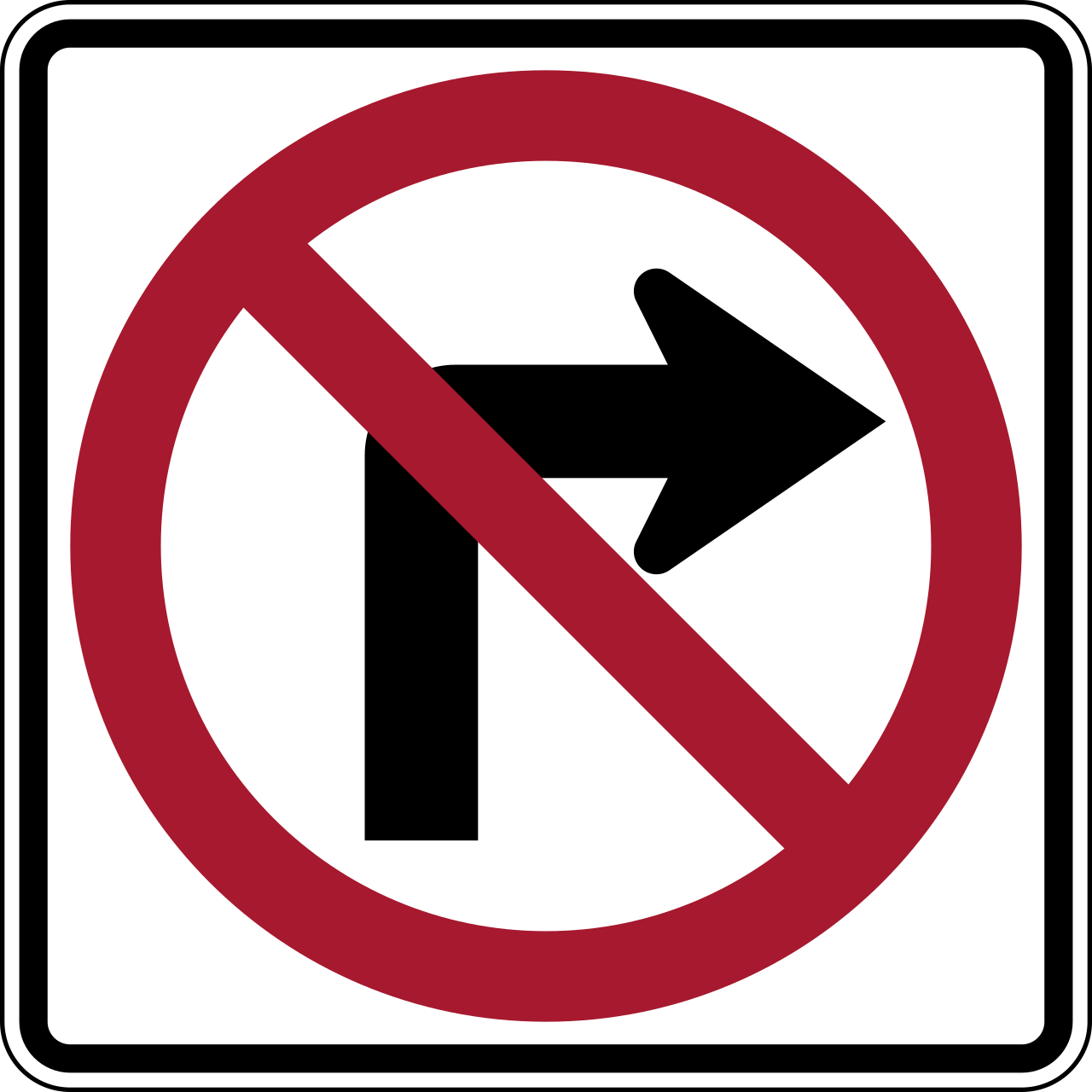 This road sign means:
A
No left turn
B
No right turn
C
No U-turns
No explanation available.
Question 14
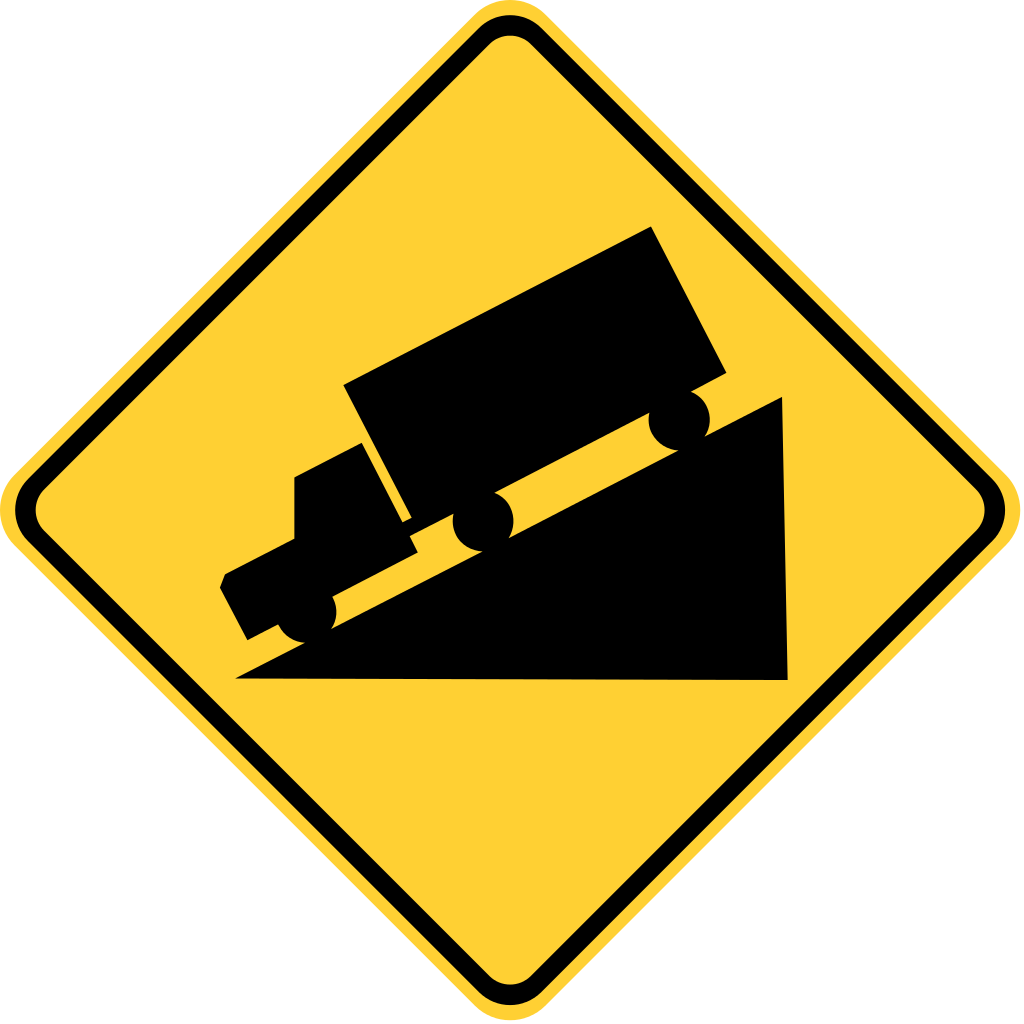 This road sign means:
A
Merging traffic
B
Steep grade ahead
C
Intersection ahead
No explanation available.
Question 15
When passing a motorcycle, you must:
A
have your vehicle entirely into the left lane before and during the pass.
B
honk your horn to alert the motorcyclist.
C
speed up above the speed limit and use your emergency lights to alert the motorcyle that you are about to pass.
No explanation available.
Question 16
Drivers can not pass a vehicle on the left if:
A
they approach the top of a hill on a two-way road and can not see over it.
B
they can not safely return to the right lane before they reach a solid yellow center line for the right lane.
C
All of the above.
No explanation available.
Question 17
When parallel parking between two cars, you should first:
A
back slowly.
B
pull up even with the front car.
C
turn your wheels to the right.
D
turn your wheels to the left.
No explanation available.
Question 18
Motorcycles:
A
must share a traffic lane with another vehicle.
B
are easier to see than cars.
C
are entitled to use a complete traffic lane.
No explanation available.
Question 19
When driving in work zones you should:
A
gradually come to a complete stop and wait for a flagger to guide traffic safely through the work zone.
B
tailgate the vehicle ahead.
C
carefully watch for workers and moving equipment.
No explanation available.
Question 20
Stopping distances:
A
are not affected by vehicle speed.
B
decrease as vehicle speed increases.
C
increase as vehicle speed increases.
No explanation available.
Question 21
Before making a left turn from a one-way street, you must:
A
be in the lane closest to the left curb.
B
be in the lane closest to the right curb.
C
be in the lane closest to the center of the street.
No explanation available.
Question 22
You come to an intersection where your view to the side is blocked. What should you do?
A
maintain your speed and look both ways.
B
slow down and look both ways.
C
Stop, then inch forward until you can see clearly in both directions.
No explanation available.
Question 23
When dust is blowing across the roadway making it difficult to see other vehicles, you should drive slower and turn on your:
A
headlights.
B
parking lights.
C
emergency flashers.
No explanation available.
Question 24
When turning, drivers should:
A
always move to the right lane.
B
check traffic in all directions.
C
increase their speed to improve stability.
No explanation available.
Question 25
The effects of alcohol on driving include:
A
None of the above.
B
Improved coordination
C
Better reflexes
D
Improved judgement
No explanation available.
Question 26
Collisions can happen more often when:
A
one lane of traffic is traveling faster than the others.
B
one vehicle is traveling faster than the flow of traffic.
C
all vehicles are traveling at the posted speed limit.
No explanation available.
Question 27
In general, you should pass vehicles going in the same direction as you are going:
A
only if the other driver signals it is safe.
B
whenever you have the opportunity to do so.
C
on the right.
D
on the left.
No explanation available.
Question 28
You should always travel:
A
at the speed of the vehicle behind.
B
according to weather and road conditions.
C
at the speed limit.
No explanation available.
Question 29
When driving at night, you should slow down and:
A
use high beams whenever possible, but never when there's oncoming traffic.
B
use high beams until other drivers dim their lights.
C
follow the vehicle ahead more closely to avoid glare from oncoming headlights.
D
come to a complete stop whenever there's oncoming traffic.
No explanation available.
Question 30
When other drivers around you are acting in anger, you should:
A
slow down or move over safely.
B
distance yourself from the situation.
C
avoid making eye contact.
D
All of the above.
No explanation available.
Question 31
Increasing your vehicle’s speed _____ your field of vision.
A
decreases
B
increases
C
inverts
D
has no effect on
No explanation available.
Question 32
A traffic light shows both a red light and a green arrow. The driver may not turn in the direction of the arrow until the red light has changed.
A
True
B
False
No explanation available.
Question 33
If you meet a stopped school bus with the lights flashing and the signal arm extended, you should:
A
proceed at 15 MPH or less, if no children are present.
B
stop.
C
watch for children and proceed at normal speed.
No explanation available.
Question 34
This road sign means:
A
Hill ahead
B
Trucks merging from the right
C
Side road ahead
D
Keep left
No explanation available.
Question 35
When parking on a public road, drivers should:
A
move as far away from traffic as possible.
B
always park on the left side of the roadway.
C
All of the above.
No explanation available.
Question 36
This traffic sign warns you about:
A
merging traffic.
B
a hill or a downgrade up ahead on the road.
C
an intersection ahead.
D
a winding road.
No explanation available.
Question 37
When getting ready to change lanes, you should:
A
check your rearview mirror.
B
quickly turn your head to check for other vehicles.
C
check your side view mirror.
D
All of the above.
No explanation available.
Question 38
Drinking alcohol while taking drugs:
A
reduces the effects of the alcohol.
B
reduces the effects of the drug or medicine.
C
has no effect, they are different substances.
D
could multiply the effects of the alcohol.
No explanation available.
Question 39
When driving, it is important to keep a space cushion _______ of your vehicle.
A
only on the left and right side
B
only in back
C
on all sides
D
only in front
No explanation available.
Question 40
When you see an emergency vehicle with flashing lights, you must:
A
stop exactly where you are.
B
pull to the curb and stop.
C
speed up and take the nearest exit.
D
slow down and keep moving in your lane.
No explanation available.
Question 41
 This road sign means:
A
You have the right of way
B
No Passing Zone
C
Yield the right-of-way
No explanation available.
Question 42
When driving in work zones, drivers should:
A
closely follow the driver in front of them.
B
reduce their speed and be prepared to stop.
C
maintain their speed through the work zone.
No explanation available.
Question 43
Before entering a traffic circle, drivers must slow down and yield to ___________ in the traffic circle.
A
pedestrians
B
vehicles
C
bicyclists
D
All of the above.
No explanation available.
Question 44
When driving in icy or snowy conditions, to avoid crashes drivers should:
A
get off the highway as quickly as possible.
B
reduce speed and increase following distance.
C
add extra weight to the vehicle to improve traction.
D
engage 4 wheel drive on the vehicle.
No explanation available.
Question 45
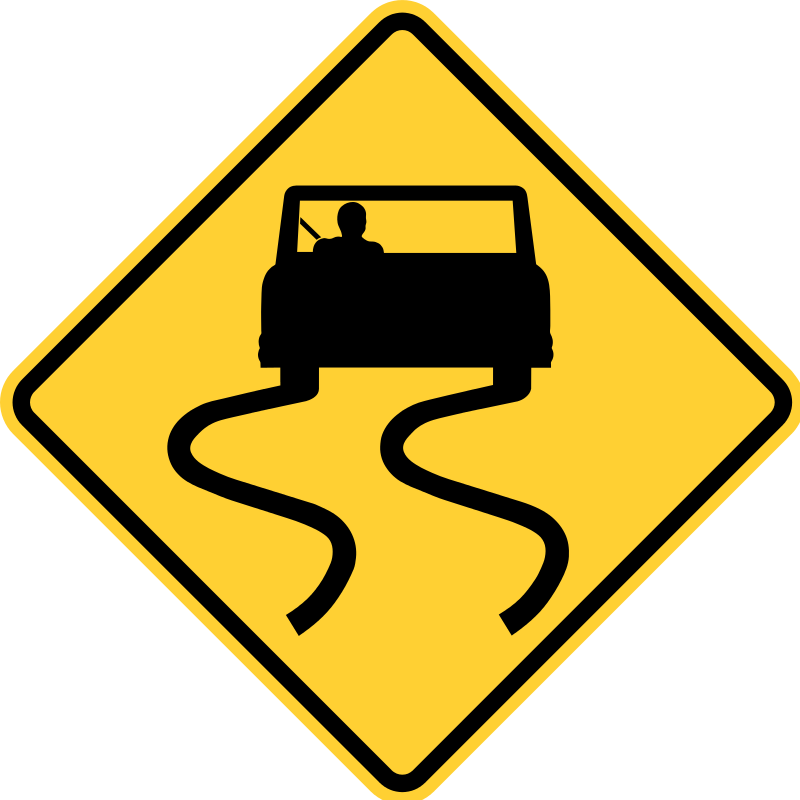 This road sign means:
A
Slow down, slippery when wet
B
Detour ahead
C
Road curves ahead
No explanation available.
Question 46
What should you do as you prepare to turn right at an intersection?
A
Honk your horn.
B
Yield to bicyclists coming from the opposite direction.
C
Signal your turn, check for bicyclists, and do not turn directly in front of a bicyclist.
No explanation available.
Question 47
This road sign means:
A
Winding road
B
Side road ahead
C
Slippery when wet
No explanation available.
Question 48
It is important for drivers to know that trucks:
A
are easier for the driver to operate.
B
require more space for turning movements.
C
take longer than cars to stop.
D
require less time to pass on an incline than cars.
No explanation available.
Question 49
Many crashes are caused by:
A
yielding the right of way.
B
frequently checking mirrors and blind spot.
C
maintaining a 4-second following distance between your vehicle and any vehicle in front of you.
D
driving too fast for conditions.
No explanation available.
Question 50
Examples of proper glass maintenance include:
A
Replacing worn wiper blades.
B
Keeping your windows clean and clear.
C
All of the above.
No explanation available.
Question 51
To avoid becoming an aggressive driver, you should:
A
drive above the posted speed limit.
B
tailgate the driver in front of you.
C
relax and concentrate on driving.
No explanation available.
Question 52
When driving behind a motorcycle, drivers should:
A
slow down.
B
be ready to sound the horn.
C
increase the following distance.
No explanation available.
Question 53
When following another vehicle at night, drivers should use:
A
low beam headlights.
B
emergency flashers.
C
high beam headlights.
No explanation available.
Question 54
If you've had a few beers, the effects of alcohol will be reduced only by:
A
waiting several hours.
B
taking a cold shower.
C
getting a cup of coffee.
No explanation available.
Question 55
To avoid becoming an aggressive driver, you should:
A
Adjust your schedule to drive during times with the most highway traffic.
B
Allow enough travel time to reach your destination on schedule.
C
Listen to heavy metal music.
No explanation available.
Question 56
The most common cause of traffic crashes is:
A
human error.
B
bad road conditions.
C
wet pavement.
D
bad weather.
No explanation available.
Question 57
Drivers must yield the right-of-way to pedestrians when:
A
pedestrians are crossing the road in marked crosswalks.
B
All of the above.
C
the driver is turning a corner and pedestrians are crossing with the light.
No explanation available.
Question 58
Double solid yellow lines mean:
A
the lane to the right may pass.
B
passing is not permitted in either direction.
C
the lane to the left may pass.
D
passing is permitted in either direction.
No explanation available.