 drivequiz.com
 Question 1
The Florida “standard” speed limits in municipal speed areas is:
A
25 MPH.
B
55 MPH.
C
30 MPH.
D
20 MPH.
No explanation available.
Question 2
 This road sign warns drivers that:
A
left turns are not allowed at the intersection.
B
the road will make a sharp turn to the right.
C
another road enters the highway from the direction shown.
No explanation available.
Question 3
 The picture shows:
A
a flashing arrow panel.
B
a sharp curve sign.
C
a one way sign.
D
a no-left-turn sign.
No explanation available.
Question 4
Parking is allowed:
A
within intersections.
B
on crosswalks.
C
on public roads.
D
within 15 feet of a fire hydrant.
No explanation available.
Question 5
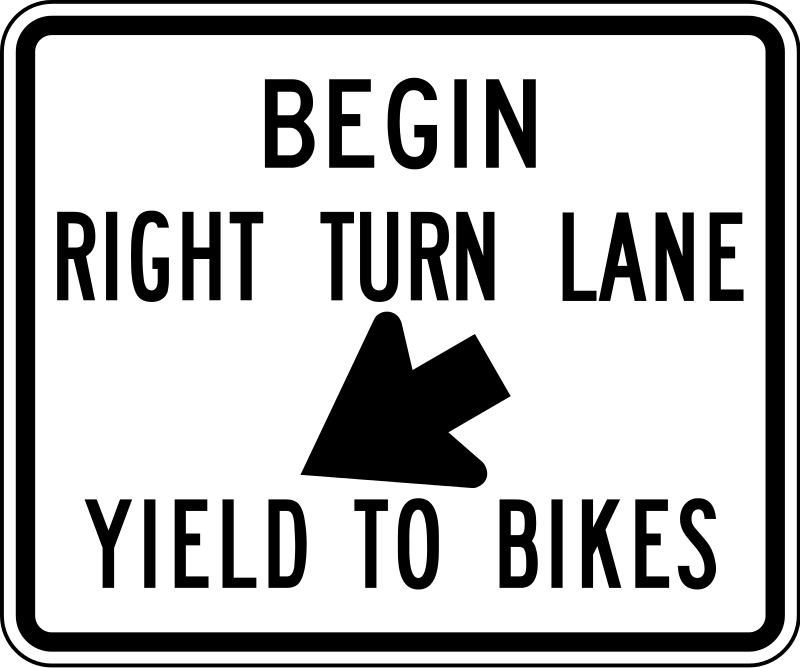 What does this road sign indicate?
A
Drivers have the right of way over bikes turning left.
B
Vehicles turning left must yield to bikes entering a right turn lane.
C
Motor vehicles entering an exclusive right-turn lane must weave across bicycle traffic in bicycle lanes.
No explanation available.
Question 6
Braking distance is:
A
usually 50 feet.
B
how far a vehicle will travel, in ideal conditions, while the driver is braking.
C
the total distance a vehicle has traveled until it comes to a complete stop.
D
how far a vehicle will continue to travel before the driver hits the brakes.
No explanation available.
Question 7
Which of the following is NOT defensive driving:
A
Looking for possible danger.
B
Acting right away to prevent a crash.
C
Thinking ahead.
D
Smiling to other drivers.
No explanation available.
Question 8
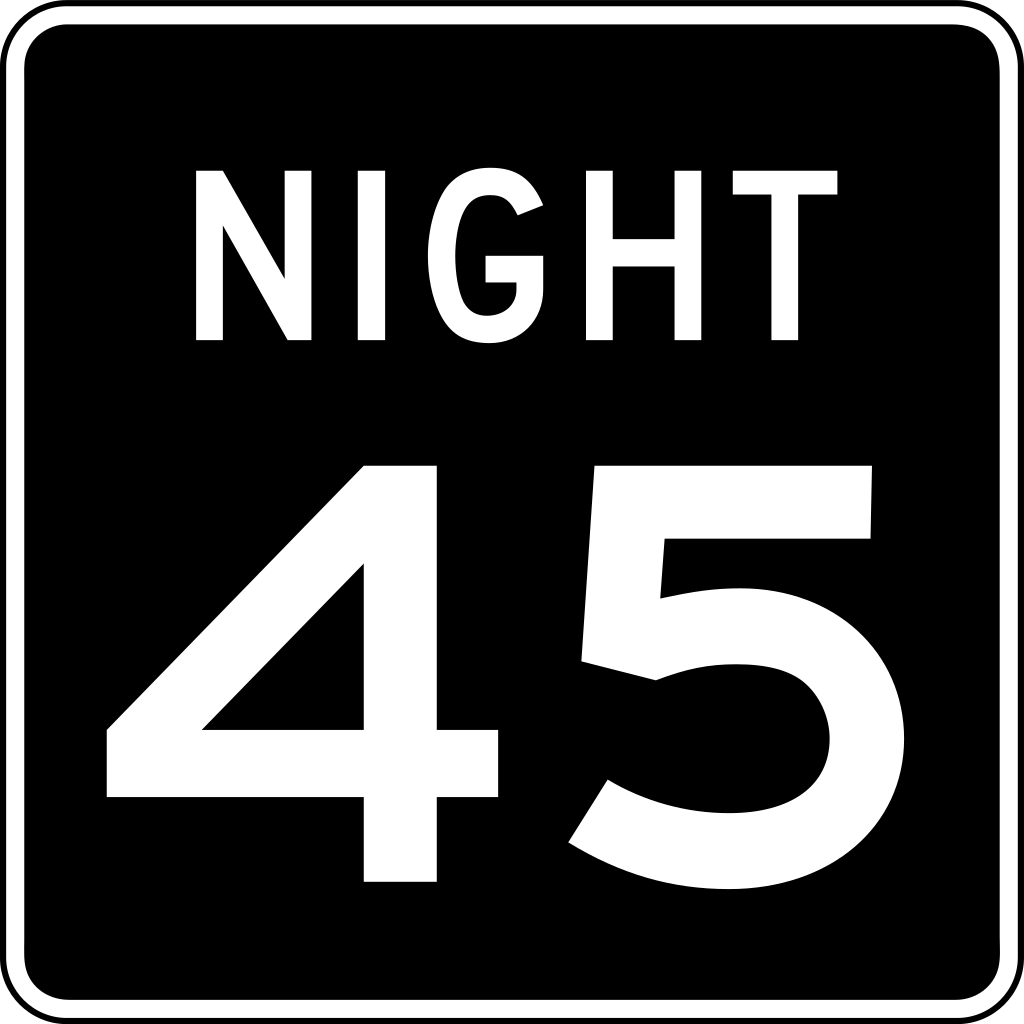 This sign means:
A
Take route 45 if you are driving at night.
B
The night-time speed limit is 45 MPH.
C
The minimum speed limit is 45 MPH.
No explanation available.
Question 9
Driving 16 MPH or more over lawful or posted speed will result in __ points being added.
A
4
B
2
C
6
D
3
No explanation available.
Question 10
On a highway, you are moving in the opposite direction of a stopped school bus which is picking up or dropping off children. You:
A
can pass the bus.
B
must always stop.
C
must stop if the bus’ stop arm is withdrawn.
D
do not have to stop if the highway is divided by a raised barrier or an unpaved median at least five feet wide.
No explanation available.
Question 11
Which of the following is true? Your license will be SUSPENDED:
A
if you commit retail theft.
B
if you are found guilty of racing on the highway.
C
if you park next to a fire hydrant.
D
All of the above.
No explanation available.
Question 12
A driver is approaching a highway-railroad crossings and is following a bus. The driver should:
A
pass the bus and come to a complete stop within 15 feet of the crossing.
B
be alert as the bus may have to stop at the crossing even when the gates are up.
C
overtake and pass the bus before reaching the crossing.
D
None of the above.
No explanation available.
Question 13
Which line on a pavement permits the passing of other vehicles?
A
Solid yellow line.
B
Broken yellow line
C
Broken white line
D
Solid white line.
No explanation available.
Question 14
To reduce their chances of colliding with an animal, drivers should:
A
scan the sides of the road to watch for the reflection of vehicle headlights in the eyes of animals.
B
look well down the road and far off to each side.
C
All of the above.
No explanation available.
Question 15
Which of the following is true when crossing a railroad track:
A
Do not move forward until it's safe to do so.
B
If there is more than one track, make sure all tracks are clear before starting to cross.
C
In heavy traffic, make sure there is room for their vehicle on the other side before crossing.
D
All of the above.
No explanation available.
Question 16
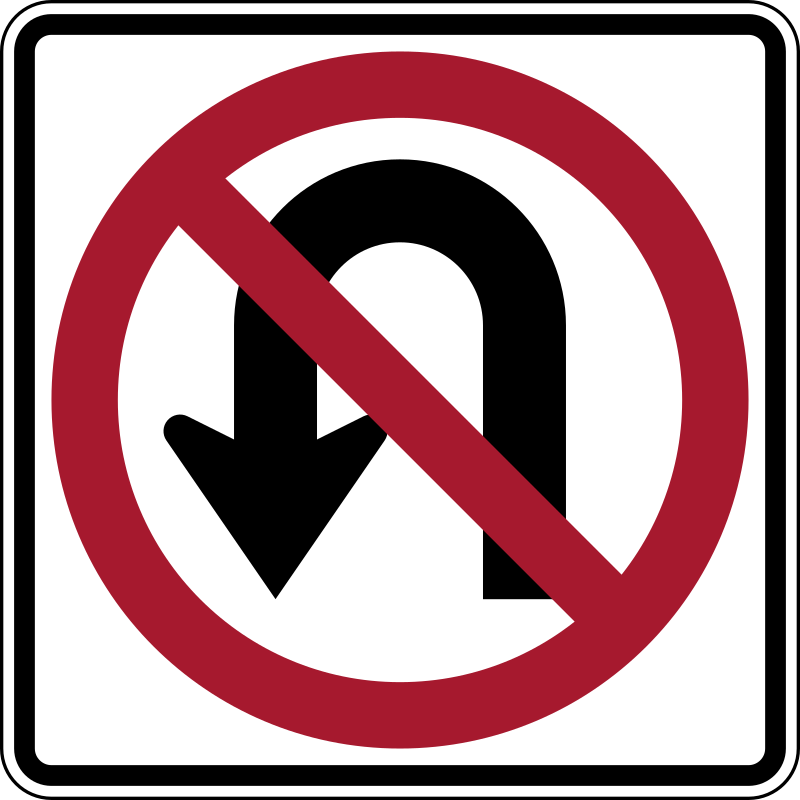 This road sign means:
A
Left turns are not allowed where this sign is displayed.
B
Drivers cannot make a complete turn to go in the opposite direction.
C
Vehicles turning left must make a U-turn.
No explanation available.
Question 17
Parking is not allowed within __ feet of a railroad crossing.
A
100
B
200
C
30
D
50
No explanation available.
Question 18
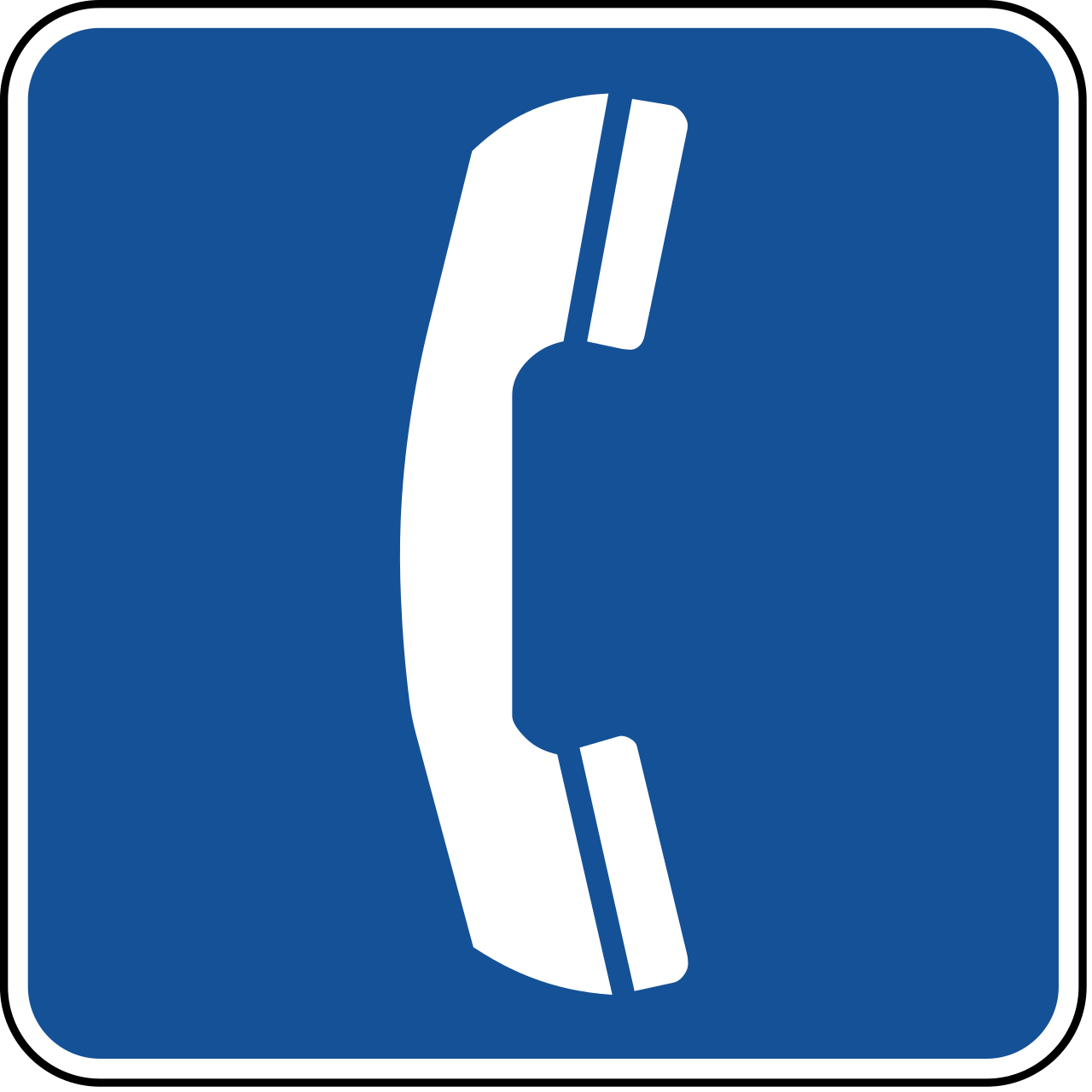 This sign indicates:
A
Phone service ahead
B
Emergency line available
C
Cell phone shop ahead
No explanation available.
Question 19
Car pool vehicles are those with:
A
2 or more occupants in the car.
B
3 or more occupants in the car.
C
less than 4 occupants in the car.
D
anti-hydroplaning tires.
No explanation available.
Question 20
In Florida, bicyclists on public roads have the same rights and responsibilities as:
A
sidewalk riders.
B
drivers of motorized vehicles.
C
pedestrians on sidewalks and in crosswalks.
D
mopeds.
No explanation available.
Question 21
If traffic signals are out of order, drivers must:
A
treat the light as if it is a four-way stop sign.
B
treat the light as if it is a yellow light.
C
stop if they can.
D
treat the light as if it is a green light.
No explanation available.
Question 22
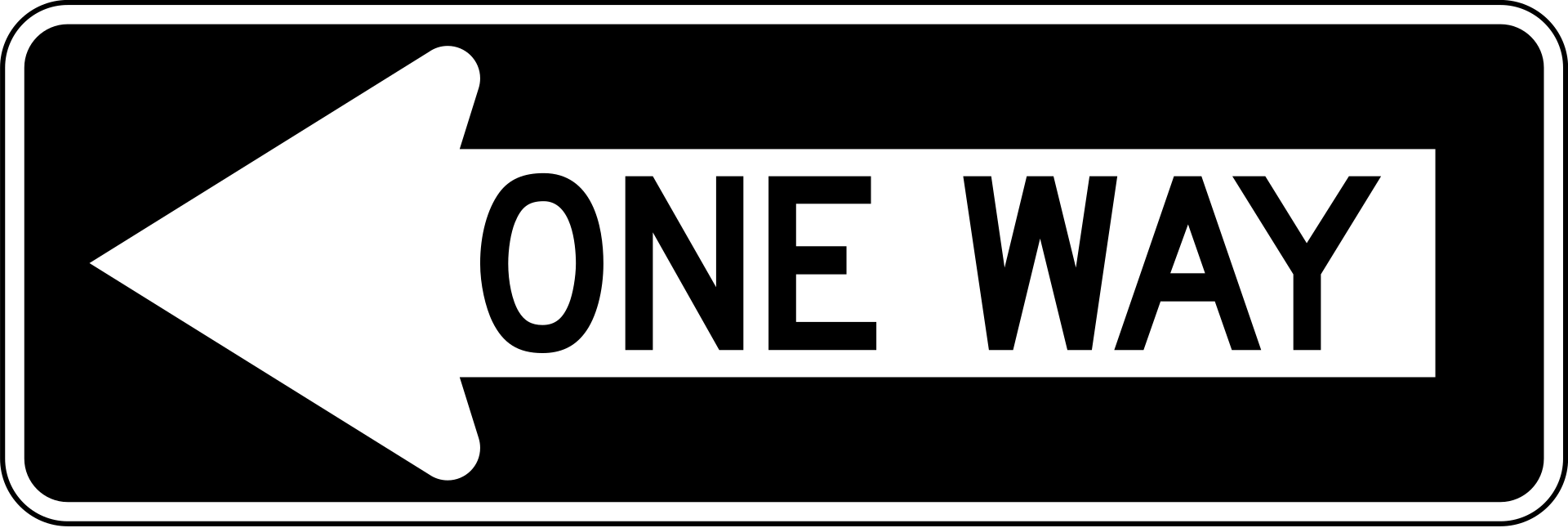 The ‘One Way’ sign means that:
A
only vehicles turning left may travel in the direction of the arrow.
B
there is only one road that turns left at the intersection.
C
drivers may travel only in the direction of the arrow.
No explanation available.
Question 23
When a school bus stops to unload children on a divided highway, should the vehicles traveling in the same direction as the bus stop?
A
No, only vehicles traveling in the opposite direction have to stop.
B
Yes, if you are in a school zone.
C
Yes, always.
D
Stopping is optional in this specific case.
No explanation available.
Question 24
On an expressway, drivers should:
A
follow other vehicles closely.
B
drive on the median strip.
C
park on the left lane.
D
stop driving when they feel tired.
No explanation available.
Question 25
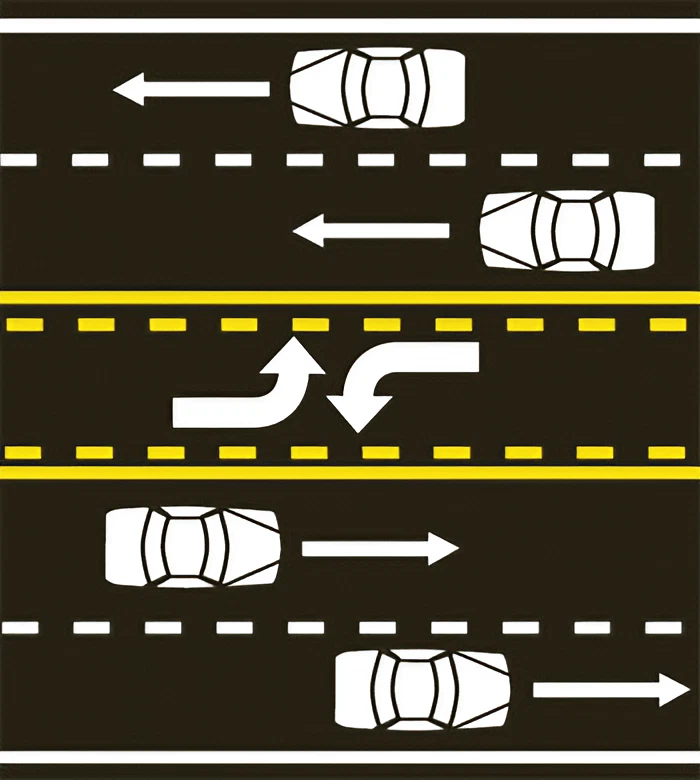 The picture shows:
A
a reversible road with reserved lanes.
B
a divided highway with a shared lane.
C
a highway with a reversible lane.
D
a two-way roadway with a center lane for left turns.
No explanation available.
Question 26
Your red traffic signal changes to green while a pedestrian is crossing in your traffic lane. The right of way should be given:
A
by the pedestrian, but only when vehicles are turning left.
B
by the pedestrian.
C
to the pedestrian.
No explanation available.
Question 27
The Financial Responsibility Law requires drivers to:
A
be financially responsible for damages they may cause to others when a motor vehicle crash happens.
B
pay $15,000 of Property Damage Liability (PDL)
C
share the financial risk of road crashes with the other drivers
D
pay their car insurance.
No explanation available.
Question 28
Drivers should keep a minimum following distance of:
A
3 to 4 seconds, with an additional second for any unusual weather or traffic conditions.
B
1 second, with an additional second when approaching an intersection.
C
55 milliseconds, with an additional millisecond for every drop of rain in a 2 miles radius.
D
1 to 2 seconds, with an additional second for any vehicle in front of them.
No explanation available.
Question 29
Which of the following is NOT true? Before you start your engine you should:
A
make sure your safety belt is clean.
B
adjust the seat so you can reach all controls.
C
make sure your car is in park or neutral gear.
D
adjust the inside and outside rearview mirrors.
No explanation available.
Question 30
Parking is not allowed within __ feet of any flashing signal, stop sign or traffic signal.
A
50
B
30
C
15
D
100
No explanation available.
Question 31
When the light is red, drivers:
A
must stop after entering the intesection.
B
must yield to oncoming traffic and pedestrians.
C
must come to a complete stop before moving into the intersection.
D
can go, but only if the intersection is clear.
No explanation available.
Question 32
Passing is allowed:
A
at intersections
B
on hills
C
on two-lane highways
D
None of the above.
No explanation available.
Question 33
Before pulling out from a right-side parallel parking space, drivers must:
A
check for approaching traffic and give a left turn signal.
B
enter the traffic flow and then give a left turn signal.
C
make sure no law enforcement officer who is directing traffic.
D
None of the above.
No explanation available.
Question 34
If you want to go to a social event where you might drink alcohol, you should:
A
arrange to go with two or more people and agree that one of you will not drink alcohol.
B
arrange to remain overnight or ride home with a friend who does not drink.
C
use public transportation or a taxi, if available.
D
All of the above.
No explanation available.
Question 35
On slippery roads, drivers should:
A
leave more space in front of their vehicle.
B
increase their speed to avoid hydroplaning.
C
come to a complete stop.
No explanation available.
Question 36
What is the meaning of red traffic signs?
A
High emphasis warning.
B
Stop, do not enter or wrong way.
C
Regulatory.
No explanation available.
Question 37
 This sign warns drivers that:
A
they must turn either to the right or left.
B
there is a double curve ahead.
C
there is a winding road ahead.
No explanation available.
Question 38
Any driver under the age of 18 who accumulates six or more points within a 12 month period is automatically restricted for one year to:
A
operating the motor vehicle only between 7:00 a.m. and 11:00 p.m.
B
driving for “Business Purposes ONLY”.
C
driving within 25 miles from home.
D
driving only during weekends.
No explanation available.
Question 39
Crossbuck signs are:
A
speed limit signs.
B
yield signs.
C
stop signs.
D
flashing signals.
No explanation available.
Question 40
A bicyclist on the road ahead has their left arm extended downward to their left. You should assume the bicyclist is signaling that he/she is:
A
turning left.
B
about to turn right.
C
slowing down or stopping.
D
tired.
No explanation available.
Question 41
Which of the following is NOT true? When you enter an open intersection, you must yield the right-of-way if:
A
the traffic light is red.
B
a vehicle is already in the intersection.
C
you plan to make a left turn and a vehicle is approaching from the opposite direction.
D
All of the above.
No explanation available.
Question 42
A large percentage of motorist bicycle crashes occur:
A
on interstate highways.
B
at intersections.
C
because there are too many byciclists.
D
on sidewalks.
No explanation available.
Question 43
Passengers under the age of 18:
A
must always be restrained by a safety belt or a child restraint device.
B
must be restrained by a safety belt or a child restraint device when seating in front.
C
do not have to be restrained by a safety belt or a child restraint device.
No explanation available.
Question 44
An eight-lane highway has ________ pedestrian countdown period ___ a four-lane road.
A
the same; as
B
a longer; than
C
half the; of
D
a shorter; than
No explanation available.
Question 45
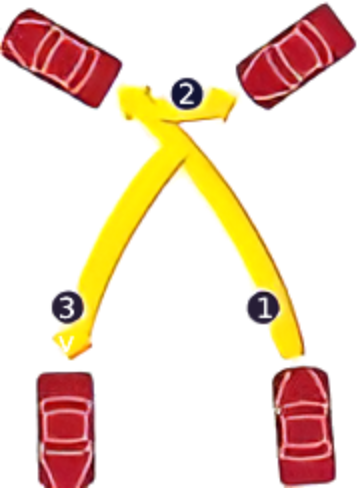 The picture shows:
A
a three-point turn.
B
that car number 1 should yield to car number 2, while car number 2 should yield to car number 3.
C
a U-turn.
D
an intersection with 4 cars.
No explanation available.
Question 46
Unlawful speed resulting in a crash will result in __ points being added.
A
2
B
3
C
6
D
4
No explanation available.
Question 47
A second refusal to take a blood or breath test will result in:
A
a fine of $1,500.
B
an 18 month suspension and a first degree misdemeanor.
C
a fine of $1,000.
D
a 12 month suspension and a second degree misdemeanor.
No explanation available.
Question 48
At intersections marked with stop lines, drivers must:
A
stop behind the lines and yield the right-of-way to all other traffic and pedestrians at stop signs.
B
stop only if a pedestrian is crossing the road.
C
yield the right-of-way to other vehicles and pedestrians and then stop.
D
enter the intersection and then yield to pedestrians.
No explanation available.
Question 49
At 50 MPH, a vehicle will travel a minimum of ___ feet before the driver can bring it to a complete stop.
A
158
B
100
C
268
D
55
No explanation available.
Question 50
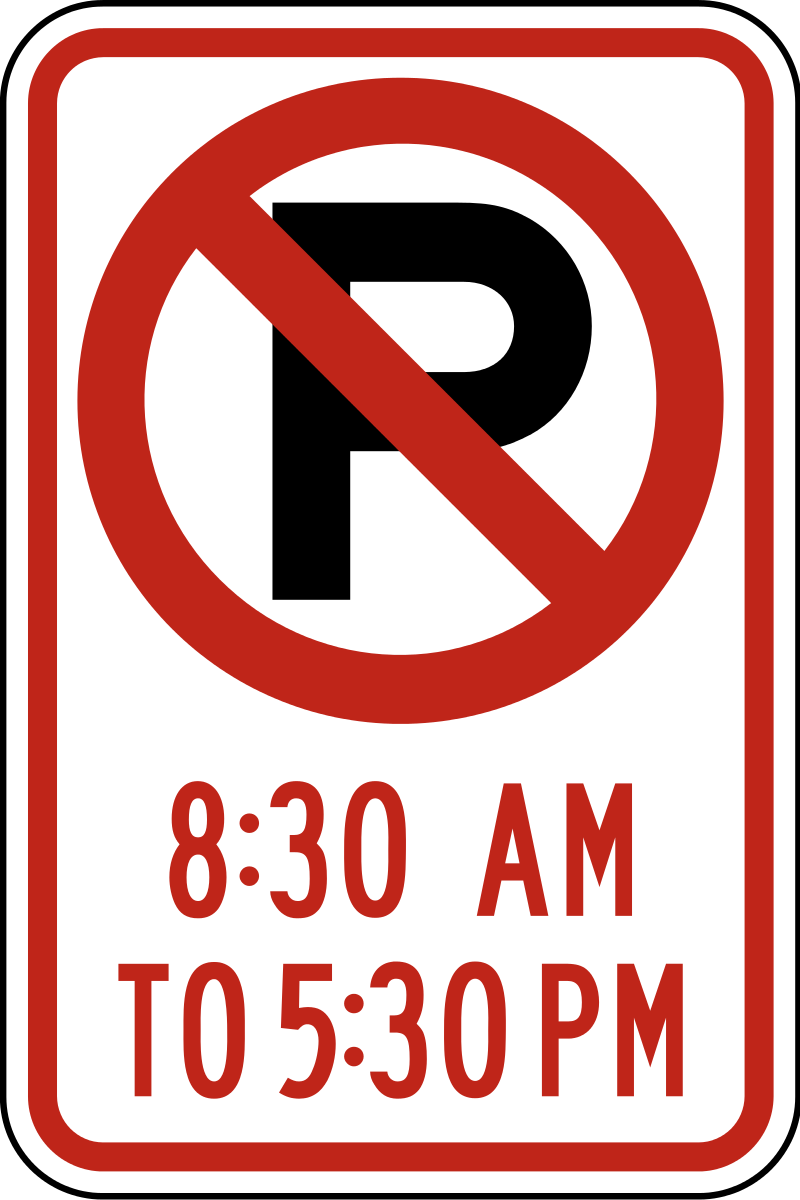 It's 10 AM. This sign tells you that:
A
you are allowed to park until 5:30 PM.
B
you must display a special permit in order to park here.
C
you are not allowed to park here.
No explanation available.