 drivequiz.com
 Question 1
 This sign tells drivers:
A
they must wait for the traffic signal to turn green before turning right or left.
B
they may not turn right or left during the red light.
C
All of the above.
No explanation available.
Question 2
Drivers may not cross ______________ unless turning left when it is safe to do so.
A
double solid yellow lines
B
red lines
C
broken yellow lines
D
double solid white lines
No explanation available.
Question 3
When approaching any intersection or driveway, drivers should:
A
look both ways and be ready to stop.
B
pass other vehicles and then stop.
C
drive at the fastest speed just before entering the intersection.
No explanation available.
Question 4
When passing a truck, drivers should:
A
decrease their speed if passing the truck on a downgrade.
B
pass on the right.
C
pull in front of the truck before they can see the cab.
D
let the truck driver know they are passing by blinking their headlights.
No explanation available.
Question 5
People who drive after drinking risk:
A
higher insurance rates, jail sentences.
B
heavy fines, loss of license.
C
injuries and fatalities.
D
All of the above.
No explanation available.
Question 6
At 40 MPH, the average driver’s reaction time accounts for __ feet travelled.
A
111
B
88
C
44
D
22
No explanation available.
Question 7
Ramp signals:
A
control the speed of vehicles entering a freeway.
B
are not considered traffic control devices.
C
control the weight of trucks entering a freeway.
D
control the rate of vehicles entering a freeway.
No explanation available.
Question 8
 This is:
A
a side road sign.
B
a merging traffic sign.
C
a right curve sign.
No explanation available.
Question 9
Which of the following is NOT a defensive driving tip:
A
It is better to drive off the road than skid off when avoiding a crash.
B
Hitting a car moving in the same direction as you are is better than hitting a car head-on.
C
Hitting a post is better than hitting a bush.
D
It is better to swerve right instead of toward oncoming traffic to prevent a crash.
No explanation available.
Question 10
 This sign warns drivers that:
A
the highway ahead is divided into two one-way roadways. Drivers should keep to the right.
B
there is a low place in the road.
C
there is a winding road ahead.
D
there is a dou
No explanation available.
Question 11
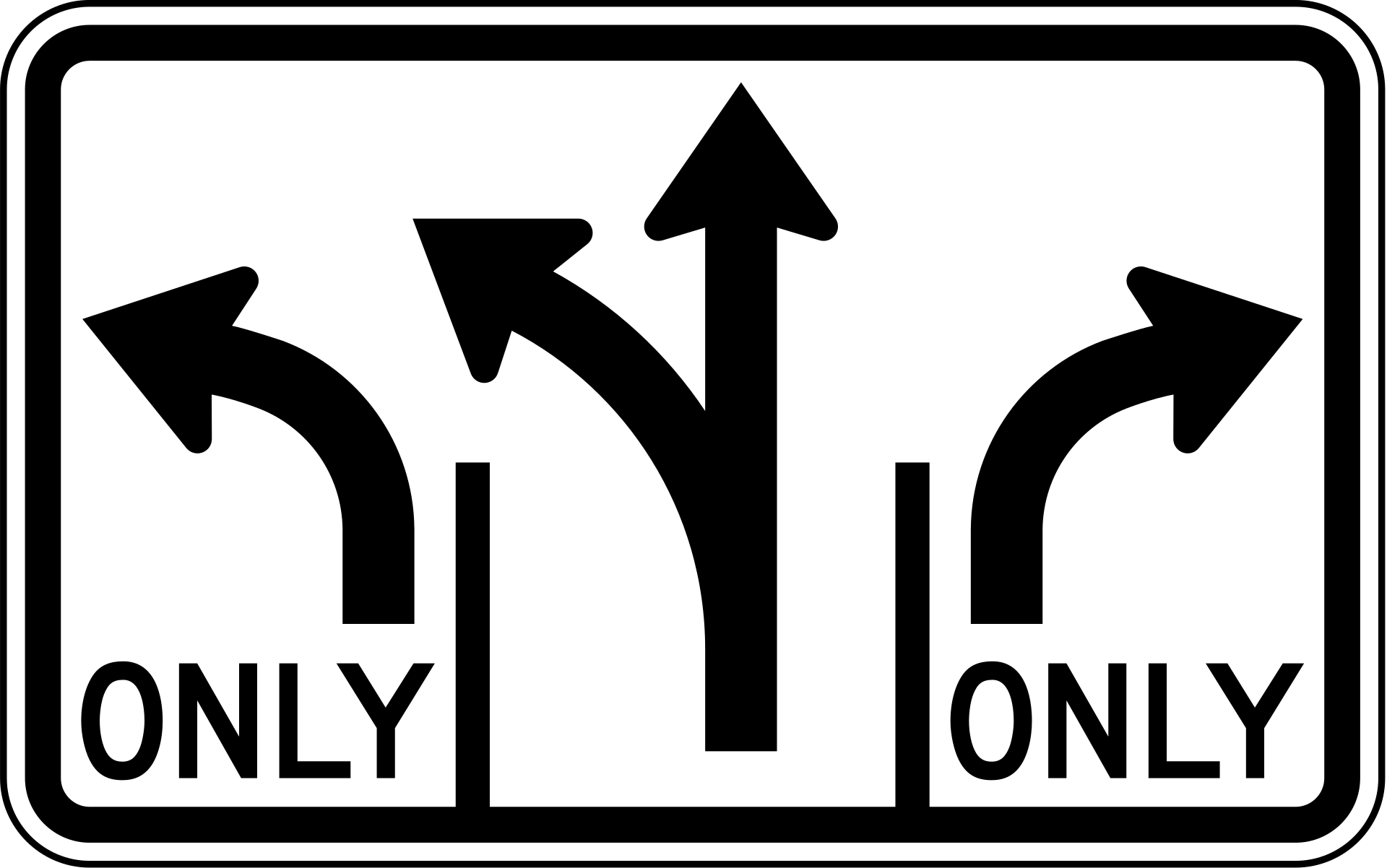 This regulatory sign tells drivers that:
A
traffic in the left lane must turn left at the intersection ahead.
B
all vehicles must turn left immediately.
C
traffic in the right lane must go straight.
No explanation available.
Question 12
When you are driving on a multi-lane road, if another vehicle moves into your lane right in front of you, cutting you off, you should:
A
Brake only if necessary to avoid a crash, and follow the other vehicle closely for a while.
B
Honk your horn and brake firmly, to quickly drop back from the other vehicle.
C
Stay calm. Slow down if necessary to avoid a crash, and gently drop back to a safe following distance.
D
brake sharply.
No explanation available.
Question 13
Drinking alcohol while taking other drugs could cause:
A
serious health problems.
B
the effects of alcohol to be multiplied.
C
death.
D
All of the above.
No explanation available.
Question 14
When a public transit bus traveling in the same direction has signaled and is re-entering the traffic flow, drivers should:
A
yield the right-of-way to the bus.
B
None of the other answers is correct.
C
pass the bus on the right.
D
pass the bus on the left.
No explanation available.
Question 15
What does ‘overdriving your headlights’ mean?
A
Driving so slow that your headlights go into standby mode.
B
Driving over a bridge with your headlights on.
C
Driving so fast that you cannot stop within the range of the headlights.
D
Driving so fast that you could break your headlights.
No explanation available.
Question 16
Overdriving your headlights is dangerous because:
A
you can't see upcoming road hazards.
B
your stopping distance is greater than the effective illumination of your headlights.
C
your stopping distance is too short.
D
All of the above.
No explanation available.
Question 17
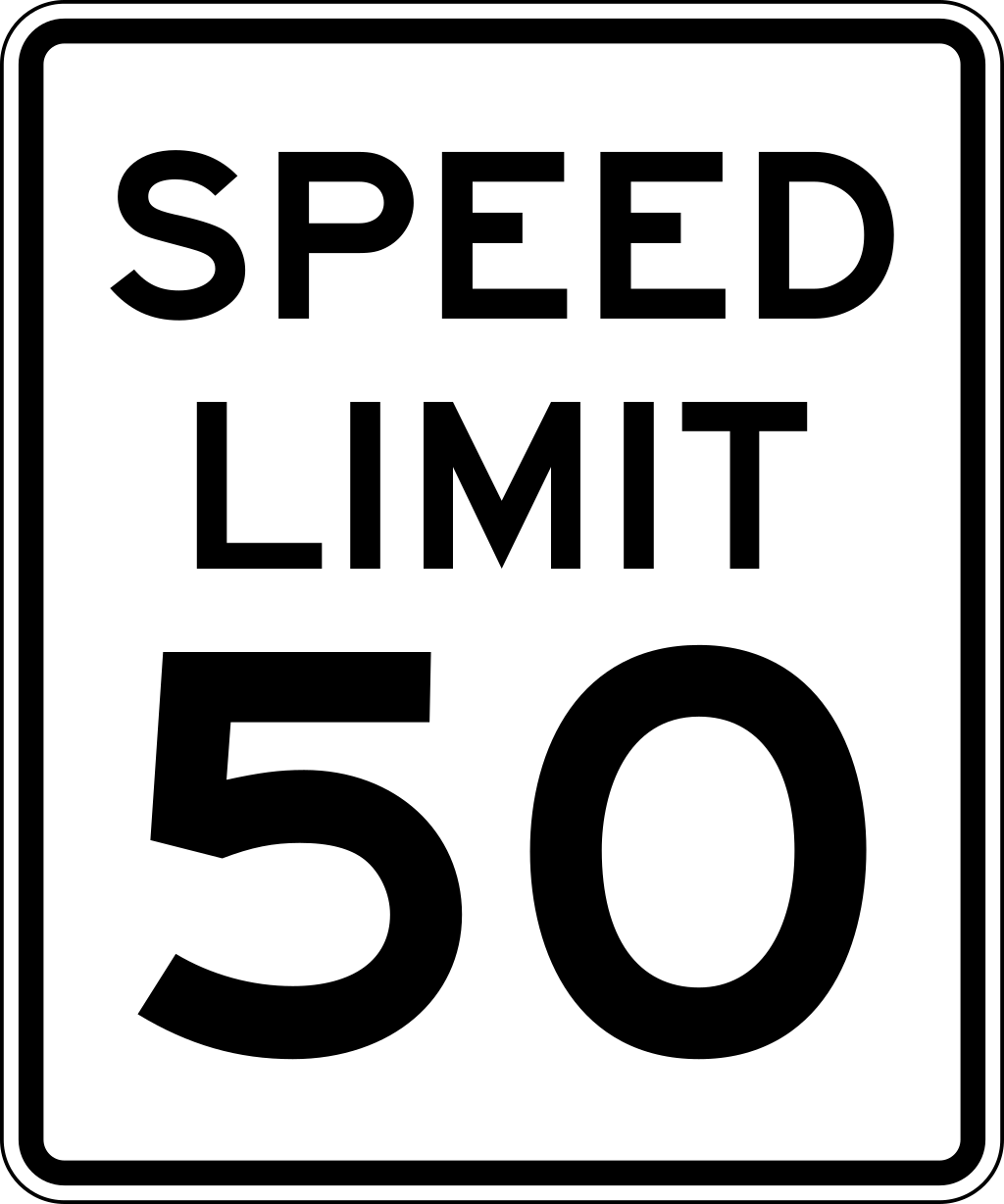 This sign indicates the _______________ vehicles can safely travel in this area.
A
suggested speed
B
maximum speed
C
minimum speed
No explanation available.
Question 18
An ____ pavement marking may be painted on the paved approach to a railroad crossing:
A
TXC
B
SXS
C
RXC
D
RXR
No explanation available.
Question 19
Florida law requires that motorists give cyclists a minimum of ______ feet of clearance and reduce their speed.
A
nine
B
three
C
fifteen
D
ten
No explanation available.
Question 20
When following motorcycles, drivers should:
A
reduce the minimum following distance.
B
try to pass them as they have different braking capabilities than other motor vehicles.
C
keep more space in front of their vehicle.
No explanation available.
Question 21
On a two-way roadway with a center lane, drivers from either direction can make ______ on the center lane.
A
right turns
B
sudden turns
C
left turns
D
U-turns
No explanation available.
Question 22
__________________ are required by law when changing lanes or overtaking a vehicle.
A
Turn signals
B
Four-way emergency flashers
C
Traffic signals
D
High beam headlights
No explanation available.
Question 23
Under what conditions are drivers allowed to turn right on a red light?
A
After a complete stop.
B
After yielding to pedestrians in crosswalks and to vehicles still in the intersection.
C
At most intersections, after stopping, if the way is clear.
D
All of the above.
No explanation available.
Question 24
The length of a point suspension is 3 months for:
A
9 points within a 18-month period.
B
18 points within a 18-month period.
C
24 points within a 24-month period.
D
12 points within a 12-month period.
No explanation available.
Question 25
Which of the following is a penalty for a First DUI Conviction:
A
Probation - Not more than 1 year
B
License Revocation - Minimum 1 year
C
Driving License termination
D
Mandatory 30 days in jail
No explanation available.
Question 26
 This sign means:
A
A road crosses the main highway ahead.
B
The divided highway on which drivers are traveling ends ahead.
C
Drivers are coming to a point where another traffic lane joins the one they are on.
No explanation available.
Question 27
Which of the following is recommended for mature drivers?
A
Stopping to rest every two hours on long trips.
B
Installing small side mirrors to improve visibility.
C
Not wearing safety belts while fatigued.
D
None of the above.
No explanation available.
Question 28
An emergency vehicle is approaching with flashing lights on. You must:
A
pull over immediately and stop until the emergency vehicle has passed.
B
slow down and stop at the next intersection.
C
stop and block the intersection if necessary.
D
increase your speed and stop at the next parking area.
No explanation available.
Question 29
Any driver under 21 with a breath or blood alcohol level of __ or higher is required to attend a substance abuse course.
A
0.08
B
0.2
C
0.5
D
0.05
No explanation available.
Question 30
Which of the following are allowed on expressways?
A
Motor scooters with more than 150 cubic centimeter displacement
B
Motor-driven cycles
C
Bicycles
D
All of the above.
No explanation available.
Question 31
You are driving on a roadway with multiple lanes of travel in the same direction, and are approaching an emergency vehicle parked along the roadway. You must:
A
Leave the lane closest to the emergency as soon as it is safe to do so, or slow down to a speed of 20 MPH below the posted speed limit.
B
Yield to the emergency vehicle.
C
If you are in the lane closest to the emergency vehicle, immediately come to a complete stop and ask if any help is needed.
D
All of the above.
No explanation available.
Question 32
Blind spots are:
A
Dangerous intersection where the maximum speed limit is 15 MPH or less.
B
At night, the darkest areas of a road, where emergency flashers should be used.
C
Areas to the side or rear of a vehicle that the driver cannot see with use of mirrors.
No explanation available.
Question 33
Car insurance is important because:
A
it protects your car.
B
you can drive faster if you have the proper insurance coverage.
C
it protects yourself and others.
D
it may be required by law.
No explanation available.
Question 34
 This sign means:
A
You may make a U-turn.
B
Hairpin corner ahead.
C
You must make a U-turn.
No explanation available.
Question 35
When a hazard is seen ahead, reaction distance:
A
is the sum of perception distance and braking distance.
B
equals total stopping distance minus perception distance.
C
is how far a vehicle will continue to travel, in ideal conditions, before the driver hits the brakes.
No explanation available.
Question 36
Turning motorists must _____________ at intersections and driveways:
A
make U-turns
B
block the crosswalk when stopped at a red light
C
stop for pedestrians
D
make a turn that causes pedestrians to stop
No explanation available.
Question 37
While his/her vehicle is disabled on the highway or shoulder, a driver should use:
A
an umbrella if it's raining.
B
four-way emergency flashers.
C
left and right turn signals together.
D
a three-point turn.
No explanation available.
Question 38
Alcohol tolerance:
A
does not change with age.
B
increases with age.
C
is lower when you drink whisky.
D
decreases with age.
No explanation available.
Question 39
When the gas pedal is jammed, drivers should NOT:
A
tap the gas pedal with their foot.
B
keep their eyes on the road.
C
pump the brake pedal hard and fast.
D
shift into neutral.
No explanation available.
Question 40
If another car has stopped in an adjacent lane in the same direction of travel, you should:
A
speed up and pass the vehicle on the right.
B
pass the car on the left.
C
be careful in case the other vehicle has stopped for a pedestrian.
D
tap your horn to let the other driver know you are passing.
No explanation available.
Question 41
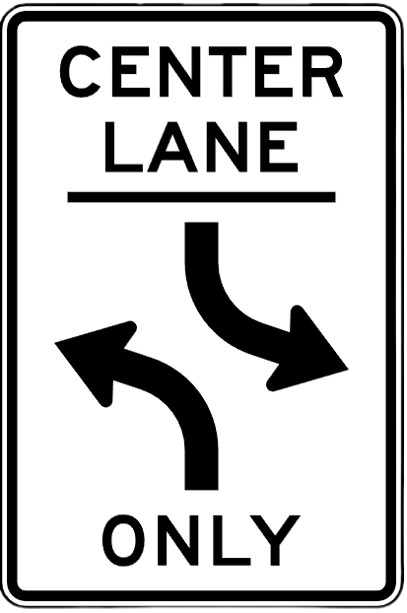 This road sign means:
A
Vehicles may only travel in the center lane.
B
The center lane is shared for left turns in both directions of travel.
C
The center lane in both directions of travel will soon turn left.
No explanation available.
Question 42
 Leaving the scene of a crash involving injuries commits a felony of the ____ degree.
A
first
B
second
C
fourth
D
third
No explanation available.
Question 43
A diamond-shaped marking on the left lane shows that:
A
the lane is reserved for car-pool vehicles.
B
the lane is reserved for state-owned vehicles.
C
the lane is reserved for trucks and heavy vehicles.
D
this is an emergency-only lane.
No explanation available.
Question 44
What is the speed limit for cars in a residential area?
A
30 MPH
B
55 MPH
C
20 MPH
D
15 MPH
No explanation available.
Question 45
At most intersections, after stopping, drivers may __________ on red if the way is clear.
A
turn left
B
take a nap
C
turn right
D
cross the intersection
No explanation available.
Question 46
If a law enforcement officer suspects your vehicle equipment is not properly maintained, the officer:
A
may force you to read the 'Perfect Car' handbook.
B
may stop your vehicle at any time for a vehicle inspection.
C
may suspend your driver license.
D
may send you to jail.
No explanation available.
Question 47
 This sign warns drivers of:
A
low clearance.
B
a narrow bridge ahead.
C
a low place in the road.
No explanation available.
Question 48
When the foot brake is pressed, which light must come on?
A
Two red stoplights.
B
Emergency flashers.
C
One red brakelight.
D
Two high-beam headlights, visible from 1,000 feet.
No explanation available.
Question 49
The pedestrian countdown period _____ at the beginning of the DON’T START or flashing hand phase and _____ with a zero and a DON’T WALK or solid red hand.
A
ends; starts
B
starts; ends
C
ends; ends
D
None of the above.
No explanation available.
Question 50
If you are the driver or owner of a vehicle which is in a crash that is your fault, and you do not have insurance to comply with the Financial Responsibility Law, you:
A
may be sent to jail.
B
can be fined up to $1,000 or jailed up to 60 days.
C
may be required to pay for the damages before your driving privilege is reinstated.
D
must purchase a policy with a minimum coverage of $50,000 within 60 days.
No explanation available.