 drivequiz.com
 Question 1
When driving on gravel roads:
A
your tires do not have as much traction.
B
you should use cruise control to increase traction.
C
you should keep your eyes moving.
No explanation available.
Question 2
If your wheels drop off the pavement edge, you should:
A
stop.
B
turn back onto the roadway immediately.
C
turn gradually back onto the roadway when safe.
No explanation available.
Question 3
 When you see a 'merging traffic' sign on the freeway, you should:
A
slow down to allow traffic to enter.
B
move to another lane to let traffic enter, if safe.
C
speed up to avoid congesting traffic.
No explanation available.
Question 4
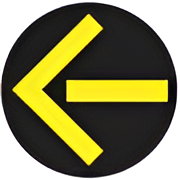 What does a yellow arrow signal mean?
A
The same as the yellow light, but applies only to movement in the direction of the arrow.
B
The same as a green light.
C
Vehicles moving in all directions must stop if they can. The light will soon be red.
No explanation available.
Question 5
Collisions can happen more often when:
A
one lane of traffic is traveling faster than the others.
B
one vehicle is traveling faster than the flow of traffic.
C
all vehicles are traveling at the posted speed limit.
No explanation available.
Question 6
At a red traffic light with a green arrow, you may proceed in the direction of the arrow:
A
after making a complete stop first.
B
if you wait until the light changes.
C
if you are in the proper lane and the roadway is clear.
No explanation available.
Question 7
When turning left at an intersection:
A
you should never yield to oncoming traffic and pedestrians.
B
oncoming traffic and pedestrians should yield to you.
C
you should always yield to oncoming traffic and pedestrians.
No explanation available.
Question 8
If you are blinded by headlights on an approaching vehicle, you should:
A
avoid looking directly at the bright lights.
B
glance toward the side of the road, then look quickly ahead to determine the other vehicle’s position.
C
All of the above.
No explanation available.
Question 9
When is it safe to pass another vehicle?
A
Whenever signs and/or markings permit passing other vehicles.
B
When you are entering a curve and there are no oncoming vehicles.
C
When you are driving through an intersection and there are no oncoming vehicles.
No explanation available.
Question 10
If you've had a few beers, the effects of alcohol will be reduced only by:
A
waiting several hours.
B
taking a cold shower.
C
getting a cup of coffee.
No explanation available.
Question 11
The extra space in front of a large truck is needed for:
A
other drivers when merging onto a freeway.
B
the truck driver to stop the vehicle.
C
other drivers when they want to pass the truck.
No explanation available.
Question 12
 This sign means:
A
Hairpin corner ahead.
B
Warning: U-turn ahead.
C
Sharp right turn ahead.
No explanation available.
Question 13
You are stopped at a stop sign and you are going to go straight through the intersection. A car on the cross road has stopped at a stop sign on your right and is going to go straight. Who has the right-of-way?
A
Whoever enters the intersection first.
B
You.
C
The car on your right.
No explanation available.
Question 14
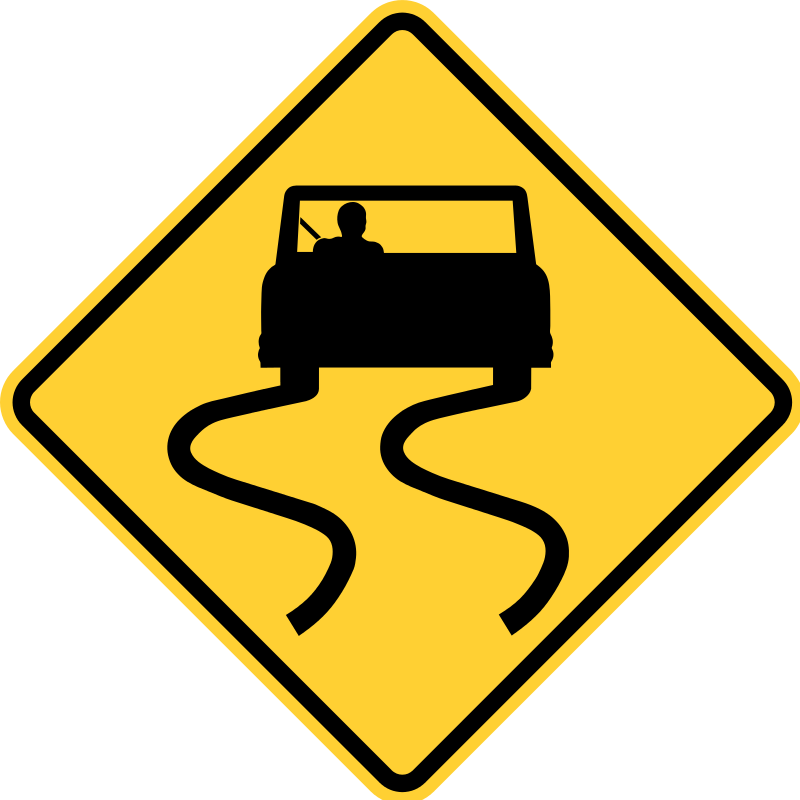 This sign indicates:
A
Warning: drunk drivers.
B
Winding road. Drive with caution.
C
The road may be slippery when wet. Drive slowly.
No explanation available.
Question 15
Large trucks:
A
have high-tech air brakes which allow them to stop quickly.
B
take longer to stop than passenger vehicles.
C
are more maneuverable than passenger vehicles.
No explanation available.
Question 16
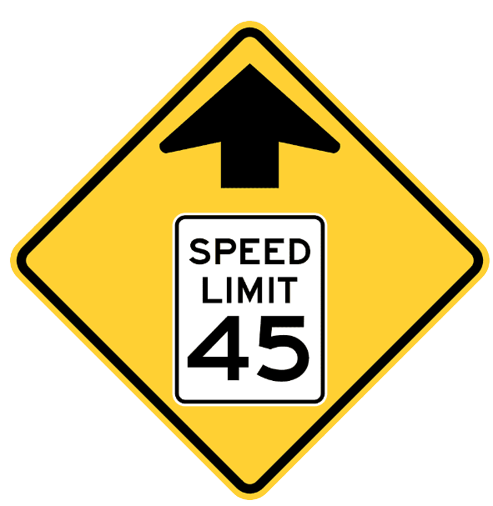 This warning sign:
A
provides advance notice to upcoming speed limit change.
B
shows the current speed limit that all vehicles traveling in the direction of the arrow must not exceed.
C
indicates the suggested highest safe speed.
No explanation available.
Question 17
To drive defensively, you must:
A
anticipate errors by other drivers.
B
assume that a driver who approaches a STOP sign on a side road is actually going to stop.
C
not check behind you through your mirrors.
No explanation available.
Question 18
After parking, are you allowed to open a door on the road side of your vehicle?
A
Yes, always.
B
Yes, but only if it does not interfere with bicyclists and other traffic.
C
No, never.
No explanation available.
Question 19
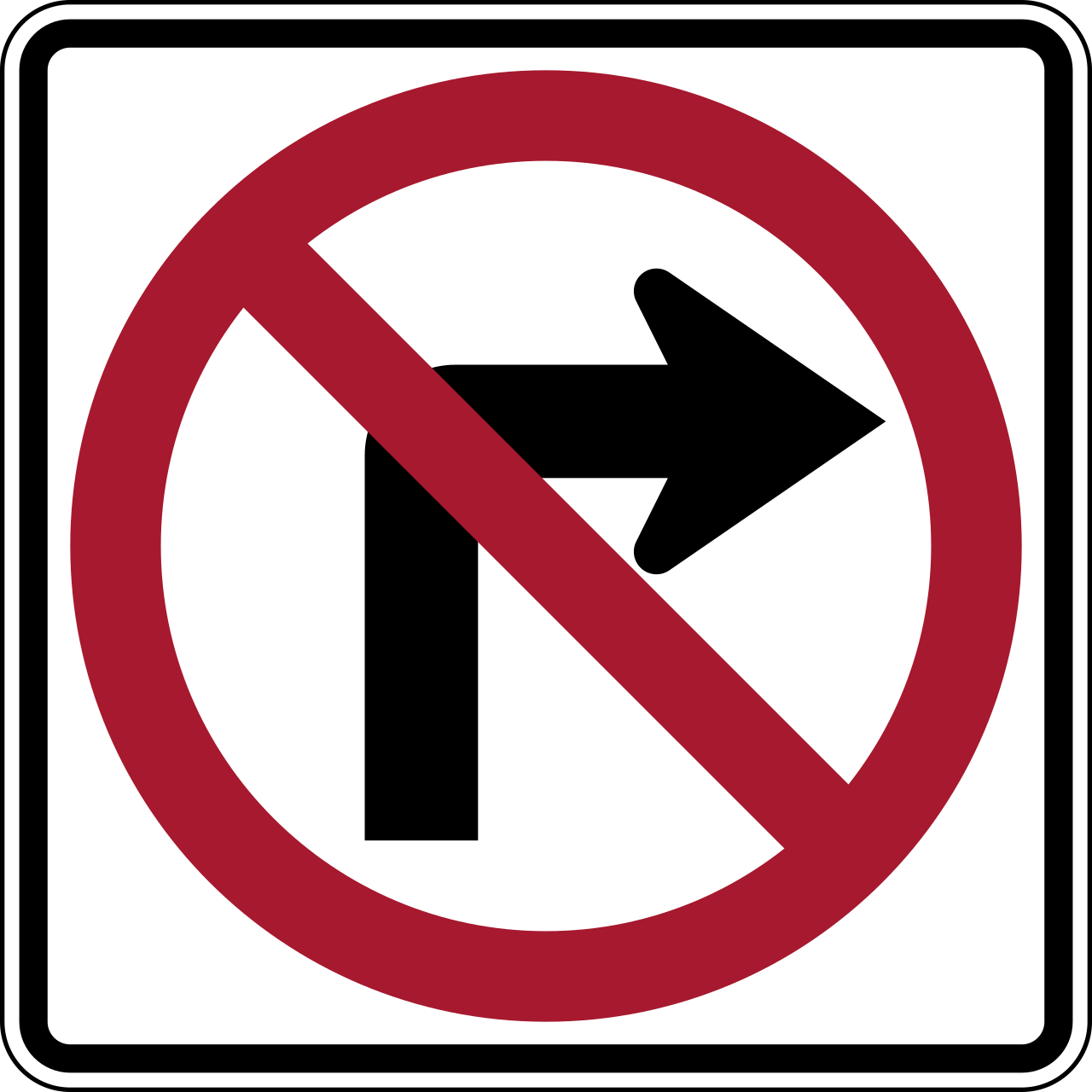 This road sign means:
A
No left turn
B
No right turn
C
No U-turns
No explanation available.
Question 20
To reduce their chances of colliding with an animal, drivers should:
A
scan the sides of the road to watch for the reflection of vehicle headlights in the eyes of animals.
B
look well down the road and far off to each side.
C
All of the above.
No explanation available.
Question 21
When driving in work zones, drivers should:
A
tailgate the vehicle ahead while reducing their speed.
B
pass the vehicle ahead when safe.
C
keep a safe following distance.
No explanation available.
Question 22
 The picture shows:
A
a railroad advance warning sign.
B
a speeding fines doubled sign.
C
a reversible road sign.
No explanation available.
Question 23
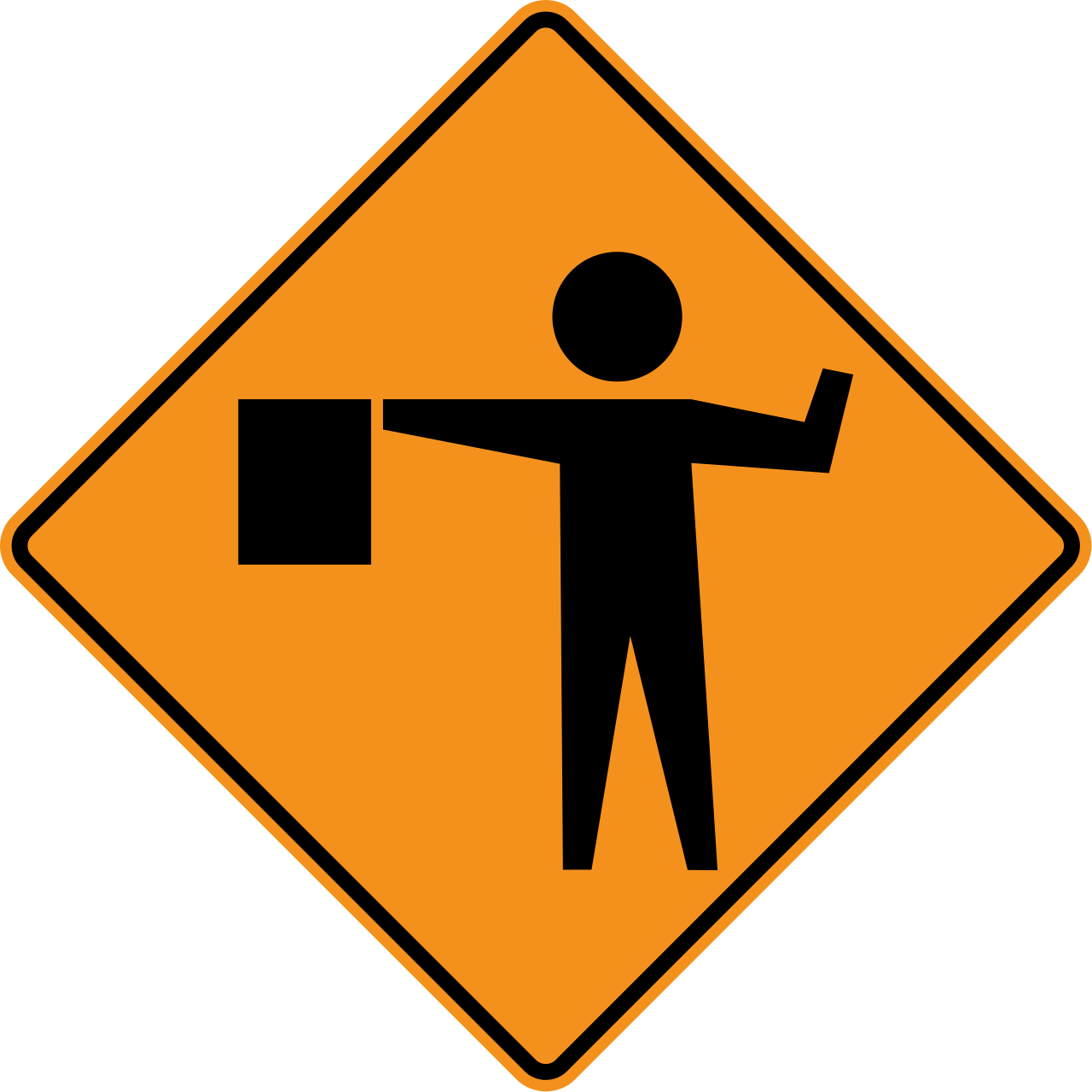 This road sign means:
A
Right lane closed
B
Do not block intersection
C
Flagger ahead
No explanation available.
Question 24
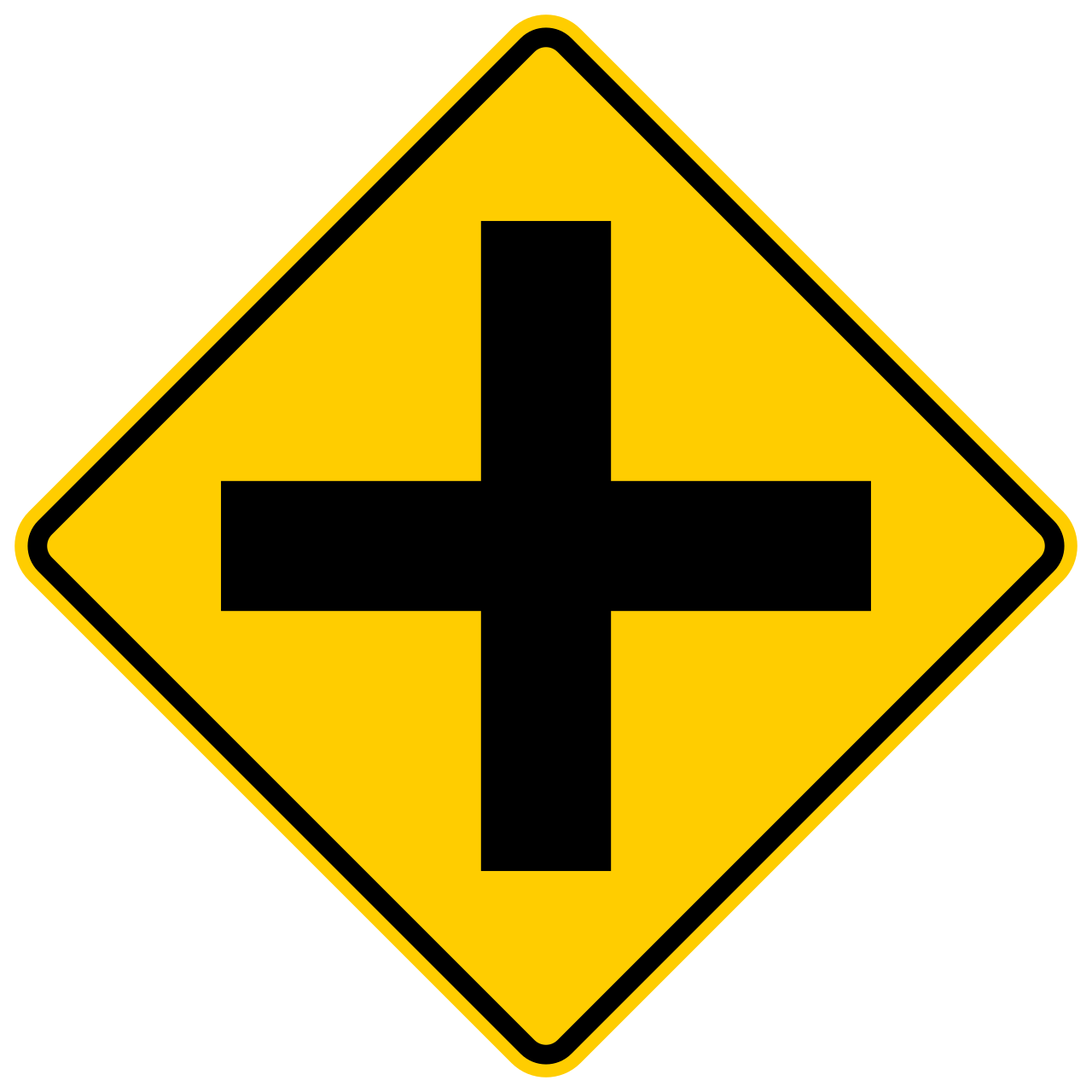 This road sign means:
A
Warning, crossroad ahead
B
All traffic must turn
C
Yield sign ahead
No explanation available.
Question 25
Which statement about blind spots is true?
A
Before changing lanes, you should check mirrors and look over your shoulder toward the rear.
B
Large trucks have smaller blind spots than most passenger vehicles.
C
If traffic conditions permit you should cruise in blind spot of the vehicle ahead.
No explanation available.
Question 26
A broken white line:
A
means passing or crossing is prohibited in that lane.
B
separates two lanes traveling in the same direction.
C
marks the right edge of the roadway.
No explanation available.
Question 27
When is the pavement most slippery?
A
If it's been raining several hours.
B
When it has just begun to rain.
C
When it's been raining from at least one hour.
No explanation available.
Question 28
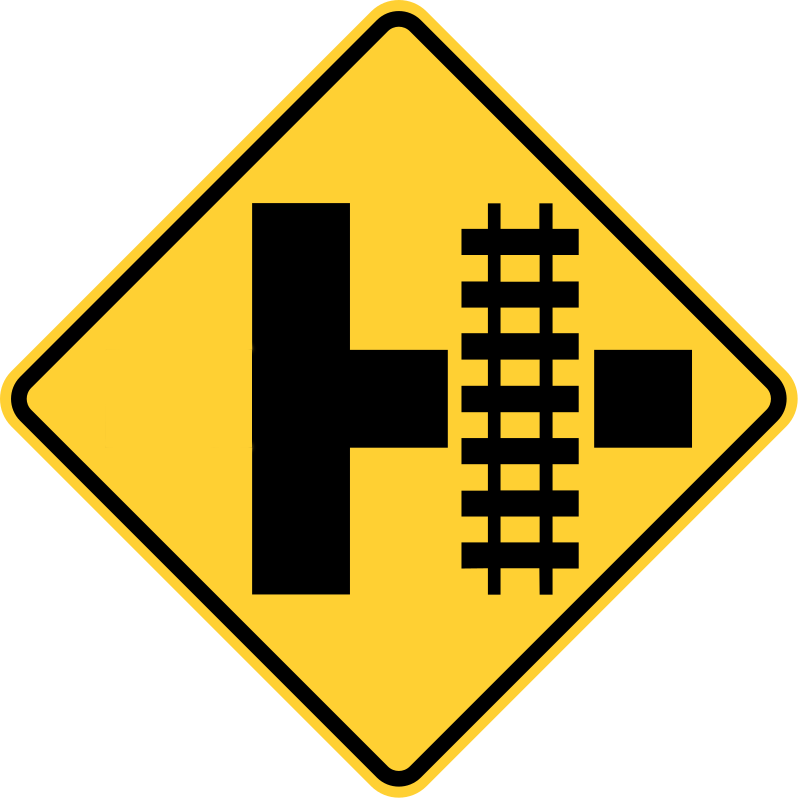 What does this sign indicate?
A
Parallel railroad crossing (side road)
B
Low ground clearance railroad crossing
C
Parallel railroad crossing (crossroad)
No explanation available.
Question 29
You are driving and you are feeling drowsy. You should:
A
avoid drinking coffee.
B
turn on the radio to keep you awake.
C
find a safe place to stop for a break.
No explanation available.
Question 30
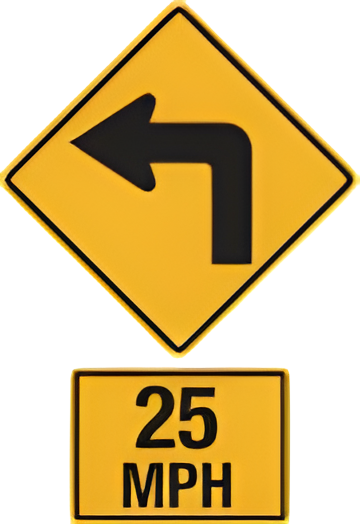 This sign means:
A
If you are driving at 40 MPH or less you must stay in the right-hand lane
B
Curve ahead, drive at 40 MPH ot more around the curve ahead
C
Curve ahead, the recommended speed is 40 MPH or less
No explanation available.
Question 31
When approaching someone using a white cane or guide dog, drivers should:
A
carefully drive around them.
B
stop until the person is well away from the roadway or path of travel.
C
honk their horn as they proceed past them.
No explanation available.
Question 32
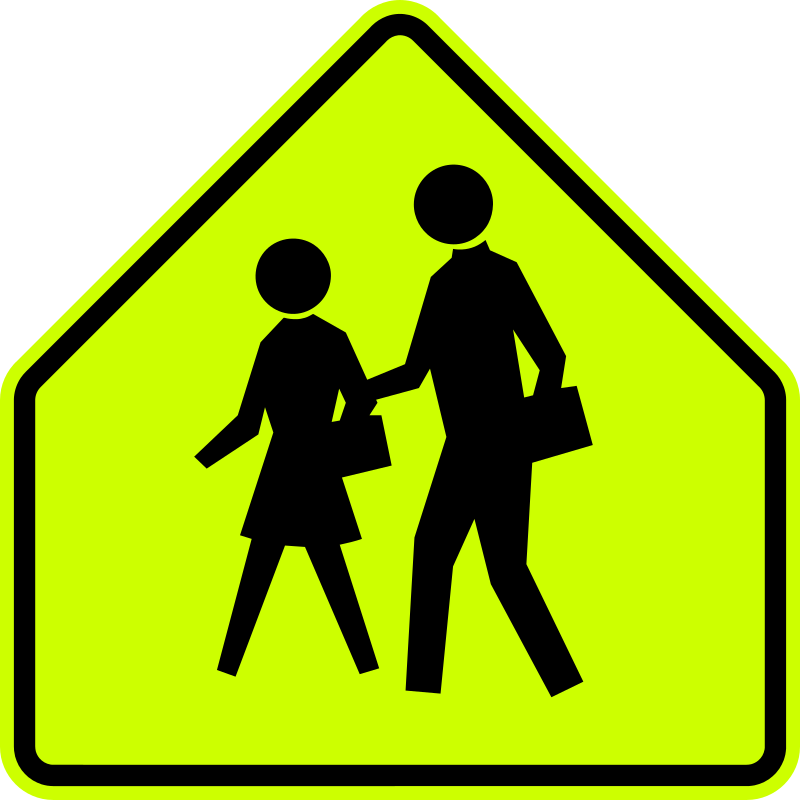 This road sign means:
A
School crossing
B
Playground ahead
C
Pedestrian crossing
No explanation available.
Question 33
For protection, motorcyclists are required to:
A
keep their headlights and taillights on at all times.
B
signal turns, lane changes and stops.
C
wear approved helmets.
No explanation available.
Question 34
When following motorcycles, drivers should:
A
reduce the minimum following distance.
B
try to pass them as they have different braking capabilities than other motor vehicles.
C
keep more space in front of their vehicle.
No explanation available.
Question 35
 This road sign means:
A
A road joins from the right
B
All traffic must go straight ahead
C
All traffic must turn right
No explanation available.
Question 36
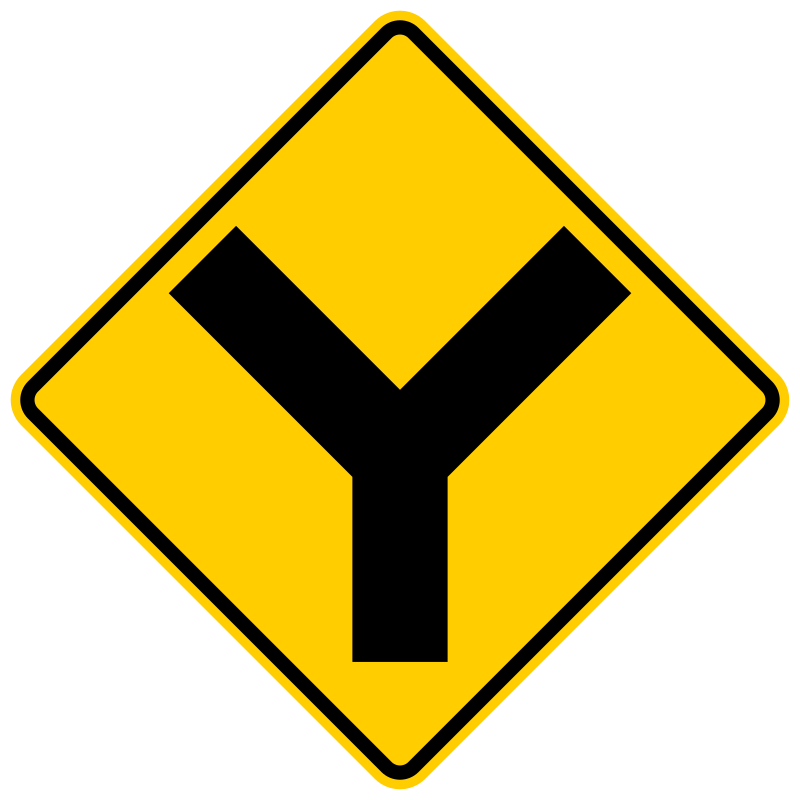 This road sign means:
A
A road joins from the left
B
You must bear either right or left
C
A 3-way intersection is ahead
No explanation available.
Question 37
A solid yellow line on your side of the center line means:
A
Stop
B
Pass with caution
C
Do not pass
No explanation available.
Question 38
 This regulatory road sign indicates that:
A
Vehicles must slow down and stay in the right lane.
B
The right hand lane is reserved for buses and car-pool vehicles.
C
Slower vehicles traveling on multiple lane highways must stay in the right hand lane.
No explanation available.
Question 39
What should you do when an aggressive driver confronts you?
A
Avoid eye contact with the aggressive driver.
B
Make eye contact.
C
Challenge the aggressive driver with increased speed.
No explanation available.
Question 40
 The yield sign means:
A
Drive with caution in wet weather.
B
You must come to a complete stop.
C
Slow down and give vehicles crossing your path the right-of-way.
No explanation available.