Question 1:
 This road sign means the road you're driving on:
A
turns sharply to the left and then right
B
turns to the right and then the left
C
turns only to the left
This traffic sign indicates: turns to the right and then the left. Observing and obeying all roadway signs ensures safe traffic flow and legal driving.
Question 2:
 This sign means:
A
Railroad crossing
B
No Passing Zone
C
The road ends ahead
Circular signs with an 'X' and 'RR' designate a Railroad Advance Warning: Railroad crossing. Drivers must slow down, look both ways, listen for trains, and be prepared to stop.
Question 3:
A traffic sign with a red circle around and a slash over a symbol means:
A
the maneuver shown by the symbol is not allowed.
B
Do not drive faster than the posted speed limit.
C
the maneuver shown on the sign should be executed with extreme caution.
This traffic sign indicates: the maneuver shown by the symbol is not allowed. Observing and obeying all roadway signs ensures safe traffic flow and legal driving.
Question 4:
When the traffic light is green, but traffic is blocking the intersection, drivers should:
A
enter the intersection and wait for traffic to clear.
B
not enter the intersection until they can get completely across.
C
honk their horn to establish their right-of-way.
According to standard right-of-way regulations: not enter the intersection until they can get completely across. Yielding appropriately prevents intersection collisions and maintains safe traffic flow.
Question 5:
Motorcycles:
A
must share a traffic lane with another vehicle.
B
are easier to see than cars.
C
are entitled to use a complete traffic lane.
The correct driving rule is: are entitled to use a complete traffic lane. Following standard DMV road rules and practicing defensive driving ensures safety for all road users.
Question 6:
Drivers under the age of 21 are subject to a specific restriction prohibiting them from driving:
A
before consuming alcohol.
B
with alcohol in their system.
C
before midnight.
The correct driving rule is: with alcohol in their system. Following standard DMV road rules and practicing defensive driving ensures safety for all road users.
Question 7:
Which of the following is a defensive driving skill/technique?
A
Maintain the correct speed.
B
Do not drive if you are very weary.
C
All of the above.
All of the listed points are essential driving requirements: Maintain the correct speed; Do not drive if you are very weary. Practicing each ensures compliance with DMV safety laws.
Question 8:
What is the most important rule to remember in any emergency?
A
Do not panic.
B
Run away.
C
Call the police.
The correct driving rule is: Do not panic. Following standard DMV road rules and practicing defensive driving ensures safety for all road users.
Question 9:
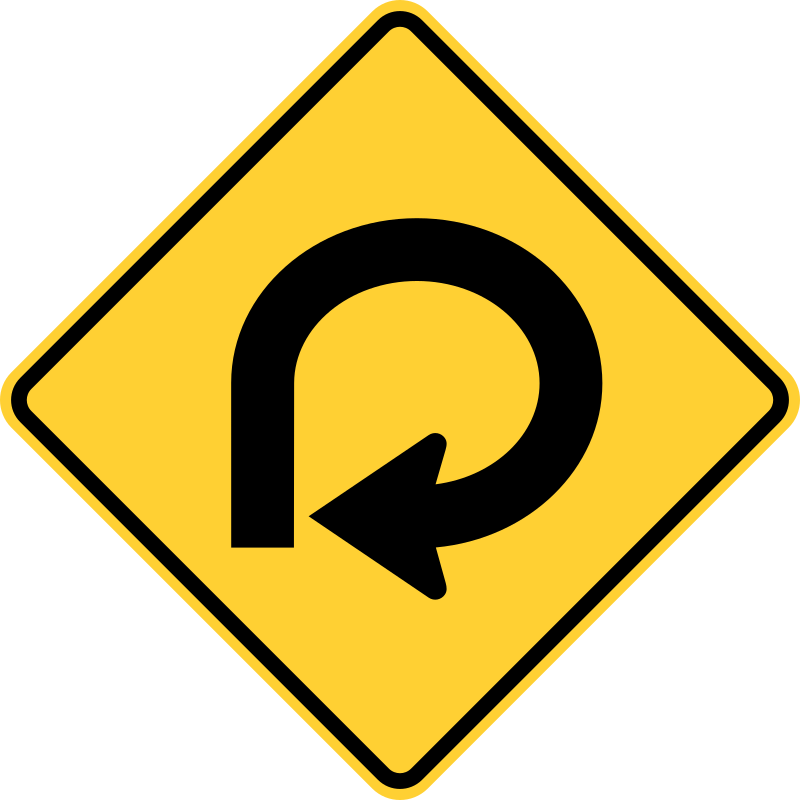 This sign means:
A
Roundabout ahead.
B
270 degree turn ahead.
C
Wrong way; Turn around immediately.
This traffic sign indicates: 270 degree turn ahead. Observing and obeying all roadway signs ensures safe traffic flow and legal driving.
Question 10:
If your gas pedal is stuck, you should:
A
hook your shoe under the pedal and see if you can free it. If not, shift into neutral and use the brake to slow your vehicle and get off the road.
B
ease your foot off the gas pedal and brake gently.
C
turn off the ignition if your vehicle has power steering.
The correct driving rule is: hook your shoe under the pedal and see if you can free it. If not, shift into neutral and use the brake to slow your vehicle and get off the road. Following standard DMV road rules and practicing defensive driving ensures safety for all road users.
Question 11:
When passing another car, you have enough room to return to the driving lane when:
A
you cannot see the vehicle directly to your right.
B
you are at least 50 feet in front of the vehicle.
C
you can see both headlights of the car you passed in your rearview mirror.
Defensive driving guidelines state that: you can see both headlights of the car you passed in your rearview mirror. Anticipating road hazards and communicating maneuvers keeps traffic predictable and safe.
Question 12:
Who is most at risk?
A
Drivers who have overslept.
B
Drivers who are driving long distances without rest breaks.
C
Experienced drivers.
The correct driving rule is: drivers who are driving long distances without rest breaks. Following standard DMV road rules and practicing defensive driving ensures safety for all road users.
Question 13:
In work zones, barriers such as drums, panels and cones are used to:
A
reduce the flow of traffic.
B
keep traffic out of hazardous work zones.
C
keep workers out of the work zone.
The correct driving rule is: keep traffic out of hazardous work zones. Following standard DMV road rules and practicing defensive driving ensures safety for all road users.
Question 14:
A driver who's being passed on the right and the left by many vehicles while driving in the center lane of an highway should:
A
take the next exit.
B
move to the lane on their right.
C
move to the lane on their left.
Defensive driving guidelines state that: move to the lane on their right. Anticipating road hazards and communicating maneuvers keeps traffic predictable and safe.
Question 15:
Before entering a curve, you should:
A
pump your brakes several times.
B
activate your turn signal.
C
reduce your speed.
The correct driving rule is: reduce your speed. Following standard DMV road rules and practicing defensive driving ensures safety for all road users.
Question 16:
Fatigue increases the risk of:
A
falling asleep while driving.
B
hitting a roadblock.
C
missing an exit.
Under state DUI and traffic safety laws: falling asleep while driving. Alcohol degrades judgment, slows reaction times, and distorts depth perception.
Question 17:
A driver cuts off another vehicle, or threatens another motorist or a pedestrian. These are examples of:
A
excessive driving
B
road rage
C
defensive driving
Drivers must always yield the right-of-way to pedestrians crossing at intersections and crosswalks: road rage. Stop and allow them to clear the lane safely.
Question 18:
 This road sign means:
A
Merging traffic from the right
B
Sharp curves ahead
C
Intersection ahead
This traffic sign indicates: Merging traffic from the right. Observing and obeying all roadway signs ensures safe traffic flow and legal driving.
Question 19:
The driver of an emergency vehicle that uses lights and a siren can legally:
A
pass red lights.
B
exceed the speed limit
C
All of the above.
Sharing the road safely requires mutual awareness and respect: pass red lights; exceed the speed limit. Maintaining safe space cushions protects all roadway users.
Question 20:
When following a motorcycle, drivers must remember that motorcycles can ____________ than other vehicles.
A
accelerate much faster
B
stop much more quickly
C
stop much more slowly
Motorcycles can stop rapidly and are easily hidden in vehicle blind spots: stop much more quickly. Always allow an increased following distance of at least 3 to 4 seconds.
Question 21:
At an intersection without stop or yield signs, you should:
A
yield to the vehicle to your left.
B
wait until there are no vehicles at the intersection.
C
yield to the vehicle to your right.
According to standard right-of-way regulations: yield to the vehicle to your right. Yielding appropriately prevents intersection collisions and maintains safe traffic flow.
Question 22:
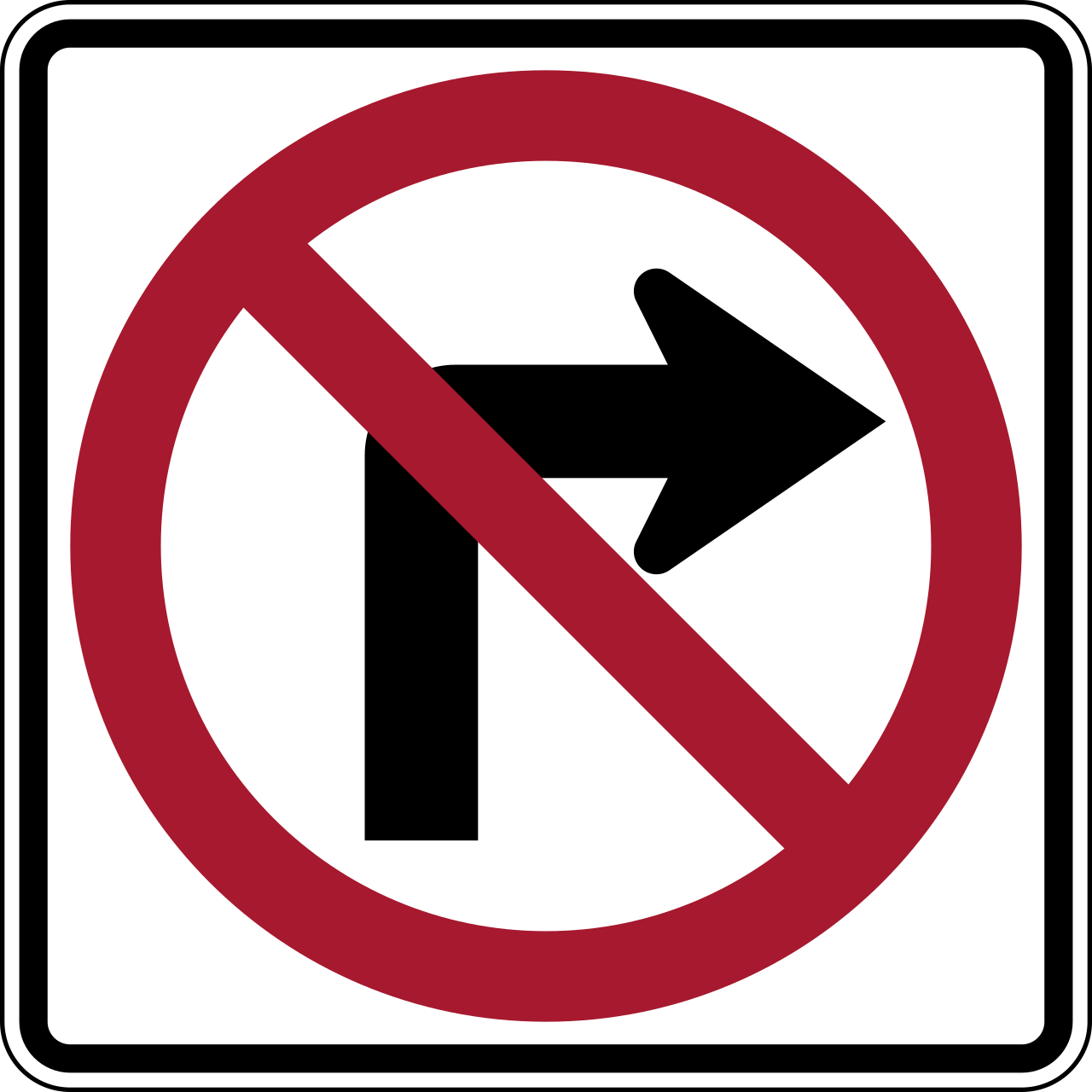 This road sign means:
A
Right turn is not permitted
B
Left turns are permitted
C
You may turn right after yielding the right-of-way to oncoming traffic
This traffic sign indicates: Right turn is not permitted. Observing and obeying all roadway signs ensures safe traffic flow and legal driving.
Question 23:
As your speed increases it is most important to:
A
drive with both hands on steering wheel.
B
maintain a constant speed.
C
look farther ahead.
For safe speed and stopping control: look farther ahead. Adjusting speed to match visibility and road traction prevents loss of steering grip.
Question 24:
Drivers may cross a double yellow line to pass another vehicle if:
A
the yellow line next to the other side of the road is broken.
B
the vehicle ahead moves to the right to let them pass.
C
the yellow line next to their side of the road is broken.
The correct driving rule is: the yellow line next to their side of the road is broken. Following standard DMV road rules and practicing defensive driving ensures safety for all road users.
Question 25:
Regulation signs normally are:
A
white triangles.
B
green rectangles.
C
white rectangles.
The correct driving rule is: white rectangles. Following standard DMV road rules and practicing defensive driving ensures safety for all road users.