Question 1:
When a school bus is stopped with its red lights flashing:
A
drivers only need to stop if children are present.
B
drivers don't need to stop unless they are in a school zone.
C
drivers may not pass while the red lights are flashing.
D
you never need to stop.
When a school bus displays flashing red lights and extended stop sign: drivers may not pass while the red lights are flashing. Traffic in both directions must come to a full stop on undivided roads until children are clear.
Question 2:
When you see an emergency vehicle with flashing lights, you must:
A
stop exactly where you are.
B
pull to the curb and stop.
C
speed up and take the nearest exit.
D
slow down and keep moving in your lane.
When sharing the road with other vehicles: pull to the curb and stop. Giving large vehicles and vulnerable users adequate clearance prevents dangerous accidents.
Question 3:
You are coming to an intersection and have a green light. Pedestrians are crossing against the red. You should:
A
claim your right-of-way and proceed with caution.
B
honk your horn.
C
speed up and pass in front of the pedestrians.
D
stop to let pedestrians cross safely.
Drivers must always yield the right-of-way to pedestrians crossing at intersections and crosswalks: stop to let pedestrians cross safely. Stop and allow them to clear the lane safely.
Question 4:
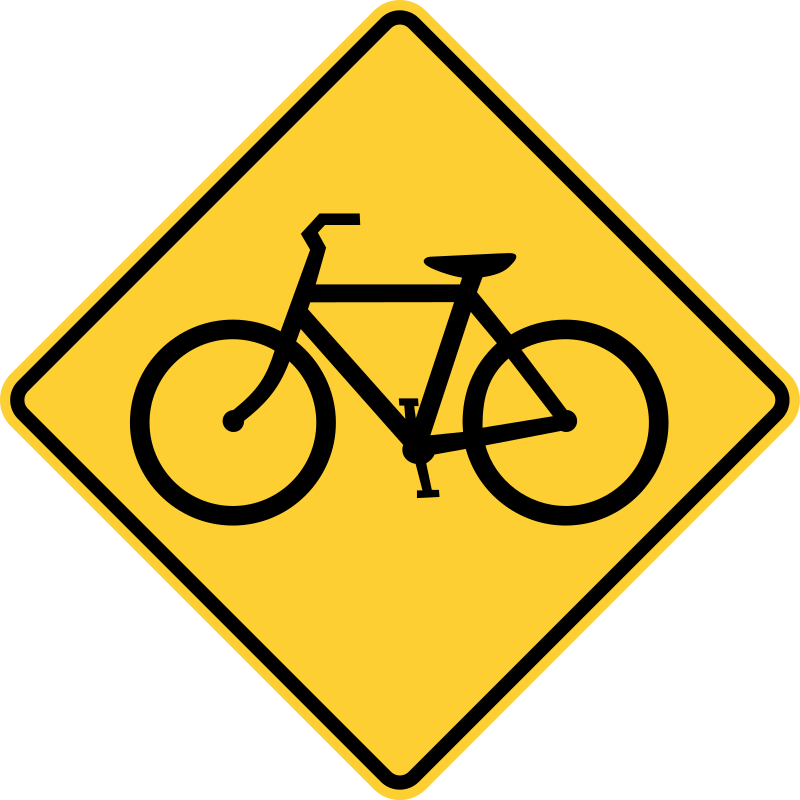 This road sign means:
A
Bicycle crossing
B
Bicycles have the right-of-way
C
This lane is reserved for bicyclists
This traffic sign indicates: Bicycle crossing. Observing and obeying all roadway signs ensures safe traffic flow and legal driving.
Question 5:
When you reach an intersection with a stop sign, you should:
A
follow the vehicle ahead of you.
B
stop, look right, then left, then right again.
C
stop, look left, then right, then left again.
D
check your rearview mirror, look left, then right, then proceed.
According to standard right-of-way regulations: stop, look left, then right, then left again. Yielding appropriately prevents intersection collisions and maintains safe traffic flow.
Question 6:
Hydroplaning is a situation in which:
A
your tires throw water to the rear, causing problems for the vehicles behind.
B
the tires of the car ahead cause sheets of water to splash on your vehicle.
C
one of your tires goes flat, causing the others to skid.
D
your tires ride up on a thin surface of water, losing contact with the pavement, and resulting in sudden loss of control
The correct driving rule is: your tires ride up on a thin surface of water, losing contact with the pavement, and resulting in sudden loss of control. Following standard DMV road rules and practicing defensive driving ensures safety for all road users.
Question 7:
Roads are the most slippery:
A
the first rain after a dry spell.
B
after it has been raining for an hour or more.
C
for the first 2 hours of a rain storm.
For safe speed and stopping control: the first rain after a dry spell. Adjusting speed to match visibility and road traction prevents loss of steering grip.
Question 8:
When a driver has their left arm and hand extended upward, the driver plans to:
A
go straight ahead.
B
turn right.
C
turn left.
D
come to a stop.
The correct driving rule is: turn right. Following standard DMV road rules and practicing defensive driving ensures safety for all road users.
Question 9:
Drivers must not drive at:
A
a speed that is greater than reasonable.
B
a speed that is not prudent for the circumstances.
C
a speed that is greater than the posted speed limit.
D
All of the above.
All of the listed points are essential driving requirements: a speed that is greater than reasonable; a speed that is not prudent for the circumstances; a speed that is greater than the posted speed limit. Practicing each ensures compliance with DMV safety laws.
Question 10:
When approaching a railroad crossing that has no warning signals (such as electric flashing lights or gates) a driver should look, listen and slow down.
A
False
B
True
The correct driving rule is: True. Following standard DMV road rules and practicing defensive driving ensures safety for all road users.
Question 11:
A broken yellow line alongside a solid yellow line means:
A
Passing is permitted on the side of the broken yellow line
B
Passing is not permitted in either direction
C
Passing on the right is permitted in either direction
The correct driving rule is: Passing is permitted on the side of the broken yellow line. Following standard DMV road rules and practicing defensive driving ensures safety for all road users.
Question 12:
Broken white lines can be crossed over:
A
when it is safe to change lanes.
B
only when passing another car.
C
at any time.
D
only in passing zones.
The correct driving rule is: when it is safe to change lanes. Following standard DMV road rules and practicing defensive driving ensures safety for all road users.
Question 13:
Sudden wind gusts on highways:
A
are generally caused by dust and dirt blowing around.
B
can cause one to lose control of their vehicle.
C
only affect large vehicles.
The correct driving rule is: can cause one to lose control of their vehicle. Following standard DMV road rules and practicing defensive driving ensures safety for all road users.
Question 14:
What can you do to prevent skids on snow and ice?
A
Allow the wheels to keep turning.
B
Brake early and gently.
C
All of the above.
Hazardous road and weather conditions require extra caution: Allow the wheels to keep turning; Brake early and gently. Reducing speed and expanding following distance preserves control.
Question 15:
On slippery roads, drivers should:
A
slow down.
B
increase their speed to avoid hydroplaning.
C
not drive faster than 25 MPH.
D
go faster.
For safe speed and stopping control: slow down. Adjusting speed to match visibility and road traction prevents loss of steering grip.
Question 16:
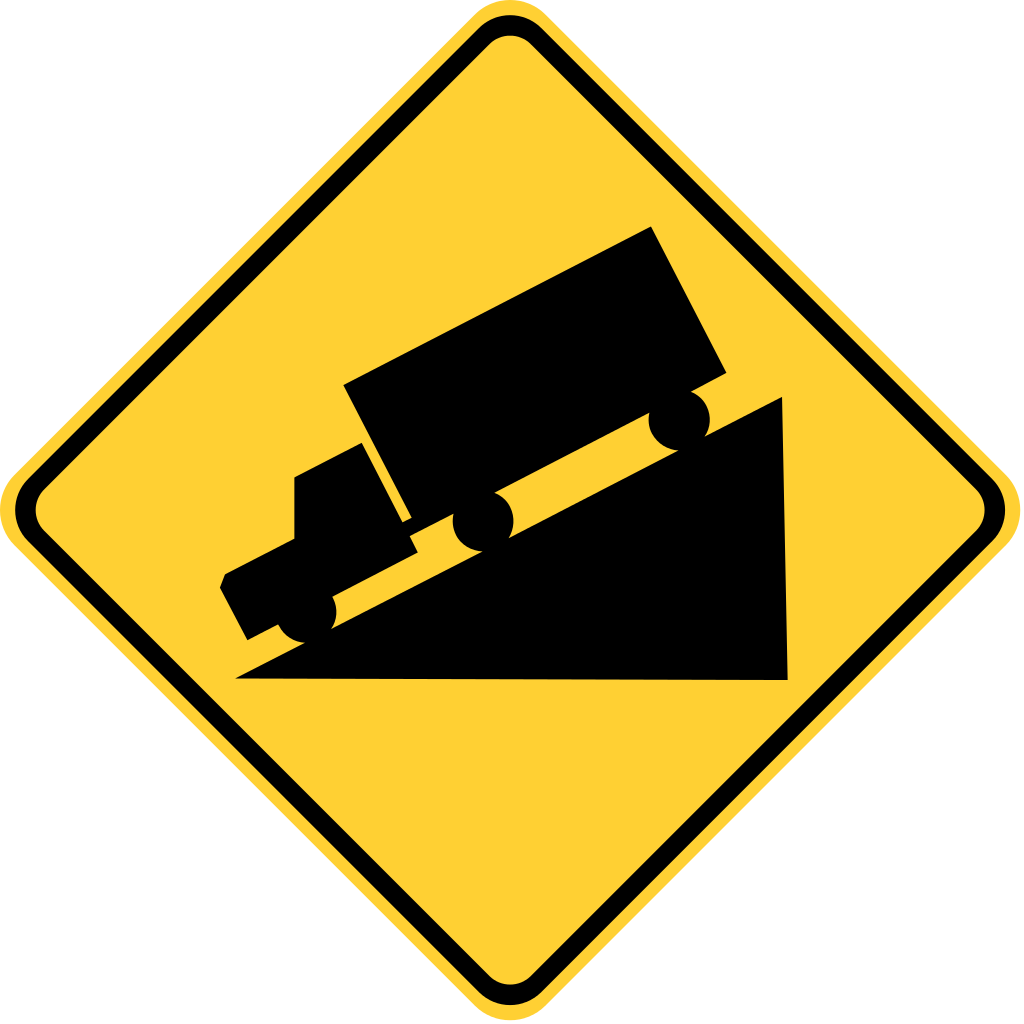 This traffic sign warns you about:
A
merging traffic.
B
a hill or a downgrade up ahead on the road.
C
an intersection ahead.
D
a winding road.
This traffic sign indicates: a hill or a downgrade up ahead on the road. Observing and obeying all roadway signs ensures safe traffic flow and legal driving.
Question 17:
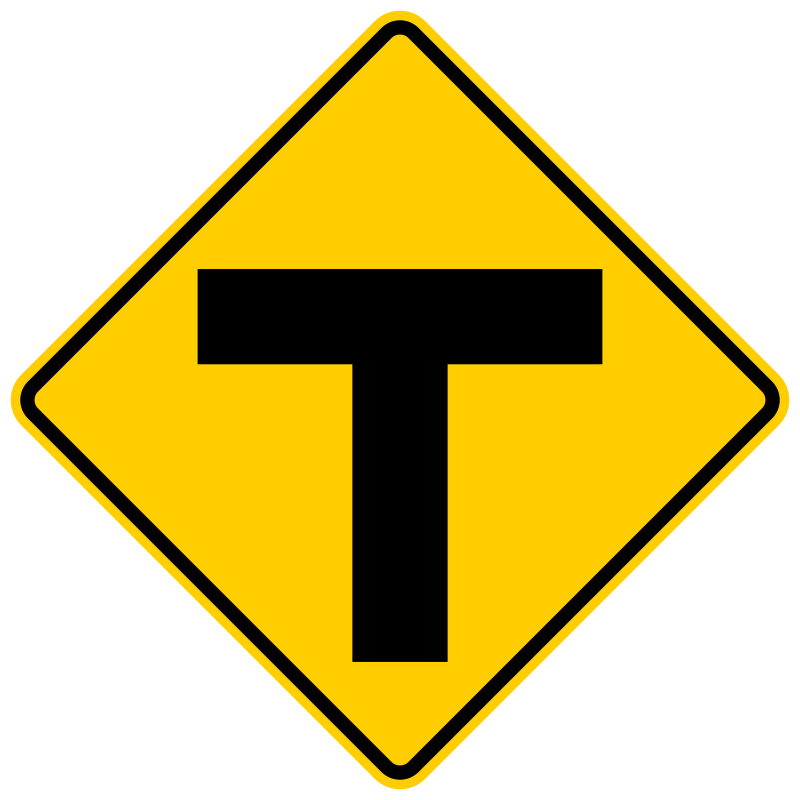 This road sign means:
A
Side road
B
T-intersection ahead
C
Keep right
D
Left lane must turn left
This traffic sign indicates: T-intersection ahead. Observing and obeying all roadway signs ensures safe traffic flow and legal driving.
Question 18:
If you approach a flashing red traffic light, you should treat the intersection the same as:
A
a yield sign.
B
a stop sign.
C
a warning sign.
When an emergency vehicle approaches with flashing lights or sirens, you must safely pull over to the right curb and stop completely until it passes.
Question 19:
When a pedestrian carrying a white cane is at the corner ready to cross the street in front of you, before making your right turn, you should:
A
use your horn to help the pedestrian cross the street.
B
turn off the ignition until the person crosses the street.
C
yield the right-of-way and wait until the pedestrian crosses the street.
Drivers must always yield the right-of-way to pedestrians crossing at intersections and crosswalks: yield the right-of-way and wait until the pedestrian crosses the street. Stop and allow them to clear the lane safely.
Question 20:
Drivers under the age of 21 are subject to a specific restriction prohibiting them from driving:
A
before consuming alcohol.
B
with alcohol in their system.
C
before midnight.
The correct driving rule is: with alcohol in their system. Following standard DMV road rules and practicing defensive driving ensures safety for all road users.
Question 21:
 This sign warns drivers that:
A
the highway ahead is divided into two one-way roadways. Drivers should keep to the right.
B
there is a winding road ahead.
C
there is a double curve ahead.
This traffic sign indicates: there is a double curve ahead. Observing and obeying all roadway signs ensures safe traffic flow and legal driving.
Question 22:
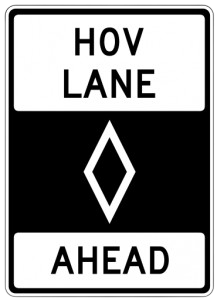 This road sign indicates that:
A
a lane is reserved for certain purposes or certain vehicles.
B
buses and car pools may not travel in the restricted lane.
C
vehicles cannot go straight ahead. Cars must turn either to the right or left.
This traffic sign indicates: a lane is reserved for certain purposes or certain vehicles. Observing and obeying all roadway signs ensures safe traffic flow and legal driving.
Question 23:
This road sign means:
A
Yield right-of-way to bicycles
B
Bicycles cross or ride beside traffic
C
Yield to motorcyles, but not to bicycles
D
Bicycles have the same rights as other vehicles
This traffic sign indicates: Bicycles cross or ride beside traffic. Observing and obeying all roadway signs ensures safe traffic flow and legal driving.
Question 24:
Drivers should not sound their horn when:
A
near blind pedestrians.
B
visibility ahead is limited.
C
they may hit another vehicle.
The correct driving rule is: near blind pedestrians. Following standard DMV road rules and practicing defensive driving ensures safety for all road users.
Question 25:
_____________ lights indicate that drivers should slow down and proceed with caution at an intersection.
A
Red
B
Flashing yellow
C
Flashing red
D
Yellow
According to standard right-of-way regulations: Flashing yellow. Yielding appropriately prevents intersection collisions and maintains safe traffic flow.