DriveQuiz drivequiz.com

RI DMV PERMİT PRACTİCE TEST 20

Rhode Island
Duration: 23 min
|
Questions: 25
Student Name:
Date:
Correct:      Incorrect:      Score:      
1.
A traffic sign with a red circle around and a slash over a symbol means:
A) the maneuver shown by the symbol is not allowed.
B) Do not drive faster than the posted speed limit.
C) the maneuver shown on the sign should be executed with extreme caution.
2.
Distracted driving:
A) causes the driver to react more slowly to hazards.
B) is only dangerous for inexperienced drivers.
C) usually causes the driver to drive slower.
D) is never dangerous.
3.
The best way to avoid loss of control in wet conditions is pump your brakes.
A) False
B) True
4.
If your car starts to skid, turn your steering wheel:
A) in the direction you want to go.
B) in the opposite direction of the skid.
C) to keep the front wheels straight.
D) in any direction. It doesnt matter.
5.
If the entrance lane is too short to allow acceleration to highway speed, you should:
A) go to the next entrance ramp.
B) stop and wait for a large gap in traffic, then enter the highway and accelerate quickly.
C) merge into highway traffic as soon as possible.
6.
Indicates a series of three or more consecutive sharp turns or curves ahead. Reduce speed and maintain lane control.
This sign warns drivers that:
A) they must turn either to the right or left.
B) there is a double curve ahead.
C) there is a winding road ahead.
7.
Driving under the influence of any medication which impairs your driving ability is permitted:
A) under no circumstances.
B) if it is prescribed by a physician.
C) if you dont feel drowsy.
8.
When you get in a car to drive, the first thing you should do is:
A) check your rear view mirror.
B) adjust the steering wheel.
C) adjust your seat belt.
D) adjust your seat.
9.
A side road enters the highway from the right or left. Watch for traffic turning onto or crossing your lane.
This road sign means:
A) A road joins from the right
B) All traffic must go straight ahead
C) All traffic must turn right
10.
On a road with two or more lanes in the same direction, you approach an emergency vehicle that is stopped with its warning lights on. You must:
A) slow down. If possible, change lanes.
B) pass the emergency vehicle as quickly as possible.
C) drive to the right side of the road and stop.
D) maintain your current speed and stay in your lane.
11.
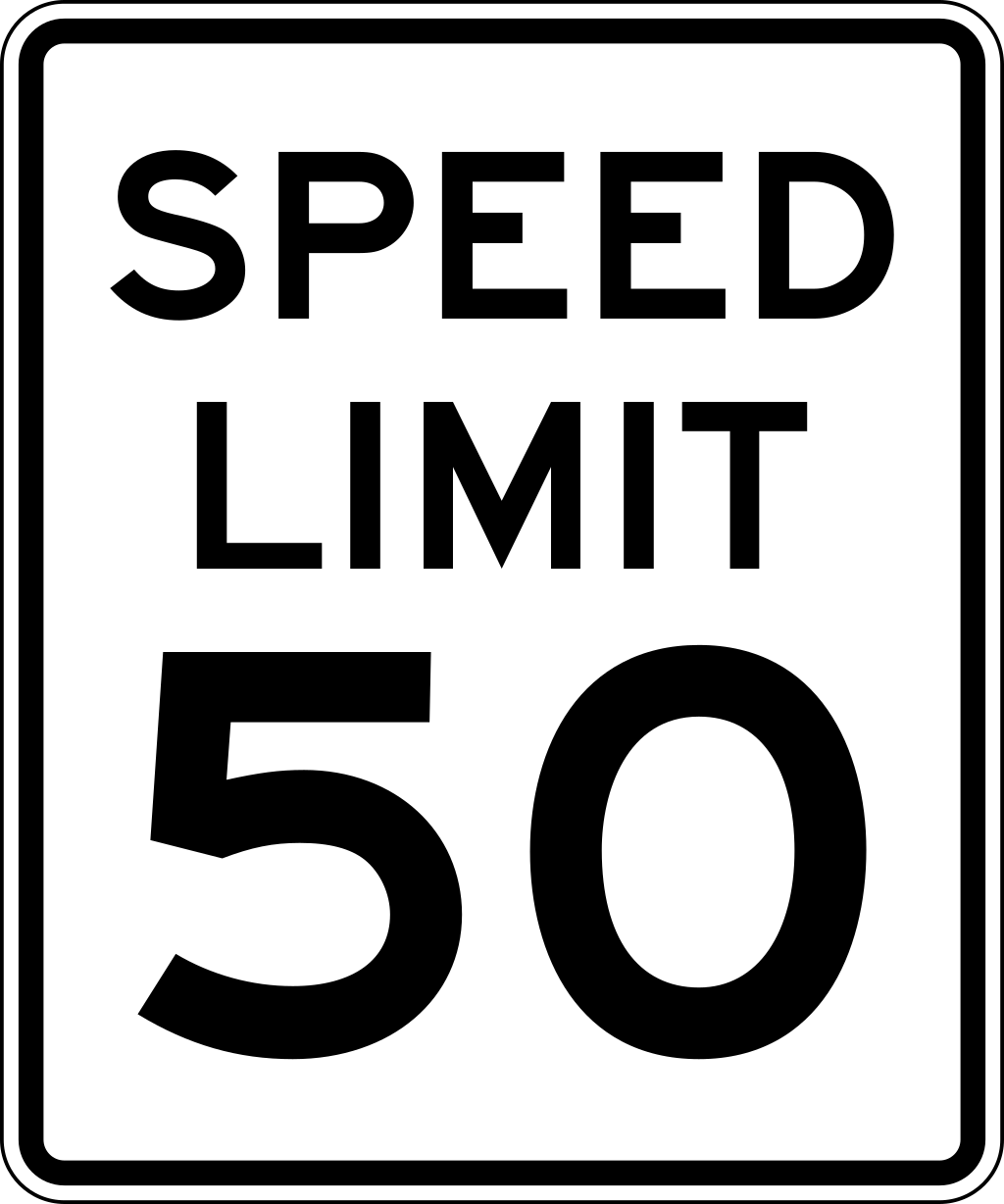
The maximum legal speed under ideal driving conditions is 50 miles per hour. Always adjust speed downward for adverse weather, traffic, or road conditions.
This road sign means:
A) You must travel at the speed indicated
B) The maximum speed limit under ideal conditions
C) None of the above
12.
Regulatory signs are:
A) Suggestions
B) Warnings
C) Law
13.
Alerts drivers to an upcoming crosswalk where pedestrians frequently cross. Slow down and yield right-of-way to anyone in or about to enter the roadway.
This road sign means:
A) Railroad Crossing
B) One Way
C) Limited parking
14.
Your red traffic signal changes to green while a pedestrian is crossing in your traffic lane. The right of way should be given:
A) by the pedestrian, but only when vehicles are turning left.
B) by the pedestrian.
C) to the pedestrian.
15.
Posted on the far side of a sharp curve or T-intersection to indicate a sharp change in direction of travel.
This sign means:
A) Not enter
B) Detour to the right
C) The road to the right is for one-way traffic only
16.
When entering a highway from an entrance ramp, drivers should:
A) enter slowly to avoid other vehicles.
B) stop first, then gradually enter traffic.
C) accelerate to the speed of traffic.
D) drive above the speed of traffic to get ahead.
17.
At a stop sign there is no stop line, you must stop:
A) before you enter the intersection.
B) before you enter the crosswalk.
C) after you enter the crosswalk.
18.
When they see a crossbuck sign, drivers:
A) must slow down and wait for the red lights to flash.
B) must always come to a complete stop.
C) are legally required to yield the right of way to trains.
19.
In heavy rain, tires can begin to ride on the water that is on top of the road pavement. This is called:
A) rideplaning.
B) hydroplaning.
C) pavement-planing.
D) waterplaning.
20.
What should you do if one of your tires blows out?
A) Hold the steering wheel tight and brake immediately to avoid the risk of skidding.
B) Leave the road immediately.
C) Hold the steering wheel tight and slowly take your foot off the gas pedal.
21.
When you approach a railroad crossing without flashing warning signals or crossing gates, you should:
A) always stop.
B) cross the tracks as slowly as possible.
C) yield to all trains at the crossing.
D) speed up to beat the train.
22.
What is the first thing you should do if your wheels move off the pavement?
A) Pull the steering wheel back.
B) Pull over to the right and sound your horn to warn the other drivers.
C) Ease your foot off the gas pedal and brake gently.
23.
If a vehicle starts to skid on water the driver should quickly apply the brakes.
A) True
B) False
24.
A defensive driver:
A) never drives below the speed limit.
B) knows when it is safe to pass other vehicles.
C) considers what other drivers might do and is always prepared to act.
25.
What should you do if your vision through the windshield becomes blocked?
A) Pull your vehicle off the road and park it.
B) Turn on your emergency lights.
C) Open the side window so you can see.
D) All of the above.
ANSWER KEY Check answers after completing the test.
1 A
2 A
3 A
4 A
5 B
6 C
7 A
8 D
9 A
10 A
11 B
12 C
13 A
14 C
15 B
16 C
17 B
18 C
19 B
20 C
21 C
22 C
23 B
24 C
25 D