Question 1:
Which sign has white letters on a red background?
A
Stop
B
School zone
C
Yield
The correct driving rule is: stop. Following standard DMV road rules and practicing defensive driving ensures safety for all road users.
Question 2:
When changing lanes, drivers should never:
A
check to see if other drivers are moving into the same lane.
B
change lanes abruptly.
C
glance over their shoulder to check for blind spots.
The correct driving rule is: change lanes abruptly. Following standard DMV road rules and practicing defensive driving ensures safety for all road users.
Question 3:
Which shape is a yield sign?
A
Vertical rectangle
B
Upside-down triangle
C
Diamond
The correct driving rule is: Upside-down triangle. Following standard DMV road rules and practicing defensive driving ensures safety for all road users.
Question 4:
 The yield sign means:
A
Go. The light will soon be red.
B
If the way is clear, you may move forward slowly without stopping.
C
Stop if you can.
A triangular Yield sign requires drivers to slow down and give right-of-way to other traffic: If the way is clear, you may move forward slowly without stopping. Proceed only when there is a safe opening.
Question 5:
If another vehicle passes you on the left, you must:
A
increase your speed slightly and keep to the right.
B
decrease your speed, then pull over to the right and stop.
C
decrease your speed slightly and keep to the right.
The correct driving rule is: decrease your speed slightly and keep to the right. Following standard DMV road rules and practicing defensive driving ensures safety for all road users.
Question 6:
You can reduce the chance of a collision with a large vehicle if you:
A
delay near it.
B
cut abruptly in front of it.
C
pay close attention to the turn signals.
The correct driving rule is: pay close attention to the turn signals. Following standard DMV road rules and practicing defensive driving ensures safety for all road users.
Question 7:
Which of the following is a common cause of a traffic collisions?
A
Following too closely.
B
Excessive speed for conditions.
C
Distracted driving.
D
All of the above.
All of the listed points are essential driving requirements: Following too closely; Excessive speed for conditions; Distracted driving. Practicing each ensures compliance with DMV safety laws.
Question 8:
 This sign warns drivers of:
A
low clearance.
B
a narrow bridge ahead.
C
a low place in the road.
This traffic sign indicates: a narrow bridge ahead. Observing and obeying all roadway signs ensures safe traffic flow and legal driving.
Question 9:
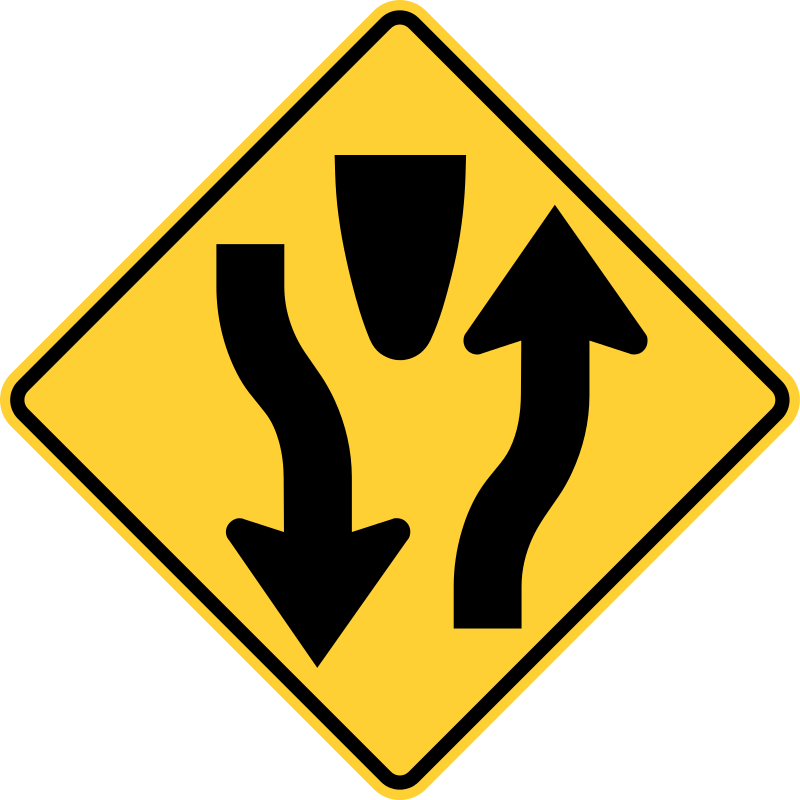 This road sign means:
A
Keep left
B
Divided highway begins
C
Lane ends
This traffic sign indicates: Divided highway begins. Observing and obeying all roadway signs ensures safe traffic flow and legal driving.
Question 10:
 This road sign means:
A
There is a series of sharp turns up ahead on the road
B
Sharp right turn ahead.
C
A road joins from the right
This traffic sign indicates: There is a series of sharp turns up ahead on the road. Observing and obeying all roadway signs ensures safe traffic flow and legal driving.
Question 11:
A flashing yellow light means:
A
The light will soon change from green to red.
B
Drive with caution.
C
Yield the right-of-way to other traffic at the intersection.
According to standard right-of-way regulations: drive with caution. Yielding appropriately prevents intersection collisions and maintains safe traffic flow.
Question 12:
The basic color for traffic control devices used in construction zones is:
A
red.
B
orange.
C
yellow.
The correct driving rule is: orange. Following standard DMV road rules and practicing defensive driving ensures safety for all road users.
Question 13:
When driving on major highways you should:
A
be ready to react to road hazards.
B
stay alert.
C
keep your eyes moving.
D
All of the above.
All of the listed points are essential driving requirements: be ready to react to road hazards; stay alert; keep your eyes moving. Practicing each ensures compliance with DMV safety laws.
Question 14:
Your ability to drive safely can be impaired by:
A
alcohol.
B
lack of sleep.
C
drugs, even if they are over-the-counter.
D
All of the above.
All of the listed points are essential driving requirements: alcohol; lack of sleep; drugs, even if they are over-the-counter. Practicing each ensures compliance with DMV safety laws.
Question 15:
When an aggressive driver confronts you, you should:
A
Try to move away safely.
B
Remain calm and relaxed.
C
All of the above.
All of the listed points are essential driving requirements: Try to move away safely; Remain calm and relaxed. Practicing each ensures compliance with DMV safety laws.
Question 16:
When dust is blowing across the roadway making it difficult to see other vehicles, you should drive slower and turn on your:
A
headlights.
B
parking lights.
C
emergency flashers.
The correct driving rule is: headlights. Following standard DMV road rules and practicing defensive driving ensures safety for all road users.
Question 17:
This road sign means:
A
A road joins from the left
B
The road ahead turns sharply right then sharply left
C
Sharp right turn
D
Winding road ahead
This traffic sign indicates: The road ahead turns sharply right then sharply left. Observing and obeying all roadway signs ensures safe traffic flow and legal driving.
Question 18:
Are drivers allowed to exceed the speed limit to pass other vehicles?
A
Yes, but only by 10 MPH or less.
B
No.
C
Yes, but only if they drive with caution.
For safe speed and stopping control: No. Adjusting speed to match visibility and road traction prevents loss of steering grip.
Question 19:
You are considered to be driving under the influence when your blood alcohol concentration (BAC) is ____ or more.
A
0.05%
B
0.08%
C
0.8%
In nearly all US states, drivers age 21 and older are legally intoxicated with a Blood Alcohol Concentration (BAC) of 0.08% or higher.
Question 20:
Your brake lights tell other drivers that you:
A
are changing lanes.
B
are slowing down or stopping.
C
are making a turn.
D
have your emergency brake on.
The correct driving rule is: are slowing down or stopping. Following standard DMV road rules and practicing defensive driving ensures safety for all road users.
Question 21:
After passing a vehicle, it is safe to return to your lane:
A
when you can no longer see the vehicle over your right shoulder.
B
after about five seconds.
C
when you see the front bumper of the other vehicle in your mirror.
Defensive driving guidelines state that: when you see the front bumper of the other vehicle in your mirror. Anticipating road hazards and communicating maneuvers keeps traffic predictable and safe.
Question 22:
Select the most effective safety restraint(s) in a traffic crash.
A
Lap and shoulder belt only
B
Air bag only
C
Pumping brakes.
D
A combination of lap/shoulder belt and air bag.
The correct driving rule is: A combination of lap/shoulder belt and air bag. Following standard DMV road rules and practicing defensive driving ensures safety for all road users.
Question 23:
 This yellow sign means:
A
Lane ends ahead
B
Undivided highway ahead
C
Merging traffic ahead
This traffic sign indicates: Merging traffic ahead. Observing and obeying all roadway signs ensures safe traffic flow and legal driving.
Question 24:
 This road sign means:
A
Low clearance
B
Do not enter
C
A steep grade is ahead
This traffic sign indicates: Low clearance. Observing and obeying all roadway signs ensures safe traffic flow and legal driving.
Question 25:
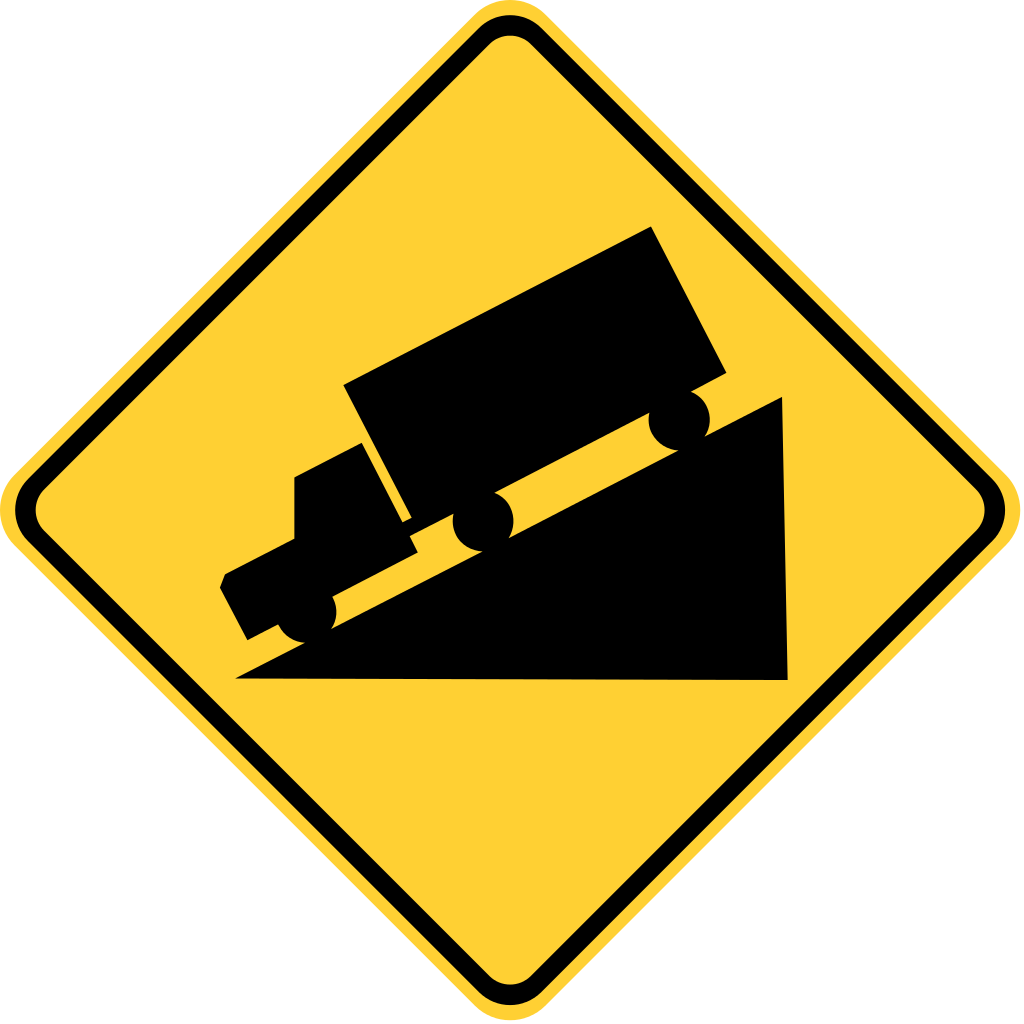 This road sign means:
A
Watch for trucks entering from the side
B
Merging traffic
C
Steep hill
This traffic sign indicates: Steep hill. Observing and obeying all roadway signs ensures safe traffic flow and legal driving.