Question 1:
You may turn right on red if you:
A
are in the left lane.
B
slow down first.
C
stop first and check for traffic and pedestrians.
D
have a right turn red arrow.
Answer Explanation
According to standard right-of-way regulations: stop first and check for traffic and pedestrians. Yielding appropriately prevents intersection collisions and maintains safe traffic flow.
According to standard right-of-way regulations: stop first and check for traffic and pedestrians. Yielding appropriately prevents intersection collisions and maintains safe traffic flow.
Question 2:
When you park on the roadway, you should:
A
keep your turn signal on.
B
park at an angle.
C
use your four-way flashers.
D
turn your lights on.
Answer Explanation
Under standard parking and curb regulations: use your four-way flashers. Following parking distance clearances keeps roadways unobstructed and emergency lanes accessible.
Under standard parking and curb regulations: use your four-way flashers. Following parking distance clearances keeps roadways unobstructed and emergency lanes accessible.
Question 3:
 A four-way stop sign means:
A
traffic from all four directions must stop.
B
if two vehicles reach the intersection at the same time, the driver on the left yields to the driver on the right.
C
All of the above.
Answer Explanation
This sign alerts drivers to several mandatory requirements: traffic from all four directions must stop, if two vehicles reach the intersection at the same time, the driver on the left yields to the driver on the right. Obeying all posted traffic control instructions is required by law.
This sign alerts drivers to several mandatory requirements: traffic from all four directions must stop, if two vehicles reach the intersection at the same time, the driver on the left yields to the driver on the right. Obeying all posted traffic control instructions is required by law.
Question 4:
If you are arrested for driving under the influence of alcohol and you refuse to take the blood test, you will receive a:
A
sentence of one day in jail.
B
$300 fine.
C
government voucher for an alcohol addiction treatment.
D
license suspension.
Answer Explanation
Under state DUI and traffic safety laws: license suspension. Alcohol degrades judgment, slows reaction times, and distorts depth perception.
Under state DUI and traffic safety laws: license suspension. Alcohol degrades judgment, slows reaction times, and distorts depth perception.
Question 5:
 This regulatory road sign indicates that:
A
Vehicles must slow down and stay in the right lane.
B
The right hand lane is reserved for buses and car-pool vehicles.
C
Slower vehicles traveling on multiple lane highways must stay in the right hand lane.
Answer Explanation
This traffic sign indicates: Slower vehicles traveling on multiple lane highways must stay in the right hand lane. Observing and obeying all roadway signs ensures safe traffic flow and legal driving.
This traffic sign indicates: Slower vehicles traveling on multiple lane highways must stay in the right hand lane. Observing and obeying all roadway signs ensures safe traffic flow and legal driving.
Question 6:
 This is the shape and color of a ________ sign.
A
yield
B
stop
C
do not enter
Answer Explanation
The correct driving rule is: yield. Following standard DMV road rules and practicing defensive driving ensures safety for all road users.
The correct driving rule is: yield. Following standard DMV road rules and practicing defensive driving ensures safety for all road users.
Question 7:
Destination signs are ______ with ____ letters and symbols.
A
green; white
B
blue; white
C
white; black
Answer Explanation
The correct driving rule is: green; white. Following standard DMV road rules and practicing defensive driving ensures safety for all road users.
The correct driving rule is: green; white. Following standard DMV road rules and practicing defensive driving ensures safety for all road users.
Question 8:
Drivers may continue carefully through a yellow light if:
A
there are no pedestrians crossing.
B
they are turning right.
C
they already are within the intersection.
D
an emergency vehicle is crossing your lane.
Answer Explanation
According to standard right-of-way regulations: they already are within the intersection. Yielding appropriately prevents intersection collisions and maintains safe traffic flow.
According to standard right-of-way regulations: they already are within the intersection. Yielding appropriately prevents intersection collisions and maintains safe traffic flow.
Question 9:
 This sign warns drivers that:
A
the highway ahead is divided into two one-way roadways. Drivers should keep to the right.
B
there is a winding road ahead.
C
there is a double curve ahead.
Answer Explanation
This traffic sign indicates: there is a double curve ahead. Observing and obeying all roadway signs ensures safe traffic flow and legal driving.
This traffic sign indicates: there is a double curve ahead. Observing and obeying all roadway signs ensures safe traffic flow and legal driving.
Question 10:
When approaching someone using a white cane, you should proceed with caution because:
A
the pedestrian might be using a guide dog.
B
the pedestrian might be blind.
C
the pedestrian is deaf.
D
the pedestrian is blind.
Answer Explanation
The correct driving rule is: the pedestrian is blind. Following standard DMV road rules and practicing defensive driving ensures safety for all road users.
The correct driving rule is: the pedestrian is blind. Following standard DMV road rules and practicing defensive driving ensures safety for all road users.
Question 11:
Anything that requires you to _______ could cause you to crash.
A
take your hands off the wheel
B
take your attention away from driving
C
take your eyes off the road
D
All of the above.
Answer Explanation
All of the listed points are essential driving requirements: take your hands off the wheel; take your attention away from driving; take your eyes off the road. Practicing each ensures compliance with DMV safety laws.
All of the listed points are essential driving requirements: take your hands off the wheel; take your attention away from driving; take your eyes off the road. Practicing each ensures compliance with DMV safety laws.
Question 12:
Driving at night is _______ than driving during the day.
A
easier on your eyes
B
more dangerous
C
no more of less dangerous
D
less dangerous
Answer Explanation
The correct driving rule is: more dangerous. Following standard DMV road rules and practicing defensive driving ensures safety for all road users.
The correct driving rule is: more dangerous. Following standard DMV road rules and practicing defensive driving ensures safety for all road users.
Question 13:
If you are pulled over by law enforcement, you should:
A
stay in the driver’s seat with both hands clearly in sight on the steering wheel.
B
unbuckle your seat belt and lower your window.
C
get out of your vehicle and walk toward the patrol car.
D
turn off on your interior light if stopped at night.
Answer Explanation
The correct driving rule is: stay in the driver’s seat with both hands clearly in sight on the steering wheel. Following standard DMV road rules and practicing defensive driving ensures safety for all road users.
The correct driving rule is: stay in the driver’s seat with both hands clearly in sight on the steering wheel. Following standard DMV road rules and practicing defensive driving ensures safety for all road users.
Question 14:
You should use turn signals to indicate your intention with sufficient time to allow other drivers to see the signal:
A
if it’s raining.
B
AFTER you move.
C
BEFORE you move.
Answer Explanation
State laws require signaling your intention: BEFORE you move. Signal at least 100 feet before making a turn or changing lanes.
State laws require signaling your intention: BEFORE you move. Signal at least 100 feet before making a turn or changing lanes.
Question 15:
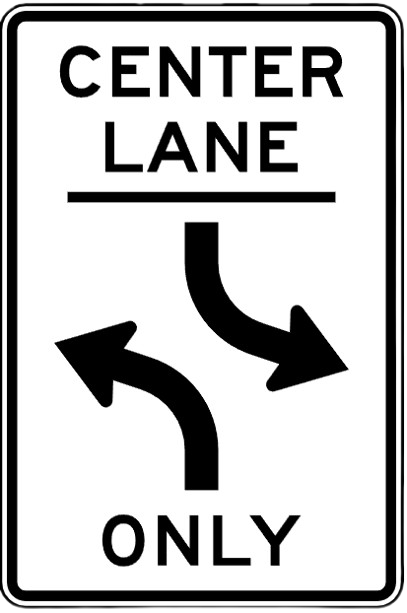 This road sign means:
A
Extra lane to the left
B
Two way left turn
C
Lane shifting
Answer Explanation
This traffic sign indicates: Two way left turn. Observing and obeying all roadway signs ensures safe traffic flow and legal driving.
This traffic sign indicates: Two way left turn. Observing and obeying all roadway signs ensures safe traffic flow and legal driving.
Question 16:
Arrows on the roadway:
A
show which lanes you must use.
B
indicate reserved lanes.
C
indicate HOV lanes.
Answer Explanation
The correct driving rule is: show which lanes you must use. Following standard DMV road rules and practicing defensive driving ensures safety for all road users.
The correct driving rule is: show which lanes you must use. Following standard DMV road rules and practicing defensive driving ensures safety for all road users.
Question 17:
If there are no sidewalks, pedestrians should:
A
walk in the direction of traffic.
B
walk facing oncoming traffic.
C
stop walking.
Answer Explanation
The correct driving rule is: walk facing oncoming traffic. Following standard DMV road rules and practicing defensive driving ensures safety for all road users.
The correct driving rule is: walk facing oncoming traffic. Following standard DMV road rules and practicing defensive driving ensures safety for all road users.
Question 18:
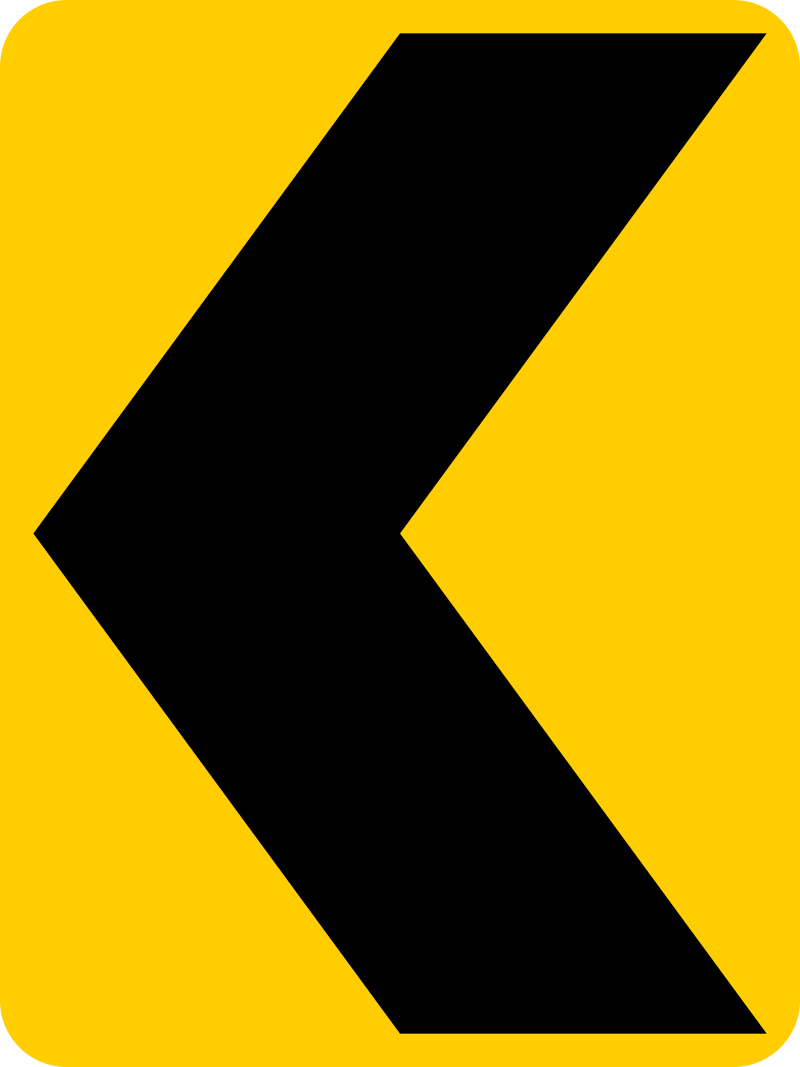 This road sign means:
A
No Passing Zone
B
You must turn right at the next intersection
C
Warning: the road ahead changes direction
D
Warning: traffic coming from the right
Answer Explanation
This traffic sign indicates: Warning: the road ahead changes direction. Observing and obeying all roadway signs ensures safe traffic flow and legal driving.
This traffic sign indicates: Warning: the road ahead changes direction. Observing and obeying all roadway signs ensures safe traffic flow and legal driving.