Question 1:
If your car goes into water, you should:
A
wait for water to rush in and let it out in small breaths through your nose.
B
call the fire department immediately.
C
remove yourself before it starts to sink.
The correct driving rule is: remove yourself before it starts to sink. Following standard DMV road rules and practicing defensive driving ensures safety for all road users.
Question 2:
When children are close, what should you do before you back out of a driveway?
A
Rely on your mirrors.
B
Get out of the car and check behind the car.
C
Look through your back window for children.
The correct driving rule is: Get out of the car and check behind the car. Following standard DMV road rules and practicing defensive driving ensures safety for all road users.
Question 3:
Roads become very slippery:
A
for the first 10 to 15 minutes of a rain storm.
B
None of the other answers is correct.
C
when it's been raining for an hour or more.
D
right after the rain.
For safe speed and stopping control: for the first 10 to 15 minutes of a rain storm. Adjusting speed to match visibility and road traction prevents loss of steering grip.
Question 4:
In the following situations, drivers should increase their following interval:
A
When following vehicles that are required to come to a stop at railroad crossings.
B
When it is hard to see ahead because of bad weather.
C
All of the above.
All of the listed points are essential driving requirements: When following vehicles that are required to come to a stop at railroad crossings; When it is hard to see ahead because of bad weather. Practicing each ensures compliance with DMV safety laws.
Question 5:
 This road sign means:
A
A road joins from the left
B
The road ahead turns sharply right then sharply left
C
Sharp right turn
D
Winding road ahead
This traffic sign indicates: The road ahead turns sharply right then sharply left. Observing and obeying all roadway signs ensures safe traffic flow and legal driving.
Question 6:
A speed restriction sign:
A
shows the recommended speed for a curve/turn.
B
is blue with white lettering.
C
must be ignored in snow conditions.
D
has a diamond shape.
For safe speed and stopping control: shows the recommended speed for a curve/turn. Adjusting speed to match visibility and road traction prevents loss of steering grip.
Question 7:
Directions given by traffic officers ___________ signs, signals or pavement markings.
A
take precedence over
B
are less important than
C
must obey
The correct driving rule is: take precedence over. Following standard DMV road rules and practicing defensive driving ensures safety for all road users.
Question 8:
When driving behind a motorcycle, drivers must:
A
remembers that motorcyclists have the right to use a complete traffic lane.
B
pass the motorcycle in the same lane.
C
drive on the shoulder beside the motorcycle.
D
share the lane with the motorcycle.
Motorcycles can stop rapidly and are easily hidden in vehicle blind spots: remembers that motorcyclists have the right to use a complete traffic lane. Always allow an increased following distance of at least 3 to 4 seconds.
Question 9:
 This is:
A
a side road sign.
B
a merging traffic sign.
C
a right curve sign.
The correct driving rule is: a side road sign. Following standard DMV road rules and practicing defensive driving ensures safety for all road users.
Question 10:
Work zone signs:
A
mean that road conditions will improve soon.
B
mean that drivers must come to a complete stop and back up.
C
provide information on road work or other temporary road conditions.
D
mean that drivers should drive faster to get out of the work zone.
The correct driving rule is: provide information on road work or other temporary road conditions. Following standard DMV road rules and practicing defensive driving ensures safety for all road users.
Question 11:
This road sign means:
A
Merge
B
Side Road
C
Merging Traffic
D
All traffic must go straight ahead
This traffic sign indicates: Side Road. Observing and obeying all roadway signs ensures safe traffic flow and legal driving.
Question 12:
A road is likely to be most slippery:
A
when tire marks have been left by other vehicles.
B
in cold, dry weather.
C
when icy and the temperature is near freezing.
D
in spring.
For safe speed and stopping control: when icy and the temperature is near freezing. Adjusting speed to match visibility and road traction prevents loss of steering grip.
Question 13:
What are some telltale signs of a drunk driver?
A
Sudden stops.
B
Weaving between lanes.
C
Driving slower than the normal flow of traffic.
D
All of the above.
Alcohol and impairing substances degrade all critical driving functions: Sudden stops; Weaving between lanes; Driving slower than the normal flow of traffic. Driving while impaired carries severe criminal and safety penalties.
Question 14:
For protection, motorcyclists are required to:
A
keep their headlights and taillights on at all times.
B
signal turns, lane changes and stops.
C
wear approved helmets.
The correct driving rule is: wear approved helmets. Following standard DMV road rules and practicing defensive driving ensures safety for all road users.
Question 15:
A vehicle is stopped at a crosswalk to permit a pedestrian to cross the roadway. The driver of the vehicle approaching from the rear should:
A
sound the horn.
B
overtake and pass the stopped vehicle.
C
not overtake and pass the stopped vehicle.
Drivers must always yield the right-of-way to pedestrians crossing at intersections and crosswalks: not overtake and pass the stopped vehicle. Stop and allow them to clear the lane safely.
Question 16:
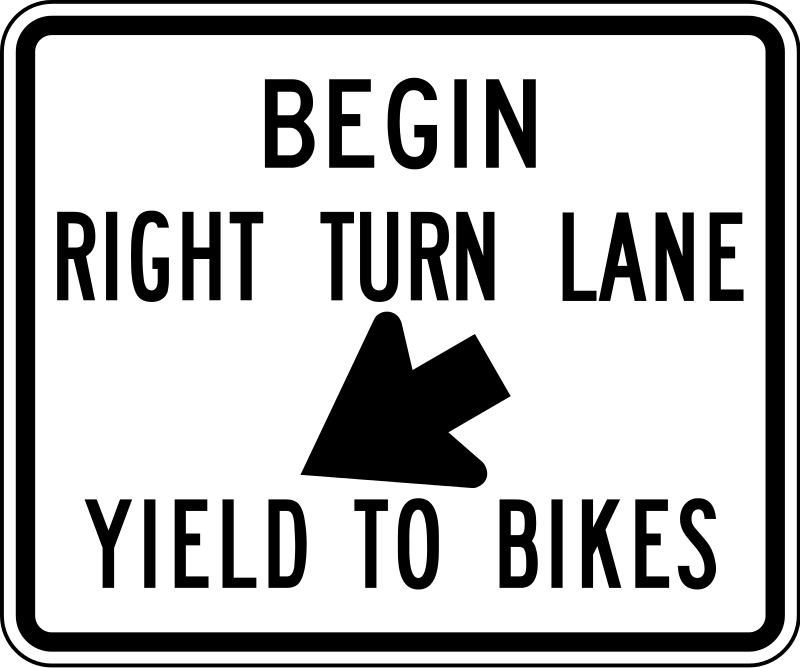 What does this road sign indicate?
A
Drivers have the right of way over bikes turning left.
B
Vehicles turning left must yield to bikes entering a right turn lane.
C
Motor vehicles entering an exclusive right-turn lane must weave across bicycle traffic in bicycle lanes.
This traffic sign indicates: Motor vehicles entering an exclusive right-turn lane must weave across bicycle traffic in bicycle lanes. Observing and obeying all roadway signs ensures safe traffic flow and legal driving.
Question 17:
In case of skidding, drivers should NOT:
A
take their foot off the gas pedal.
B
pump the brakes gently if they are about to hit something.
C
tap the gas pedal with their foot.
The correct driving rule is: tap the gas pedal with their foot. Following standard DMV road rules and practicing defensive driving ensures safety for all road users.
Question 18:
A steady green light at intersections means:
A
You may drive through the intersection if the road is clear
B
You must increase your speed
C
You may not turn right
According to standard right-of-way regulations: you may drive through the intersection if the road is clear. Yielding appropriately prevents intersection collisions and maintains safe traffic flow.
Question 19:
 This road sign means:
A
Railroad Crossing
B
One Way
C
Limited parking
Circular signs with an 'X' and 'RR' designate a Railroad Advance Warning: Railroad Crossing. Drivers must slow down, look both ways, listen for trains, and be prepared to stop.
Question 20:
 This road sign means:
A
You must come to a complete stop
B
Do not enter
C
Slow down, stop if necessary and yield the right-of-way
D
Merging traffic
A triangular Yield sign requires drivers to slow down and give right-of-way to other traffic: slow down, stop if necessary and yield the right-of-way. Proceed only when there is a safe opening.
Question 21:
You should use turn signals to indicate your intention with sufficient time to allow other drivers to see the signal:
A
if it’s raining.
B
AFTER you move.
C
BEFORE you move.
State laws require signaling your intention: BEFORE you move. Signal at least 100 feet before making a turn or changing lanes.
Question 22:
Air bags are meant to _________ seat belts.
A
work with
B
fix
C
replace
The correct driving rule is: work with. Following standard DMV road rules and practicing defensive driving ensures safety for all road users.
Question 23:
___________ are the most frequent fatality in work zone crashes.
A
Motorcyclists
B
Construction workers
C
Drivers and their passengers
D
Bicyclists
The correct driving rule is: drivers and their passengers. Following standard DMV road rules and practicing defensive driving ensures safety for all road users.
Question 24:
When entering a highway from an entrance ramp, drivers should:
A
enter slowly to avoid other vehicles.
B
stop first, then gradually enter traffic.
C
accelerate to the speed of traffic.
D
drive above the speed of traffic to get ahead.
Defensive driving guidelines state that: accelerate to the speed of traffic. Anticipating road hazards and communicating maneuvers keeps traffic predictable and safe.
Question 25:
When you see an emergency vehicle with flashing lights, you must:
A
pull over to the side of the road and stop.
B
increase your speed to provide a clear path for the emergency vehicle.
C
slow down until it passes you.
D
drive with your flashers on.
When sharing the road with other vehicles: pull over to the side of the road and stop. Giving large vehicles and vulnerable users adequate clearance prevents dangerous accidents.
Question 26:
What should you do if your brakes fail?
A
Hook your shoe under the pedal and see if you can free it.
B
Turn on your cruise control.
C
Try pumping the brake pedal to increase pressure.
The correct driving rule is: Try pumping the brake pedal to increase pressure. Following standard DMV road rules and practicing defensive driving ensures safety for all road users.
Question 27:
 A four-way stop sign means:
A
traffic from all four directions must stop.
B
if two vehicles reach the intersection at the same time, the driver on the left yields to the driver on the right.
C
All of the above.
This sign alerts drivers to several mandatory requirements: traffic from all four directions must stop, if two vehicles reach the intersection at the same time, the driver on the left yields to the driver on the right. Obeying all posted traffic control instructions is required by law.
Question 28:
 This sign means:
A
Divided highway ahead.
B
Divided highway ends.
C
Drivers will soon be on a roadway with two-way traffic.
This traffic sign indicates: Divided highway ahead. Observing and obeying all roadway signs ensures safe traffic flow and legal driving.
Question 29:
A thumping sound can be a warning:
A
that a tire blowout is about to occur.
B
of a steering failure.
C
of a brake failure.
The correct driving rule is: that a tire blowout is about to occur. Following standard DMV road rules and practicing defensive driving ensures safety for all road users.
Question 30:
A broken yellow line alongside a solid yellow line means:
A
Passing is permitted on the side of the broken yellow line
B
Passing is not permitted in either direction
C
Passing on the right is permitted in either direction
The correct driving rule is: Passing is permitted on the side of the broken yellow line. Following standard DMV road rules and practicing defensive driving ensures safety for all road users.
Question 31:
You should never depend on your mirrors when you prepare to change lanes. Why?
A
Mirrors leave “blind spots” behind both sides of vehicles.
B
Mirrors need to be adjusted.
C
Mirrors are useless.
The correct driving rule is: Mirrors leave “blind spots” behind both sides of vehicles. Following standard DMV road rules and practicing defensive driving ensures safety for all road users.
Question 32:
Are drivers allowed to exceed the speed limit to pass other vehicles?
A
Yes, but only by 10 MPH or less.
B
No.
C
Yes, but only if they drive with caution.
For safe speed and stopping control: No. Adjusting speed to match visibility and road traction prevents loss of steering grip.
Question 33:
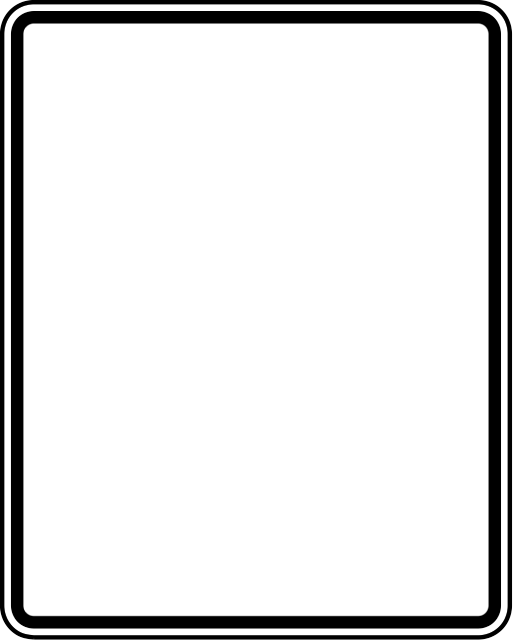 Vertical rectangles tell drivers:
A
the law.
B
what is not allowed.
C
the direction they should travel.
The correct driving rule is: the law. Following standard DMV road rules and practicing defensive driving ensures safety for all road users.
Question 34:
Before passing another vehicle, you should signal:
A
early enough so other drivers know your intention.
B
after changing lanes.
C
at any time.
D
just before changing lanes.
State laws require signaling your intention: early enough so other drivers know your intention. Signal at least 100 feet before making a turn or changing lanes.
Question 35:
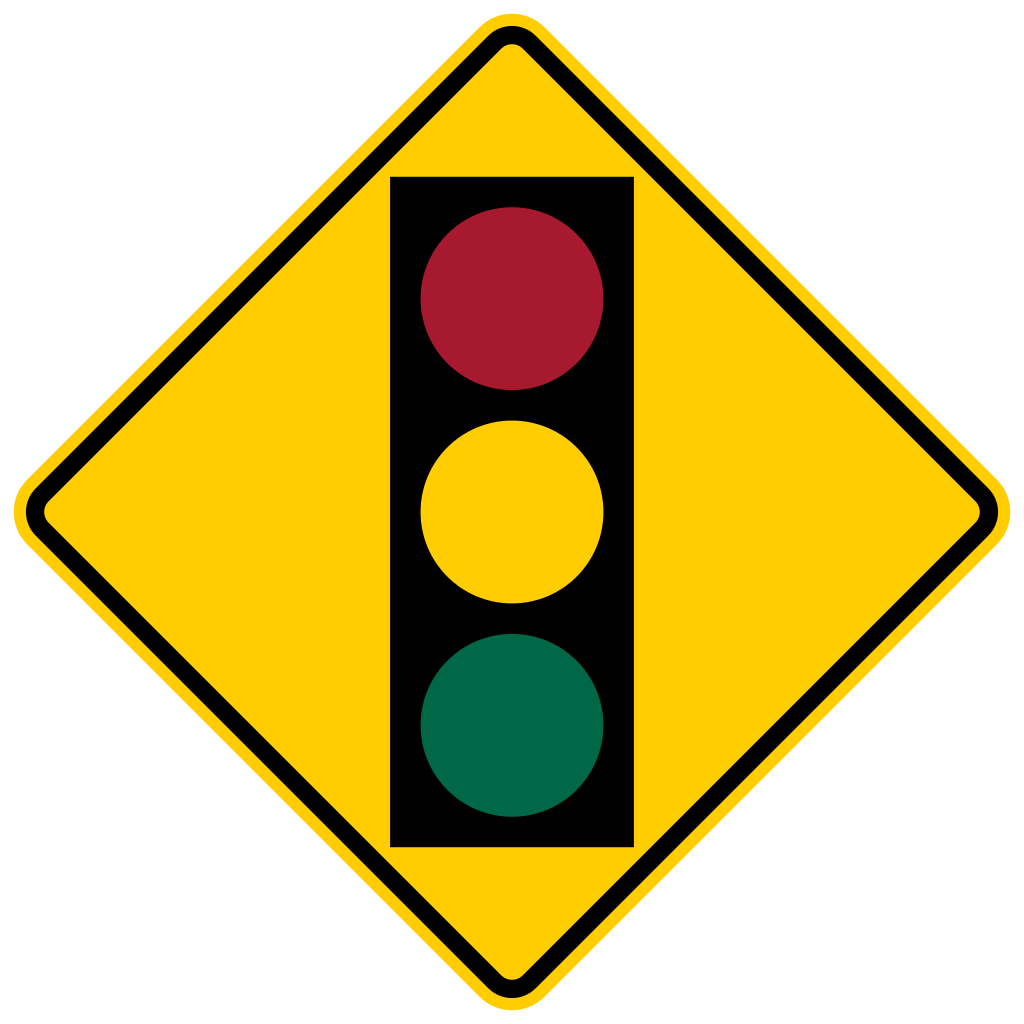 This road sign means:
A
Stop before turning right
B
4-way stop ahead
C
Lane closed for traffic
D
There is a traffic signal ahead
This traffic sign indicates: There is a traffic signal ahead. Observing and obeying all roadway signs ensures safe traffic flow and legal driving.