Question 1:
You go with a group of friends to a social event, and you plan to have a few drinks. You should:
A
make alcohol the focus of the event.
B
avoid alternating between drinks with alcohol and drinks without any alcohol.
C
arrange to ride home with a friend who does not drink.
The correct driving rule is: arrange to ride home with a friend who does not drink. Following standard DMV road rules and practicing defensive driving ensures safety for all road users.
Question 2:
You are driving and you are feeling drowsy. You should:
A
avoid drinking coffee.
B
turn on the radio to keep you awake.
C
find a safe place to stop for a break.
Under state DUI and traffic safety laws: find a safe place to stop for a break. Alcohol degrades judgment, slows reaction times, and distorts depth perception.
Question 3:
Large trucks:
A
have large blind spots.
B
can stop quicker than passenger vehicles.
C
do not need more room to maneuver.
D
All of the above.
The correct driving rule is: have large blind spots. Following standard DMV road rules and practicing defensive driving ensures safety for all road users.
Question 4:
When parallel parking between two cars, you should first:
A
back slowly.
B
pull up even with the front car.
C
turn your wheels to the right.
D
turn your wheels to the left.
Under standard parking and curb regulations: pull up even with the front car. Following parking distance clearances keeps roadways unobstructed and emergency lanes accessible.
Question 5:
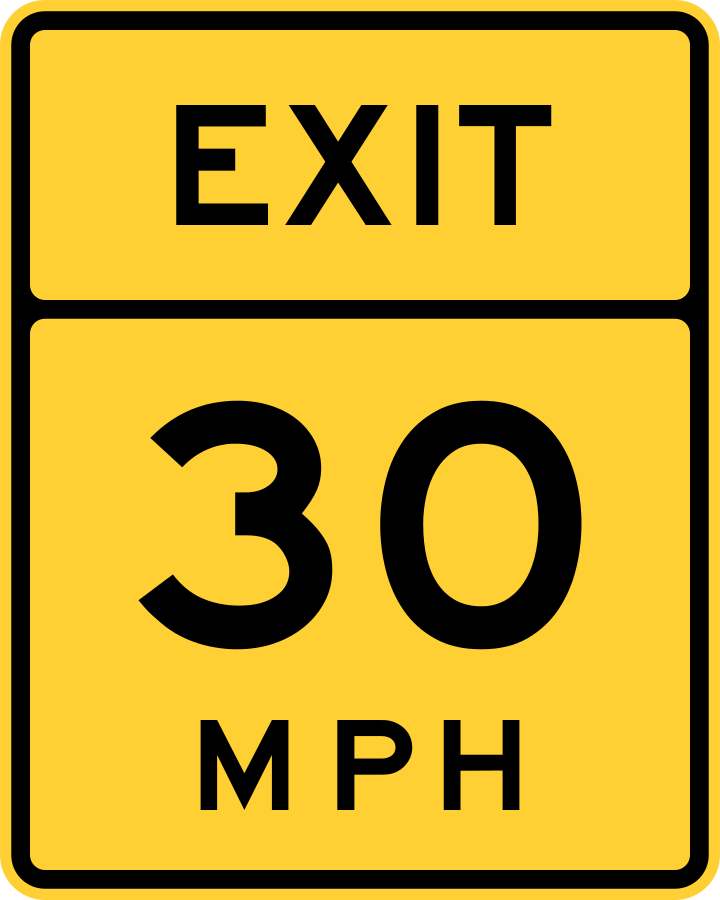 The sign in the picture:
A
shows the highest speed drivers can travel at the exit of the intersection.
B
is used to advise motorists of the appropriate ramp speed at the highway exit point.
C
indicates the minimum ramp speed at the highway exit point.
The correct driving rule is: is used to advise motorists of the appropriate ramp speed at the highway exit point. Following standard DMV road rules and practicing defensive driving ensures safety for all road users.
Question 6:
When you drive into the street from any driveway you:
A
can disregard pedestrians if there is no sidewalk.
B
must drive slowly so approaching vehicles and pedestrians can get out of your way.
C
must honk the horn so approaching vehicles and pedestrians can allow you room.
D
must stop and proceed only when there are no pedestrians or vehicles approaching.
The correct driving rule is: must stop and proceed only when there are no pedestrians or vehicles approaching. Following standard DMV road rules and practicing defensive driving ensures safety for all road users.
Question 7:
Two motorcyclists are allowed to:
A
ride side-by-side in a single lane.
B
share the lane with another vehicle.
C
race on empty roads.
The correct driving rule is: ride side-by-side in a single lane. Following standard DMV road rules and practicing defensive driving ensures safety for all road users.
Question 8:
Blind spots are:
A
Areas to the side or rear of a vehicle that are easy to spot.
B
areas of the road that cannot be seen even when looking into mirrors.
C
traffic control devices.
The correct driving rule is: areas of the road that cannot be seen even when looking into mirrors. Following standard DMV road rules and practicing defensive driving ensures safety for all road users.
Question 9:
Which signs have black letters on a white background?
A
Warning signs (diamond)
B
Regulatory signs (vertical rectangle)
C
Guide signs (horizontal rectangle)
The correct driving rule is: Regulatory signs (vertical rectangle). Following standard DMV road rules and practicing defensive driving ensures safety for all road users.
Question 10:
Blocking an intersection during rush hour traffic is not permitted:
A
under any circumstances.
B
unless you entered the intersection on a green light.
C
unless you have the right-of-way.
According to standard right-of-way regulations: under any circumstances. Yielding appropriately prevents intersection collisions and maintains safe traffic flow.
Question 11:
When two cars arrive at an intersection with no signs or signals at the same time, which car has the right-of-way?
A
The car that is traveling faster.
B
The car approaching from the right.
C
The car approaching from the left.
D
The car in which the driver sounds the horn.
According to standard right-of-way regulations: The car approaching from the right. Yielding appropriately prevents intersection collisions and maintains safe traffic flow.
Question 12:
Green and white signs:
A
give information about directions and distances.
B
are mainly used at intersections and driveways.
C
warn drivers of unexpected road conditions.
The correct driving rule is: give information about directions and distances. Following standard DMV road rules and practicing defensive driving ensures safety for all road users.
Question 13:
When driving at night, if an approaching car is using its high-beams you should:
A
look toward the left edge of the road.
B
look toward the right edge of the road.
C
turn your lights on and off.
The correct driving rule is: look toward the right edge of the road. Following standard DMV road rules and practicing defensive driving ensures safety for all road users.
Question 14:
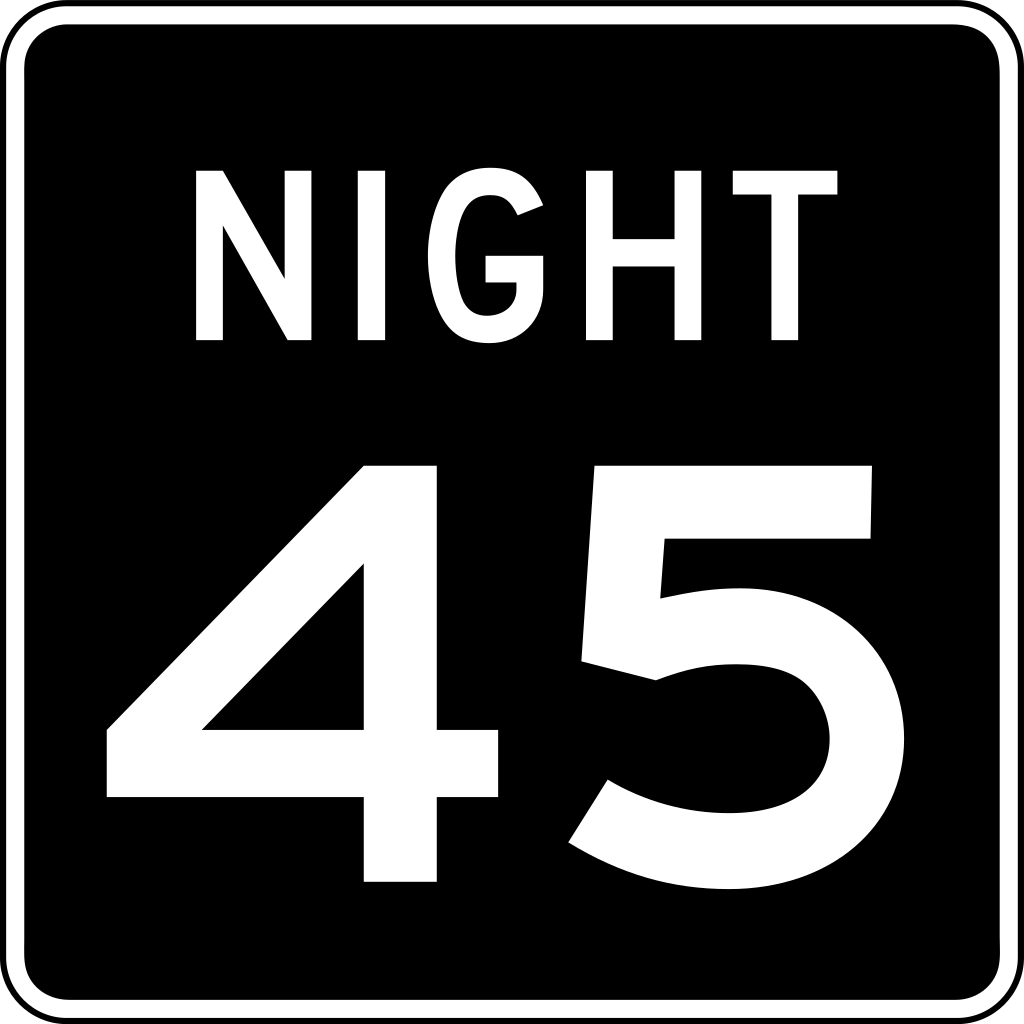 This sign means:
A
Take route 45 if you are driving at night.
B
The night-time speed limit is 45 MPH.
C
The minimum speed limit is 45 MPH.
This traffic sign indicates: The night-time speed limit is 45 MPH. Observing and obeying all roadway signs ensures safe traffic flow and legal driving.
Question 15:
When you make a left turn from a two-way road into a four-lane highway, you must:
A
enter the left lane, to the right of the center line.
B
enter the right lane, to the left of the center line.
C
go straight through the intersection, and then make the turn.
Defensive driving guidelines state that: enter the left lane, to the right of the center line. Anticipating road hazards and communicating maneuvers keeps traffic predictable and safe.
Question 16:
The shape of a route sign tells you:
A
the type of route you are on.
B
the speed limit on that route.
C
that the route you are on might be dangerous.
This traffic sign indicates: the type of route you are on. Observing and obeying all roadway signs ensures safe traffic flow and legal driving.
Question 17:
When drivers see the ‘Wrong Way’ sign:
A
they are going the wrong way on an expressway exit ramp.
B
they must drive past this sign and reach the next intersection.
C
they must not leave the pavement except in an emergency.
The correct driving rule is: they are going the wrong way on an expressway exit ramp. Following standard DMV road rules and practicing defensive driving ensures safety for all road users.
Question 18:
 What does this sign indicate?
A
The highway ahead is divided into two one-way roadways.
B
Winding road ahead. Drive with caution.
C
Drivers will soon be on a roadway with two-way traffic.
This traffic sign indicates: drivers will soon be on a roadway with two-way traffic. Observing and obeying all roadway signs ensures safe traffic flow and legal driving.
Question 19:
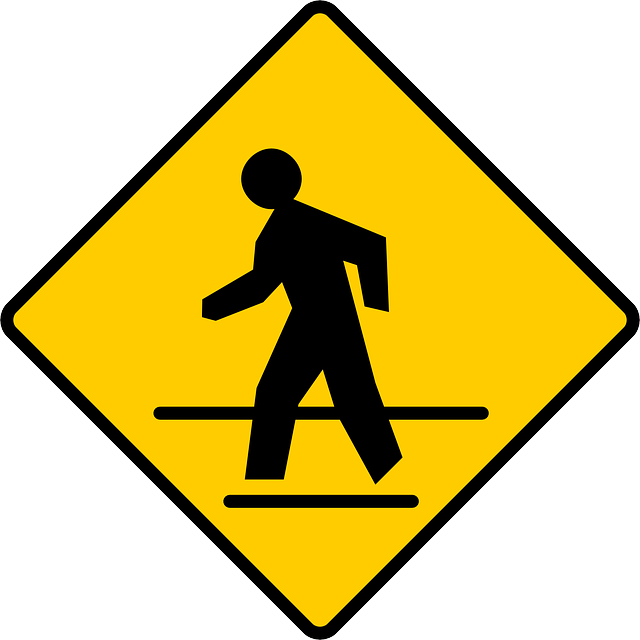 This road sign means:
A
School zone ahead
B
Pedestrians must not cross here
C
Pedestrian crossing ahead
This traffic sign indicates: Pedestrian crossing ahead. Observing and obeying all roadway signs ensures safe traffic flow and legal driving.
Question 20:
What should you do if your rear wheels start to skid?
A
Steer left if your rear wheels slide right.
B
If the vehicle has ABS, pump the pedal carefully.
C
Turn the steering wheel in the direction the vehicle is trying to go.
The correct driving rule is: turn the steering wheel in the direction the vehicle is trying to go. Following standard DMV road rules and practicing defensive driving ensures safety for all road users.
Question 21:
The traffic light is green and you want to drive straight through an intersection. If a car is already in the intersection and is making a turn, you must:
A
enter the intersection and then stop.
B
drive through the intersection. You have the right-of-way.
C
let that car complete its turn before you enter the intersection.
According to standard right-of-way regulations: let that car complete its turn before you enter the intersection. Yielding appropriately prevents intersection collisions and maintains safe traffic flow.
Question 22:
Drivers approaching a stopped school bus with flashing amber lights should always:
A
blow their horn and pass slowly.
B
None of the other answers is correct.
C
speed up and pass quickly.
D
slow down and prepare to stop.
When a school bus displays flashing red lights and extended stop sign: slow down and prepare to stop. Traffic in both directions must come to a full stop on undivided roads until children are clear.
Question 23:
Tailgating:
A
cannot result in a traffic citation.
B
helps reduce traffic congestion.
C
is a defensive driving tecnique.
D
can frustrate other drivers and make them angry.
The correct driving rule is: can frustrate other drivers and make them angry. Following standard DMV road rules and practicing defensive driving ensures safety for all road users.
Question 24:
A traffic light shows both a red light and a green arrow. The driver may not turn in the direction of the arrow until the red light has changed.
A
True
B
False
According to standard right-of-way regulations: False. Yielding appropriately prevents intersection collisions and maintains safe traffic flow.
Question 25:
What does it mean If an oncoming driver flashes headlights at you during a period of low visibility?
A
Your headlights are too bright. You should turn them off.
B
Your vehicle was difficult to see. You should turn on your headlights.
C
Your headlights are too bright. You should use parking lights instead.
The correct driving rule is: Your vehicle was difficult to see. You should turn on your headlights. Following standard DMV road rules and practicing defensive driving ensures safety for all road users.