Question 1:
If you must drive during ice or snow storms, you should:
A
clear the ice and snow from your vehicle.
B
make sure the windshield washer reservoir is filled with a cleaning solution that resists freezing.
C
drive slowly.
D
All of the above.
No explanation available.
Question 2:
 What does a flashing yellow light mean?
A
The same thing as a stop sign.
B
Drivers may move forward with caution.
C
All of the above.
No explanation available.
Question 3:
On average, how long does it take your body to remove the alcohol contained in 5 ounces of wine?
A
one hour.
B
30 minutes.
C
3 hours.
No explanation available.
Question 4:
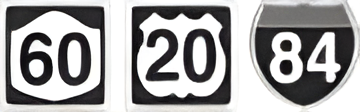 The sample route signs, left to right, are for:
A
interstate, state, and U.S. routes.
B
state, U.S., and interstate routes.
C
state, interstate and U.S. routes.
D
U.S., state and interstate routes.
No explanation available.
Question 5:
 This sign warns that:
A
traffic must merge left.
B
the bridge ahead is wide enough for only one vehicle at a time.
C
traffic must merge right.
No explanation available.
Question 6:
What should you do if a vehicle is approaching head-on in your lane?
A
Pull over to the left and use your emergency lights to stop the other driver.
B
Decrease speed, pull over to the right and sound your horn to warn the other driver.
C
Turn off the ignition if your vehicle has power steering.
No explanation available.
Question 7:
Where must a pedestrian walk when there are no sidewalks?
A
On the side of the road, in the same direction of traffic.
B
In the middle of the road, facing oncoming traffic.
C
On the side of the road, facing the traffic.
No explanation available.
Question 8:
You should never depend on your mirrors when you prepare to change lanes. Why?
A
Mirrors leave “blind spots” behind both sides of vehicles.
B
Mirrors need to be adjusted.
C
Mirrors are useless.
No explanation available.
Question 9:
To reduce their chances of colliding with an animal, drivers should:
A
scan the sides of the road to watch for the reflection of vehicle headlights in the eyes of animals.
B
look well down the road and far off to each side.
C
All of the above.
No explanation available.
Question 10:
You hear a siren close by but can not see where the emergency vehicle is. What do you do?
A
Keep driving until you are sure the emergency vehicle is headed toward you.
B
Stop immediately and activate your emergency flashers.
C
Pull over to the right side of the road and stop until you are sure the emergency vehicle is not headed toward you.
No explanation available.
Question 11:
What should you do if your vision through the windshield becomes blocked?
A
Pull your vehicle off the road and park it.
B
Turn on your emergency lights.
C
Open the side window so you can see.
D
All of the above.
No explanation available.
Question 12:
What should you do in case of a steering failure?
A
Pump your gas pedal a few times to increase the pressure.
B
Don't panic. Turn on your emergency lights to let other drivers know you are having car problems. Move toward the side of the road and bring the car to a gradual stop.
C
Leave the road immediately.
No explanation available.
Question 13:
In New York City, unless a sign that permits it is posted:
A
you must not yield the right-of-way to oncoming traffic and pedestrians.
B
you are not allowed to stop at a red light.
C
you are not allowed to turn on a red light.
D
you must not make a right turn at a steady green light.
No explanation available.
Question 14:
Seat belt use is not required in ____ or older vehicles.
A
1982
B
1968
C
1964
D
1974
No explanation available.
Question 15:
If you are blinded by headlights on an approaching vehicle, you should:
A
avoid looking directly at the bright lights.
B
glance toward the side of the road, then look quickly ahead to determine the other vehicle’s position.
C
All of the above.
No explanation available.
Question 16:
If you hear an emergency vehicle heading toward your vehicle, in which case are you required to pull over and stop?
A
When the emergency vehicle is coming from the right.
B
When the emergency vehicle is coming from the left.
C
When the emergency vehicle is headed toward you in the opposite lane of a two-lane roadway.
D
Always.
No explanation available.
Question 17:
Roads are most slippery:
A
just before it rains.
B
when it stops raining.
C
when it first starts to rain.
No explanation available.
Question 18:
BAC is:
A
the acronym for Beer ACcumulation.
B
the number of ounces of alcohol in your blood.
C
the percentage of alcohol in your blood.
No explanation available.
Question 19:
 This sign means:
A
Hairpin corner ahead.
B
Warning: U-turn ahead.
C
Sharp right turn ahead.
No explanation available.
Question 20:
Courts must order all drivers convicted of DWI or AGG-DWI to:
A
install and maintain an ignition interlock on any vehicle owned or operated by such driver.
B
attend a Safe Driving Course.
C
attend an approved driver education course.
D
drink no alcohol at all for 6 months.
No explanation available.