Question 1:
A solid line with broken line means:
A
Passing is not permitted on the side with the solid line.
B
If you are on the side with the solid line, you can not go across the line except to make a left turn into a driveway.
C
If you are on the side with the broken line, you can pass if it’s safe to do so.
D
All of the above.
All of the listed points are essential driving requirements: Passing is not permitted on the side with the solid line; If you are on the side with the solid line, you can not go across the line except to make a left turn into a driveway; If you are on the side with the broken line, you can pass if it’s safe to do so. Practicing each ensures compliance with DMV safety laws.
Question 2:
If your brakes are wet, you can dry them by:
A
riding the pedal lightly.
B
pull over to the right and wait until it stops raining.
C
having them checked by a mechanic.
The correct driving rule is: riding the pedal lightly. Following standard DMV road rules and practicing defensive driving ensures safety for all road users.
Question 3:
Parking is not allowed within __ feet of a fire station driveway.
A
30
B
20
C
50
D
10
Under standard parking and curb regulations: 20. Following parking distance clearances keeps roadways unobstructed and emergency lanes accessible.
Question 4:
A bicycle used at night must have a red taillight visible from at least _____ behind.
A
100 feet
B
300 feet
C
200 feet
D
50 feet
State laws require motorists to provide a safe clearance buffer: 300 feet. Allow at least 3 feet of space when overtaking a bicyclist.
Question 5:
What is the average total stopping distance of a car traveling at 55 MPH?
A
256 feet
B
193 feet
C
123 feet
D
430 feet
For safe speed and stopping control: 193 feet. Adjusting speed to match visibility and road traction prevents loss of steering grip.
Question 6:
Alcohol:
A
makes drivers more prone to take chances.
B
increases reaction time.
C
All of the above.
Alcohol and impairing substances degrade all critical driving functions: makes drivers more prone to take chances; increases reaction time. Driving while impaired carries severe criminal and safety penalties.
Question 7:
A vehicle that enters a road from a driveway:
A
has the right-of-way.
B
must yield to traffic approaching from the right, while it has the right-of-way over vehicles approaching from the left.
C
must stop and yield the right-of-way to traffic on the roadway and to pedestrians.
The correct driving rule is: must stop and yield the right-of-way to traffic on the roadway and to pedestrians. Following standard DMV road rules and practicing defensive driving ensures safety for all road users.
Question 8:
When you speed in work zones, ticket fines:
A
double
B
quadruple.
C
triple, even when the workers are not there.
D
triple, if the workers are in the work zone.
For safe speed and stopping control: double. Adjusting speed to match visibility and road traction prevents loss of steering grip.
Question 9:
On slippery roads, drivers should:
A
leave more space in front of their vehicle.
B
increase their speed to avoid hydroplaning.
C
come to a complete stop.
For safe speed and stopping control: leave more space in front of their vehicle. Adjusting speed to match visibility and road traction prevents loss of steering grip.
Question 10:
You get stopped and there is a passenger under 16 without a belt. You can face a fine, and receive how many penalty points on your driver license for each violation?
A
Two
B
One
C
Three
D
Four
The correct driving rule is: Three. Following standard DMV road rules and practicing defensive driving ensures safety for all road users.
Question 11:
Aggravated DWI (first offense) is:
A
a class E felony.
B
traffic infraction.
C
a misdemeanor.
D
None of the above.
Under state DUI and traffic safety laws: a misdemeanor. Alcohol degrades judgment, slows reaction times, and distorts depth perception.
Question 12:
You refused to take the chemical test after being arrested. If a DMV hearing later confirms you refused the test, and you are found not guilty of the alcohol violation, what happens to your driver license?
A
It will be revoked.
B
It will be cancelled.
C
Nothing.
D
It will be suspended for 90 days.
Under state DUI and traffic safety laws: it will be revoked. Alcohol degrades judgment, slows reaction times, and distorts depth perception.
Question 13:
 This sign warns drivers that:
A
they must turn either to the right or left.
B
there is a double curve ahead.
C
there is a winding road ahead.
This traffic sign indicates: there is a winding road ahead. Observing and obeying all roadway signs ensures safe traffic flow and legal driving.
Question 14:
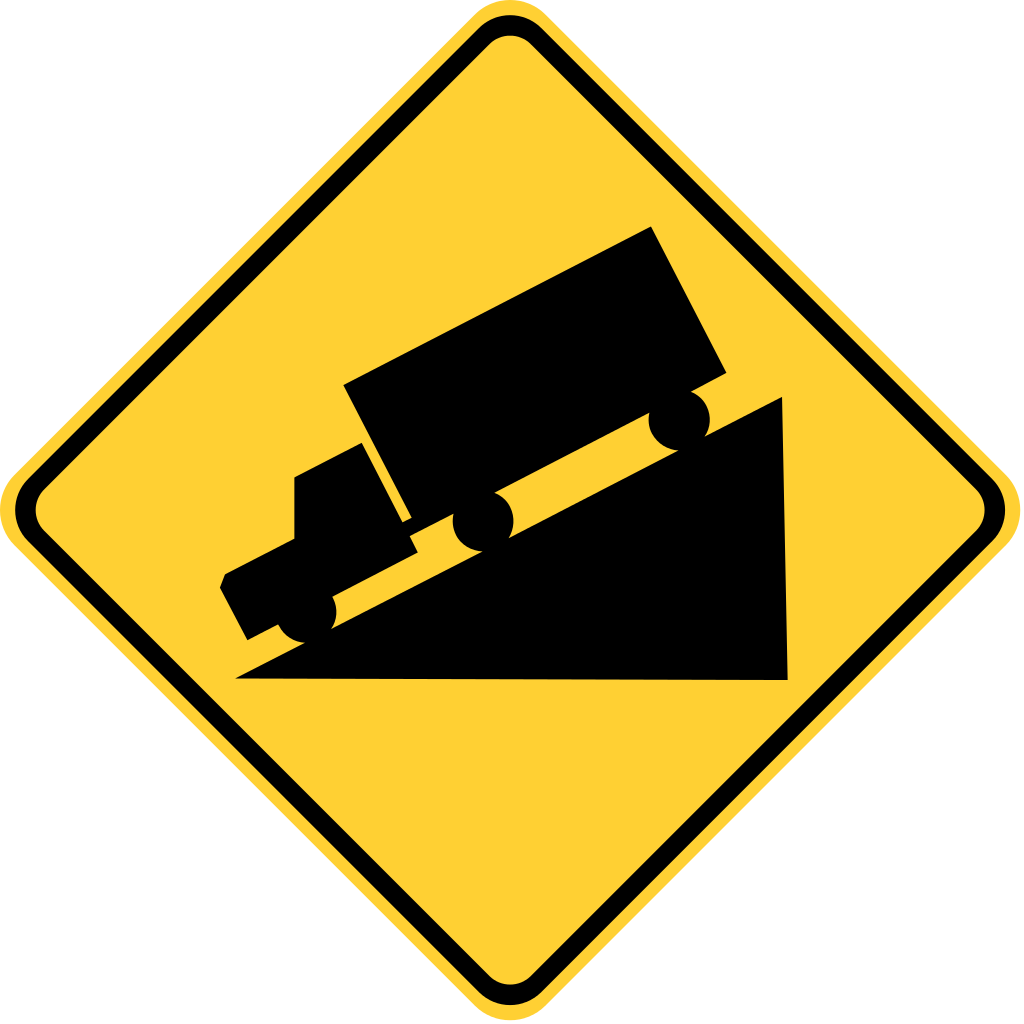 This sign warns of a ________ ahead.
A
hill
B
no passing zone
C
soft shoulder
This traffic sign indicates: hill. Observing and obeying all roadway signs ensures safe traffic flow and legal driving.
Question 15:
Bicyclists and their passenger and in-line skaters, age___________ , must wear an approved helmet.
A
1 through 11
B
1 through 10
C
2 through 8
D
1 through 13
The correct driving rule is: 1 through 13. Following standard DMV road rules and practicing defensive driving ensures safety for all road users.
Question 16:
Warning signs normally are:
A
rectangles.
B
triangles.
C
diamond-shaped.
The correct driving rule is: diamond-shaped. Following standard DMV road rules and practicing defensive driving ensures safety for all road users.
Question 17:
The yield sign is ___ and white, with ___ letters.
A
yellow; black
B
red; red
C
red; white
The correct driving rule is: red; red. Following standard DMV road rules and practicing defensive driving ensures safety for all road users.
Question 18:
Parking is not allowed:
A
in an intersection, unless permitted by signs.
B
within 300 feet of a pedestrian safety area.
C
on public roads
Under standard parking and curb regulations: in an intersection, unless permitted by signs. Following parking distance clearances keeps roadways unobstructed and emergency lanes accessible.
Question 19:
You want to turn left at an intersection ahead. A car reaches the intersection from the opposite direction and moves straight ahead. You:
A
can turn left. You have the right of way.
B
must wait for the car to go through before you turn.
C
may not enter the intersection to prepare for your left turn if the light is green.
According to standard right-of-way regulations: must wait for the car to go through before you turn. Yielding appropriately prevents intersection collisions and maintains safe traffic flow.
Question 20:
Can a New York State law enforcement officer issue a traffic ticket for failure to wear a seat belt?
A
Yes, but in New York City only.
B
Yes.
C
No, unless you are from outside New York State.
D
No. The NYS occupant restraint law does not apply to residents.
The correct driving rule is: Yes. Following standard DMV road rules and practicing defensive driving ensures safety for all road users.