Question 1:
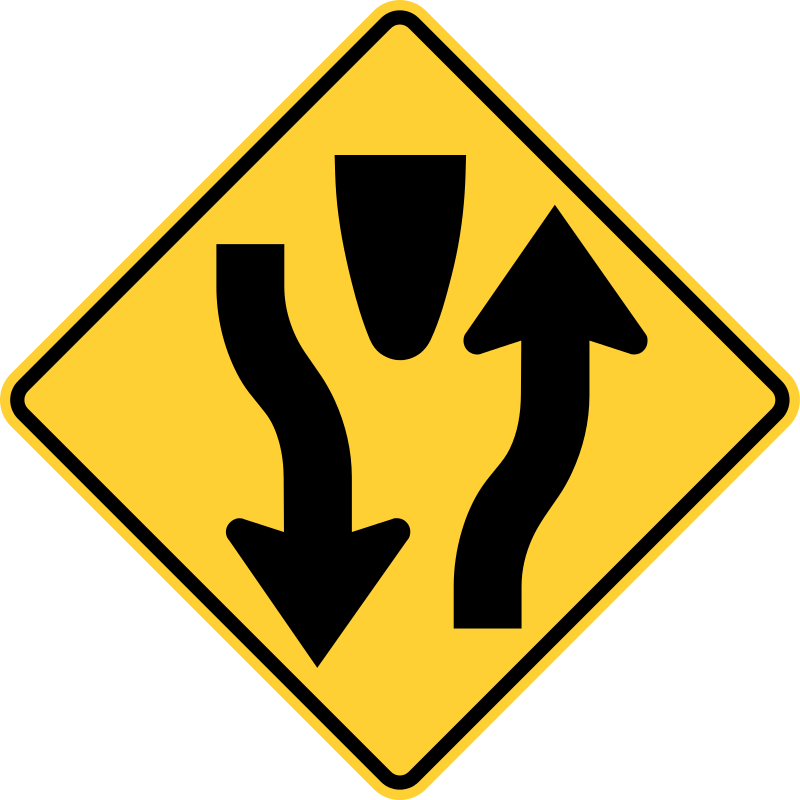 This sign means:
A
Divided highway ahead.
B
Divided highway ends.
C
Drivers will soon be on a roadway with two-way traffic.
This traffic sign indicates: Divided highway ahead. Observing and obeying all roadway signs ensures safe traffic flow and legal driving.
Question 2:
You go with a group of friends to a social event, and you plan to have a few drinks. You should:
A
make alcohol the focus of the event.
B
avoid alternating between drinks with alcohol and drinks without any alcohol.
C
arrange to ride home with a friend who does not drink.
The correct driving rule is: arrange to ride home with a friend who does not drink. Following standard DMV road rules and practicing defensive driving ensures safety for all road users.
Question 3:
HOV lanes:
A
are reserved for trucks 3,000 pounds or more.
B
are reserved for High Octane Vehicles.
C
promote the most efficient use of limited street and highway capacity.
D
All of the above.
The correct driving rule is: promote the most efficient use of limited street and highway capacity. Following standard DMV road rules and practicing defensive driving ensures safety for all road users.
Question 4:
Which of the following contains enough alcohol to increase BAC by about .02 percent?
A
20 oz. can of beer (5% alcohol)
B
5 oz. glass of wine (12% alcohol)
C
3 oz. liquor (80 proof)
D
All of the above.
Under state DUI and traffic safety laws: 5 oz. glass of wine (12% alcohol). Alcohol degrades judgment, slows reaction times, and distorts depth perception.
Question 5:
If you are involved in a crash and must move an injured person, you should:
A
keep the back and neck as straight as possible.
B
pull the victim feet first away from the danger.
C
if there are wires down, go near them.
D
None of the above answers is correct.
The correct driving rule is: keep the back and neck as straight as possible. Following standard DMV road rules and practicing defensive driving ensures safety for all road users.
Question 6:
Are three motorcyclists allowed to ride side-by-side in a single lane?
A
Yes, but they must have at least 3 years experience driving motorcycles.
B
Yes, up to three motorcyclists are allowed to ride side-by-side in a single lane.
C
No, motorcyclists are never allowed to ride side-by-side in a single lane.
D
No. Two motorcyclists are allowed to ride side-by-side in a single lane, but not three.
The correct driving rule is: No. Two motorcyclists are allowed to ride side-by-side in a single lane, but not three. Following standard DMV road rules and practicing defensive driving ensures safety for all road users.
Question 7:
If you remain in the back blind spot of a large vehicle:
A
you increase the chance of a crash.
B
the large vehicle will take much longer to stop.
C
you can reduce fuel consumption.
Large commercial trucks have extensive blind spots on all four sides called the 'No-Zone': you increase the chance of a crash. If you cannot see the truck driver in their side mirrors, they cannot see you.
Question 8:
You face a green light, but traffic on the other side of the intersection does not allow you to travel all the way through the intersection. What must you do?
A
Enter the intersection and wait until traffic ahead clears.
B
Wait for the next green light.
C
Wait until traffic ahead clears, so you do not block the intersection.
According to standard right-of-way regulations: wait until traffic ahead clears, so you do not block the intersection. Yielding appropriately prevents intersection collisions and maintains safe traffic flow.
Question 9:
Left turns on a red light are allowed:
A
from a one-way street into a one-way street.
B
Never.
C
at intersections, after stopping, if the way is clear.
When turning left across traffic lanes: from a one-way street into a one-way street. You must yield to all oncoming vehicles and crossing pedestrians before completing the turn.
Question 10:
In heavy rain, tires can begin to ride on the water that is on top of the road pavement. This is called:
A
rideplaning.
B
hydroplaning.
C
pavement-planing.
D
waterplaning.
When hydroplaning on water: hydroplaning. Gently ease off the accelerator and hold the steering wheel straight without sudden braking.
Question 11:
New York State occupant restraint law:
A
is meant to restrain the use of seat belts.
B
also applies to visitors from outside New York State.
C
applies to New York State residents only.
D
applies to passengers 16 years or older.
The correct driving rule is: also applies to visitors from outside New York State. Following standard DMV road rules and practicing defensive driving ensures safety for all road users.
Question 12:
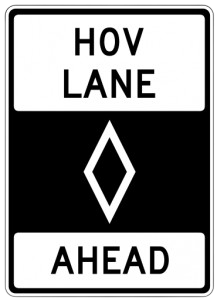 This road sign indicates that:
A
a lane is reserved for certain purposes or certain vehicles.
B
buses and car pools may not travel in the restricted lane.
C
vehicles cannot go straight ahead. Cars must turn either to the right or left.
This traffic sign indicates: a lane is reserved for certain purposes or certain vehicles. Observing and obeying all roadway signs ensures safe traffic flow and legal driving.
Question 13:
Before a school bus stops to load passengers, the driver will usually flash:
A
yellow warning lights.
B
red warning lights.
C
red lights.
When a school bus displays flashing red lights and extended stop sign: yellow warning lights. Traffic in both directions must come to a full stop on undivided roads until children are clear.
Question 14:
Drivers often fail to see a motorcycle headed toward them. Why?
A
It is difficult to judge a motorcycle's speed.
B
Motorcycles are hard to see.
C
All of the above.
Sharing the road safely requires mutual awareness and respect: It is difficult to judge a motorcycle's speed; Motorcycles are hard to see. Maintaining safe space cushions protects all roadway users.
Question 15:
Which of the following is a defensive driving skill/technique?
A
Maintain the correct speed.
B
Do not drive if you are very weary.
C
All of the above.
All of the listed points are essential driving requirements: Maintain the correct speed; Do not drive if you are very weary. Practicing each ensures compliance with DMV safety laws.
Question 16:
If you are in a crash you must:
A
exchange information with the other drivers involved.
B
show your insurance identification card if requested.
C
if any person is injured, make sure the ambulance have been called.
D
All of the above.
All of the listed points are essential driving requirements: exchange information with the other drivers involved; show your insurance identification card if requested; if any person is injured, make sure the ambulance have been called. Practicing each ensures compliance with DMV safety laws.
Question 17:
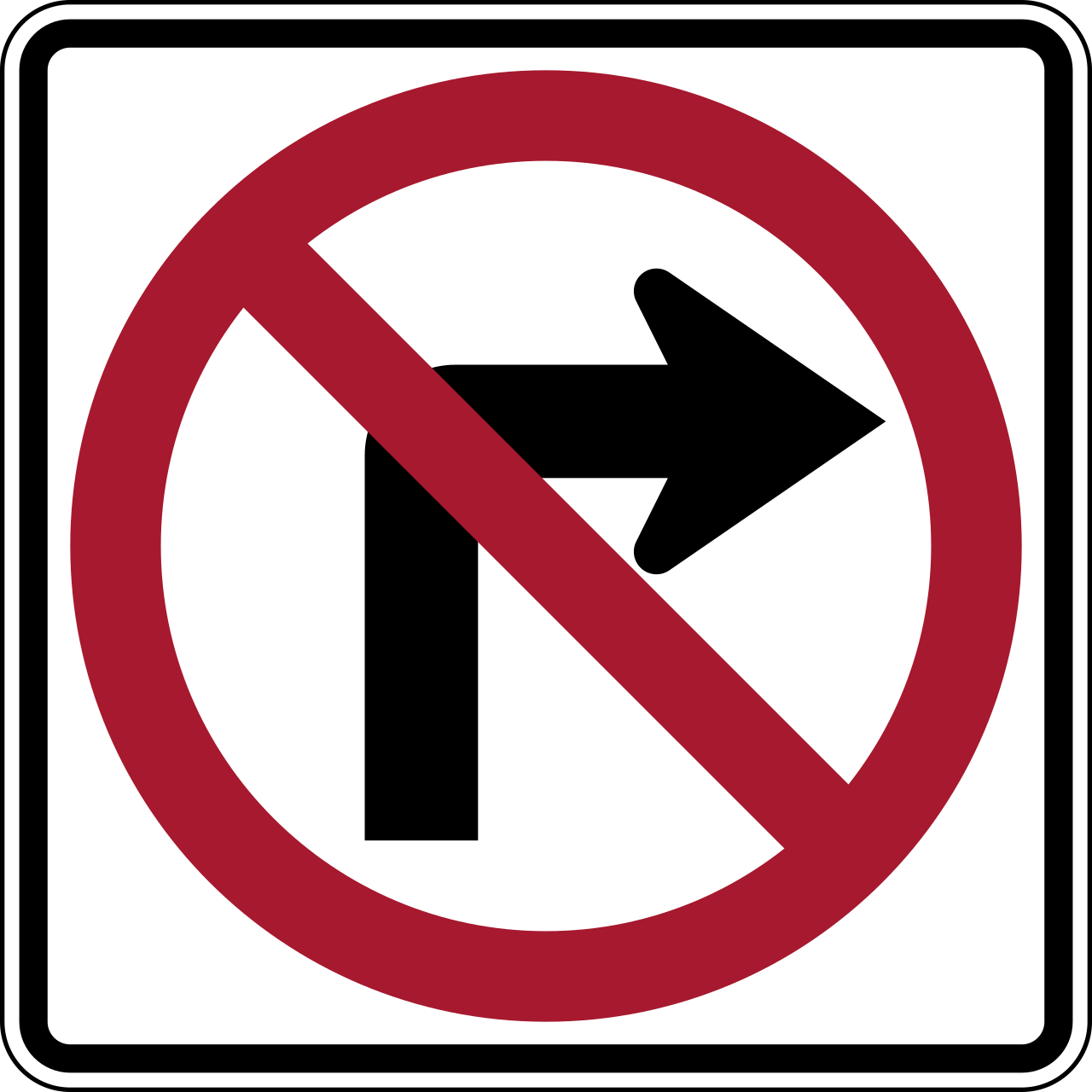 This sign tells drivers that:
A
they must make a left turn at the intersection.
B
U-turns are not allowed.
C
they must not make a right turn.
D
None of the above.
This traffic sign indicates: they must not make a right turn. Observing and obeying all roadway signs ensures safe traffic flow and legal driving.
Question 18:
 This sign means:
A
You may make a U-turn.
B
Hairpin corner ahead.
C
You must make a U-turn.
This traffic sign indicates: you must make a U-turn. Observing and obeying all roadway signs ensures safe traffic flow and legal driving.
Question 19:
Double solid lines on the roadway mean:
A
you cannot pass.
B
you can not go across the lines except to turn left to enter or leave the highway.
C
All of the above.
All of the listed points are essential driving requirements: you cannot pass; you can not go across the lines except to turn left to enter or leave the highway. Practicing each ensures compliance with DMV safety laws.
Question 20:
When you pass another vehicle, before you return to the right lane, you must:
A
look at your interior rear-view mirror.
B
signal.
C
All of the above.
All of the listed points are essential driving requirements: look at your interior rear-view mirror; signal. Practicing each ensures compliance with DMV safety laws.