C)when they see a flashing red or blue light or hear a siren.
D)None of the above.
2.
How can you prevent fatigue on a long trip?
A)Plan to drive long trips with a companion.
B)Get enough sleep.
C)All of the above.
3.
At a stop sign there is no stop line or crosswalk. You must stop:
A)before you enter the intersection.
B)at the next crosswalk.
C)after you enter the intersection, if you have a clear view of traffic on the intersecting roadway.
4.
When a driver is turning and a pedestrian is crossing without a traffic light, __________ must yield the right-of-way.
A)the pedestrian
B)the driver
C)both
D)whoever is slower
5.
This sign means:
A)The highway ahead is divided into two one-way roadways.
B)Roundabout ahead. Slow down.
C)The divided highway on which drivers are traveling ends ahead.
6.
Speed limit signs are:
A)service signs
B)regulation signs (regulatory signs)
C)warning signs
7.
Drivers may need more space in front of their vehicle:
A)when following motorcycles.
B)when carrying a heavy load or pulling a trailer.
C)All of the above.
8.
When driving in travel lanes on the roadway:
A)you may make a U-turn if you get on the wrong entrance ramp of the freeway.
B)you may stop to let out passengers.
C)do not stop for any reason, keep moving until you can safely pull off the road.
D)you may make back up quickly if there are no vehicles behind.
9.
This sign means:
A)narrow road ahead.
B)no turns are allowed on this road.
C)series of curves ahead.
D)the road may be slippery when wet.
10.
When you make a left turn from a one-way road into a two-way road, you must:
A)enter the two-way road to the left of its center line.
B)make a U-turn into the two-way road.
C)enter the two-way road to the right of its center line.
11.
A red traffic sign means?
A)Do not enter.
B)Stop.
C)All of the above.
12.
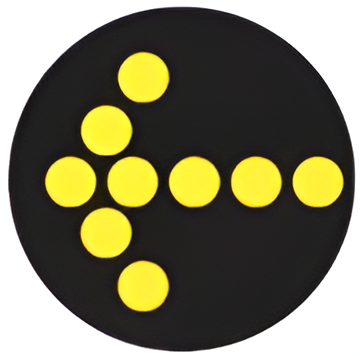
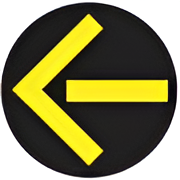
What does a flashing left yellow arrow mean?
A)Vehicles turning left must stop if they can. The light will soon be red.
B)Only right turns are allowed.
C)Left turns are allowed. Yield to oncoming traffic and pedestrians.
D)None of the above.
13.
What should you do if your brakes fail?
A)Hook your shoe under the pedal and see if you can free it.
B)Turn on your cruise control.
C)Try pumping the brake pedal to increase pressure.
14.
This sign tells drivers that:
A)they must make a left turn at the intersection.
B)U-turns are not allowed.
C)they must not make a right turn.
D)None of the above.
15.
This sign means drivers should:
A)not drive in this lane.
B)give the right-of-way to traffic on the road they wish to enter.
C)proceed at normal speed through the upcoming intersection.
D)come to a complete stop and check for oncoming traffic before proceeding.
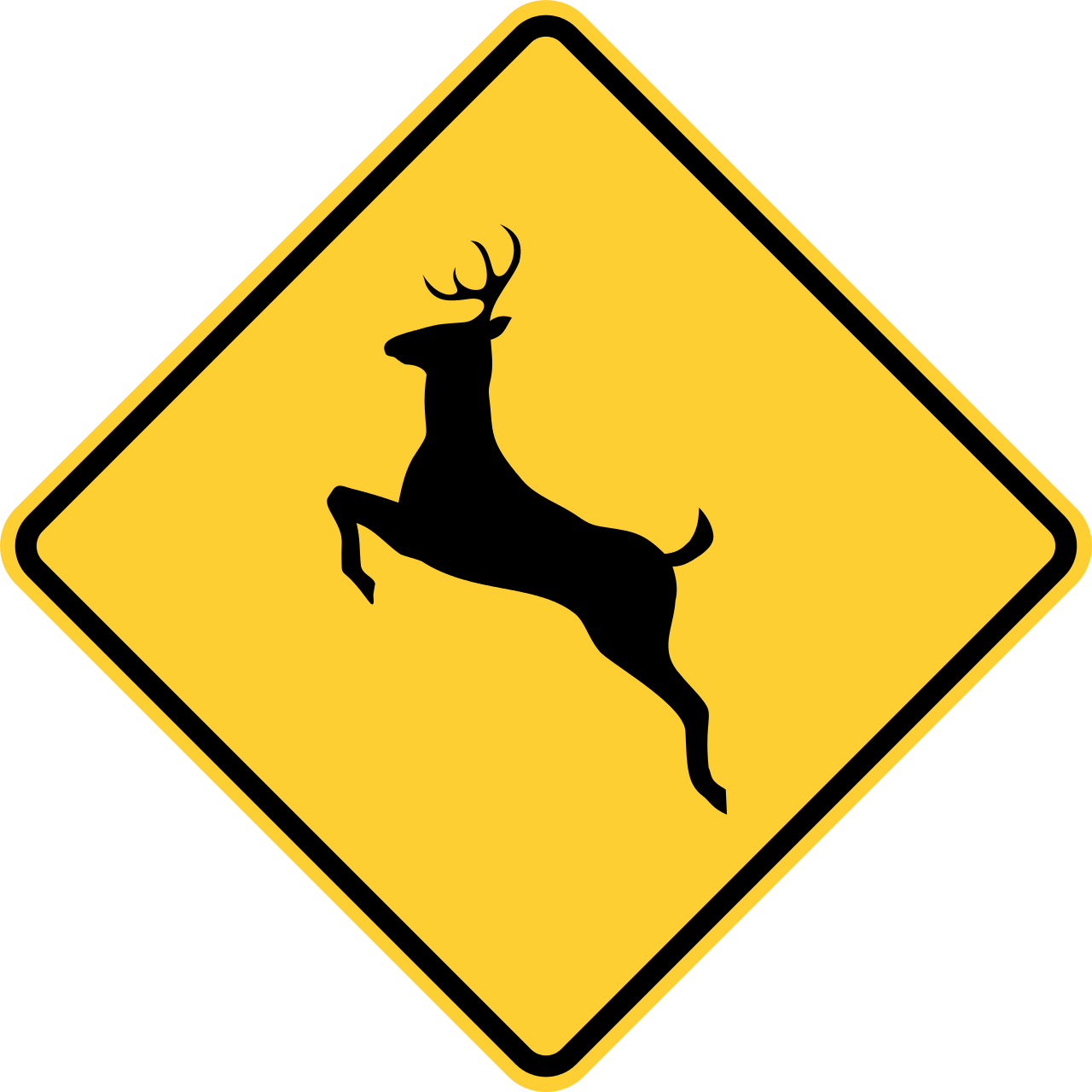
16.
When they see this road sign, drivers should:
A)drive carefully because the animal pictured on the sign is extremely rare in the area.
B)watch for this species crossing the road.
C)park in the zoo area.
17.
Which shape is a warning sign?
A)Diamond
B)Triangle
C)Pennant
18.
Directions given by traffic officers ___________ signs, signals or pavement markings.
A)take precedence over
B)are less important than
C)must obey
19.
If your turn signals fail, you should use _____ to indicate your intention to turn.
A)your emergency flashers
B)your horn
C)your high beams
D)hand signals
20.
A traffic sign with a red circle around and a slash over a symbol means:
A)the maneuver shown by the symbol is not allowed.
B)Do not drive faster than the posted speed limit.
C)the maneuver shown on the sign should be executed with extreme caution.
21.
When driving in fog, drivers should use:
A)low beam headlights.
B)parking lights.
C)high beam headlights.
22.
You reach an intersection that is not controlled at the same time as a driver on your right, and both of you prepare to go straight. Who has the right-of-way?
A)You.
B)No one.
C)The other driver.
23.
A four-way stop sign means:
A)traffic from all four directions must stop.
B)if two vehicles reach the intersection at the same time, the driver on the left yields to the driver on the right.
C)All of the above.
24.
When driving at night, you should slow down and:
A)use high beams whenever possible, but never when there's oncoming traffic.
B)use high beams until other drivers dim their lights.
C)follow the vehicle ahead more closely to avoid glare from oncoming headlights.
D)come to a complete stop whenever there's oncoming traffic.
25.
Drivers can not pass a vehicle on the left if:
A)they approach the top of a hill on a two-way road and can not see over it.
B)they can not safely return to the right lane before they reach a solid yellow center line for the right lane.
C)All of the above.
26.
You are driving and you are feeling drowsy. You should:
A)avoid drinking coffee.
B)turn on the radio to keep you awake.
C)find a safe place to stop for a break.
27.
Anything that requires you to _______ could cause you to crash.
A)take your hands off the wheel
B)take your attention away from driving
C)take your eyes off the road
D)All of the above.
28.
When driving in heavy rain, drivers should use:
A)parking lights.
B)low beam headlights.
C)high beam headlights.
29.
What does a yellow arrow signal mean?
A)The same as the yellow light, but applies only to movement in the direction of the arrow.
B)The same as a green light.
C)Vehicles moving in all directions must stop if they can. The light will soon be red.
30.
What is the purpose of minimum speed limits?
A)To keep a smooth traffic flow.
B)To halt the traffic flow.
C)To allow emergency vehicles with red flashing lights to safely pass other vehicles.
31.
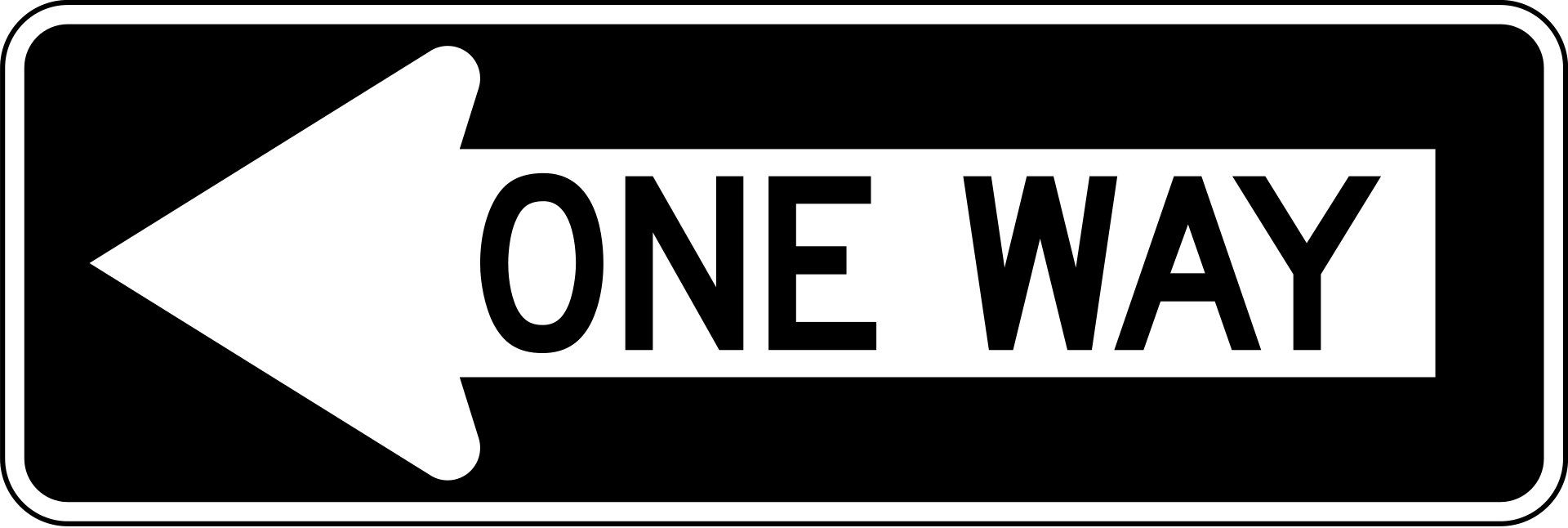
The ‘One Way’ sign means that:
A)only vehicles turning left may travel in the direction of the arrow.
B)there is only one road that turns left at the intersection.
C)drivers may travel only in the direction of the arrow.
32.
This sign means:
A)Bicycles should yield to vehicles ahead.
B)Warning: a bikeway crosses the roadway ahead.
C)The lane ahead is reserved for bicycles.
33.
This sign warns drivers of:
A)low clearance.
B)a narrow bridge ahead.
C)a low place in the road.
34.
What can you do to prevent skids on snow and ice?
A)Allow the wheels to keep turning.
B)Brake early and gently.
C)All of the above.
35.
Where must a pedestrian walk when there are no sidewalks?
A)On the side of the road, in the same direction of traffic.
B)In the middle of the road, facing oncoming traffic.
C)On the side of the road, facing the traffic.
36.
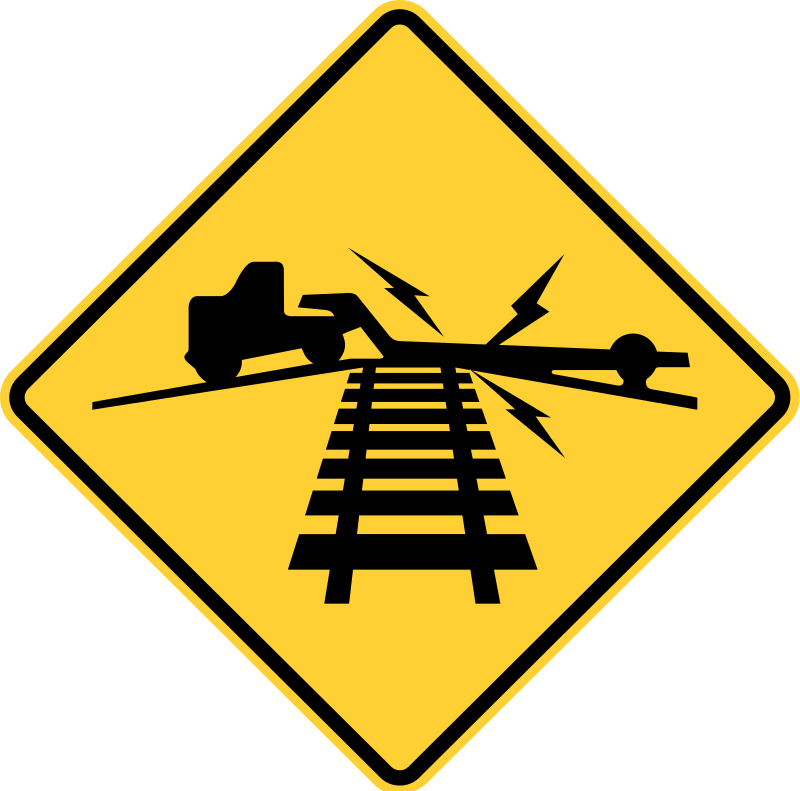
This road sign means:
A)Winding road ahead
B)Pedestrian crossing
C)Low ground railroad crossing
D)No-passing zone
37.
This sign indicates that the road ahead:
A)turns sharply right, then left.
B)is a divided highway.
C)curves right, then left.
D)curves right.
38.
When driving on slippery roads, drivers should:
A)increase their following distance.
B)avoid crossing bridges or intersections.
C)brake harder than usual.
D)change lanes quickly.
39.
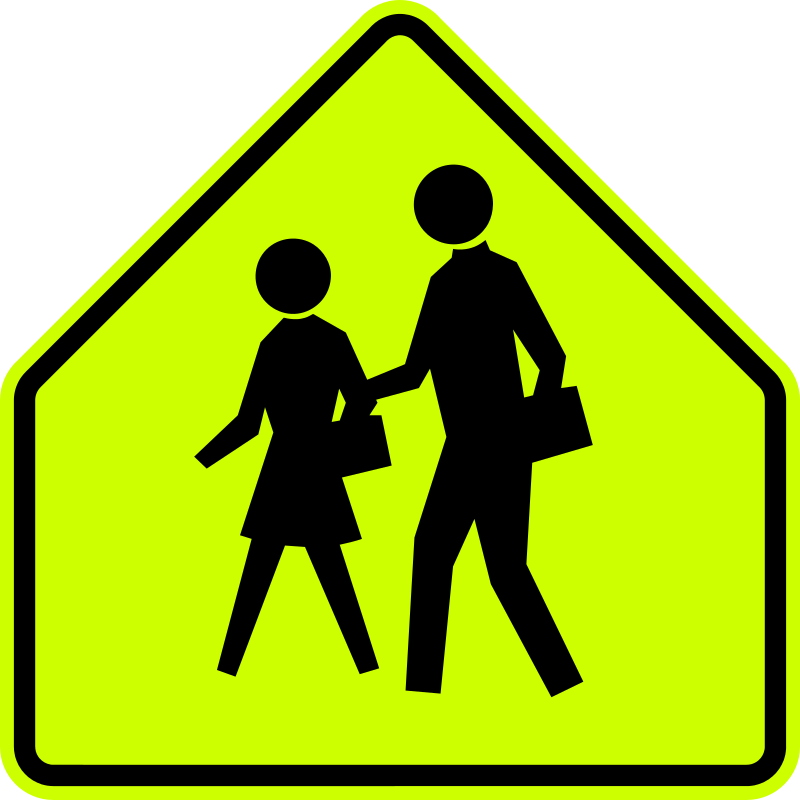
This sign means:
A)Business area nearby. Watch for business people.
B)There is a work zone ahead. Watch for workers.
C)The driver is near a school and should watch for children.
40.
You should increase your following distance when:
A)exiting a freeway.
B)following a motorcycle.
C)driving behind a large vehicle that blocks your vision.
D)All of the above.
41.
When approaching a curve, remember to:
A)accelerate slightly before entering the curve.
B)drive at the posted speed limit throughout the curve.
C)slow down before entering the curve.
D)drive at the posted speed limit as you enter the curve, then slow down gradually.
42.
What does the flashing signal in the picture indicate?
A)The same thing as a stop sign.
B)Pedestrians should finish crossing the street if started.
C)Pedestrians should start crossing the street.
43.
To enter a freeway:
A)signal, yield, and enter at the same speed that traffic is moving.
B)drive slowly so you can check traffic.
C)signal and enter the freeway. You have the right-of-way.
D)make a complete stop before entering the freeway.
44.
Drivers who eat and drink while driving:
A)have no driving errors.
B)may have trouble controlling their vehicles.
C)must yield the right-of-way.
D)tend to be more aggressive.
45.
You must come to a full stop at a yield sign:
A)Always.
B)Never.
C)If traffic conditions require it.
46.
What are some telltale signs of a drunk driver?
A)Sudden stops.
B)Weaving between lanes.
C)Driving slower than the normal flow of traffic.
D)All of the above.
47.
What is the meaning of red traffic signs?
A)High emphasis warning.
B)Stop, do not enter or wrong way.
C)Regulatory.
48.
This road sign tells drivers that:
A)they must change lane immediately.
B)they must turn either to the right or left.
C)the one-way street or roadway ahead ends.
D)None of the above.
49.
A steady yellow light means:
A)Be prepared to stop for the red light.
B)Drive with caution.
C)Be prepared to go. The light will soon be green.
50.
What should drivers do in case of a brake failure?
A)Shift to a lower gear.
B)Tie a white cloth on the left door handle.
C)Brake lightly.
ANSWER KEYCheck answers after completing the test.