Question 1:
Drivers must yield for emergency vehicles:
A
Never.
B
only when other vehicles yield.
C
when they see a flashing red or blue light or hear a siren.
D
None of the above.
The correct driving rule is: when they see a flashing red or blue light or hear a siren. Following standard DMV road rules and practicing defensive driving ensures safety for all road users.
Question 2:
How can you prevent fatigue on a long trip?
A
Plan to drive long trips with a companion.
B
Get enough sleep.
C
All of the above.
Alcohol and impairing substances degrade all critical driving functions: Plan to drive long trips with a companion; Get enough sleep. Driving while impaired carries severe criminal and safety penalties.
Question 3:
At a stop sign there is no stop line or crosswalk. You must stop:
A
before you enter the intersection.
B
at the next crosswalk.
C
after you enter the intersection, if you have a clear view of traffic on the intersecting roadway.
Drivers must always yield the right-of-way to pedestrians crossing at intersections and crosswalks: before you enter the intersection. Stop and allow them to clear the lane safely.
Question 4:
When a driver is turning and a pedestrian is crossing without a traffic light, __________ must yield the right-of-way.
A
the pedestrian
B
the driver
C
both
D
whoever is slower
Drivers must always yield the right-of-way to pedestrians crossing at intersections and crosswalks: the driver. Stop and allow them to clear the lane safely.
Question 5:
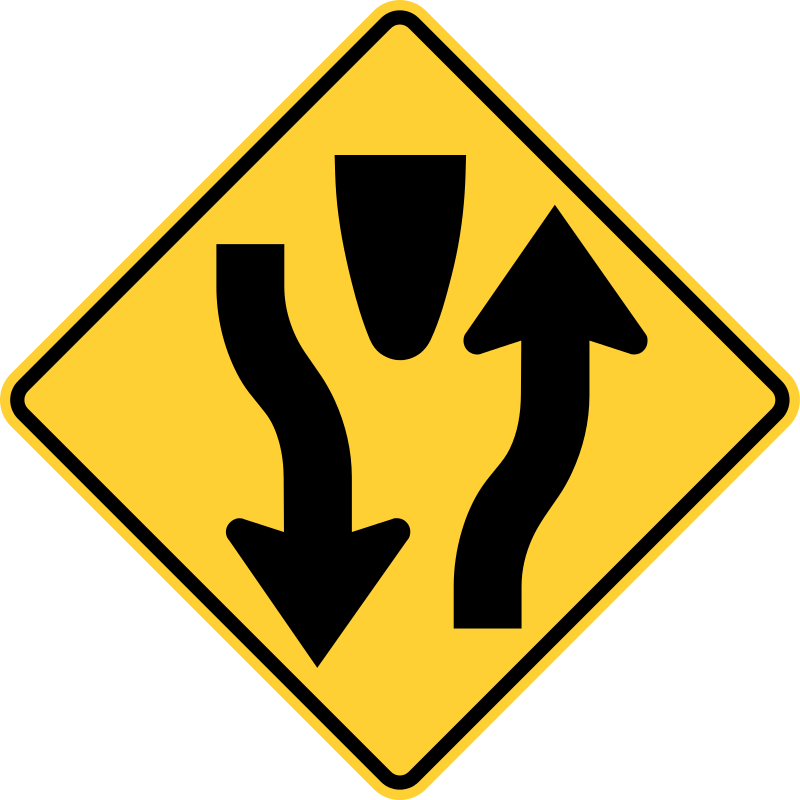 This sign means:
A
The highway ahead is divided into two one-way roadways.
B
Roundabout ahead. Slow down.
C
The divided highway on which drivers are traveling ends ahead.
This traffic sign indicates: The highway ahead is divided into two one-way roadways. Observing and obeying all roadway signs ensures safe traffic flow and legal driving.
Question 6:
Speed limit signs are:
A
service signs
B
regulation signs (regulatory signs)
C
warning signs
For safe speed and stopping control: regulation signs (regulatory signs). Adjusting speed to match visibility and road traction prevents loss of steering grip.
Question 7:
Drivers may need more space in front of their vehicle:
A
when following motorcycles.
B
when carrying a heavy load or pulling a trailer.
C
All of the above.
All of the listed points are essential driving requirements: when following motorcycles; when carrying a heavy load or pulling a trailer. Practicing each ensures compliance with DMV safety laws.
Question 8:
When driving in travel lanes on the roadway:
A
you may make a U-turn if you get on the wrong entrance ramp of the freeway.
B
you may stop to let out passengers.
C
do not stop for any reason, keep moving until you can safely pull off the road.
D
you may make back up quickly if there are no vehicles behind.
The correct driving rule is: do not stop for any reason, keep moving until you can safely pull off the road. Following standard DMV road rules and practicing defensive driving ensures safety for all road users.
Question 9:
 This sign means:
A
narrow road ahead.
B
no turns are allowed on this road.
C
series of curves ahead.
D
the road may be slippery when wet.
This traffic sign indicates: series of curves ahead. Observing and obeying all roadway signs ensures safe traffic flow and legal driving.
Question 10:
When you make a left turn from a one-way road into a two-way road, you must:
A
enter the two-way road to the left of its center line.
B
make a U-turn into the two-way road.
C
enter the two-way road to the right of its center line.
The correct driving rule is: enter the two-way road to the right of its center line. Following standard DMV road rules and practicing defensive driving ensures safety for all road users.
Question 11:
A red traffic sign means?
A
Do not enter.
B
Stop.
C
All of the above.
This sign alerts drivers to several mandatory requirements: Do not enter, Stop. Obeying all posted traffic control instructions is required by law.
Question 12:
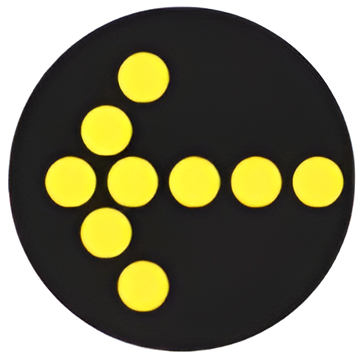 What does a flashing left yellow arrow mean?
A
Vehicles turning left must stop if they can. The light will soon be red.
B
Only right turns are allowed.
C
Left turns are allowed. Yield to oncoming traffic and pedestrians.
D
None of the above.
The correct driving rule is: Left turns are allowed. Yield to oncoming traffic and pedestrians. Following standard DMV road rules and practicing defensive driving ensures safety for all road users.
Question 13:
What should you do if your brakes fail?
A
Hook your shoe under the pedal and see if you can free it.
B
Turn on your cruise control.
C
Try pumping the brake pedal to increase pressure.
The correct driving rule is: Try pumping the brake pedal to increase pressure. Following standard DMV road rules and practicing defensive driving ensures safety for all road users.
Question 14:
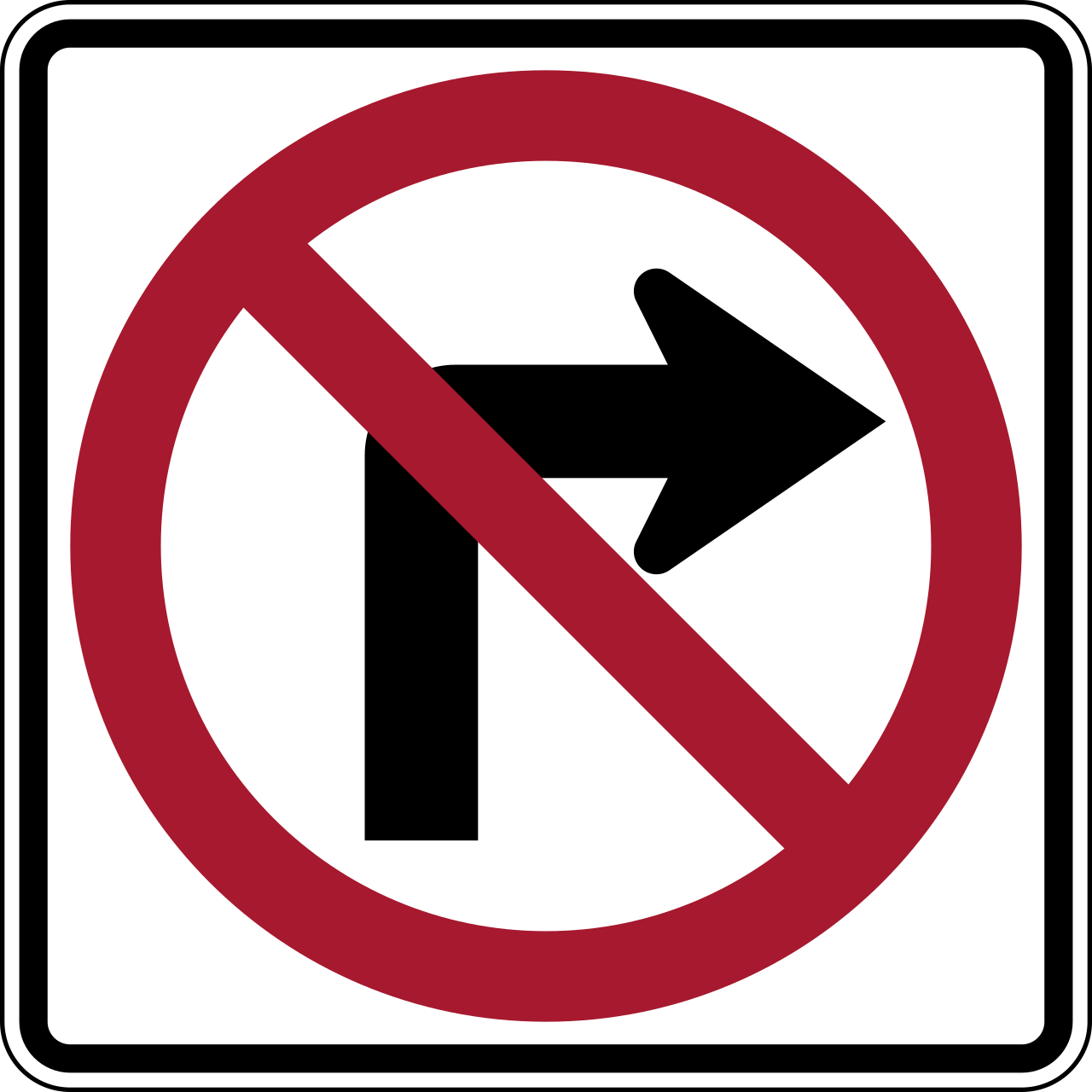 This sign tells drivers that:
A
they must make a left turn at the intersection.
B
U-turns are not allowed.
C
they must not make a right turn.
D
None of the above.
This traffic sign indicates: they must not make a right turn. Observing and obeying all roadway signs ensures safe traffic flow and legal driving.
Question 15:
 This sign means drivers should:
A
not drive in this lane.
B
give the right-of-way to traffic on the road they wish to enter.
C
proceed at normal speed through the upcoming intersection.
D
come to a complete stop and check for oncoming traffic before proceeding.
This traffic sign indicates: give the right-of-way to traffic on the road they wish to enter. Observing and obeying all roadway signs ensures safe traffic flow and legal driving.
Question 16:
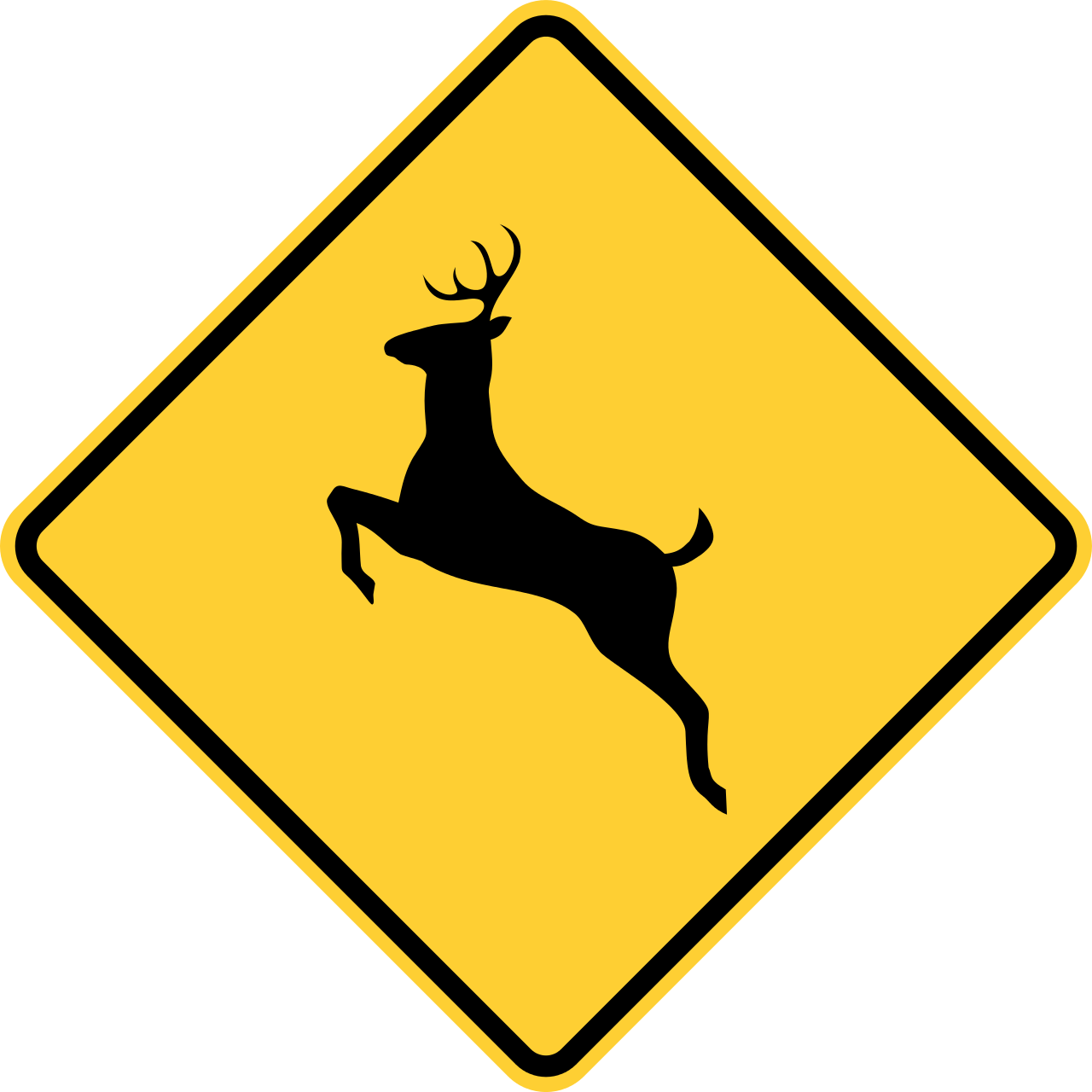 When they see this road sign, drivers should:
A
drive carefully because the animal pictured on the sign is extremely rare in the area.
B
watch for this species crossing the road.
C
park in the zoo area.
This traffic sign indicates: watch for this species crossing the road. Observing and obeying all roadway signs ensures safe traffic flow and legal driving.
Question 17:
Which shape is a warning sign?
A
Diamond
B
Triangle
C
Pennant
This traffic sign indicates: Diamond. Observing and obeying all roadway signs ensures safe traffic flow and legal driving.
Question 18:
Directions given by traffic officers ___________ signs, signals or pavement markings.
A
take precedence over
B
are less important than
C
must obey
The correct driving rule is: take precedence over. Following standard DMV road rules and practicing defensive driving ensures safety for all road users.
Question 19:
If your turn signals fail, you should use _____ to indicate your intention to turn.
A
your emergency flashers
B
your horn
C
your high beams
D
hand signals
The correct driving rule is: hand signals. Following standard DMV road rules and practicing defensive driving ensures safety for all road users.
Question 20:
A traffic sign with a red circle around and a slash over a symbol means:
A
the maneuver shown by the symbol is not allowed.
B
Do not drive faster than the posted speed limit.
C
the maneuver shown on the sign should be executed with extreme caution.
This traffic sign indicates: the maneuver shown by the symbol is not allowed. Observing and obeying all roadway signs ensures safe traffic flow and legal driving.
Question 21:
When driving in fog, drivers should use:
A
low beam headlights.
B
parking lights.
C
high beam headlights.
Always use low-beam headlights in fog, heavy rain, or snow. High beams reflect off moisture droplets and bounce glare back into your eyes.
Question 22:
You reach an intersection that is not controlled at the same time as a driver on your right, and both of you prepare to go straight. Who has the right-of-way?
A
You.
B
No one.
C
The other driver.
According to standard right-of-way regulations: The other driver. Yielding appropriately prevents intersection collisions and maintains safe traffic flow.
Question 23:
 A four-way stop sign means:
A
traffic from all four directions must stop.
B
if two vehicles reach the intersection at the same time, the driver on the left yields to the driver on the right.
C
All of the above.
This sign alerts drivers to several mandatory requirements: traffic from all four directions must stop, if two vehicles reach the intersection at the same time, the driver on the left yields to the driver on the right. Obeying all posted traffic control instructions is required by law.
Question 24:
When driving at night, you should slow down and:
A
use high beams whenever possible, but never when there's oncoming traffic.
B
use high beams until other drivers dim their lights.
C
follow the vehicle ahead more closely to avoid glare from oncoming headlights.
D
come to a complete stop whenever there's oncoming traffic.
The correct driving rule is: use high beams whenever possible, but never when there's oncoming traffic. Following standard DMV road rules and practicing defensive driving ensures safety for all road users.
Question 25:
Drivers can not pass a vehicle on the left if:
A
they approach the top of a hill on a two-way road and can not see over it.
B
they can not safely return to the right lane before they reach a solid yellow center line for the right lane.
C
All of the above.
All of the listed points are essential driving requirements: they approach the top of a hill on a two-way road and can not see over it; they can not safely return to the right lane before they reach a solid yellow center line for the right lane. Practicing each ensures compliance with DMV safety laws.
Question 26:
You are driving and you are feeling drowsy. You should:
A
avoid drinking coffee.
B
turn on the radio to keep you awake.
C
find a safe place to stop for a break.
Under state DUI and traffic safety laws: find a safe place to stop for a break. Alcohol degrades judgment, slows reaction times, and distorts depth perception.
Question 27:
Anything that requires you to _______ could cause you to crash.
A
take your hands off the wheel
B
take your attention away from driving
C
take your eyes off the road
D
All of the above.
All of the listed points are essential driving requirements: take your hands off the wheel; take your attention away from driving; take your eyes off the road. Practicing each ensures compliance with DMV safety laws.
Question 28:
When driving in heavy rain, drivers should use:
A
parking lights.
B
low beam headlights.
C
high beam headlights.
For safe speed and stopping control: low beam headlights. Adjusting speed to match visibility and road traction prevents loss of steering grip.
Question 29:
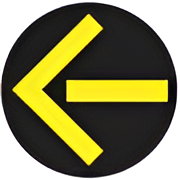 What does a yellow arrow signal mean?
A
The same as the yellow light, but applies only to movement in the direction of the arrow.
B
The same as a green light.
C
Vehicles moving in all directions must stop if they can. The light will soon be red.
State laws require signaling your intention: The same as the yellow light, but applies only to movement in the direction of the arrow. Signal at least 100 feet before making a turn or changing lanes.
Question 30:
What is the purpose of minimum speed limits?
A
To keep a smooth traffic flow.
B
To halt the traffic flow.
C
To allow emergency vehicles with red flashing lights to safely pass other vehicles.
For safe speed and stopping control: To keep a smooth traffic flow. Adjusting speed to match visibility and road traction prevents loss of steering grip.
Question 31:
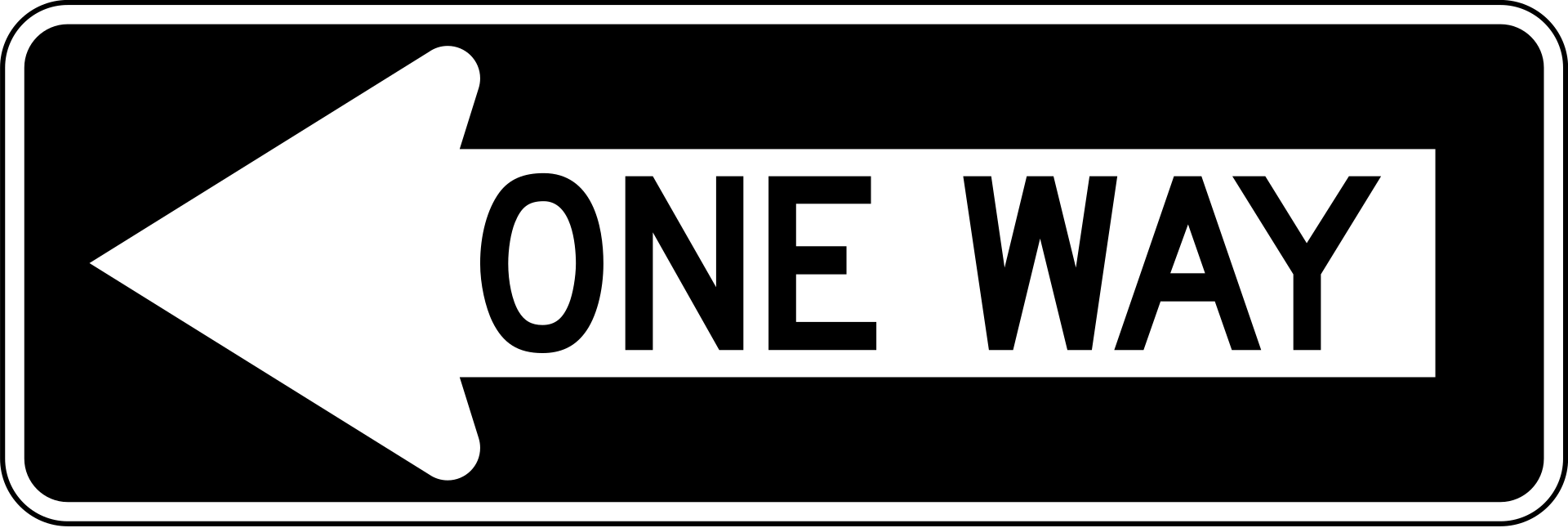 The ‘One Way’ sign means that:
A
only vehicles turning left may travel in the direction of the arrow.
B
there is only one road that turns left at the intersection.
C
drivers may travel only in the direction of the arrow.
This traffic sign indicates: drivers may travel only in the direction of the arrow. Observing and obeying all roadway signs ensures safe traffic flow and legal driving.
Question 32:
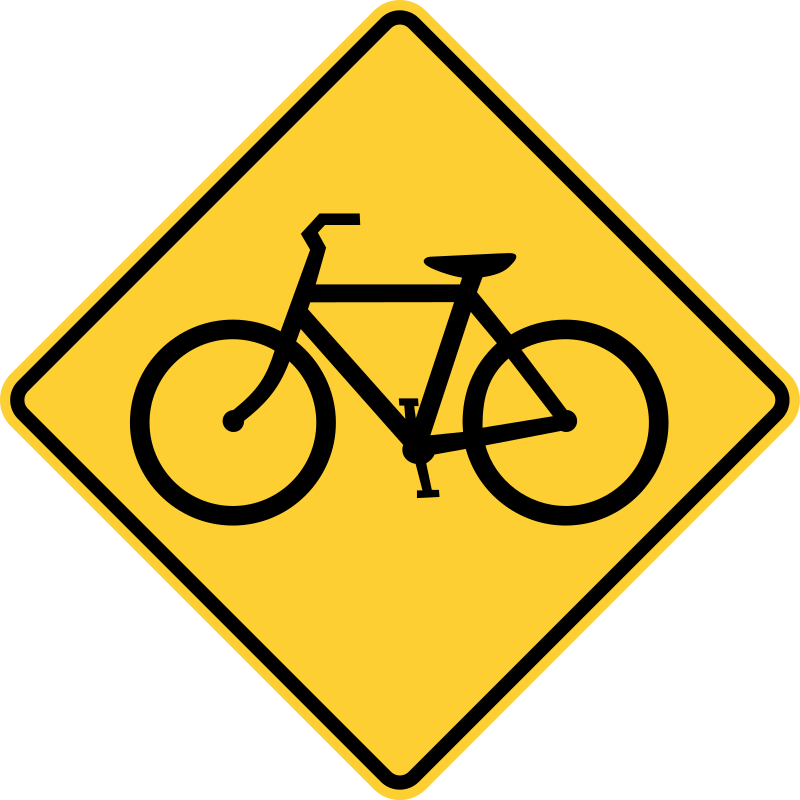 This sign means:
A
Bicycles should yield to vehicles ahead.
B
Warning: a bikeway crosses the roadway ahead.
C
The lane ahead is reserved for bicycles.
This traffic sign indicates: Warning: a bikeway crosses the roadway ahead. Observing and obeying all roadway signs ensures safe traffic flow and legal driving.
Question 33:
 This sign warns drivers of:
A
low clearance.
B
a narrow bridge ahead.
C
a low place in the road.
This traffic sign indicates: a narrow bridge ahead. Observing and obeying all roadway signs ensures safe traffic flow and legal driving.
Question 34:
What can you do to prevent skids on snow and ice?
A
Allow the wheels to keep turning.
B
Brake early and gently.
C
All of the above.
Hazardous road and weather conditions require extra caution: Allow the wheels to keep turning; Brake early and gently. Reducing speed and expanding following distance preserves control.
Question 35:
Where must a pedestrian walk when there are no sidewalks?
A
On the side of the road, in the same direction of traffic.
B
In the middle of the road, facing oncoming traffic.
C
On the side of the road, facing the traffic.
Drivers must always yield the right-of-way to pedestrians crossing at intersections and crosswalks: On the side of the road, facing the traffic. Stop and allow them to clear the lane safely.
Question 36:
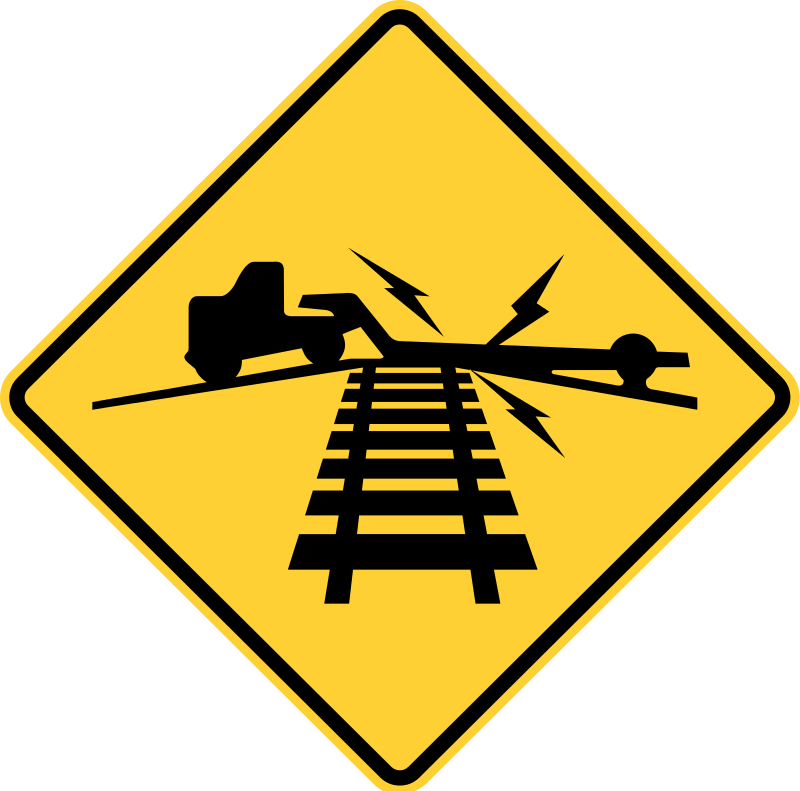 This road sign means:
A
Winding road ahead
B
Pedestrian crossing
C
Low ground railroad crossing
D
No-passing zone
Circular signs with an 'X' and 'RR' designate a Railroad Advance Warning: Low ground railroad crossing. Drivers must slow down, look both ways, listen for trains, and be prepared to stop.
Question 37:
 This sign indicates that the road ahead:
A
turns sharply right, then left.
B
is a divided highway.
C
curves right, then left.
D
curves right.
This traffic sign indicates: curves right, then left. Observing and obeying all roadway signs ensures safe traffic flow and legal driving.
Question 38:
When driving on slippery roads, drivers should:
A
increase their following distance.
B
avoid crossing bridges or intersections.
C
brake harder than usual.
D
change lanes quickly.
For safe speed and stopping control: increase their following distance. Adjusting speed to match visibility and road traction prevents loss of steering grip.
Question 39:
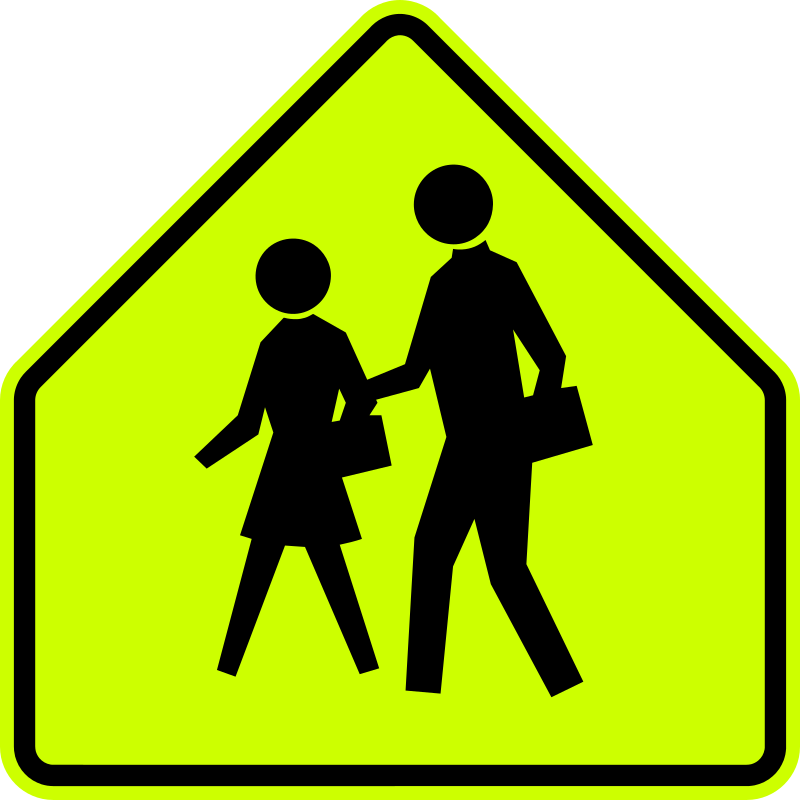 This sign means:
A
Business area nearby. Watch for business people.
B
There is a work zone ahead. Watch for workers.
C
The driver is near a school and should watch for children.
Pentagonal (5-sided) signs are exclusively reserved for school zones and school crossings: The driver is near a school and should watch for children. Drivers must reduce speed and yield right-of-way to all crossing children.
Question 40:
You should increase your following distance when:
A
exiting a freeway.
B
following a motorcycle.
C
driving behind a large vehicle that blocks your vision.
D
All of the above.
Defensive driving best practices include: exiting a freeway; following a motorcycle; driving behind a large vehicle that blocks your vision. Staying alert and maintaining spacing prevents unexpected hazards.
Question 41:
When approaching a curve, remember to:
A
accelerate slightly before entering the curve.
B
drive at the posted speed limit throughout the curve.
C
slow down before entering the curve.
D
drive at the posted speed limit as you enter the curve, then slow down gradually.
The correct driving rule is: slow down before entering the curve. Following standard DMV road rules and practicing defensive driving ensures safety for all road users.
Question 42:
 What does the flashing signal in the picture indicate?
A
The same thing as a stop sign.
B
Pedestrians should finish crossing the street if started.
C
Pedestrians should start crossing the street.
State laws require signaling your intention: pedestrians should finish crossing the street if started. Signal at least 100 feet before making a turn or changing lanes.
Question 43:
To enter a freeway:
A
signal, yield, and enter at the same speed that traffic is moving.
B
drive slowly so you can check traffic.
C
signal and enter the freeway. You have the right-of-way.
D
make a complete stop before entering the freeway.
Defensive driving guidelines state that: signal, yield, and enter at the same speed that traffic is moving. Anticipating road hazards and communicating maneuvers keeps traffic predictable and safe.
Question 44:
Drivers who eat and drink while driving:
A
have no driving errors.
B
may have trouble controlling their vehicles.
C
must yield the right-of-way.
D
tend to be more aggressive.
The correct driving rule is: may have trouble controlling their vehicles. Following standard DMV road rules and practicing defensive driving ensures safety for all road users.
Question 45:
You must come to a full stop at a yield sign:
A
Always.
B
Never.
C
If traffic conditions require it.
The correct driving rule is: If traffic conditions require it. Following standard DMV road rules and practicing defensive driving ensures safety for all road users.
Question 46:
What are some telltale signs of a drunk driver?
A
Sudden stops.
B
Weaving between lanes.
C
Driving slower than the normal flow of traffic.
D
All of the above.
Alcohol and impairing substances degrade all critical driving functions: Sudden stops; Weaving between lanes; Driving slower than the normal flow of traffic. Driving while impaired carries severe criminal and safety penalties.
Question 47:
What is the meaning of red traffic signs?
A
High emphasis warning.
B
Stop, do not enter or wrong way.
C
Regulatory.
The correct driving rule is: Stop, do not enter or wrong way. Following standard DMV road rules and practicing defensive driving ensures safety for all road users.
Question 48:
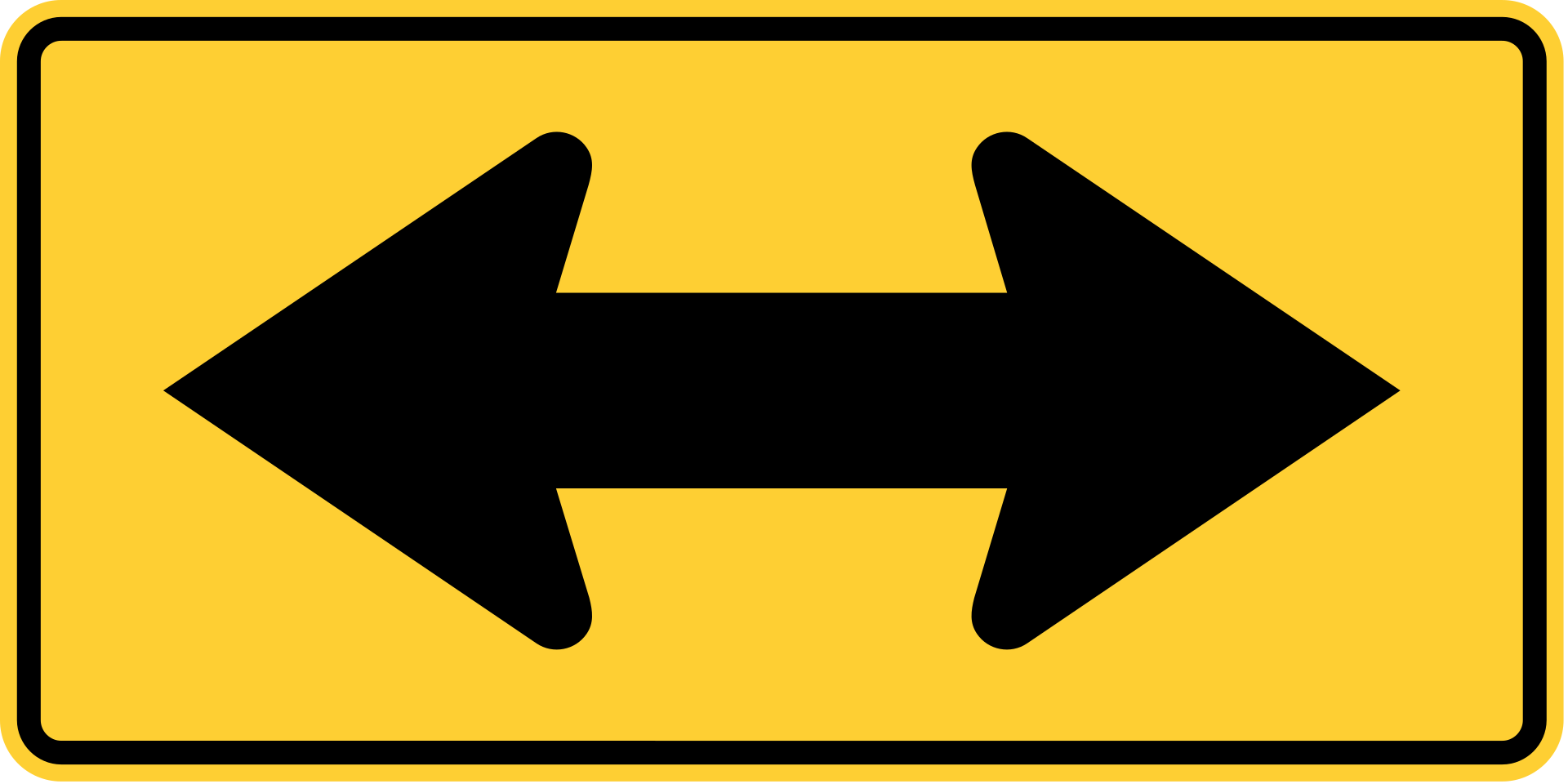 This road sign tells drivers that:
A
they must change lane immediately.
B
they must turn either to the right or left.
C
the one-way street or roadway ahead ends.
D
None of the above.
This traffic sign indicates: they must turn either to the right or left. Observing and obeying all roadway signs ensures safe traffic flow and legal driving.
Question 49:
A steady yellow light means:
A
Be prepared to stop for the red light.
B
Drive with caution.
C
Be prepared to go. The light will soon be green.
According to standard right-of-way regulations: Be prepared to stop for the red light. Yielding appropriately prevents intersection collisions and maintains safe traffic flow.
Question 50:
What should drivers do in case of a brake failure?
A
Shift to a lower gear.
B
Tie a white cloth on the left door handle.
C
Brake lightly.
The correct driving rule is: shift to a lower gear. Following standard DMV road rules and practicing defensive driving ensures safety for all road users.