DriveQuiz drivequiz.com

NJ DMV PERMİT PRACTİCE TEST 6

New Jersey
Duration: 45 min
|
Questions: 50
Student Name:
Date:
Correct:      Incorrect:      Score:      
1.

A signalized intersection is ahead. Prepare to stop if the light turns yellow or red.
This sign means:
A) No traffic signal ahead
B) Traffic signal ahead
C) Open intersection ahead
2.
Before a school bus stops to load passengers, the driver will usually flash:
A) yellow warning lights.
B) red warning lights.
C) red lights.
3.
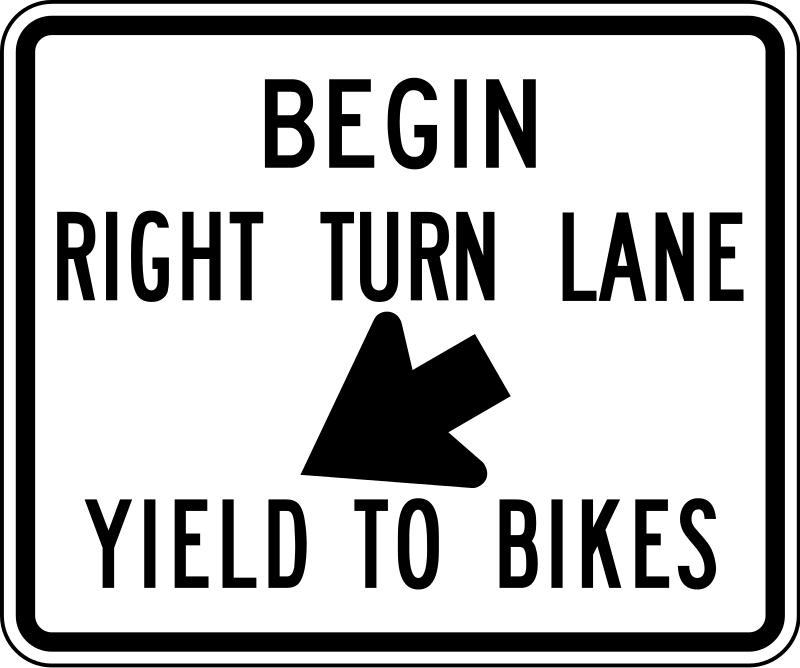
Drivers turning right must merge into the bike lane before turning, first checking mirrors and blind spots and yielding to all cyclists.
What does this road sign indicate?
A) Drivers have the right of way over bikes turning left.
B) Vehicles turning left must yield to bikes entering a right turn lane.
C) Motor vehicles entering an exclusive right-turn lane must weave across bicycle traffic in bicycle lanes.
4.
The road curves gradually to the right ahead. Reduce speed before entering the curve.
This road sign means:
A) Wrong Way
B) Merging Traffic
C) Curve ahead
5.
What is the first thing you should do if your wheels move off the pavement?
A) Pull the steering wheel back.
B) Pull over to the right and sound your horn to warn the other drivers.
C) Ease your foot off the gas pedal and brake gently.
6.
You face a green light, but traffic on the other side of the intersection does not allow you to travel all the way through the intersection. What must you do?
A) Enter the intersection and wait until traffic ahead clears.
B) Wait for the next green light.
C) Wait until traffic ahead clears, so you do not block the intersection.
7.
When an aggressive driver confronts you, you should:
A) Try to move away safely.
B) Remain calm and relaxed.
C) All of the above.
8.
When driving behind a motorcycle:
A) allow a following distance of at least 4 motorcycle lengths.
B) allow a following distance of at least 2 car lengths.
C) allow at least 2 seconds of following distance.
D) allow at least 4 seconds of following distance.
9.
The driver of an emergency vehicle that uses lights and a siren can legally:
A) pass red lights.
B) exceed the speed limit
C) All of the above.
10.
Indicates an upcoming bicycle crossing or shared road zone. Always leave at least 3 feet of clearance when passing cyclists.
This road sign means:
A) Yield right-of-way to bicycles
B) Bicycles cross or ride beside traffic
C) Yield to motorcyles, but not to bicycles
D) Bicycles have the same rights as other vehicles
11.
What should you do if a vehicle is approaching head-on in your lane?
A) Pull over to the left and use your emergency lights to stop the other driver.
B) Decrease speed, pull over to the right and sound your horn to warn the other driver.
C) Turn off the ignition if your vehicle has power steering.
12.
If a collision is possible, you should:
A) choose to hit something that will give way rather than something rigid.
B) if you have to hit anything, try to make it a sideswipe.
C) choose to hit something that is standing still rather than something moving toward you.
D) All of the above.
13.
Alerts drivers to an upcoming crosswalk where pedestrians frequently cross. Slow down and yield right-of-way to anyone in or about to enter the roadway.
This sign means:
A) Railroad crossing
B) No Passing Zone
C) The road ends ahead
14.
Prohibits drivers from making a 180-degree turn to travel in the opposite direction at this intersection or stretch of road.
This road sign means:
A) No left turn
B) No U-turn
C) Detour ahead
15.
Another road crosses the highway ahead. Look left and right for crossing or entering vehicles.
This sign indicates:
A) a side road.
B) a cross road.
C) a church zone ahead.
16.
The octagonal (8-sided) shape is exclusively reserved for STOP signs so drivers can identify it immediately even in poor visibility or from behind.
The octagonal shape is used:
A) for stop signs and railroad advance warning signs.
B) exclusively for stop signs.
C) to warn drivers of existing or possible hazards on roadways.
17.
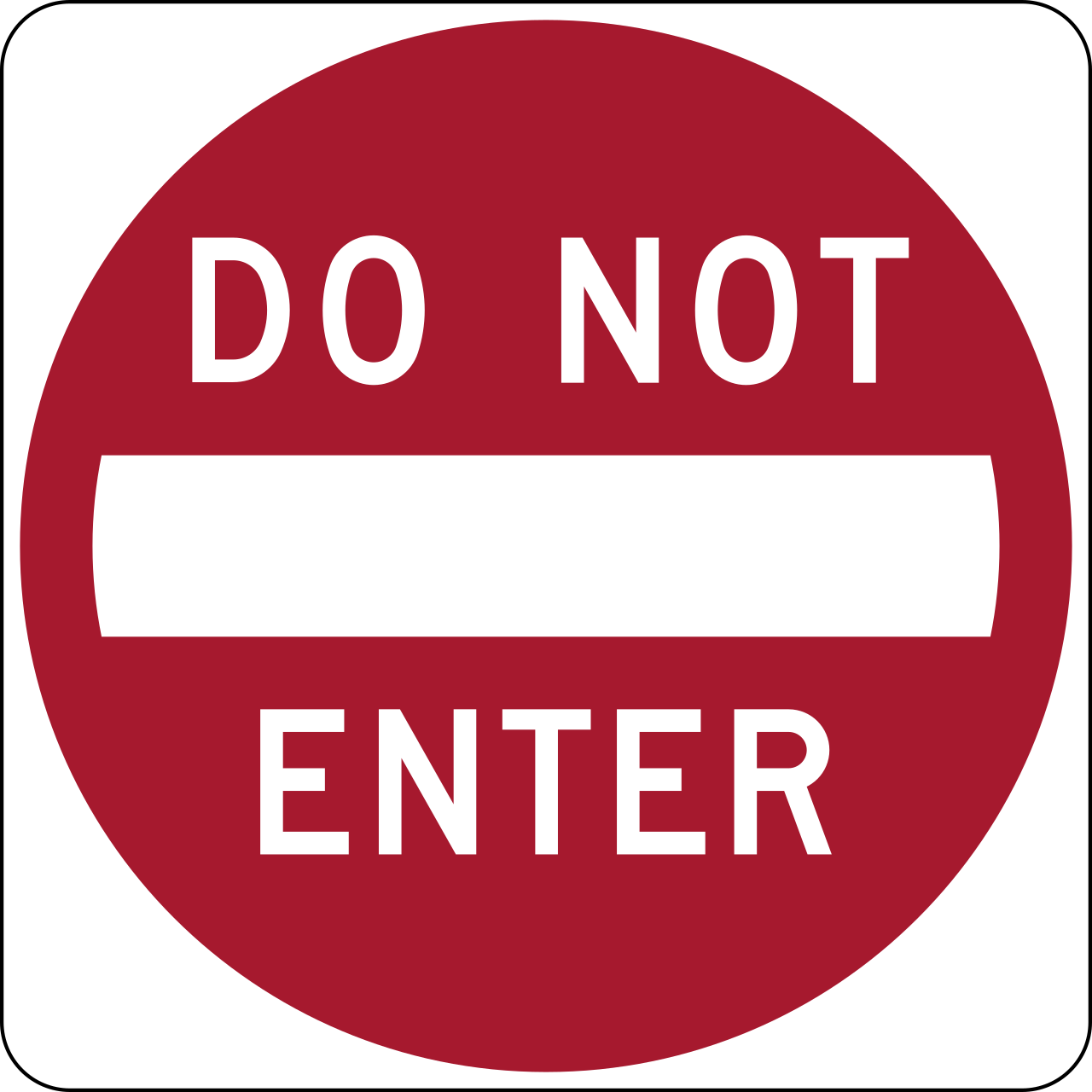
Marks a roadway or ramp where vehicular traffic is strictly forbidden to enter from your direction (such as freeway off-ramps or one-way streets).
This sign indicates:
A) that you must not drive past this sign.
B) that you must yield the right-of-way.
C) the entrance to a construction site.
D) the entrance to a dead-end street.
18.
Where are yield signs usually placed?
A) At intersections, if there is no marked stop line.
B) Where auxiliary roads lead into major roads.
C) Where major roads lead into auxiliary roads.
19.
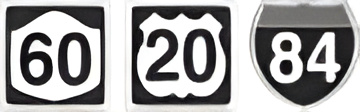
Interstate or State Route numbered highway marker used for route navigation and guide information.
These are:
A) route signs.
B) miles-left signs.
C) speed limit signs.
20.
If your car breaks down on the highway, you should:
A) use your four-way flashers to warn other drivers.
B) sound your horn to warn passing vehicles.
C) flash your headlights at oncoming traffic.
D) stop in the right lane.
21.
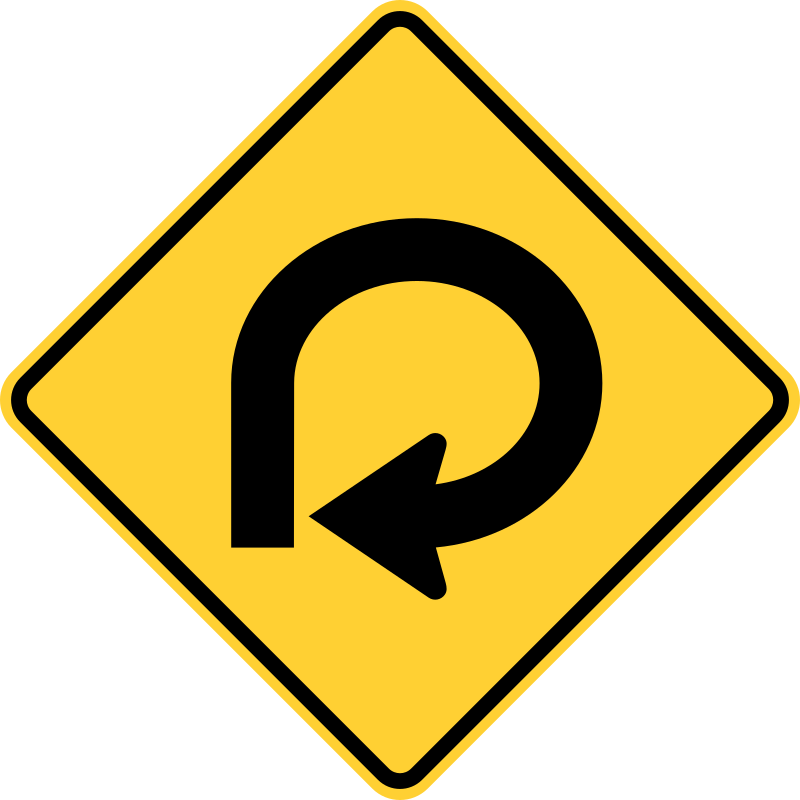
Warns of a circular exit or interchange ramp looping 270 degrees. Slow down significantly to the posted advisory speed.
This sign means:
A) Roundabout ahead.
B) 270 degree turn ahead.
C) Wrong way; Turn around immediately.
22.
Unlike passenger cars, trucks have blind spots:
A) on the right.
B) directly behind them.
C) on the front.
23.
What should you do if you see smoke come from under the hood?
A) Call the fire department and then pull off the road and park your vehicle.
B) Pull off the road and park your vehicle. Turn off the ignition, get away from the car and call the fire department.
C) Try to fight the fire yourself.
24.
Aggressive drivers:
A) run stop signs.
B) are high risk drivers.
C) tailgate other vehicles and make improper lane changes.
D) All of the above.
25.
A flashing yellow traffic signal means:
A) Slow down and be alert at the upcoming intersection.
B) The same thing as a stop sign.
C) Stop and proceed when a green light appears.
D) No right turn.
26.
If another vehicle passes you on the left, you must:
A) increase your speed slightly and keep to the right.
B) decrease your speed, then pull over to the right and stop.
C) decrease your speed slightly and keep to the right.
27.
Who is most at risk?
A) Drivers who are fatigued.
B) Drivers who are driving on long, boring roads.
C) All of the above.
28.
One broken line indicates:
A) You can pass other vehicles and change lanes, if it is safe.
B) You can not pass other vehicles or go across the line.
C) You can change lanes, but only when traffic conditions or obstructions in the road make it necessary.
29.
What should you do when an aggressive driver confronts you?
A) Avoid eye contact with the aggressive driver.
B) Make eye contact.
C) Challenge the aggressive driver with increased speed.
30.
Lanes of traffic moving in the same direction are divided by ____ lines.
A) orange
B) yellow
C) black
D) white
31.
If you get on a wrong expressway exit, you must:
A) get off at the next exit and look for signs that tell you how to return to the expressway.
B) use the the exit ramp to accelerate to expressway speed and blend with traffic.
C) drive in reverse to return to the expressway.
32.
Another road crosses the highway ahead. Look left and right for crossing or entering vehicles.
This road sign means:
A) Crossroad
B) Hospital parking ahead
C) Merge
33.
When following motorcycles, drivers should:
A) reduce the minimum following distance.
B) try to pass them as they have different braking capabilities than other motor vehicles.
C) keep more space in front of their vehicle.
34.
When approaching a highway-rail intersection, the first sign drivers see is usually:
A) an RXR round sign on a yellow background.
B) a stop sign.
C) a yield sign.
35.
Alcohol causes:
A) poor judgment.
B) loss of concentration.
C) reduced perception.
D) All of the above.
36.
If a bus has signaled and is pulling back onto the roadway, you must:
A) yield.
B) honk to let them know you’re there.
C) move to the left lane.
D) speed up to pass.
37.
The following symptoms are associated with drowsy driving:
A) You continue to yawn.
B) You don’t remember driving the last few miles.
C) All of the above.
38.
The minimum drinking age in this State is ____ years.
A) 20
B) 21
C) 9
D) 18
39.
Reflective orange triangle displayed on vehicles traveling at 25 MPH or slower (such as farm tractors or construction machinery). Approach with caution and pass safely.
The sign in the picture:
A) is a Construction and Maintenance Traffic Control sign.
B) is found at most intersections and indicates that drivers must yield to other vehicles.
C) is displayed on the rear of slow moving vehicles.
40.
The road curves gradually to the right ahead. Reduce speed before entering the curve.
When they see this sign, drivers should:
A) increase their speed and keep well to the right.
B) slow down and keep well to the right.
C) slow down and keep well to the left.
41.
Prohibits drivers from making a 180-degree turn to travel in the opposite direction at this intersection or stretch of road.
The picture shows a _________ sign.
A) no U-turn
B) no left turn
C) sharp turn
42.
Drivers may cross solid yellow lines:
A) at any time.
B) only to pass traffic moving in the same direction.
C) when making turns.
D) during daylight hours only.
43.
The road ahead is divided by a median strip or physical barrier into two separate one-way roadways. Keep to the right of the divider.
This road sign means:
A) Divided highway ahead
B) Merging traffic
C) Flagger ahead
44.
Which signs have black letters on a yellow or orange background?
A) Warning signs (diamond)
B) Regulatory signs (vertical rectangle)
C) Railroad advance warning signs (round)
45.
Slower-moving vehicles must stay in the right-hand lane to allow faster traffic to pass safely on multi-lane highways.
This regulatory road sign indicates that:
A) Vehicles must slow down and stay in the right lane.
B) The right hand lane is reserved for buses and car-pool vehicles.
C) Slower vehicles traveling on multiple lane highways must stay in the right hand lane.
46.
If cars approaching from opposite directions reach an intersection at the same time:
A) a car that moves straight must yield to cars that turn left.
B) a car that turns left must yield to cars that move straight or turn right.
C) a car that turns right must yield to cars that move straight or turn left.
47.
If your front wheels start to skid, the first thing you should do is:
A) Take your foot off the gas pedal and shift to neutral.
B) Immediately turn in the direction you want to go.
C) Speed up, pump your brakes and steer in the direction the vehicle is trying to go.
48.
The roadway ahead is narrowing or a lane is ending. Merge smoothly into the continuing lane.
This road sign means:
A) The left lane ends soon
B) one-way street ahead.
C) The right lane ends soon
D) Highway entrance ramp ahead
49.
Left turns on a red light are allowed:
A) from a one-way street into a one-way street.
B) Never.
C) at intersections, after stopping, if the way is clear.
50.
When making a turn, drivers must _____ their speed.
A) reduce
B) maintain
C) increase
D) double
ANSWER KEY Check answers after completing the test.
1 B
2 A
3 C
4 C
5 C
6 C
7 C
8 D
9 C
10 B
11 B
12 D
13 A
14 B
15 B
16 B
17 A
18 B
19 A
20 A
21 B
22 B
23 B
24 D
25 A
26 C
27 C
28 A
29 A
30 D
31 A
32 A
33 C
34 A
35 D
36 A
37 C
38 B
39 C
40 C
41 A
42 C
43 A
44 A
45 C
46 B
47 A
48 C
49 A
50 A