Question 1:
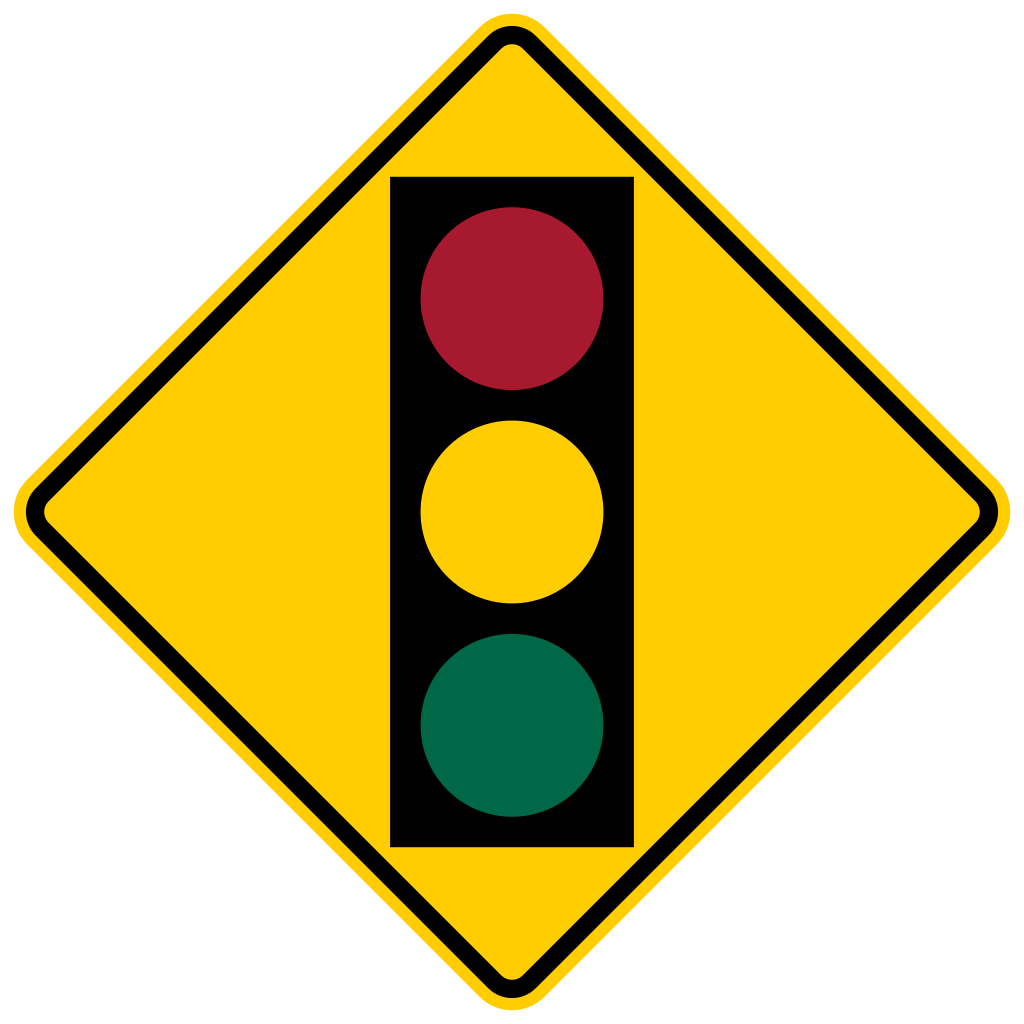 This sign means:
A
No traffic signal ahead
B
Traffic signal ahead
C
Open intersection ahead
This traffic sign indicates: traffic signal ahead. Observing and obeying all roadway signs ensures safe traffic flow and legal driving.
Question 2:
Before a school bus stops to load passengers, the driver will usually flash:
A
yellow warning lights.
B
red warning lights.
C
red lights.
When a school bus displays flashing red lights and extended stop sign: yellow warning lights. Traffic in both directions must come to a full stop on undivided roads until children are clear.
Question 3:
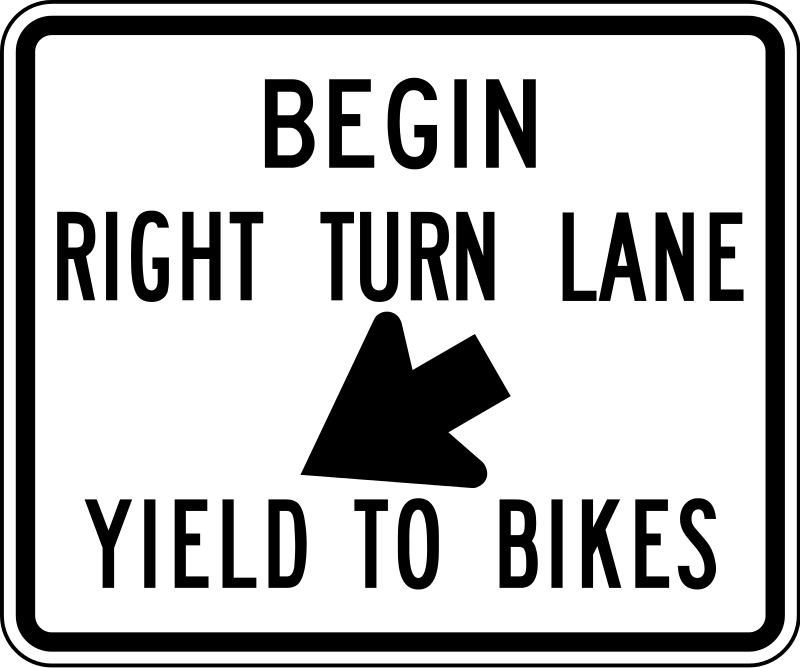 What does this road sign indicate?
A
Drivers have the right of way over bikes turning left.
B
Vehicles turning left must yield to bikes entering a right turn lane.
C
Motor vehicles entering an exclusive right-turn lane must weave across bicycle traffic in bicycle lanes.
This traffic sign indicates: Motor vehicles entering an exclusive right-turn lane must weave across bicycle traffic in bicycle lanes. Observing and obeying all roadway signs ensures safe traffic flow and legal driving.
Question 4:
 This road sign means:
A
Wrong Way
B
Merging Traffic
C
Curve ahead
This traffic sign indicates: Curve ahead. Observing and obeying all roadway signs ensures safe traffic flow and legal driving.
Question 5:
What is the first thing you should do if your wheels move off the pavement?
A
Pull the steering wheel back.
B
Pull over to the right and sound your horn to warn the other drivers.
C
Ease your foot off the gas pedal and brake gently.
The correct driving rule is: Ease your foot off the gas pedal and brake gently. Following standard DMV road rules and practicing defensive driving ensures safety for all road users.
Question 6:
You face a green light, but traffic on the other side of the intersection does not allow you to travel all the way through the intersection. What must you do?
A
Enter the intersection and wait until traffic ahead clears.
B
Wait for the next green light.
C
Wait until traffic ahead clears, so you do not block the intersection.
According to standard right-of-way regulations: wait until traffic ahead clears, so you do not block the intersection. Yielding appropriately prevents intersection collisions and maintains safe traffic flow.
Question 7:
When an aggressive driver confronts you, you should:
A
Try to move away safely.
B
Remain calm and relaxed.
C
All of the above.
All of the listed points are essential driving requirements: Try to move away safely; Remain calm and relaxed. Practicing each ensures compliance with DMV safety laws.
Question 8:
When driving behind a motorcycle:
A
allow a following distance of at least 4 motorcycle lengths.
B
allow a following distance of at least 2 car lengths.
C
allow at least 2 seconds of following distance.
D
allow at least 4 seconds of following distance.
Motorcycles can stop rapidly and are easily hidden in vehicle blind spots: allow at least 4 seconds of following distance. Always allow an increased following distance of at least 3 to 4 seconds.
Question 9:
The driver of an emergency vehicle that uses lights and a siren can legally:
A
pass red lights.
B
exceed the speed limit
C
All of the above.
Sharing the road safely requires mutual awareness and respect: pass red lights; exceed the speed limit. Maintaining safe space cushions protects all roadway users.
Question 10:
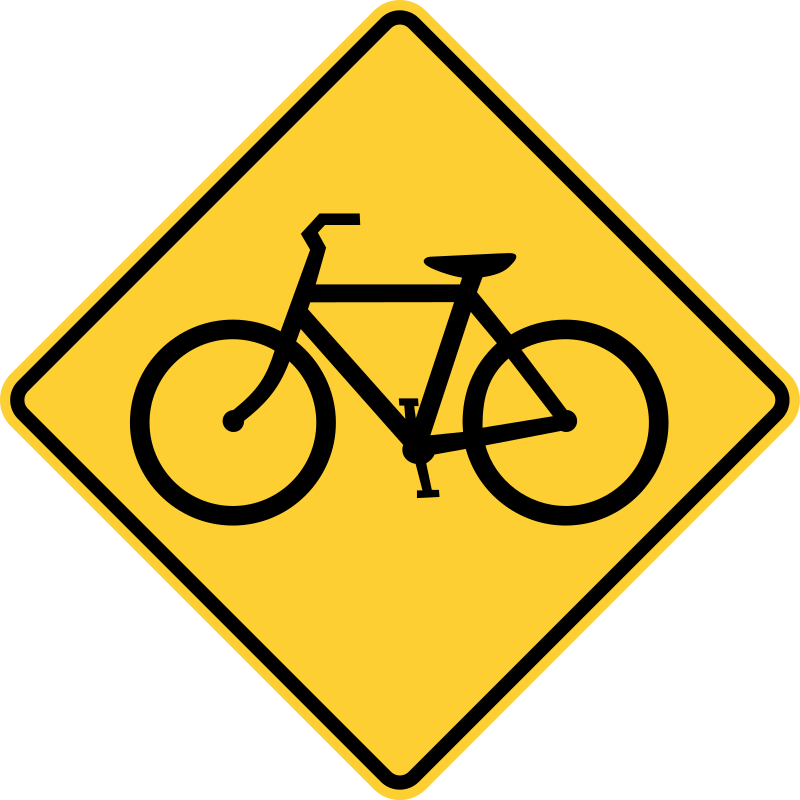 This road sign means:
A
Yield right-of-way to bicycles
B
Bicycles cross or ride beside traffic
C
Yield to motorcyles, but not to bicycles
D
Bicycles have the same rights as other vehicles
This traffic sign indicates: Bicycles cross or ride beside traffic. Observing and obeying all roadway signs ensures safe traffic flow and legal driving.
Question 11:
What should you do if a vehicle is approaching head-on in your lane?
A
Pull over to the left and use your emergency lights to stop the other driver.
B
Decrease speed, pull over to the right and sound your horn to warn the other driver.
C
Turn off the ignition if your vehicle has power steering.
The correct driving rule is: Decrease speed, pull over to the right and sound your horn to warn the other driver. Following standard DMV road rules and practicing defensive driving ensures safety for all road users.
Question 12:
If a collision is possible, you should:
A
choose to hit something that will give way rather than something rigid.
B
if you have to hit anything, try to make it a sideswipe.
C
choose to hit something that is standing still rather than something moving toward you.
D
All of the above.
All of the listed points are essential driving requirements: choose to hit something that will give way rather than something rigid; if you have to hit anything, try to make it a sideswipe; choose to hit something that is standing still rather than something moving toward you. Practicing each ensures compliance with DMV safety laws.
Question 13:
 This sign means:
A
Railroad crossing
B
No Passing Zone
C
The road ends ahead
Circular signs with an 'X' and 'RR' designate a Railroad Advance Warning: Railroad crossing. Drivers must slow down, look both ways, listen for trains, and be prepared to stop.
Question 14:
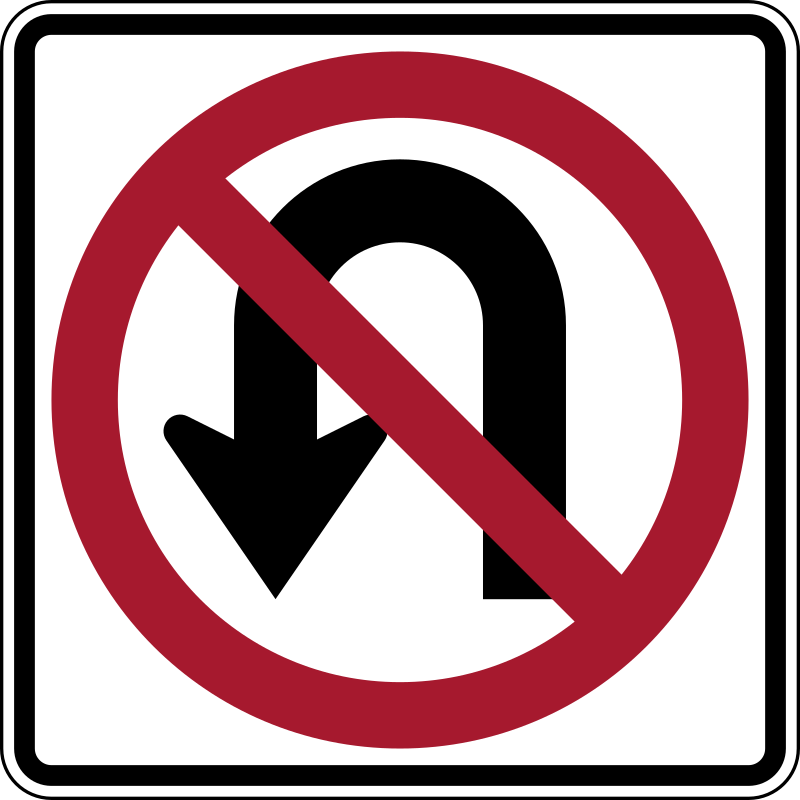 This road sign means:
A
No left turn
B
No U-turn
C
Detour ahead
This traffic sign indicates: No U-turn. Observing and obeying all roadway signs ensures safe traffic flow and legal driving.
Question 15:
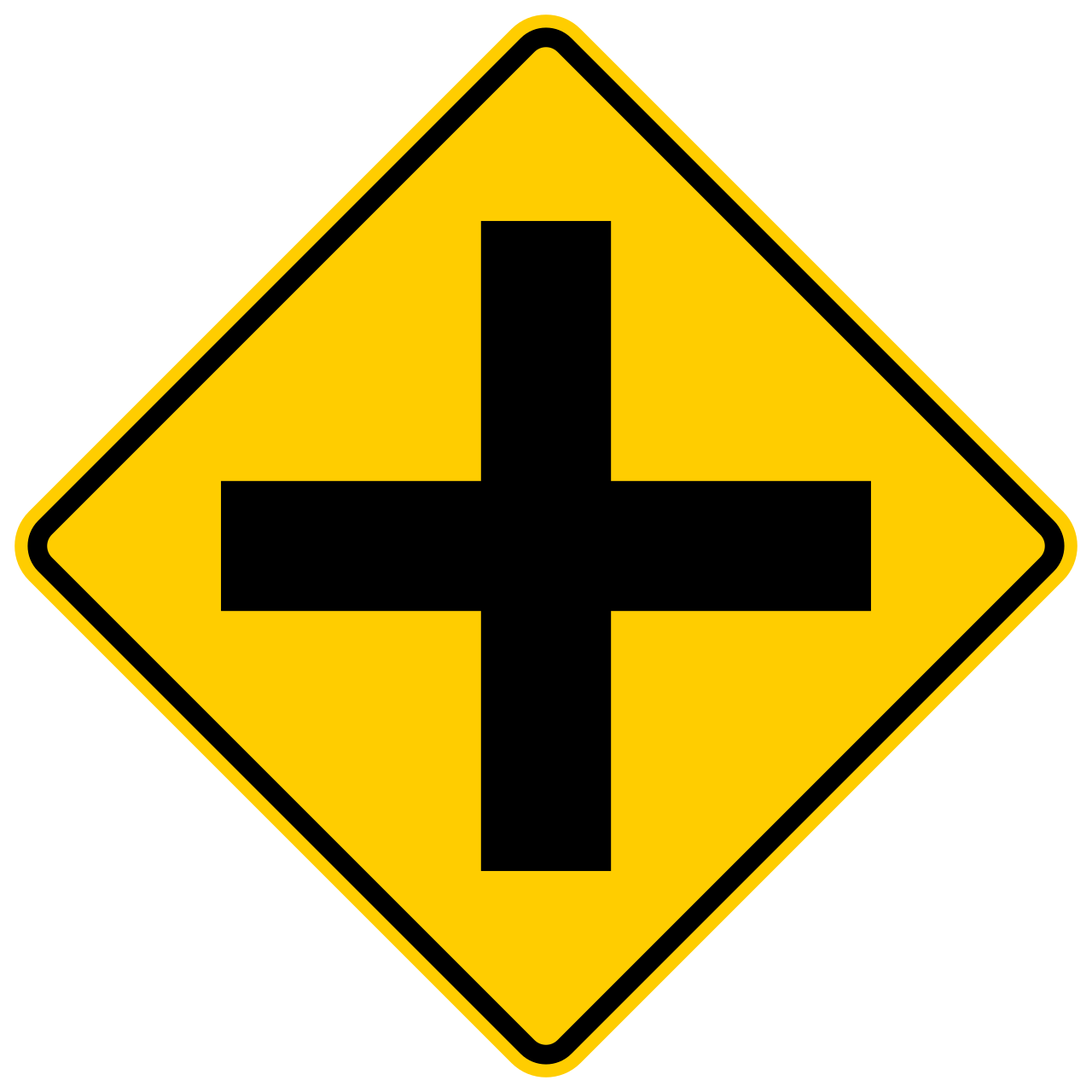 This sign indicates:
A
a side road.
B
a cross road.
C
a church zone ahead.
This traffic sign indicates: a cross road. Observing and obeying all roadway signs ensures safe traffic flow and legal driving.
Question 16:
 The octagonal shape is used:
A
for stop signs and railroad advance warning signs.
B
exclusively for stop signs.
C
to warn drivers of existing or possible hazards on roadways.
An octagonal Stop sign requires a full and complete stop before the stop line or crosswalk: exclusively for stop signs. Proceed only after yielding to all cross traffic and pedestrians.
Question 17:
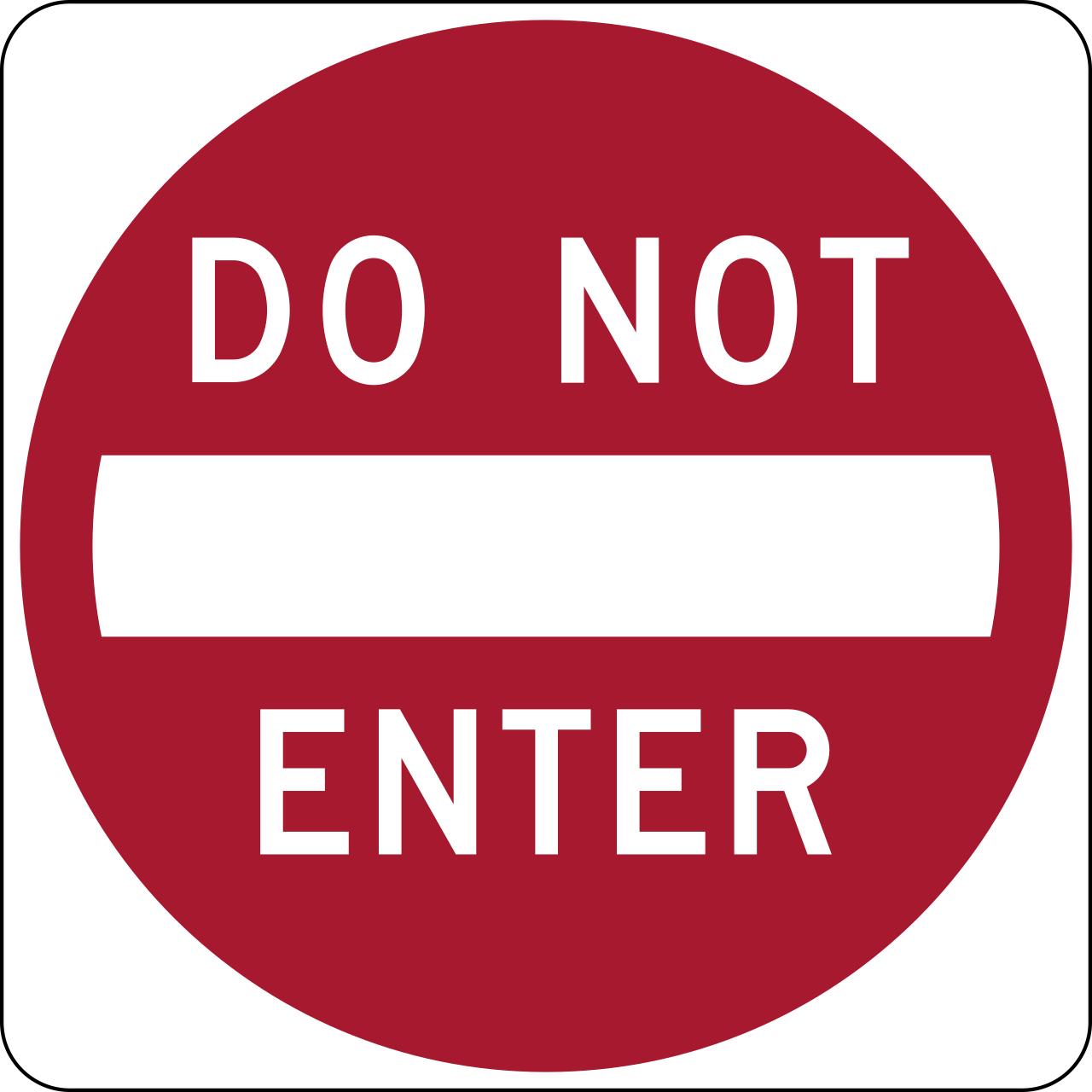 This sign indicates:
A
that you must not drive past this sign.
B
that you must yield the right-of-way.
C
the entrance to a construction site.
D
the entrance to a dead-end street.
This traffic sign indicates: that you must not drive past this sign. Observing and obeying all roadway signs ensures safe traffic flow and legal driving.
Question 18:
Where are yield signs usually placed?
A
At intersections, if there is no marked stop line.
B
Where auxiliary roads lead into major roads.
C
Where major roads lead into auxiliary roads.
The correct driving rule is: Where auxiliary roads lead into major roads. Following standard DMV road rules and practicing defensive driving ensures safety for all road users.
Question 19:
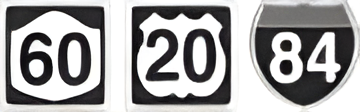 These are:
A
route signs.
B
miles-left signs.
C
speed limit signs.
The correct driving rule is: route signs. Following standard DMV road rules and practicing defensive driving ensures safety for all road users.
Question 20:
If your car breaks down on the highway, you should:
A
use your four-way flashers to warn other drivers.
B
sound your horn to warn passing vehicles.
C
flash your headlights at oncoming traffic.
D
stop in the right lane.
Defensive driving guidelines state that: use your four-way flashers to warn other drivers. Anticipating road hazards and communicating maneuvers keeps traffic predictable and safe.
Question 21:
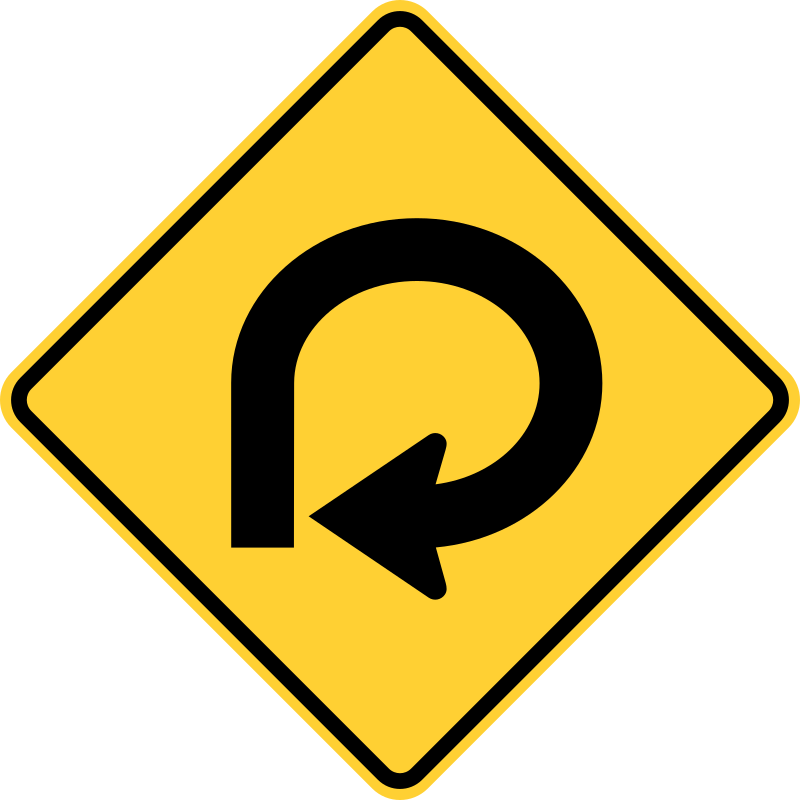 This sign means:
A
Roundabout ahead.
B
270 degree turn ahead.
C
Wrong way; Turn around immediately.
This traffic sign indicates: 270 degree turn ahead. Observing and obeying all roadway signs ensures safe traffic flow and legal driving.
Question 22:
Unlike passenger cars, trucks have blind spots:
A
on the right.
B
directly behind them.
C
on the front.
The correct driving rule is: directly behind them. Following standard DMV road rules and practicing defensive driving ensures safety for all road users.
Question 23:
What should you do if you see smoke come from under the hood?
A
Call the fire department and then pull off the road and park your vehicle.
B
Pull off the road and park your vehicle. Turn off the ignition, get away from the car and call the fire department.
C
Try to fight the fire yourself.
The correct driving rule is: pull off the road and park your vehicle. Turn off the ignition, get away from the car and call the fire department. Following standard DMV road rules and practicing defensive driving ensures safety for all road users.
Question 24:
Aggressive drivers:
A
run stop signs.
B
are high risk drivers.
C
tailgate other vehicles and make improper lane changes.
D
All of the above.
All of the listed points are essential driving requirements: run stop signs; are high risk drivers; tailgate other vehicles and make improper lane changes. Practicing each ensures compliance with DMV safety laws.
Question 25:
A flashing yellow traffic signal means:
A
Slow down and be alert at the upcoming intersection.
B
The same thing as a stop sign.
C
Stop and proceed when a green light appears.
D
No right turn.
This traffic sign indicates: slow down and be alert at the upcoming intersection. Observing and obeying all roadway signs ensures safe traffic flow and legal driving.
Question 26:
If another vehicle passes you on the left, you must:
A
increase your speed slightly and keep to the right.
B
decrease your speed, then pull over to the right and stop.
C
decrease your speed slightly and keep to the right.
The correct driving rule is: decrease your speed slightly and keep to the right. Following standard DMV road rules and practicing defensive driving ensures safety for all road users.
Question 27:
Who is most at risk?
A
Drivers who are fatigued.
B
Drivers who are driving on long, boring roads.
C
All of the above.
All of the listed points are essential driving requirements: Drivers who are fatigued; Drivers who are driving on long, boring roads. Practicing each ensures compliance with DMV safety laws.
Question 28:
One broken line indicates:
A
You can pass other vehicles and change lanes, if it is safe.
B
You can not pass other vehicles or go across the line.
C
You can change lanes, but only when traffic conditions or obstructions in the road make it necessary.
The correct driving rule is: you can pass other vehicles and change lanes, if it is safe. Following standard DMV road rules and practicing defensive driving ensures safety for all road users.
Question 29:
What should you do when an aggressive driver confronts you?
A
Avoid eye contact with the aggressive driver.
B
Make eye contact.
C
Challenge the aggressive driver with increased speed.
The correct driving rule is: avoid eye contact with the aggressive driver. Following standard DMV road rules and practicing defensive driving ensures safety for all road users.
Question 30:
Lanes of traffic moving in the same direction are divided by ____ lines.
A
orange
B
yellow
C
black
D
white
The correct driving rule is: white. Following standard DMV road rules and practicing defensive driving ensures safety for all road users.
Question 31:
If you get on a wrong expressway exit, you must:
A
get off at the next exit and look for signs that tell you how to return to the expressway.
B
use the the exit ramp to accelerate to expressway speed and blend with traffic.
C
drive in reverse to return to the expressway.
Defensive driving guidelines state that: get off at the next exit and look for signs that tell you how to return to the expressway. Anticipating road hazards and communicating maneuvers keeps traffic predictable and safe.
Question 32:
This road sign means:
A
Crossroad
B
Hospital parking ahead
C
Merge
This traffic sign indicates: Crossroad. Observing and obeying all roadway signs ensures safe traffic flow and legal driving.
Question 33:
When following motorcycles, drivers should:
A
reduce the minimum following distance.
B
try to pass them as they have different braking capabilities than other motor vehicles.
C
keep more space in front of their vehicle.
The correct driving rule is: keep more space in front of their vehicle. Following standard DMV road rules and practicing defensive driving ensures safety for all road users.
Question 34:
When approaching a highway-rail intersection, the first sign drivers see is usually:
A
an RXR round sign on a yellow background.
B
a stop sign.
C
a yield sign.
According to standard right-of-way regulations: an RXR round sign on a yellow background. Yielding appropriately prevents intersection collisions and maintains safe traffic flow.
Question 35:
Alcohol causes:
A
poor judgment.
B
loss of concentration.
C
reduced perception.
D
All of the above.
Alcohol and impairing substances degrade all critical driving functions: poor judgment; loss of concentration; reduced perception. Driving while impaired carries severe criminal and safety penalties.
Question 36:
If a bus has signaled and is pulling back onto the roadway, you must:
A
yield.
B
honk to let them know you’re there.
C
move to the left lane.
D
speed up to pass.
The correct driving rule is: yield. Following standard DMV road rules and practicing defensive driving ensures safety for all road users.
Question 37:
The following symptoms are associated with drowsy driving:
A
You continue to yawn.
B
You don’t remember driving the last few miles.
C
All of the above.
Alcohol and impairing substances degrade all critical driving functions: You continue to yawn; You don’t remember driving the last few miles. Driving while impaired carries severe criminal and safety penalties.
Question 38:
The minimum drinking age in this State is ____ years.
A
20
B
21
C
9
D
18
The correct driving rule is: 21. Following standard DMV road rules and practicing defensive driving ensures safety for all road users.
Question 39:
 The sign in the picture:
A
is a Construction and Maintenance Traffic Control sign.
B
is found at most intersections and indicates that drivers must yield to other vehicles.
C
is displayed on the rear of slow moving vehicles.
The correct driving rule is: is displayed on the rear of slow moving vehicles. Following standard DMV road rules and practicing defensive driving ensures safety for all road users.
Question 40:
When they see this sign, drivers should:
A
increase their speed and keep well to the right.
B
slow down and keep well to the right.
C
slow down and keep well to the left.
This traffic sign indicates: slow down and keep well to the left. Observing and obeying all roadway signs ensures safe traffic flow and legal driving.
Question 41:
The picture shows a _________ sign.
A
no U-turn
B
no left turn
C
sharp turn
The correct driving rule is: no U-turn. Following standard DMV road rules and practicing defensive driving ensures safety for all road users.
Question 42:
Drivers may cross solid yellow lines:
A
at any time.
B
only to pass traffic moving in the same direction.
C
when making turns.
D
during daylight hours only.
The correct driving rule is: when making turns. Following standard DMV road rules and practicing defensive driving ensures safety for all road users.
Question 43:
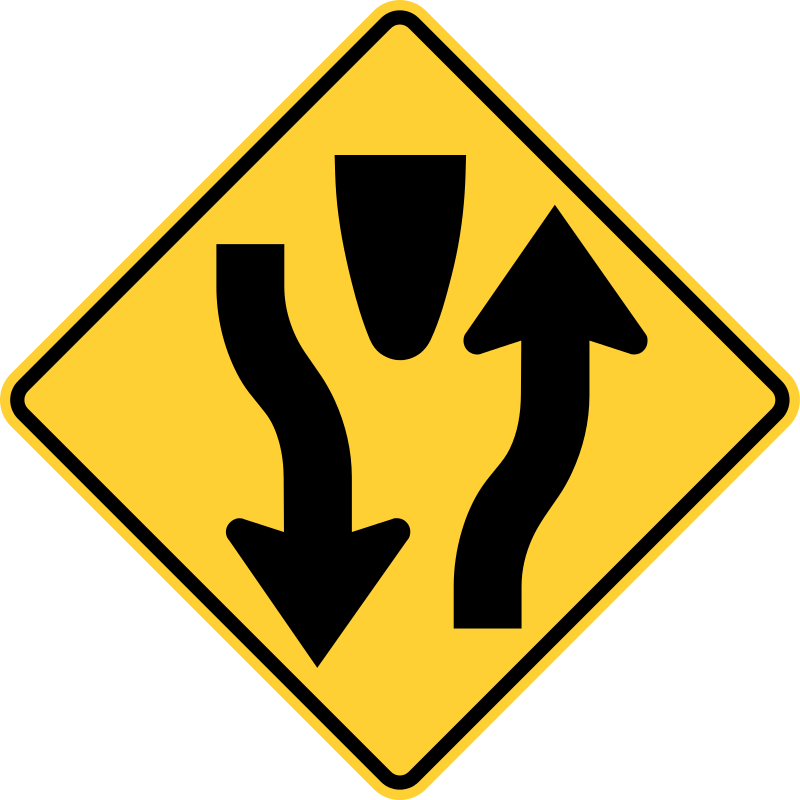 This road sign means:
A
Divided highway ahead
B
Merging traffic
C
Flagger ahead
This traffic sign indicates: Divided highway ahead. Observing and obeying all roadway signs ensures safe traffic flow and legal driving.
Question 44:
Which signs have black letters on a yellow or orange background?
A
Warning signs (diamond)
B
Regulatory signs (vertical rectangle)
C
Railroad advance warning signs (round)
The correct driving rule is: Warning signs (diamond). Following standard DMV road rules and practicing defensive driving ensures safety for all road users.
Question 45:
 This regulatory road sign indicates that:
A
Vehicles must slow down and stay in the right lane.
B
The right hand lane is reserved for buses and car-pool vehicles.
C
Slower vehicles traveling on multiple lane highways must stay in the right hand lane.
This traffic sign indicates: Slower vehicles traveling on multiple lane highways must stay in the right hand lane. Observing and obeying all roadway signs ensures safe traffic flow and legal driving.
Question 46:
If cars approaching from opposite directions reach an intersection at the same time:
A
a car that moves straight must yield to cars that turn left.
B
a car that turns left must yield to cars that move straight or turn right.
C
a car that turns right must yield to cars that move straight or turn left.
According to standard right-of-way regulations: a car that turns left must yield to cars that move straight or turn right. Yielding appropriately prevents intersection collisions and maintains safe traffic flow.
Question 47:
If your front wheels start to skid, the first thing you should do is:
A
Take your foot off the gas pedal and shift to neutral.
B
Immediately turn in the direction you want to go.
C
Speed up, pump your brakes and steer in the direction the vehicle is trying to go.
The correct driving rule is: take your foot off the gas pedal and shift to neutral. Following standard DMV road rules and practicing defensive driving ensures safety for all road users.
Question 48:
 This road sign means:
A
The left lane ends soon
B
one-way street ahead.
C
The right lane ends soon
D
Highway entrance ramp ahead
This traffic sign indicates: The right lane ends soon. Observing and obeying all roadway signs ensures safe traffic flow and legal driving.
Question 49:
Left turns on a red light are allowed:
A
from a one-way street into a one-way street.
B
Never.
C
at intersections, after stopping, if the way is clear.
When turning left across traffic lanes: from a one-way street into a one-way street. You must yield to all oncoming vehicles and crossing pedestrians before completing the turn.
Question 50:
When making a turn, drivers must _____ their speed.
A
reduce
B
maintain
C
increase
D
double
For safe speed and stopping control: reduce. Adjusting speed to match visibility and road traction prevents loss of steering grip.