←
Back to Test
Hide Answer Key
Print / Save as PDF
Print / PDF
drive
quiz
.com
NH DMV PERMİT PRACTİCE TEST 7
New Hampshire
Duration: 36 min
|
Questions: 40
Student Name:
Date:
Correct:
Incorrect:
Score:
1.
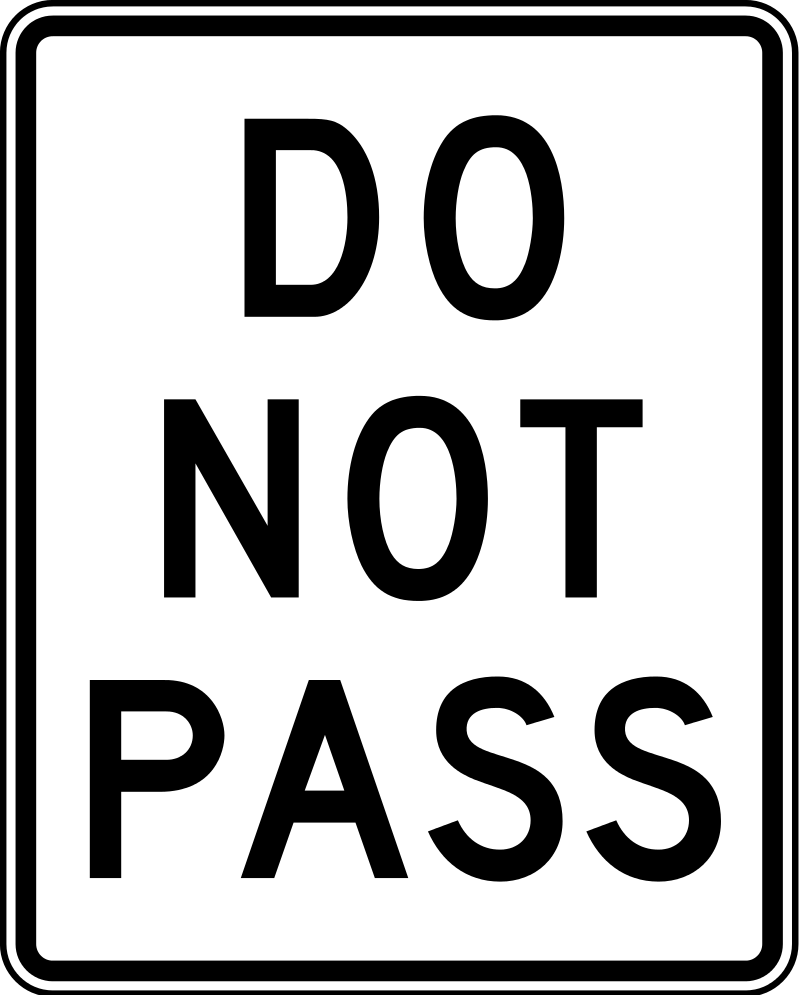
This sign means drivers must not pass other vehicles:
A)
unless it is safe to do so.
B)
within 250 feet of this sign.
C)
when it's dark.
D)
for any reason.
2.
Lanes of traffic moving in the same direction are divided by ____ lines.
A)
orange
B)
yellow
C)
black
D)
white
3.
While driving, it is important to slow down:
A)
when the road is wet.
B)
on narrow roads.
C)
at intersections.
D)
All of the above.
4.
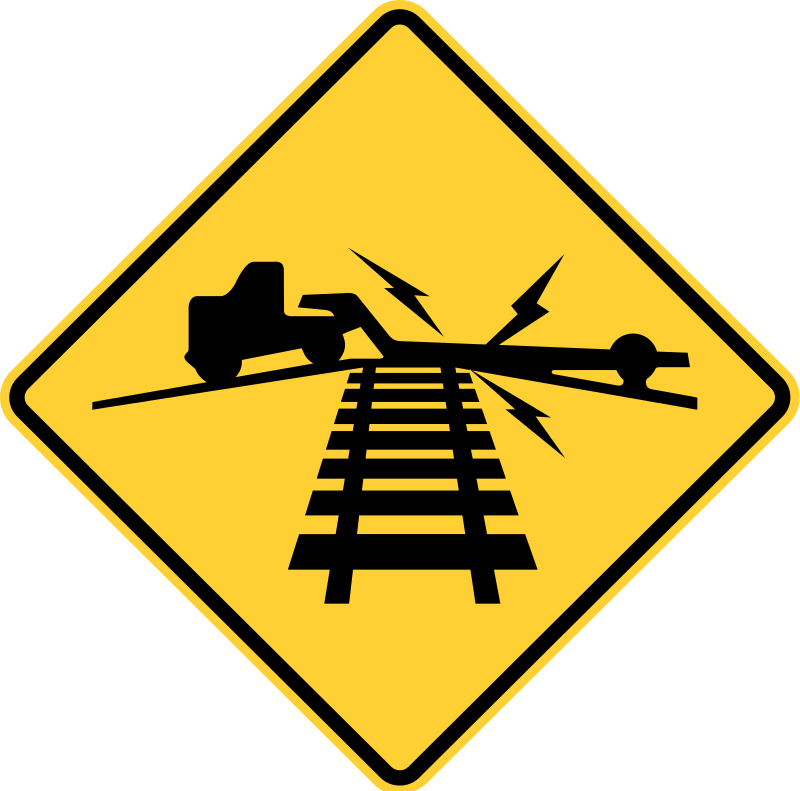
This road sign means:
A)
Pedestrian crossing
B)
School zone
C)
School crossing
5.
This road sign means:
A)
Cars in right lane must slow down
B)
Merging traffic ahead
C)
Pass only in the right lane
D)
No left turn
6.
What does a red arrow on a traffic light mean?
A)
You may proceed slowly through the intersection.
B)
You must stop and then proceed when the way is clear.
C)
You may turn in the direction of the arrow.
D)
You must stop. Do not go in the direction of the arrow until a green light or arrow light goes on.
7.
This sign means:
A)
Reversible lane ahead.
B)
The divided highway ends ahead.
C)
Drivers are coming to a point where another traffic lane joins the one they are on.
8.
Highway markings:
A)
provide information for drivers.
B)
only apply to motorcycles.
C)
are only found in school zones.
D)
are usually red and blue in color.
9.
______________ is an unsafe distraction when driving.
A)
Leaving early to drive to an appointment.
B)
Texting a message on your cell phone.
C)
Controlling an emotion before putting the vehicle in gear.
D)
Asking a passenger to enter your mapping request into your GPS.
10.
What should drivers do in case of a brake failure?
A)
Shift to a lower gear.
B)
Tie a white cloth on the left door handle.
C)
Brake lightly.
11.
At a stop sign there is no stop line, you must stop:
A)
before you enter the intersection.
B)
before you enter the crosswalk.
C)
after you enter the crosswalk.
12.
This sign warns drivers that:
A)
the road will make a sharp turn to the right.
B)
right turns are not allowed.
C)
another road enters the highway from the direction shown.
13.
Roads are most slippery:
A)
just before it rains.
B)
when it stops raining.
C)
when it first starts to rain.
14.
Your vehicles braking distance will be much longer:
A)
when driving at night.
B)
on interstate highways.
C)
on wet, icy or gravel roads.
D)
All of the above.
15.
This sign indicates:
A)
Winding road
B)
Merging traffic
C)
Divided highway ends
16.
If you are blinded by headlights on an approaching vehicle, you should:
A)
avoid looking directly at the bright lights.
B)
glance toward the side of the road, then look quickly ahead to determine the other vehicle’s position.
C)
All of the above.
17.
Emergency vehicles:
A)
may follow each other.
B)
may use a loudspeaker to give instructions.
C)
have the right-of-way when using siren and red/blue lights.
D)
All of the above.
18.
This sign warns drivers that:
A)
they cannot go straight ahead.
B)
they will soon be facing oncoming traffic.
C)
a shared lane starts ahead.
19.
An octagonal sign means that drivers must:
A)
respect the posted speed limit.
B)
come to a complete stop at the marked stop line.
C)
be aware possible hazards ahead.
20.
Studies show that wearing seat belts:
A)
reduces your chances of serious injury in a crash.
B)
increases your chances of fatality in a crash.
C)
reduces your chances of damaging your car in a crash.
D)
All of the above.
21.
Keeping a space cushion between you and the other vehicles around you is important because it:
A)
gives you time to react to situations.
B)
prevents distractions from other vehicles.
C)
keeps other drivers alert.
D)
keeps traffic flowing at a safe pace.
22.
If your car starts to skid, turn your steering wheel:
A)
in the direction you want to go.
B)
in the opposite direction of the skid.
C)
to keep the front wheels straight.
D)
in any direction. It doesnt matter.
23.
When driving in fog:
A)
turn on your hazard lights.
B)
do not drive over 10 MPH.
C)
turn on your low beams.
D)
drive the speed limit.
24.
What should you do if a vehicle is approaching head-on in your lane?
A)
Pull over to the left and use your emergency lights to stop the other driver.
B)
Decrease speed, pull over to the right and sound your horn to warn the other driver.
C)
Turn off the ignition if your vehicle has power steering.
25.
If a driver follows you too closely, you should:
A)
move to another lane if possible.
B)
activate your stop lights.
C)
brake suddenly.
26.
This road sign warns drivers that:
A)
they are coming to a point where another traffic lane joins the one they are on.
B)
a divided highway is ahead.
C)
the one-way street or roadway is about to change to two-way traffic.
27.
___________ are green with white letters and symbols.
A)
Warning signs
B)
Destination signs (guide signs)
C)
Regulation signs (regulatory signs)
28.
What should you do as you prepare to turn right at an intersection?
A)
Honk your horn.
B)
Yield to bicyclists coming from the opposite direction.
C)
Signal your turn, check for bicyclists, and do not turn directly in front of a bicyclist.
29.
A speed limit is the __________ speed at which a vehicle may legally travel on the road under ideal conditions.
A)
maximum
B)
minimum
C)
suggested
D)
None of the above.
30.
When passing other vehicles, drivers should:
A)
make sure the passing lane is clear of traffic, and check behind and to the left to make sure another vehicle is not attempting to pass.
B)
pass the vehicle as slowly as possible.
C)
apply the brake and slow down.
D)
All of the above.
31.
Which sign has white letters on a red background?
A)
Stop
B)
School zone
C)
Yield
32.
Examples of proper glass maintenance include:
A)
Replacing worn wiper blades.
B)
Keeping your windows clean and clear.
C)
All of the above.
33.
The picture shows a _________ sign.
A)
no U-turn
B)
no left turn
C)
sharp turn
34.
This road sign means:
A)
Winding road ahead
B)
Pedestrian crossing
C)
Low ground railroad crossing
D)
No-passing zone
35.
Look over your shoulder to check your blind spot:
A)
when changing lanes.
B)
when pulling to the right side of the road or away from a curb.
C)
on all right and left turns.
D)
All of the above.
36.
Drivers are required to stop:
A)
when a traffic officer orders them to stop.
B)
where there is a red light.
C)
at an intersection with a stop sign.
D)
All of the above.
37.
An emergency vehicle that uses lights and a siren can be unpredictable. Why?
A)
The driver can legally pass red lights.
B)
Emergency vehicles must go faster than the posted speed limit when it is safe to do so.
C)
Emergency vehicle drivers are not required to be careful.
38.
You are entering a roadway from a private road, and you need to turn left. You have to yield to:
A)
vehicles from the right.
B)
vehicles from the left.
C)
vehicles from both directions.
39.
When you need to enter a freeway exit ramp:
A)
don't slow down on the freeway itself. Wait until you are in the deceleration lane.
B)
pass slower vehicles on the right.
C)
slow down before entering the exit ramp.
D)
don't slow down on the freeway itself, and maintain your speed once in the exit ramp.
40.
This regulatory road sign indicates that:
A)
Vehicles must slow down and stay in the right lane.
B)
The right hand lane is reserved for buses and car-pool vehicles.
C)
Slower vehicles traveling on multiple lane highways must stay in the right hand lane.
ANSWER KEY
Check answers after completing the test.
1
D
2
D
3
D
4
A
5
B
6
D
7
B
8
A
9
B
10
A
11
B
12
A
13
C
14
C
15
B
16
C
17
D
18
B
19
B
20
A
21
A
22
A
23
C
24
B
25
A
26
C
27
B
28
C
29
A
30
A
31
A
32
C
33
A
34
C
35
D
36
D
37
A
38
C
39
A
40
C