DriveQuiz drivequiz.com

NH DMV PERMİT PRACTİCE TEST 14

New Hampshire
Duration: 36 min
|
Questions: 40
Student Name:
Date:
Correct:      Incorrect:      Score:      
1.
Alcohol:
A) makes drivers more prone to take chances.
B) increases reaction time.
C) All of the above.
2.
When parallel parking between two cars, you should first:
A) back slowly.
B) pull up even with the front car.
C) turn your wheels to the right.
D) turn your wheels to the left.
3.
The bridge ahead has narrower lanes or shoulders than the preceding road. Use caution when meeting oncoming vehicles.
This sign warns drivers of:
A) low clearance.
B) a narrow bridge ahead.
C) a low place in the road.
4.
A driver should be extra alert for motorcyclists, bicycles and pedestrians. Why?
A) They obey specific traffic laws.
B) They always have the right-of-way.
C) They are hard to see in traffic.
D) They don’t have rearview mirrors.
5.
Warns of two consecutive curves in opposite directions (e.g., curves right then left). Slow down to maintain control.
When you see this sign you should:
A) increase your speed and try to pass other vehicles.
B) slow your speed and be prepared to stop.
C) slow your speed and do not pass other vehicles.
6.
If your front wheels start to skid, the first thing you should do is:
A) Take your foot off the gas pedal and shift to neutral.
B) Immediately turn in the direction you want to go.
C) Speed up, pump your brakes and steer in the direction the vehicle is trying to go.
7.
Smoking while driving:
A) does not affect driving abilities.
B) is not distracting.
C) helps increase driver alertness.
D) is distracting.
8.
Indicates a series of three or more consecutive sharp turns or curves ahead. Reduce speed and maintain lane control.
This road sign means:
A) Pavement ends
B) Winding road
C) Double curve ahead
9.
Drivers may cross solid yellow lines:
A) at any time.
B) only to pass traffic moving in the same direction.
C) when making turns.
D) during daylight hours only.
10.
When passing another vehicle:
A) pass the vehicle as safely and as quickly as possible.
B) honk your horn repeatedly to warn the other driver.
C) there is no need to signal.
D) you can exceed the posted speed limit.
11.
Alerts drivers to an upcoming crosswalk where pedestrians frequently cross. Slow down and yield right-of-way to anyone in or about to enter the roadway.
The picture shows:
A) a railroad advance warning sign.
B) a speeding fines doubled sign.
C) a reversible road sign.
12.
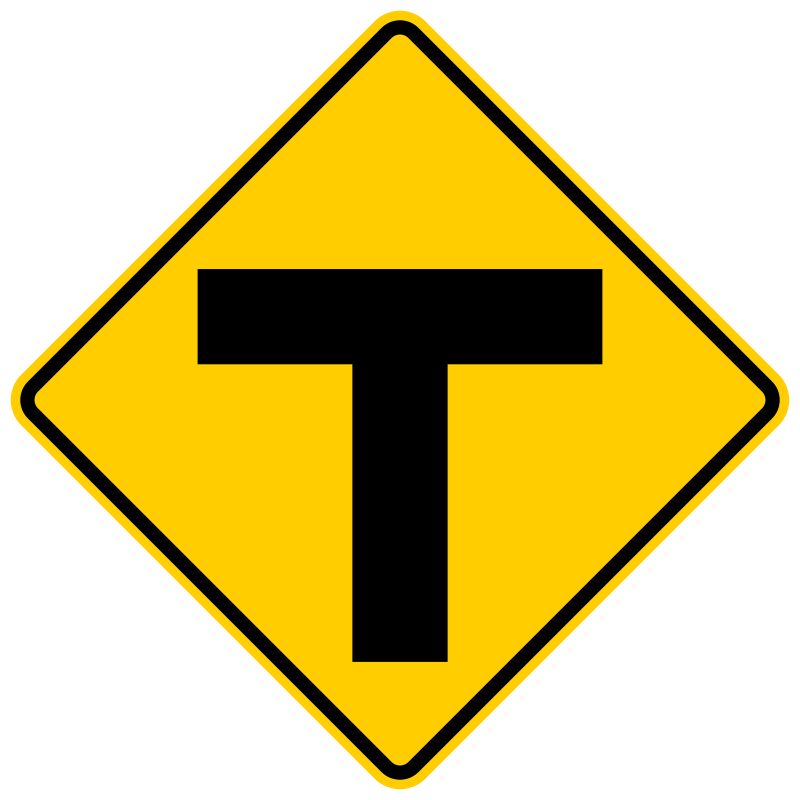
The roadway ends ahead at a T-junction. You must turn either left or right after yielding right-of-way to traffic on the cross street.
This road sign means:
A) Side road
B) T-intersection ahead
C) Keep right
D) Left lane must turn left
13.
You may pass another vehicle:
A) when there is a solid yellow line on your side.
B) on a curve or a hill.
C) on the shoulder of the highway.
D) None of the above.
14.
The best way to deal with tailgaters is to:
A) slow down to encourage the tailgater to pass.
B) pump your brakes to get them to back off.
C) ignore them completely.
D) speed up to increase the space between you and the tailgater.
15.
The shape of a route sign tells you:
A) the type of route you are on.
B) the speed limit on that route.
C) that the route you are on might be dangerous.
16.
The road ahead is divided by a median strip or physical barrier into two separate one-way roadways. Keep to the right of the divider.
This road sign means:
A) Keep left
B) Divided highway begins
C) Lane ends
17.
Which shape is a railroad advance warning sign?
A) Crossbuck
B) Round
C) Pentagon
18.
When you prepare to make a left turn from a one-way road into a two-way road, you must:
A) enter the two-way road to the left of its center line.
B) approach the turn in the right lane or from the right side of a single lane.
C) approach the turn in the left lane or from the left side of a single lane.
19.
If your car goes into water, you should:
A) wait for water to rush in and let it out in small breaths through your nose.
B) call the fire department immediately.
C) remove yourself before it starts to sink.
20.
To avoid having to make an emergency stop while driving in traffic, drivers should:
A) drive in the right lane only.
B) look ahead and maintain a safe following distance.
C) sound their horn to warn other drivers.
D) drive slower than the flow of traffic.
21.
A flashing red light means:
A) The same as a STOP sign.
B) The light will soon change to steady red.
C) Drive with caution.
22.
Worn tires:
A) may cause you to hydroplane even with very little water on the road.
B) can increase your stopping distance.
C) can make turning more difficult.
D) All of the above.
23.
The roadway becomes particularly slippery during wet or rainy conditions. Reduce your speed, increase following distance, and avoid abrupt braking or steering.
When they see this sign, drivers:
A) should be prepared to make sharp turns at a high speed.
B) need to be prepared to turn right and then left quickly.
C) should not speed up or brake quickly.
24.
Traffic signs and pavement markings must be:
A) followed only when a police officer is present.
B) followed only when other vehicles are present.
C) used as a guide only.
D) always obeyed.
25.
The roadway becomes particularly slippery during wet or rainy conditions. Reduce your speed, increase following distance, and avoid abrupt braking or steering.
This road sign means:
A) Slow down, slippery when wet
B) Detour ahead
C) Road curves ahead
26.
Tailgating:
A) cannot result in a traffic citation.
B) helps reduce traffic congestion.
C) is a defensive driving tecnique.
D) can frustrate other drivers and make them angry.
27.
When you make a left turn from a one-way road into a one-way road, if the road you enter has two lanes, you:
A) must turn into its right lane.
B) can not turn left.
C) must turn into its left lane.
28.
The median divider ends ahead, and you are returning to a two-way, two-lane undivided roadway. Watch for oncoming traffic on your left.
What does this sign indicate?
A) The highway ahead is divided into two one-way roadways.
B) Winding road ahead. Drive with caution.
C) Drivers will soon be on a roadway with two-way traffic.
29.
If you remain in the back blind spot of a large vehicle:
A) you increase the chance of a crash.
B) the large vehicle will take much longer to stop.
C) you can reduce fuel consumption.
30.
A work zone:
A) is marked with black and white signs.
B) might involve vehicles and moving workers.
C) does not require that the driver slow down and pay extra attention.
D) All of the above.
31.
When driving at night with no other vehicles ahead, a driver should use:
A) high beam lights.
B) low-beam lights.
C) parking lights.
32.
When driving on major highways you should:
A) be ready to react to road hazards.
B) stay alert.
C) keep your eyes moving.
D) All of the above.
33.
Which signs have black letters on a yellow or orange background?
A) Warning signs (diamond)
B) Regulatory signs (vertical rectangle)
C) Railroad advance warning signs (round)
34.
When changing lanes, you should:
A) check your mirrors, signal and change lanes.
B) signal, change lanes and check your mirrors.
C) signal, check your mirrors and blind spot in the direction you plan to move, then change lanes.
D) signal and change lanes.
35.
When are you allowed to drink alcoholic beverages in a vehicle on a public highway?
A) As long as you don’t drive.
B) Only if you ride in the back seat.
C) Only if you ride in the back of a pick-up truck.
D) Never.
36.
If you see a “lane closed ahead” sign you should:
A) make a U-turn. You are on the wrong side of the road.
B) merge into the correct lane when it is safe.
C) speed to the end of the closed lane and try to get into the other lane.
37.
When they see a crossbuck sign, drivers:
A) must slow down and wait for the red lights to flash.
B) must always come to a complete stop.
C) are legally required to yield the right of way to trains.
38.
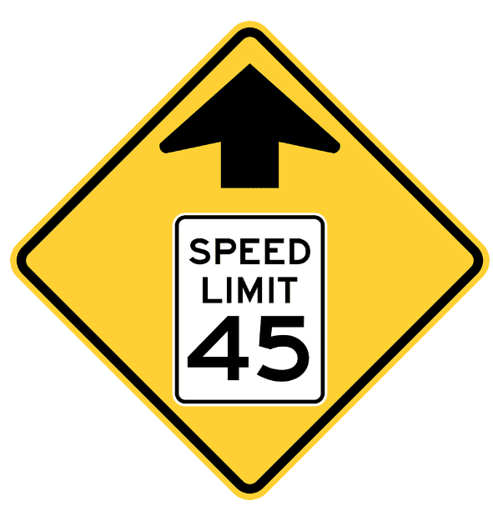
Recommended safe maximum driving speed in ideal conditions for an upcoming curve, ramp, or hazardous stretch of road.
This warning sign:
A) provides advance notice to upcoming speed limit change.
B) shows the current speed limit that all vehicles traveling in the direction of the arrow must not exceed.
C) indicates the suggested highest safe speed.
39.
indicates the suggested highest safe speed.
A) low beam headlights.
B) emergency flashers.
C) parking lights.
D) high beam headlights.
40.
A signalized intersection is ahead. Prepare to stop if the light turns yellow or red.
This sign means:
A) You must yield the right-of-way ahead
B) Traffic signals ahead
C) You must stop ahead
D) Speeding is not allowed
ANSWER KEY Check answers after completing the test.
1 C
2 B
3 B
4 C
5 C
6 A
7 D
8 B
9 C
10 A
11 A
12 B
13 D
14 A
15 A
16 B
17 B
18 C
19 C
20 B
21 A
22 D
23 C
24 D
25 A
26 D
27 C
28 C
29 A
30 B
31 A
32 D
33 A
34 C
35 D
36 B
37 C
38 A
39 A
40 B