Question 1:
What should you do if a vehicle is approaching head-on in your lane?
A
Pull over to the left and use your emergency lights to stop the other driver.
B
Decrease speed, pull over to the right and sound your horn to warn the other driver.
C
Turn off the ignition if your vehicle has power steering.
The correct driving rule is: Decrease speed, pull over to the right and sound your horn to warn the other driver. Following standard DMV road rules and practicing defensive driving ensures safety for all road users.
Question 2:
When they see a crossbuck sign, drivers:
A
must slow down and wait for the red lights to flash.
B
must always come to a complete stop.
C
are legally required to yield the right of way to trains.
The correct driving rule is: are legally required to yield the right of way to trains. Following standard DMV road rules and practicing defensive driving ensures safety for all road users.
Question 3:
When driving on the interstate, slower traffic should:
A
drive with the 4-way flashers on.
B
keep to the right.
C
keep to the left.
The correct driving rule is: keep to the right. Following standard DMV road rules and practicing defensive driving ensures safety for all road users.
Question 4:
To avoid the risk of being involved in an alcohol-related crash, you should:
A
decide before you start drinking that you are not going to drive.
B
say 'No, thanks' if someone offers you alcohol.
C
call a taxi if you've been drinking.
D
All of the above.
Alcohol and impairing substances degrade all critical driving functions: decide before you start drinking that you are not going to drive; say 'No, thanks' if someone offers you alcohol; call a taxi if you've been drinking. Driving while impaired carries severe criminal and safety penalties.
Question 5:
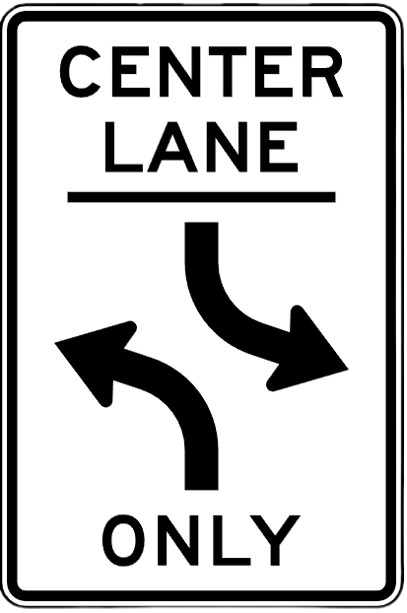 This sign means:
A
The center lane is shared for left turns.
B
Left turns in both directions of travel are not permitted.
C
Vehicles may only turn left.
This traffic sign indicates: The center lane is shared for left turns. Observing and obeying all roadway signs ensures safe traffic flow and legal driving.
Question 6:
If the entrance lane is too short to allow acceleration to highway speed, you should:
A
go to the next entrance ramp.
B
stop and wait for a large gap in traffic, then enter the highway and accelerate quickly.
C
merge into highway traffic as soon as possible.
For safe speed and stopping control: stop and wait for a large gap in traffic, then enter the highway and accelerate quickly. Adjusting speed to match visibility and road traction prevents loss of steering grip.
Question 7:
It is legal to make a left turn at a red light after stopping if:
A
you are traveling on a two-way street and turning onto a two-way street.
B
you are traveling on a one-way street and turning onto another one-way street.
C
you yield to all other traffic at the intersection before proceeding.
When turning left across traffic lanes: you are traveling on a one-way street and turning onto another one-way street. You must yield to all oncoming vehicles and crossing pedestrians before completing the turn.
Question 8:
If you hear a thumping sound while driving, you should:
A
hook your shoe under the gas pedal and see if you can free it.
B
get off the road and check your tires.
C
try your emergency lights.
The correct driving rule is: get off the road and check your tires. Following standard DMV road rules and practicing defensive driving ensures safety for all road users.
Question 9:
When you are driving at night and another vehicle is approaching, you should use your parking lights.
A
True
B
False
Under standard parking and curb regulations: False. Following parking distance clearances keeps roadways unobstructed and emergency lanes accessible.
Question 10:
When following a motorcycle, drivers should allow more following distance. Why?
A
Motorcycles have the same rights and privileges as any vehicle.
B
Motorcycles are faster than cars.
C
Motorcycles can stop more quickly than a car.
Motorcycles can stop rapidly and are easily hidden in vehicle blind spots: Motorcycles can stop more quickly than a car. Always allow an increased following distance of at least 3 to 4 seconds.
Question 11:
What should you do if one of your tires blows out?
A
Hold the steering wheel tight and brake immediately to avoid the risk of skidding.
B
Leave the road immediately.
C
Hold the steering wheel tight and slowly take your foot off the gas pedal.
The correct driving rule is: Hold the steering wheel tight and slowly take your foot off the gas pedal. Following standard DMV road rules and practicing defensive driving ensures safety for all road users.
Question 12:
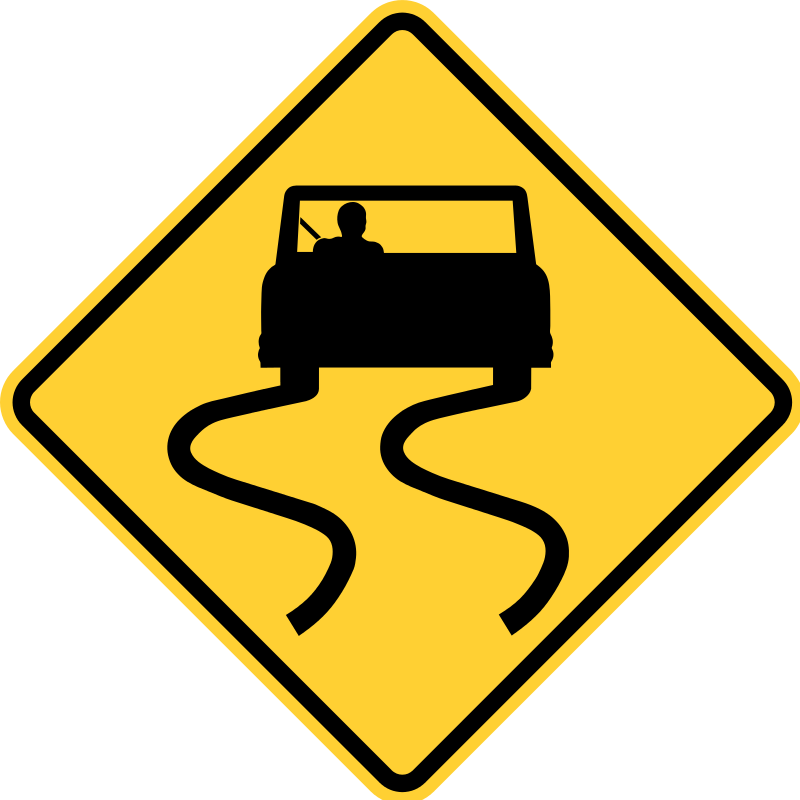 This road sign means:
A
Traffic increases ahead
B
Steep grade ahead
C
Winding road ahead
D
Slippery road ahead
This traffic sign indicates: Slippery road ahead. Observing and obeying all roadway signs ensures safe traffic flow and legal driving.
Question 13:
Which of the following is a defensive driving skill/technique?
A
Maintain the correct speed.
B
Do not drive if you are very weary.
C
All of the above.
All of the listed points are essential driving requirements: Maintain the correct speed; Do not drive if you are very weary. Practicing each ensures compliance with DMV safety laws.
Question 14:
You must yield to other drivers:
A
when it helps to prevent collisions.
B
when they are driving a truck.
C
when the other drivers are on your left and you have reached an unmarked intersection at the same time.
D
when your traffic signal is a green.
The correct driving rule is: when it helps to prevent collisions. Following standard DMV road rules and practicing defensive driving ensures safety for all road users.
Question 15:
If you get on a wrong expressway exit, you must:
A
get off at the next exit and look for signs that tell you how to return to the expressway.
B
use the the exit ramp to accelerate to expressway speed and blend with traffic.
C
drive in reverse to return to the expressway.
Defensive driving guidelines state that: get off at the next exit and look for signs that tell you how to return to the expressway. Anticipating road hazards and communicating maneuvers keeps traffic predictable and safe.
Question 16:
Drivers may pass another vehicle if the line dividing two lanes is a ________ line.
A
broken white
B
double solid yellow
C
solid yellow
D
solid white
The correct driving rule is: broken white. Following standard DMV road rules and practicing defensive driving ensures safety for all road users.
Question 17:
Pentagonal signs are used to indicate:
A
possible hazards on roadways.
B
no passing zones.
C
school crossings.
The correct driving rule is: school crossings. Following standard DMV road rules and practicing defensive driving ensures safety for all road users.
Question 18:
At many intersections a right turn may be made while the traffic light is red. Before turning right drivers must:
A
stop, look both ways and yield the right of way to pedestrians and other traffic.
B
slow down and, if the way is clear, proceed without stopping.
C
maintain constant speed because they have the right of way.
The correct driving rule is: stop, look both ways and yield the right of way to pedestrians and other traffic. Following standard DMV road rules and practicing defensive driving ensures safety for all road users.
Question 19:
When driving on slippery roads, drivers should:
A
increase their following distance.
B
avoid crossing bridges or intersections.
C
brake harder than usual.
D
change lanes quickly.
For safe speed and stopping control: increase their following distance. Adjusting speed to match visibility and road traction prevents loss of steering grip.
Question 20:
Persons who leave the scene of a crash may have their driver license revoked for up to ____ upon conviction.
A
1 year
B
6 months
C
3 months
D
9 months
The correct driving rule is: 1 year. Following standard DMV road rules and practicing defensive driving ensures safety for all road users.
Question 21:
What do pennant-shaped signs indicate?
A
A school crossing
B
Yield
C
A No Passing Zone
The correct driving rule is: A No Passing Zone. Following standard DMV road rules and practicing defensive driving ensures safety for all road users.
Question 22:
When changing lanes, drivers should never:
A
check to see if other drivers are moving into the same lane.
B
change lanes abruptly.
C
glance over their shoulder to check for blind spots.
The correct driving rule is: change lanes abruptly. Following standard DMV road rules and practicing defensive driving ensures safety for all road users.
Question 23:
 This sign is a warning that you are approaching:
A
a railroad crossing.
B
a crosswalk.
C
a dead-end street.
Circular signs with an 'X' and 'RR' designate a Railroad Advance Warning: a railroad crossing. Drivers must slow down, look both ways, listen for trains, and be prepared to stop.
Question 24:
When another vehicle is passing you:
A
stay in your lane and reduce speed.
B
stay in your lane and maintain speed unless there is an emergency.
C
pull your vehicle as far to the right as possible without leaving the pavement.
Defensive driving guidelines state that: stay in your lane and maintain speed unless there is an emergency. Anticipating road hazards and communicating maneuvers keeps traffic predictable and safe.
Question 25:
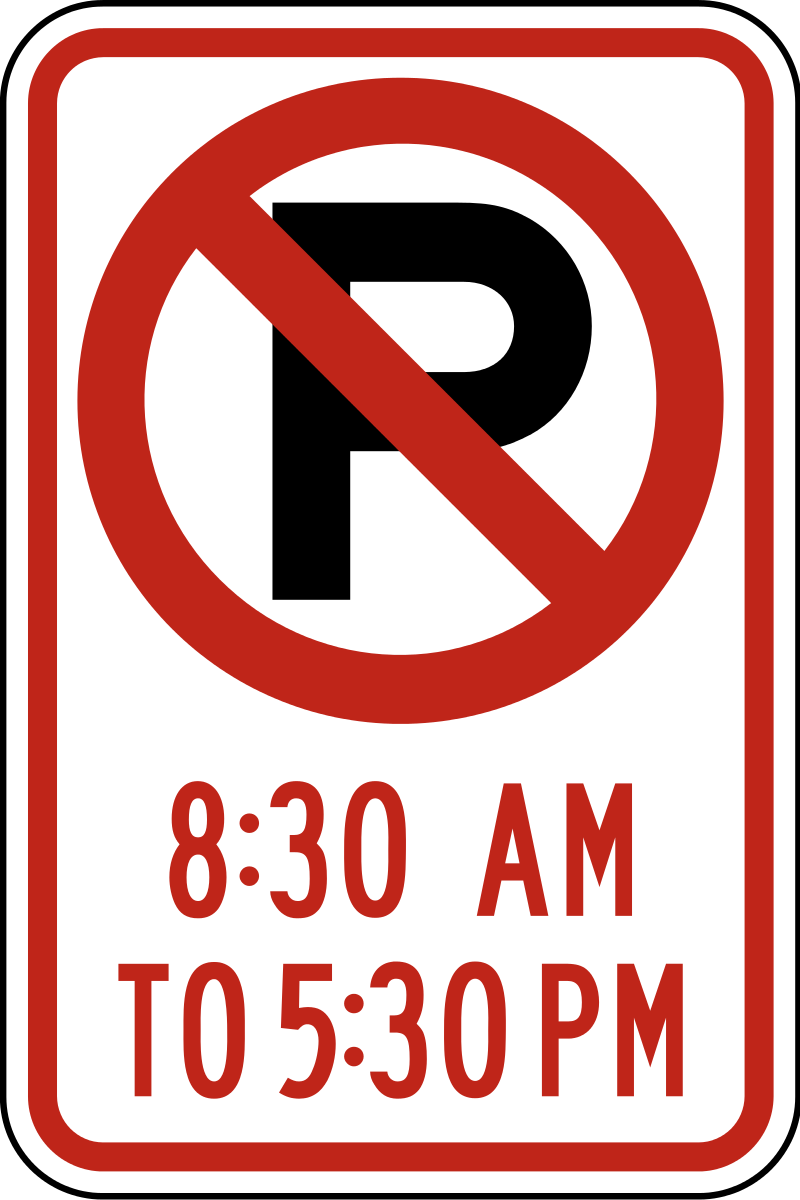 It's 10 AM. This sign tells you that:
A
you are allowed to park until 5:30 PM.
B
you must display a special permit in order to park here.
C
you are not allowed to park here.
This traffic sign indicates: you are not allowed to park here. Observing and obeying all roadway signs ensures safe traffic flow and legal driving.