A)keep their headlights and taillights on at all times.
B)signal turns, lane changes and stops.
C)wear approved helmets.
2.
Blue color traffic signs provide information on:
A)motorist services.
B)distance or direction.
C)construction and maintenance.
3.
To drive defensively, you must:
A)anticipate errors by other drivers.
B)assume that a driver who approaches a STOP sign on a side road is actually going to stop.
C)not check behind you through your mirrors.
4.
When driving in fog, drivers should use high beam headlights.
A)True
B)False
5.
This road sign means:
A)Trucks ahead
B)Downgrade
C)Construction zone
6.
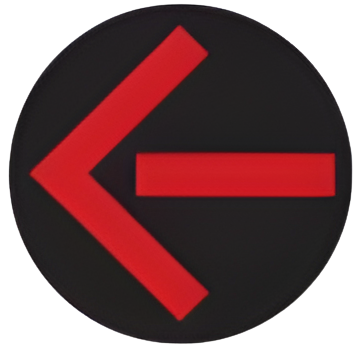
When turning left at an intersection with this sign:
A)come to a full stop and remain stopped while the arrow is red.
B)you may proceed, as long as you yield to other vehicles.
C)come to a full stop, then continue when safe to do so.
7.
If a driver follows you too closely, you should:
A)move to another lane if possible.
B)activate your stop lights.
C)brake suddenly.
8.
Who is most at risk?
A)Drivers who are fatigued.
B)Drivers who are driving on long, boring roads.
C)All of the above.
9.
Unless otherwise posted, the speed limit in a residential district is:
A)35 MPH
B)20 MPH
C)30 MPH
D)25 MPH
10.
The octagonal shape is used:
A)for stop signs and railroad advance warning signs.
B)exclusively for stop signs.
C)to warn drivers of existing or possible hazards on roadways.
11.
A flashing red light:
A)is used at dangerous intersections.
B)means the same thing as a stop sign.
C)All of the above.
12.
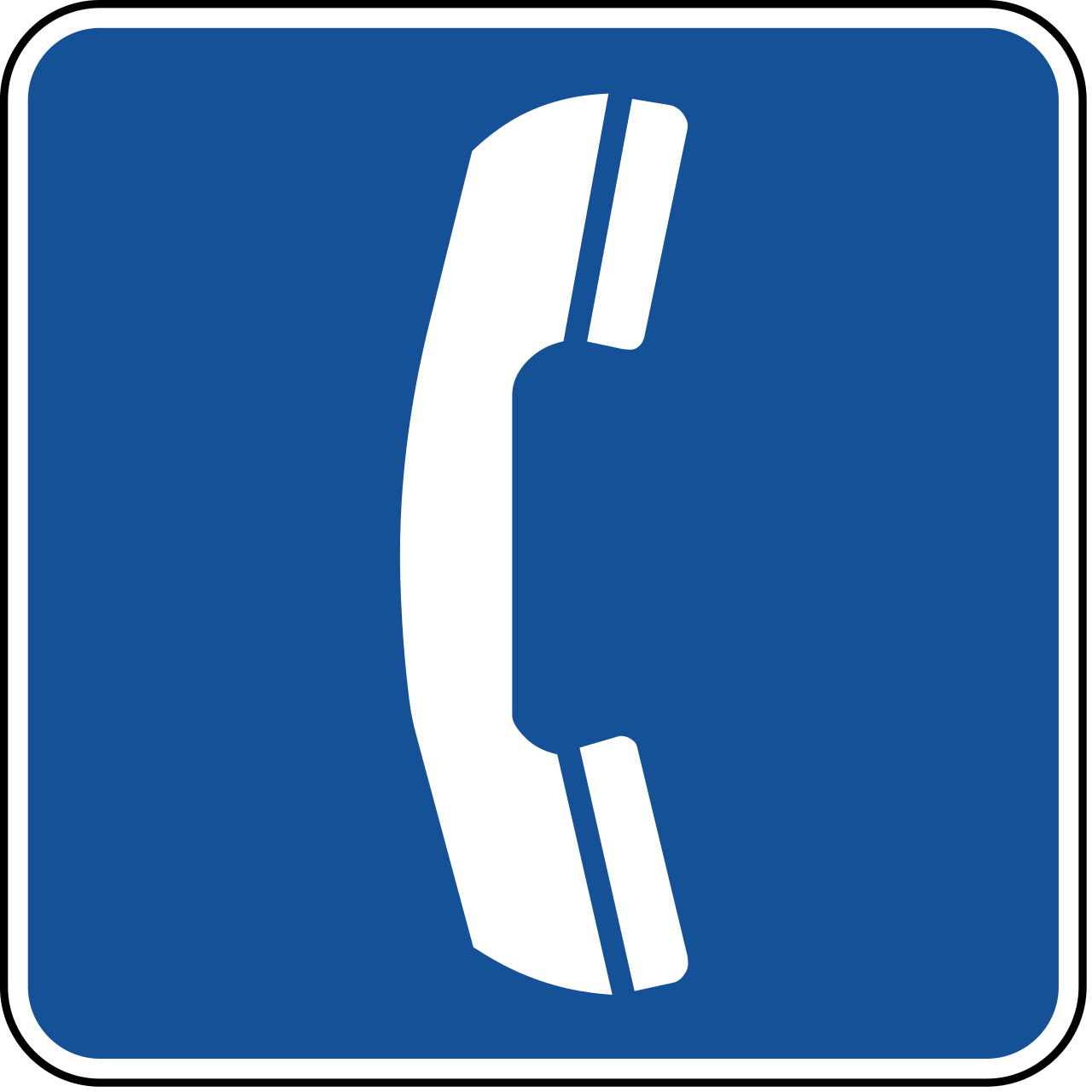
This sign indicates:
A)Phone service ahead
B)Emergency line available
C)Cell phone shop ahead
13.
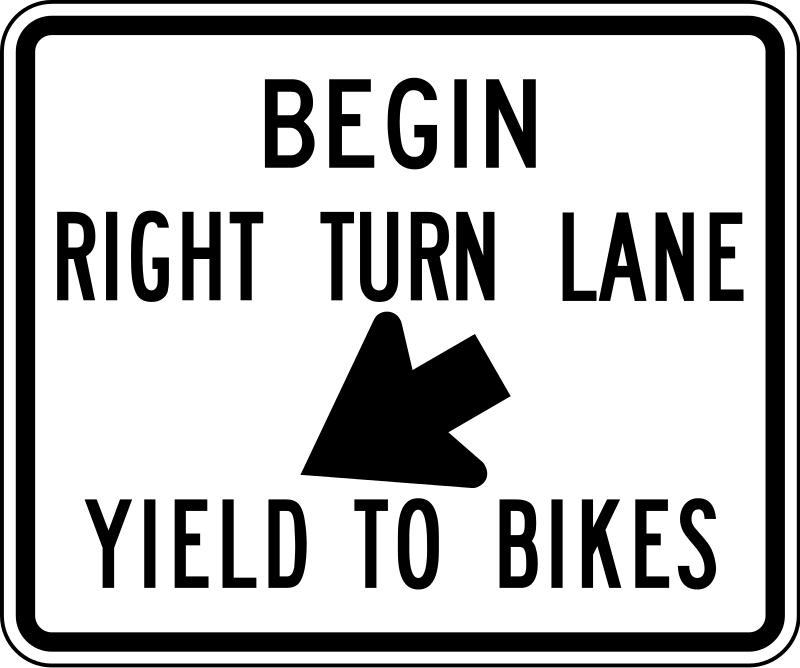
What does this road sign indicate?
A)Drivers have the right of way over bikes turning left.
B)Vehicles turning left must yield to bikes entering a right turn lane.
C)Motor vehicles entering an exclusive right-turn lane must weave across bicycle traffic in bicycle lanes.
14.
What is the purpose of minimum speed limits?
A)To keep a smooth traffic flow.
B)To halt the traffic flow.
C)To allow emergency vehicles with red flashing lights to safely pass other vehicles.
15.
You may drive faster than the posted speed limit:
A)when passing another vehicle, as long as it is safe to do so.
B)when your lane is empty.
C)Under no circumstances.
16.
Collisions can happen more often when one vehicle is traveling faster or slower than the flow of traffic.
A)False
B)True
17.
If a pedestrian is illegal crossing in the middle of the street (not at a crosswalk) you:
A)do not have to stop for them.
B)should increase your speed, honk your horn and proceed.
C)must stop for them.
18.
When an aggressive driver confronts you, you should:
A)Try to move away safely.
B)Remain calm and relaxed.
C)All of the above.
19.
Following another vehicle too closely is known as:
A)speedgating.
B)closetailing.
C)tailgating.
20.
Drivers should keep a ___ second safe following distance to have time to react to emergencies and avoid collisions.
A)six
B)five
C)ten
D)three
21.
If you missed your exit on a freeway, you should:
A)use the right turn signal, check your mirrors and move to the right.
B)None of the above.
C)go to the next exit and come back to the exit you missed.
D)make a quick U-turn from your lane of travel.
22.
ABS is the acronym for:
A)Anti-Braking System
B)Average-Beam System
C)Anti-Locking Brake System
23.
Under the Nebraska Point System, accumulating ___ points in a two year time period causes automatic revocation of the operator’s license.
A)9
B)6
C)12
24.
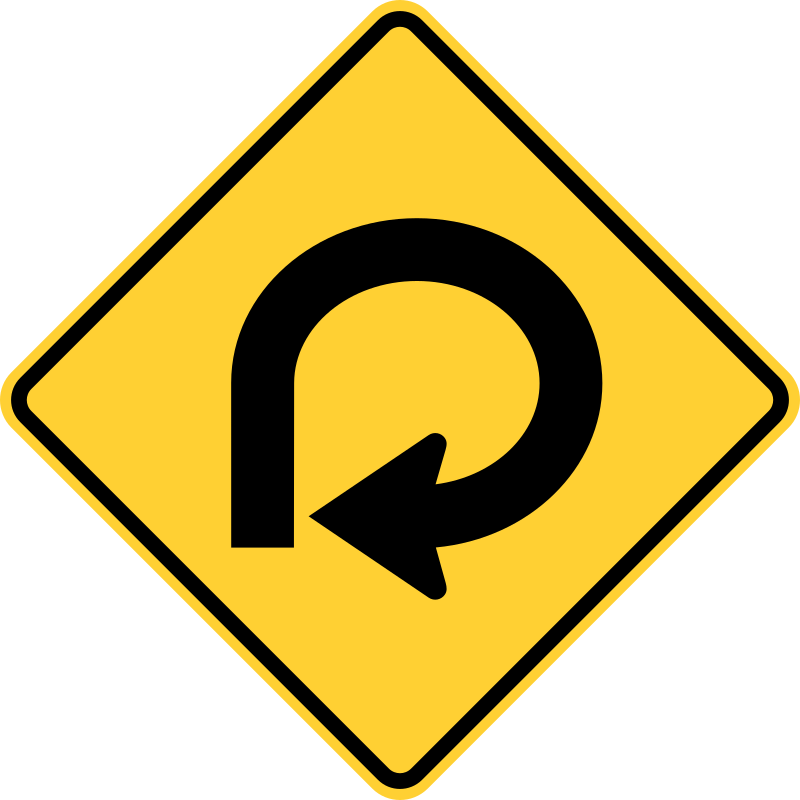
This sign means:
A)Roundabout ahead.
B)270 degree turn ahead.
C)Wrong way; Turn around immediately.
25.
Although there may be enough room in the traffic lane for an automobile and a motorcyclist, a vehicle driver should not share the lane with motorcyclists.
A)False
B)True
ANSWER KEYCheck answers after completing the test.