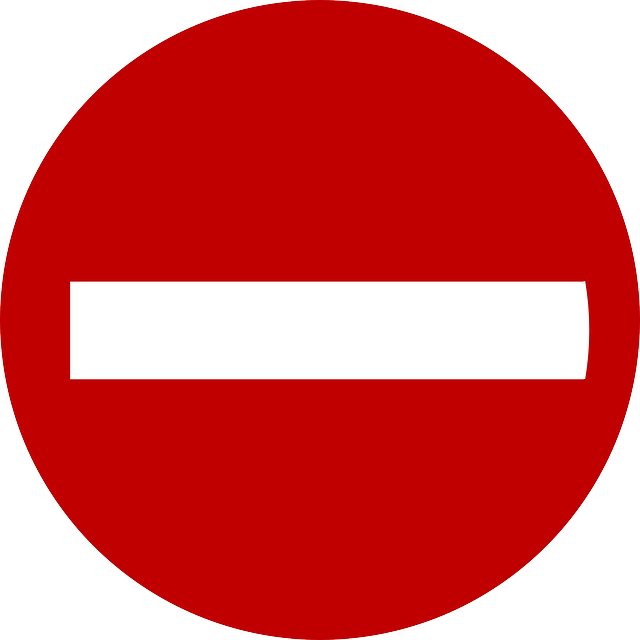
To avoid crashes with vehicles in your blind spots, you should:
A)sound your horn right before turning or changing lanes.
B)adjust your rear-view mirrors every few minutes.
C)quickly turn your head to see if your blind spot is clear, before changing lanes.
D)None of the above.
3.
This road sign means:
A)No right turn
B)Divided highway ends
C)Lane ends
D)Two way Traffic
4.
Tailgating:
A)cannot result in a traffic citation.
B)helps reduce traffic congestion.
C)is a defensive driving tecnique.
D)can frustrate other drivers and make them angry.
5.
If involved in an accident, drivers should:
A)avoid standing or walking in traffic lanes.
B)turn off the ignitions of wrecked vehicles.
C)stop their vehicle at or near the scene.
D)All of the above.
6.
What is the first thing to do when you make a three-point turn?
A)Signal with your left turn signal, then check carefully for traffic coming toward you.
B)Signal with your right turn signal, then pull over to the right and stop.
C)Turn left, go across the road so you come to a stop while you face the edge of the road.
7.
What is the first thing you should do if your wheels move off the pavement?
A)Pull the steering wheel back.
B)Pull over to the right and sound your horn to warn the other drivers.
C)Ease your foot off the gas pedal and brake gently.
8.
You should use turn signals to indicate your intention with sufficient time to allow other drivers to see the signal:
A)if it’s raining.
B)AFTER you move.
C)BEFORE you move.
9.
If the traffic lights are out of service when you approach an intersection, you:
A)must continue according to the rules of right-of-way.
B)must slow down and yield to oncoming traffic and pedestrians.
C)must come to a stop as you would for a stop sign.
D)must proceed with caution.
10.
If another car has stopped in an adjacent lane in the same direction of travel, you should:
A)speed up and pass the vehicle on the right.
B)pass the car on the left.
C)be careful in case the other vehicle has stopped for a pedestrian.
D)tap your horn to let the other driver know you are passing.
11.
You reach an intersection that is not controlled at the same time as a driver on your right, and both of you prepare to go straight. Who has the right-of-way?
A)You.
B)No one.
C)The other driver.
12.
At a light rail intersection, you should always:
A)share the road with pedestrians and bicyclists.
B)look both ways before crossing the tracks.
C)be alert and obey all traffic signals.
D)All of the above.
13.
When a school bus is stopped with its red lights flashing:
A)drivers only need to stop if children are present.
B)drivers don't need to stop unless they are in a school zone.
C)drivers may not pass while the red lights are flashing.
D)you never need to stop.
14.
You must yield to other drivers:
A)when it helps to prevent collisions.
B)when they are driving a truck.
C)when the other drivers are on your left and you have reached an unmarked intersection at the same time.
D)when your traffic signal is a green.
15.
When approaching any intersection or driveway, drivers should:
A)look both ways and be ready to stop.
B)pass other vehicles and then stop.
C)drive at the fastest speed just before entering the intersection.
16.
If traffic prevents you from crossing all the way across a set of railroad tracks:
A)proceed only when at least one-half of your vehicle can cross the tracks safely.
B)wait until the approaching train has come to a stop.
C)proceed only when there is room for your vehicle on the other side.
D)wait until no trains are in sight.
17.
When you drive into the street from any driveway you:
A)can disregard pedestrians if there is no sidewalk.
B)must drive slowly so approaching vehicles and pedestrians can get out of your way.
C)must honk the horn so approaching vehicles and pedestrians can allow you room.
D)must stop and proceed only when there are no pedestrians or vehicles approaching.
18.
If you stop at a railroad crossing with more than one track:
A)proceed with caution until you see a train.
B)go through when one of the tracks is free.
C)go through as soon as the first train passes.
D)wait until you have a clear view of both tracks.
19.
On slippery roads, drivers should:
A)slow down.
B)increase their speed to avoid hydroplaning.
C)not drive faster than 25 MPH.
D)go faster.
20.
As you approach an intersection, the traffic light changes from green to yellow. You should:
A)apply the brakes sharply and come to a complete stop.
B)be prepared to stop before the intersection.
C)be prepared to stop in the middle of the intersection.
D)speed up to beat the red light.
21.
Alcohol:
A)makes drivers more prone to take chances.
B)increases reaction time.
C)All of the above.
22.
A pedestrian starts to cross in front of your vehicle. You should:
A)sound your horn and proceed with caution.
B)slow down.
C)speed up and pass in front of the pedestrian.
D)stop until the person is out of the crosswalk.
23.
________ is the only effective way to reduce your Blood Alcohol Content (BAC).
A)Time
B)Drinking coffee
C)Taking a cold shower
D)Eating food
24.
The most common cause of traffic crashes is:
A)human error.
B)bad road conditions.
C)wet pavement.
D)bad weather.
25.
A good rule for passing is:
A)always remember to flash your lights and sound your horn to alert the other drivers that you are about to pass.
B)drive with the flow of traffic and pass only as needed.
C)pass on the right whenever possible.
D)try to get to the front of any line of slow moving traffic as soon as possible.
ANSWER KEYCheck answers after completing the test.