Question 1:
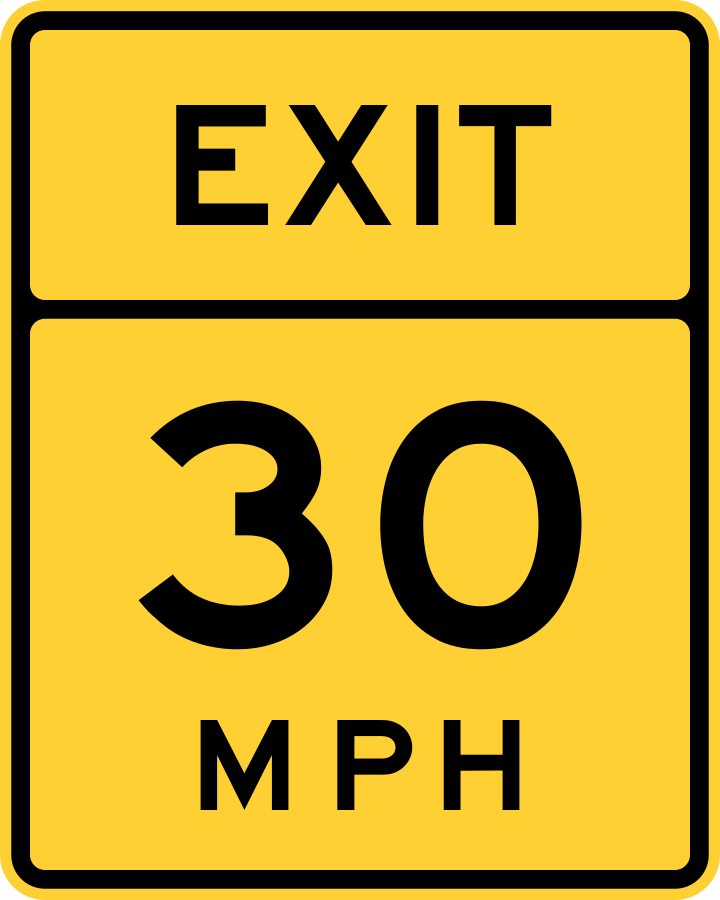 The sign in the picture:
A
shows the highest speed drivers can travel at the exit of the intersection.
B
is used to advise motorists of the appropriate ramp speed at the highway exit point.
C
indicates the minimum ramp speed at the highway exit point.
Answer Explanation
The correct driving rule is: is used to advise motorists of the appropriate ramp speed at the highway exit point. Following standard DMV road rules and practicing defensive driving ensures safety for all road users.
The correct driving rule is: is used to advise motorists of the appropriate ramp speed at the highway exit point. Following standard DMV road rules and practicing defensive driving ensures safety for all road users.
Question 2:
 This road sign means:
A
Yield the right-of-way to oncoming vehicles
B
Stop if necessary
C
You must make a complete stop
D
Slow down or stop
Answer Explanation
An octagonal Stop sign requires a full and complete stop before the stop line or crosswalk: you must make a complete stop. Proceed only after yielding to all cross traffic and pedestrians.
An octagonal Stop sign requires a full and complete stop before the stop line or crosswalk: you must make a complete stop. Proceed only after yielding to all cross traffic and pedestrians.
Question 3:
What should drivers do when the red lights begin to flash?
A
Stop.
B
Yield.
C
Slow down.
Answer Explanation
The correct driving rule is: stop. Following standard DMV road rules and practicing defensive driving ensures safety for all road users.
The correct driving rule is: stop. Following standard DMV road rules and practicing defensive driving ensures safety for all road users.
Question 4:
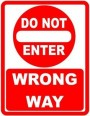 This road sign means:
A
U-turns are prohibited
B
You may proceed only if the way is clear
C
You are about to enter a one-way street the wrong way
D
Do not pass
Answer Explanation
This traffic sign indicates: you are about to enter a one-way street the wrong way. Observing and obeying all roadway signs ensures safe traffic flow and legal driving.
This traffic sign indicates: you are about to enter a one-way street the wrong way. Observing and obeying all roadway signs ensures safe traffic flow and legal driving.
Question 5:
 A flashing red light:
A
is used at dangerous intersections.
B
means the same thing as a stop sign.
C
All of the above.
Answer Explanation
Safe navigation at intersections requires following all established rules: is used at dangerous intersections; means the same thing as a stop sign. Always yield right-of-way properly to prevent collisions.
Safe navigation at intersections requires following all established rules: is used at dangerous intersections; means the same thing as a stop sign. Always yield right-of-way properly to prevent collisions.
Question 6:
 This road sign means:
A
Merging traffic from the right
B
Sharp curves ahead
C
Intersection ahead
Answer Explanation
This traffic sign indicates: Merging traffic from the right. Observing and obeying all roadway signs ensures safe traffic flow and legal driving.
This traffic sign indicates: Merging traffic from the right. Observing and obeying all roadway signs ensures safe traffic flow and legal driving.
Question 7:
 This sign means:
A
No traffic signal ahead
B
Traffic signal ahead
C
Open intersection ahead
Answer Explanation
This traffic sign indicates: traffic signal ahead. Observing and obeying all roadway signs ensures safe traffic flow and legal driving.
This traffic sign indicates: traffic signal ahead. Observing and obeying all roadway signs ensures safe traffic flow and legal driving.
Question 8:
 A pedestrian in the crosswalk when the 'DON’T WALK' signal begins flashing must:
A
stop immediately.
B
go back and wait the “WALK” light
C
finish crossing the street.
Answer Explanation
Drivers must always yield the right-of-way to pedestrians crossing at intersections and crosswalks: finish crossing the street. Stop and allow them to clear the lane safely.
Drivers must always yield the right-of-way to pedestrians crossing at intersections and crosswalks: finish crossing the street. Stop and allow them to clear the lane safely.
Question 9:
 When they see this sign, drivers should:
A
increase their speed and keep well to the right.
B
slow down and keep well to the right.
C
slow down and keep well to the left.
Answer Explanation
This traffic sign indicates: slow down and keep well to the left. Observing and obeying all roadway signs ensures safe traffic flow and legal driving.
This traffic sign indicates: slow down and keep well to the left. Observing and obeying all roadway signs ensures safe traffic flow and legal driving.
Question 10:
 This road sign warns drivers that:
A
they are coming to a point where another traffic lane joins the one they are on.
B
a divided highway is ahead.
C
the one-way street or roadway is about to change to two-way traffic.
Answer Explanation
This traffic sign indicates: the one-way street or roadway is about to change to two-way traffic. Observing and obeying all roadway signs ensures safe traffic flow and legal driving.
This traffic sign indicates: the one-way street or roadway is about to change to two-way traffic. Observing and obeying all roadway signs ensures safe traffic flow and legal driving.
Question 11:
 This sign means:
A
Divided highway ahead.
B
Divided highway ends.
C
Drivers will soon be on a roadway with two-way traffic.
Answer Explanation
This traffic sign indicates: Divided highway ahead. Observing and obeying all roadway signs ensures safe traffic flow and legal driving.
This traffic sign indicates: Divided highway ahead. Observing and obeying all roadway signs ensures safe traffic flow and legal driving.
Question 12:
 This sign means:
A
The road will curve to the right, then to the left.
B
Road slippery when wet. Drive slowly.
C
Winding road ahead. Drive with caution.
Answer Explanation
This traffic sign indicates: Road slippery when wet. Drive slowly. Observing and obeying all roadway signs ensures safe traffic flow and legal driving.
This traffic sign indicates: Road slippery when wet. Drive slowly. Observing and obeying all roadway signs ensures safe traffic flow and legal driving.
Question 13:
A speed limit is the __________ speed at which a vehicle may legally travel on the road under ideal conditions.
A
maximum
B
minimum
C
suggested
D
None of the above.
Answer Explanation
For safe speed and stopping control: maximum. Adjusting speed to match visibility and road traction prevents loss of steering grip.
For safe speed and stopping control: maximum. Adjusting speed to match visibility and road traction prevents loss of steering grip.
Question 14:
When you pass another vehicle, before you return to the right lane, you must:
A
look at your interior rear-view mirror.
B
signal.
C
All of the above.
Answer Explanation
All of the listed points are essential driving requirements: look at your interior rear-view mirror; signal. Practicing each ensures compliance with DMV safety laws.
All of the listed points are essential driving requirements: look at your interior rear-view mirror; signal. Practicing each ensures compliance with DMV safety laws.
Question 15:
You are driving and you are feeling drowsy. You should:
A
avoid drinking coffee.
B
turn on the radio to keep you awake.
C
find a safe place to stop for a break.
Answer Explanation
Under state DUI and traffic safety laws: find a safe place to stop for a break. Alcohol degrades judgment, slows reaction times, and distorts depth perception.
Under state DUI and traffic safety laws: find a safe place to stop for a break. Alcohol degrades judgment, slows reaction times, and distorts depth perception.
Question 16:
An edge line that angles toward the center of the road indicates that:
A
the road is narrower ahead.
B
there’s a narrow bridge ahead.
C
you must turn right.
Answer Explanation
The correct driving rule is: the road is narrower ahead. Following standard DMV road rules and practicing defensive driving ensures safety for all road users.
The correct driving rule is: the road is narrower ahead. Following standard DMV road rules and practicing defensive driving ensures safety for all road users.
Question 17:
Smoking while driving:
A
does not affect driving abilities.
B
is not distracting.
C
helps increase driver alertness.
D
is distracting.
Answer Explanation
The correct driving rule is: is distracting. Following standard DMV road rules and practicing defensive driving ensures safety for all road users.
The correct driving rule is: is distracting. Following standard DMV road rules and practicing defensive driving ensures safety for all road users.
Question 18:
When changing lanes, you should not:
A
signal your intentions early.
B
check your side and rear view mirrors.
C
use the inside rearview mirror to check for blind spots
D
check to see if other drivers are moving into the same lane.
Answer Explanation
The correct driving rule is: use the inside rearview mirror to check for blind spots. Following standard DMV road rules and practicing defensive driving ensures safety for all road users.
The correct driving rule is: use the inside rearview mirror to check for blind spots. Following standard DMV road rules and practicing defensive driving ensures safety for all road users.
Question 19:
As you approach an intersection, the traffic light changes from green to yellow. You should:
A
apply the brakes sharply and come to a complete stop.
B
be prepared to stop before the intersection.
C
be prepared to stop in the middle of the intersection.
D
speed up to beat the red light.
Answer Explanation
According to standard right-of-way regulations: be prepared to stop before the intersection. Yielding appropriately prevents intersection collisions and maintains safe traffic flow.
According to standard right-of-way regulations: be prepared to stop before the intersection. Yielding appropriately prevents intersection collisions and maintains safe traffic flow.
Question 20:
Drivers may pass another vehicle if the line dividing two lanes is a ________ line.
A
broken white
B
double solid yellow
C
solid yellow
D
solid white
Answer Explanation
The correct driving rule is: broken white. Following standard DMV road rules and practicing defensive driving ensures safety for all road users.
The correct driving rule is: broken white. Following standard DMV road rules and practicing defensive driving ensures safety for all road users.
Question 21:
Drivers may need more space in front of their vehicle:
A
when following motorcycles.
B
when carrying a heavy load or pulling a trailer.
C
All of the above.
Answer Explanation
All of the listed points are essential driving requirements: when following motorcycles; when carrying a heavy load or pulling a trailer. Practicing each ensures compliance with DMV safety laws.
All of the listed points are essential driving requirements: when following motorcycles; when carrying a heavy load or pulling a trailer. Practicing each ensures compliance with DMV safety laws.
Question 22:
Select the most effective safety restraint(s) in a traffic crash.
A
Lap and shoulder belt only
B
Air bag only
C
Pumping brakes.
D
A combination of lap/shoulder belt and air bag.
Answer Explanation
The correct driving rule is: A combination of lap/shoulder belt and air bag. Following standard DMV road rules and practicing defensive driving ensures safety for all road users.
The correct driving rule is: A combination of lap/shoulder belt and air bag. Following standard DMV road rules and practicing defensive driving ensures safety for all road users.
Question 23:
What should you do if your headlights suddenly go out?
A
Brake immediately and activate your emergency lights.
B
Use your emergency lights, parking lights or directional signals.
C
Ease your foot off the gas pedal and brake gently.
Answer Explanation
The correct driving rule is: use your emergency lights, parking lights or directional signals. Following standard DMV road rules and practicing defensive driving ensures safety for all road users.
The correct driving rule is: use your emergency lights, parking lights or directional signals. Following standard DMV road rules and practicing defensive driving ensures safety for all road users.
Question 24:
When changing lanes, you should:
A
check your mirrors, signal and change lanes.
B
signal, change lanes and check your mirrors.
C
signal, check your mirrors and blind spot in the direction you plan to move, then change lanes.
D
signal and change lanes.
Answer Explanation
The correct driving rule is: signal, check your mirrors and blind spot in the direction you plan to move, then change lanes. Following standard DMV road rules and practicing defensive driving ensures safety for all road users.
The correct driving rule is: signal, check your mirrors and blind spot in the direction you plan to move, then change lanes. Following standard DMV road rules and practicing defensive driving ensures safety for all road users.
Question 25:
Drivers must be prepared for anything coming up in the road ahead. They should:
A
scan the road for traffic conditions and possible hazards.
B
drive with the right foot resting lightly on the brake pedal.
C
stare straight ahead at all times.
D
maintain focus toward the left of the road.
Answer Explanation
The correct driving rule is: scan the road for traffic conditions and possible hazards. Following standard DMV road rules and practicing defensive driving ensures safety for all road users.
The correct driving rule is: scan the road for traffic conditions and possible hazards. Following standard DMV road rules and practicing defensive driving ensures safety for all road users.
Question 26:
Your car stalls on the tracks at a railroad crossing, and a collision with a train is imminent. After getting yourself and your passengers out of the car, you should:
A
run toward the train but stay off the tracks.
B
signal the train to stop.
C
cross the tracks.
Answer Explanation
The correct driving rule is: run toward the train but stay off the tracks. Following standard DMV road rules and practicing defensive driving ensures safety for all road users.
The correct driving rule is: run toward the train but stay off the tracks. Following standard DMV road rules and practicing defensive driving ensures safety for all road users.
Question 27:
What should you do if you see smoke come from under the hood?
A
Call the fire department and then pull off the road and park your vehicle.
B
Pull off the road and park your vehicle. Turn off the ignition, get away from the car and call the fire department.
C
Try to fight the fire yourself.
Answer Explanation
The correct driving rule is: pull off the road and park your vehicle. Turn off the ignition, get away from the car and call the fire department. Following standard DMV road rules and practicing defensive driving ensures safety for all road users.
The correct driving rule is: pull off the road and park your vehicle. Turn off the ignition, get away from the car and call the fire department. Following standard DMV road rules and practicing defensive driving ensures safety for all road users.
Question 28:
Who is most at risk?
A
Drivers who have overslept.
B
Drivers who are driving long distances without rest breaks.
C
Experienced drivers.
Answer Explanation
The correct driving rule is: drivers who are driving long distances without rest breaks. Following standard DMV road rules and practicing defensive driving ensures safety for all road users.
The correct driving rule is: drivers who are driving long distances without rest breaks. Following standard DMV road rules and practicing defensive driving ensures safety for all road users.
Question 29:
You can pass on the right:
A
when a vehicle ahead makes a right turn.
B
when a vehicle ahead makes a left turn.
C
when a vehicle that is approaching from the opposite direction is prepared to turn left.
Answer Explanation
The correct driving rule is: when a vehicle ahead makes a left turn. Following standard DMV road rules and practicing defensive driving ensures safety for all road users.
The correct driving rule is: when a vehicle ahead makes a left turn. Following standard DMV road rules and practicing defensive driving ensures safety for all road users.
Question 30:
A steady green light at intersections means:
A
You may drive through the intersection if the road is clear
B
You must increase your speed
C
You may not turn right
Answer Explanation
According to standard right-of-way regulations: you may drive through the intersection if the road is clear. Yielding appropriately prevents intersection collisions and maintains safe traffic flow.
According to standard right-of-way regulations: you may drive through the intersection if the road is clear. Yielding appropriately prevents intersection collisions and maintains safe traffic flow.
Question 31:
Left turns on a red light are allowed:
A
from a one-way street into a one-way street.
B
Never.
C
at intersections, after stopping, if the way is clear.
Answer Explanation
When turning left across traffic lanes: from a one-way street into a one-way street. You must yield to all oncoming vehicles and crossing pedestrians before completing the turn.
When turning left across traffic lanes: from a one-way street into a one-way street. You must yield to all oncoming vehicles and crossing pedestrians before completing the turn.
Question 32:
If your car breaks down on the highway, you should:
A
use your four-way flashers to warn other drivers.
B
sound your horn to warn passing vehicles.
C
flash your headlights at oncoming traffic.
D
stop in the right lane.
Answer Explanation
Defensive driving guidelines state that: use your four-way flashers to warn other drivers. Anticipating road hazards and communicating maneuvers keeps traffic predictable and safe.
Defensive driving guidelines state that: use your four-way flashers to warn other drivers. Anticipating road hazards and communicating maneuvers keeps traffic predictable and safe.
Question 33:
The effects of alcohol on driving include:
A
None of the above.
B
Improved coordination
C
Better reflexes
D
Improved judgement
Answer Explanation
Under state DUI and traffic safety laws: None of the above. Alcohol degrades judgment, slows reaction times, and distorts depth perception.
Under state DUI and traffic safety laws: None of the above. Alcohol degrades judgment, slows reaction times, and distorts depth perception.
Question 34:
When other drivers around you are acting in anger, you should:
A
slow down or move over safely.
B
distance yourself from the situation.
C
avoid making eye contact.
D
All of the above.
Answer Explanation
All of the listed points are essential driving requirements: slow down or move over safely; distance yourself from the situation; avoid making eye contact. Practicing each ensures compliance with DMV safety laws.
All of the listed points are essential driving requirements: slow down or move over safely; distance yourself from the situation; avoid making eye contact. Practicing each ensures compliance with DMV safety laws.
Question 35:
When exiting a highway, you should slow down:
A
when you first see the exit sign.
B
before moving into the exit lane.
C
once you have moved into the exit lane.
D
once you see the toll booth.
Answer Explanation
Defensive driving guidelines state that: once you have moved into the exit lane. Anticipating road hazards and communicating maneuvers keeps traffic predictable and safe.
Defensive driving guidelines state that: once you have moved into the exit lane. Anticipating road hazards and communicating maneuvers keeps traffic predictable and safe.
Question 36:
If you are blinded by headlights on an approaching vehicle, you should:
A
avoid looking directly at the bright lights.
B
glance toward the side of the road, then look quickly ahead to determine the other vehicle’s position.
C
All of the above.
Answer Explanation
All of the listed points are essential driving requirements: avoid looking directly at the bright lights; glance toward the side of the road, then look quickly ahead to determine the other vehicle’s position. Practicing each ensures compliance with DMV safety laws.
All of the listed points are essential driving requirements: avoid looking directly at the bright lights; glance toward the side of the road, then look quickly ahead to determine the other vehicle’s position. Practicing each ensures compliance with DMV safety laws.
Question 37:
When you drive near parks and playgrounds, you should expect children:
A
not to cross unless they are with an adult.
B
to know when it is safe to cross.
C
to stop at the curb before crossing the street.
D
to suddenly run into the street.
Answer Explanation
The correct driving rule is: to suddenly run into the street. Following standard DMV road rules and practicing defensive driving ensures safety for all road users.
The correct driving rule is: to suddenly run into the street. Following standard DMV road rules and practicing defensive driving ensures safety for all road users.