DriveQuiz drivequiz.com

MT DMV PERMİT PRACTİCE TEST 12

Montana
Duration: 30 min
|
Questions: 33
Student Name:
Date:
Correct:      Incorrect:      Score:      
1.
What should you do as you prepare to turn right at an intersection?
A) Honk your horn.
B) Yield to bicyclists coming from the opposite direction.
C) Signal your turn, check for bicyclists, and do not turn directly in front of a bicyclist.
2.
A road is likely to be most slippery:
A) when tire marks have been left by other vehicles.
B) in cold, dry weather.
C) when icy and the temperature is near freezing.
D) in spring.
3.
Prohibits drivers from making a 180-degree turn to travel in the opposite direction at this intersection or stretch of road.
This road sign means:
A) No left turn
B) No U-turn
C) Detour ahead
4.
If another car is in danger of hitting you, you should:
A) flash your brake lights.
B) sound your horn.
C) use your emergency lights.
D) flash your headlights.
5.
The amount of space you need to cross traffic depends on the:
A) road and weather conditions and oncoming traffic.
B) number of cars behind you.
C) presence of a yield sign.
D) number of cars in front of you.
6.
If you drink alcohol socially, what helps insure safe driving?
A) Stop drinking one hour before driving.
B) Drink coffee before driving.
C) Take a cold shower before driving.
D) Ride home with a friend who has not been drinking.
7.
The roadway becomes particularly slippery during wet or rainy conditions. Reduce your speed, increase following distance, and avoid abrupt braking or steering.
When they see this sign, drivers:
A) should be prepared to make sharp turns at a high speed.
B) need to be prepared to turn right and then left quickly.
C) should not speed up or brake quickly.
8.
At a stop sign there is no stop line, you must stop:
A) before you enter the intersection.
B) before you enter the crosswalk.
C) after you enter the crosswalk.
9.
Before backing up, you should:
A) get off the car to see if it is clear to proceed.
B) rely on your mirrors to see if it is clear to proceed.
C) turn your head and look through the rear window.
D) flash your headlights.
10.
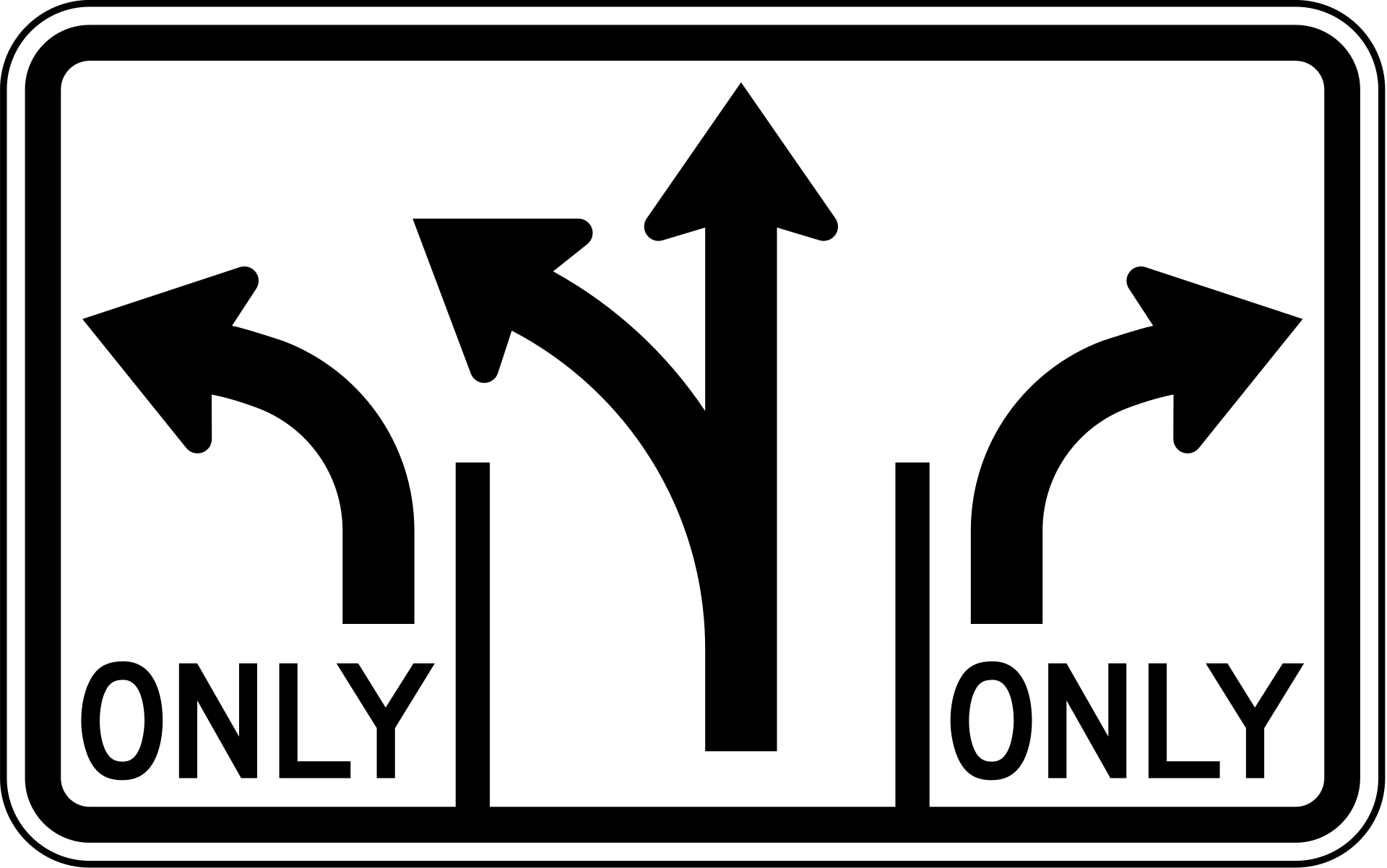
Warns of a traffic signal ahead that may not yet be visible due to a curve or hill. Be prepared to slow down and stop if the light changes.
This regulatory sign tells drivers that:
A) traffic in the left lane must turn left at the intersection ahead.
B) all vehicles must turn left immediately.
C) traffic in the right lane must go straight.
11.
A good rule for passing is:
A) always remember to flash your lights and sound your horn to alert the other drivers that you are about to pass.
B) drive with the flow of traffic and pass only as needed.
C) pass on the right whenever possible.
D) try to get to the front of any line of slow moving traffic as soon as possible.
12.
The most common cause of traffic crashes is:
A) human error.
B) bad road conditions.
C) wet pavement.
D) bad weather.
13.
If two vehicles arrive at a four-way stop at the same time:
A) both vehicles must stop.
B) the vehicle on the left must yield to the vehicle on the right.
C) the driver on the left must signal the driver on the right to go.
D) the vehicle on the right must yield to the vehicle on the left.
14.
Designated school crosswalk location. You must yield to all schoolchildren and pedestrians in the crossing.
When they approach this sign, drivers must:
A) slow down and watch for children crossing the road.
B) obey signals from crossing guards.
C) stop if necessary.
D) All of the above.
15.
Another road crosses the highway ahead. Look left and right for crossing or entering vehicles.
This road sign means:
A) Crossroads ahead
B) Side Road
C) Turn right or go through
D) Flagger ahead
16.
You are approaching an intersection when the signal turns yellow. You should:
A) speed up to get through the intersection before the red light comes on.
B) stop then enter the intersection when safe to do so.
C) slow down and proceed with caution through the intersection.
17.
A driver approaching a flashing red traffic signal must:
A) merge to the left.
B) stop before the intersection.
C) carefully drive through the intersection without stopping.
D) slow down at the traffic signal.
18.
What is the meaning of red traffic signs?
A) High emphasis warning.
B) Stop, do not enter or wrong way.
C) Regulatory.
19.
A steady yellow light means:
A) Be prepared to stop for the red light.
B) Drive with caution.
C) Be prepared to go. The light will soon be green.
20.
Who is most at risk?
A) Drivers who have overslept.
B) Drivers who are driving long distances without rest breaks.
C) Experienced drivers.
21.
All approaching traffic must stop completely. The first vehicle to reach the intersection and stop has right-of-way; if two vehicles arrive simultaneously, the vehicle on the right goes first.
A four-way stop sign means:
A) traffic from all four directions must stop.
B) if two vehicles reach the intersection at the same time, the driver on the left yields to the driver on the right.
C) All of the above.
22.
Double solid yellow lines mean:
A) the lane to the right may pass.
B) passing is not permitted in either direction.
C) the lane to the left may pass.
D) passing is permitted in either direction.
23.
When you prepare to make a left turn from a one-way road into a two-way road, you must:
A) enter the two-way road to the left of its center line.
B) approach the turn in the right lane or from the right side of a single lane.
C) approach the turn in the left lane or from the left side of a single lane.
24.
When driving near light rail vehicles, drivers should:
A) never drive around lowered crossing gates.
B) expect trains on any track at any time.
C) always obey signs and traffic signals.
D) All of the above.
25.
When you need to change lanes, it is important to:
A) make sure the lane you are about to enter is clear.
B) signal your intentions ahead of time.
C) check your blind spots.
D) All of the above.
26.
Regulatory signs are:
A) Suggestions
B) Warnings
C) Law
27.
When driving on roads that may be slippery:
A) do not make any sudden changes in direction or speed.
B) always drive at the highest speed allowed.
C) use cruise control to maintain a steady speed.
D) reduce your following distance.
28.
For protection, motorcyclists are required to:
A) keep their headlights and taillights on at all times.
B) signal turns, lane changes and stops.
C) wear approved helmets.
29.
What does a red arrow on a traffic light mean?
A) You may proceed slowly through the intersection.
B) You must stop and then proceed when the way is clear.
C) You may turn in the direction of the arrow.
D) You must stop. Do not go in the direction of the arrow until a green light or arrow light goes on.
30.
The roadway ahead is narrowing or a lane is ending. Merge smoothly into the continuing lane.
This sign warns drivers that:
A) there is a one lane bridge ahead.
B) the right lane ends.
C) the road ahead is narrow.
31.
Indicates a series of three or more consecutive sharp turns or curves ahead. Reduce speed and maintain lane control.
This road sign means:
A) Winding Road Ahead
B) No turns are allowed on this road
C) Right lane closed
D) Do Not Enter
32.
A signalized intersection is ahead. Prepare to stop if the light turns yellow or red.
This sign means:
A) You must stop ahead
B) Railroad crossing ahead
C) No Passing Zone
D) There is a traffic signal ahead
33.
A steep downhill grade is ahead. Trucks and heavy vehicles should downshift to a lower gear to prevent brake overheating.
This sign warns of a ________ ahead.
A) hill
B) no passing zone
C) soft shoulder
ANSWER KEY Check answers after completing the test.
1 C
2 C
3 B
4 B
5 A
6 D
7 C
8 B
9 C
10 A
11 B
12 A
13 B
14 D
15 A
16 B
17 B
18 B
19 A
20 B
21 C
22 B
23 C
24 D
25 D
26 C
27 A
28 C
29 D
30 B
31 A
32 D
33 A