Question 1:
The traffic light is green and you want to drive straight through an intersection. If a car is already in the intersection and is making a turn, you must:
A
enter the intersection and then stop.
B
drive through the intersection. You have the right-of-way.
C
let that car complete its turn before you enter the intersection.
According to standard right-of-way regulations: let that car complete its turn before you enter the intersection. Yielding appropriately prevents intersection collisions and maintains safe traffic flow.
Question 2:
What should you do if your vision through the windshield becomes blocked?
A
Pull your vehicle off the road and park it.
B
Turn on your emergency lights.
C
Open the side window so you can see.
D
All of the above.
All of the listed points are essential driving requirements: Pull your vehicle off the road and park it; Turn on your emergency lights; Open the side window so you can see. Practicing each ensures compliance with DMV safety laws.
Question 3:
 This road sign means:
A
A road joins from the left
B
The road ahead turns sharply right then sharply left
C
Sharp right turn
D
Winding road ahead
This traffic sign indicates: The road ahead turns sharply right then sharply left. Observing and obeying all roadway signs ensures safe traffic flow and legal driving.
Question 4:
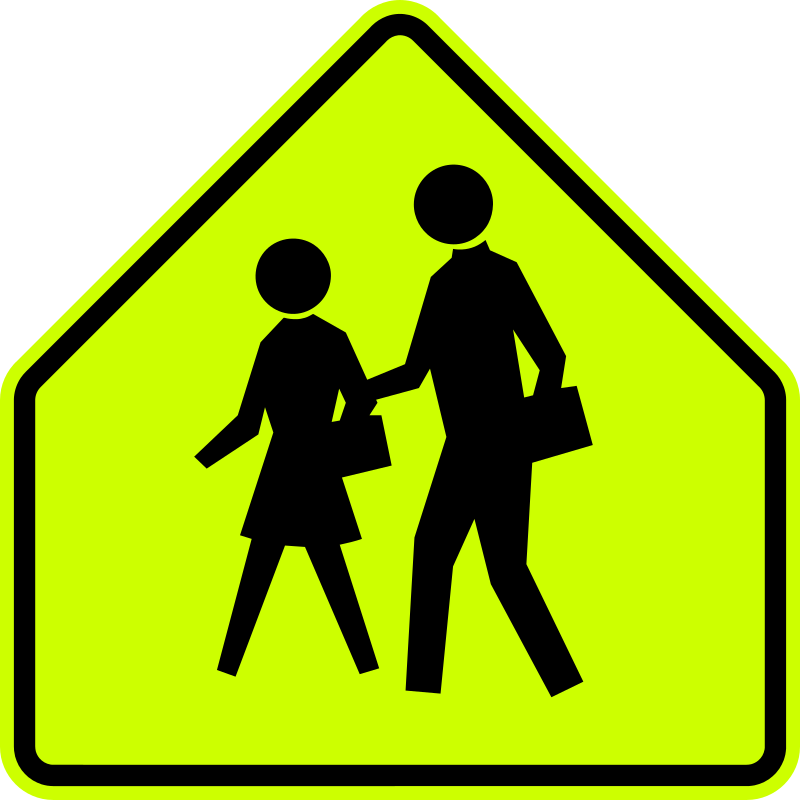 This sign means:
A
Business area nearby. Watch for business people.
B
There is a work zone ahead. Watch for workers.
C
The driver is near a school and should watch for children.
Pentagonal (5-sided) signs are exclusively reserved for school zones and school crossings: The driver is near a school and should watch for children. Drivers must reduce speed and yield right-of-way to all crossing children.
Question 5:
Drivers should allow a larger space cushion when stopping:
A
at a stop sign.
B
on an up-hill.
C
at an intersection.
D
at a yield sign.
The correct driving rule is: on an up-hill. Following standard DMV road rules and practicing defensive driving ensures safety for all road users.
Question 6:
A driver who approaches an intersection:
A
must yield the right-of-way to traffic already in the intersection.
B
must drive straight through the intersection, even if another vehicle is already in the intersection.
C
has the right-of-way over traffic already in the intersection.
According to standard right-of-way regulations: must yield the right-of-way to traffic already in the intersection. Yielding appropriately prevents intersection collisions and maintains safe traffic flow.
Question 7:
Who has a greater risk of being involved in a traffic crash?
A
Drivers who are driving alone.
B
Young people.
C
All of the above.
All of the listed points are essential driving requirements: Drivers who are driving alone; Young people. Practicing each ensures compliance with DMV safety laws.
Question 8:
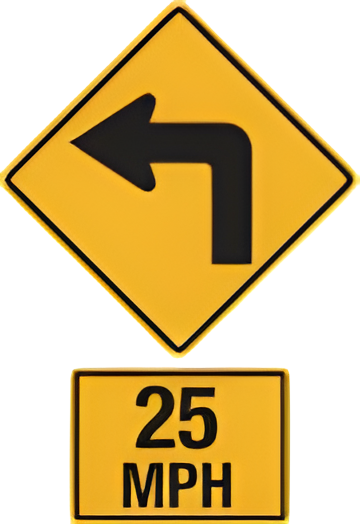 This sign indicates that:
A
the highest safe speed drivers should travel around the curve ahead is 25 MPH.
B
the safe speed around the curve ahead is at least 25 MPH.
C
drivers may not turn right if traveling at 25 MPH or less.
This traffic sign indicates: the highest safe speed drivers should travel around the curve ahead is 25 MPH. Observing and obeying all roadway signs ensures safe traffic flow and legal driving.
Question 9:
 This road sign means:
A
Truck stop ahead
B
No trucks allowed
C
Hill or downgrade up ahead
This traffic sign indicates: Hill or downgrade up ahead. Observing and obeying all roadway signs ensures safe traffic flow and legal driving.
Question 10:
To obtain an instruction permit a person must be ____ years or older.
A
14
B
15 1/2
C
15
D
16
The correct driving rule is: 15. Following standard DMV road rules and practicing defensive driving ensures safety for all road users.
Question 11:
Which of the following is true about the Anti-Locking Brake System?
A
It prevents skidding.
B
It allows drivers to steer during an emergency braking situation.
C
All of the above.
All of the listed points are essential driving requirements: It prevents skidding; It allows drivers to steer during an emergency braking situation. Practicing each ensures compliance with DMV safety laws.
Question 12:
Regulatory signs are:
A
Suggestions
B
Warnings
C
Law
The correct driving rule is: Law. Following standard DMV road rules and practicing defensive driving ensures safety for all road users.
Question 13:
Double solid lines on the roadway mean:
A
you cannot pass.
B
you can not go across the lines except to turn left to enter or leave the highway.
C
All of the above.
All of the listed points are essential driving requirements: you cannot pass; you can not go across the lines except to turn left to enter or leave the highway. Practicing each ensures compliance with DMV safety laws.
Question 14:
You must pull over to the edge of the road and allow an emergency vehicle to pass:
A
only if the emergency vehicle is following you.
B
regardless of your direction.
C
only if the emergency vehicle is approaching.
D
None of the above.
When sharing the road with other vehicles: regardless of your direction. Giving large vehicles and vulnerable users adequate clearance prevents dangerous accidents.
Question 15:
Does a vehicle prepared to enter a traffic circle or rotary have right-of-way over vehicles in the circle?
A
Yes, but only if they are entering the rotary from the right lane.
B
No. Vehicles already in the circle have the right-of-way.
C
Only if the light is green.
D
Yes.
Vehicles entering a roundabout must yield right-of-way to circulating traffic already inside: No. Vehicles already in the circle have the right-of-way. Wait for a safe gap before entering.
Question 16:
 This sign means:
A
Divided highway ahead.
B
Divided highway ends.
C
Drivers will soon be on a roadway with two-way traffic.
This traffic sign indicates: Divided highway ahead. Observing and obeying all roadway signs ensures safe traffic flow and legal driving.
Question 17:
You reach an intersection that is not controlled at the same time as a driver on your right, and both of you prepare to go straight. Who has the right-of-way?
A
You.
B
No one.
C
The other driver.
According to standard right-of-way regulations: The other driver. Yielding appropriately prevents intersection collisions and maintains safe traffic flow.
Question 18:
The yield sign is ___ and white, with ___ letters.
A
yellow; black
B
red; red
C
red; white
The correct driving rule is: red; red. Following standard DMV road rules and practicing defensive driving ensures safety for all road users.
Question 19:
Your BAC depends on:
A
how fit you are.
B
the type of beverage you drink.
C
the amount of alcohol you drink.
Under state DUI and traffic safety laws: the amount of alcohol you drink. Alcohol degrades judgment, slows reaction times, and distorts depth perception.
Question 20:
When driving near light rail vehicles, drivers should:
A
never drive around lowered crossing gates.
B
expect trains on any track at any time.
C
always obey signs and traffic signals.
D
All of the above.
All of the listed points are essential driving requirements: never drive around lowered crossing gates; expect trains on any track at any time; always obey signs and traffic signals. Practicing each ensures compliance with DMV safety laws.
Question 21:
 What does a flashing red light mean?
A
NO TURN ON RED.
B
The same thing as a stop sign.
C
Drivers may move forward with caution.
When an emergency vehicle approaches with flashing lights or sirens, you must safely pull over to the right curb and stop completely until it passes.
Question 22:
When driving behind a motorcycle:
A
allow a following distance of at least 4 motorcycle lengths.
B
allow a following distance of at least 2 car lengths.
C
allow at least 2 seconds of following distance.
D
allow at least 4 seconds of following distance.
Motorcycles can stop rapidly and are easily hidden in vehicle blind spots: allow at least 4 seconds of following distance. Always allow an increased following distance of at least 3 to 4 seconds.
Question 23:
 This sign means:
A
U-turns are not allowed.
B
Parking is not allowed.
C
No parking on pavement.
This traffic sign indicates: Parking is not allowed. Observing and obeying all roadway signs ensures safe traffic flow and legal driving.
Question 24:
Service signs are ____ with ____ letters and symbols.
A
blue; white
B
white; black
C
green; white
The correct driving rule is: blue; white. Following standard DMV road rules and practicing defensive driving ensures safety for all road users.
Question 25:
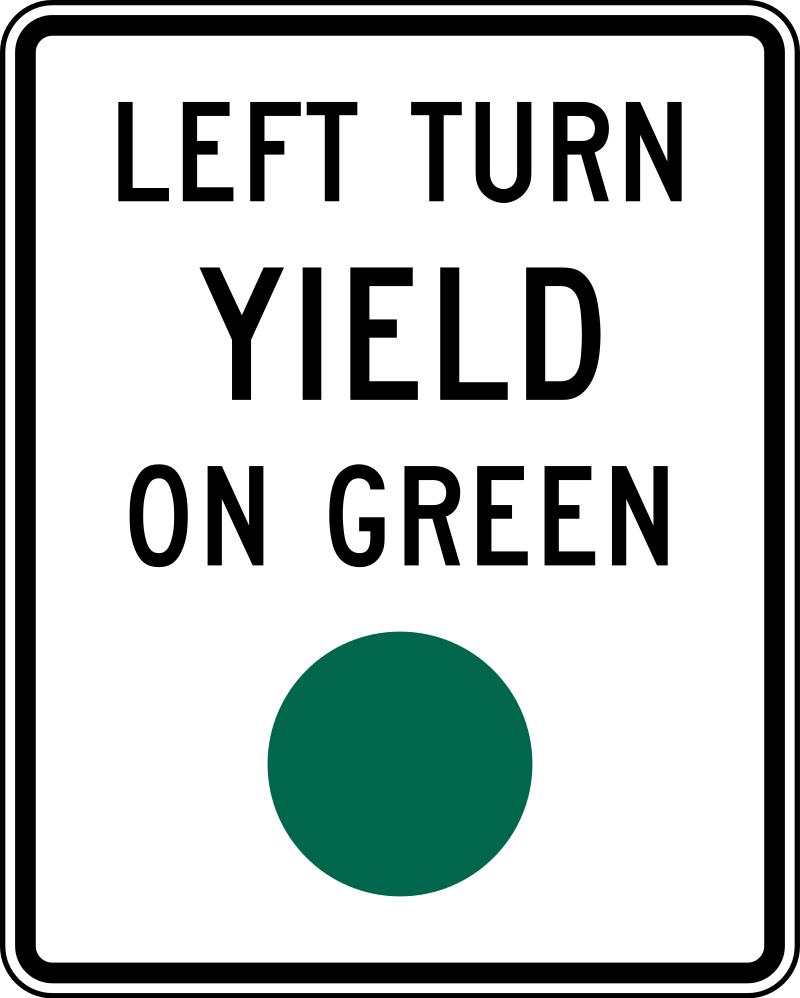 This white sign means you:
A
may turn left on a green light when it is safe to do so.
B
may turn left only on a green arrow.
C
must wait for the solid green light before you turn left.
This traffic sign indicates: may turn left on a green light when it is safe to do so. Observing and obeying all roadway signs ensures safe traffic flow and legal driving.