DriveQuiz drivequiz.com

MI DMV PERMİT PRACTİCE TEST 4

Michigan
Duration: 45 min
|
Questions: 50
Student Name:
Date:
Correct:      Incorrect:      Score:      
1.
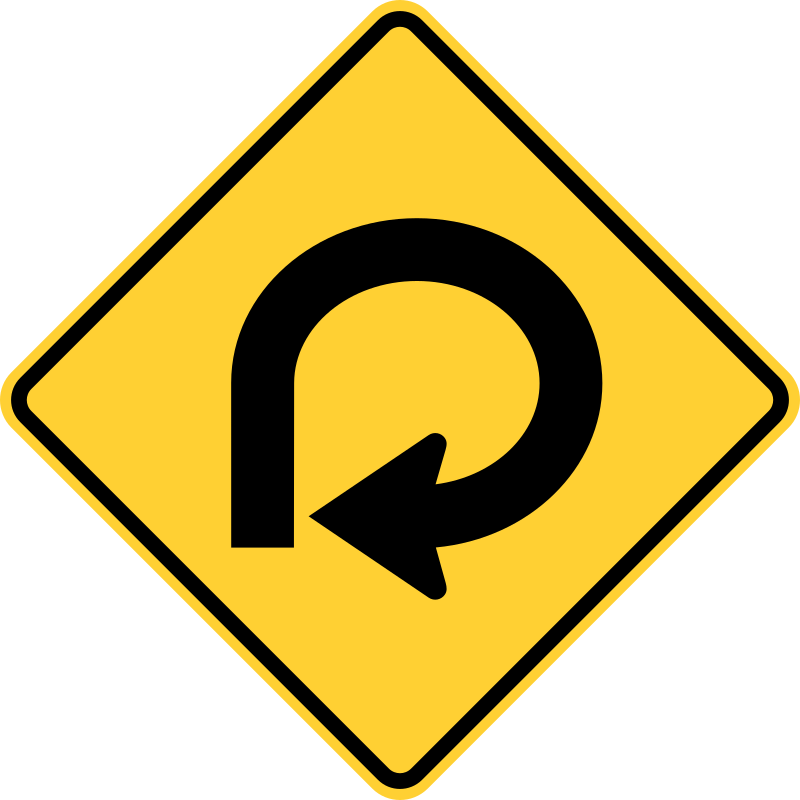
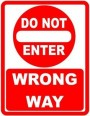
Warns of a circular exit or interchange ramp looping 270 degrees. Slow down significantly to the posted advisory speed.
This sign means:
A) Roundabout ahead.
B) 270 degree turn ahead.
C) Wrong way; Turn around immediately.
2.
Which of the following must you obey over the others?
A) A flashing red light.
B) A stop sign.
C) A steady red light.
D) A police officer.
3.
What should you do when an aggressive driver confronts you?
A) Avoid eye contact with the aggressive driver.
B) Make eye contact.
C) Challenge the aggressive driver with increased speed.
4.
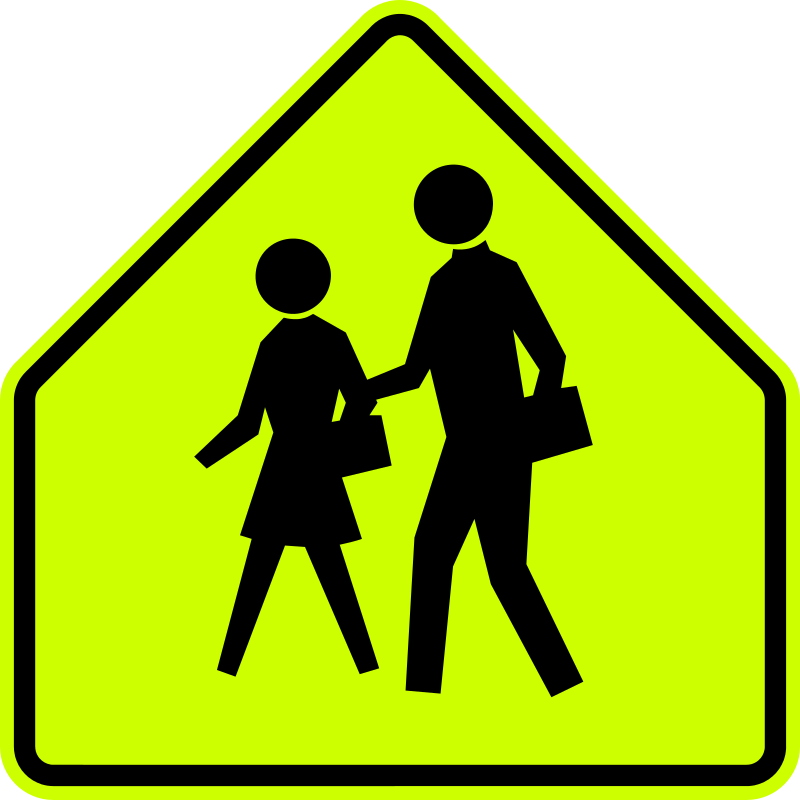
Five-sided pentagon sign indicating an upcoming school area. Watch for children crossing, school buses, and observe posted reduced school speed limits.
This sign means:
A) Business area nearby. Watch for business people.
B) There is a work zone ahead. Watch for workers.
C) The driver is near a school and should watch for children.
5.
If your gas pedal is stuck, you should:
A) hook your shoe under the pedal and see if you can free it. If not, shift into neutral and use the brake to slow your vehicle and get off the road.
B) ease your foot off the gas pedal and brake gently.
C) turn off the ignition if your vehicle has power steering.
6.
Yellow diamond warning that pedestrians may be crossing ahead. Exercise caution and yield.
This road sign means:
A) School zone ahead
B) Pedestrians must not cross here
C) Pedestrian crossing ahead
7.
When the road is slippery, you should:
A) brake suddenly carefully.
B) pump your brakes.
C) press your brakes in slow, steady strokes.
8.
Indicates a two-way left-turn lane in the center of the road. Must only be used to make left turns or U-turns (where permitted), not for regular travel or passing.
This road sign means:
A) Vehicles may only travel in the center lane.
B) The center lane is shared for left turns in both directions of travel.
C) The center lane in both directions of travel will soon turn left.
9.
The road ahead is divided by a median strip or physical barrier into two separate one-way roadways. Keep to the right of the divider.
This road sign means:
A) Keep left
B) Divided highway begins
C) Lane ends
10.
Green and white signs:
A) give information about directions and distances.
B) are mainly used at intersections and driveways.
C) warn drivers of unexpected road conditions.
11.
To avoid having to make an emergency stop while driving in traffic, drivers should:
A) drive in the right lane only.
B) look ahead and maintain a safe following distance.
C) sound their horn to warn other drivers.
D) drive slower than the flow of traffic.
12.
What happens if two vehicles reach at the same time an intersection with four-way stop signs?
A) The driver on the right yields to the driver on the left.
B) The driver on the left yields to the driver on the right.
C) The first vehicle to reach the intersection must yield.
13.
If the entrance lane is too short to allow acceleration to highway speed, you should:
A) go to the next entrance ramp.
B) stop and wait for a large gap in traffic, then enter the highway and accelerate quickly.
C) merge into highway traffic as soon as possible.
14.
You may not turn right (or left from a one-way onto a one-way) while the traffic signal is red. Wait for the green signal before turning.
This sign tells drivers:
A) they must wait for the traffic signal to turn green before turning right or left.
B) they may not turn right or left during the red light.
C) All of the above.
15.
Drivers may need more space in front of their vehicle:
A) when following motorcycles.
B) when carrying a heavy load or pulling a trailer.
C) All of the above.
16.
__________ are blue with white letters and symbols.
A) Warning signs
B) Service signs
C) Destination signs (guide signs)
17.
If your front wheels start to skid, the first thing you should do is:
A) Take your foot off the gas pedal and shift to neutral.
B) Immediately turn in the direction you want to go.
C) Speed up, pump your brakes and steer in the direction the vehicle is trying to go.
18.
When approaching a work zone with a “45 Where Workers Present” sign, drivers should:
A) drive at a safe speed for conditions (up to the posted speed limit), watch for construction workers, and slow down to 45 MPH or lower where workers are present.
B) merge to the right lane.
C) slow down immediately.
D) All of the above.
19.
Slower-moving vehicles must stay in the right-hand lane to allow faster traffic to pass safely on multi-lane highways.
This road sign is:
A) a speed reduction sign.
B) a warning sign.
C) a regulatory sign.
20.
When the driver behind you wants to pass, you should:
A) change lanes.
B) speed up.
C) use your brake lights.
D) slow down to allow room for the other driver to complete the pass safely.
21.
If you drink alcohol socially, what helps insure safe driving?
A) Stop drinking one hour before driving.
B) Drink coffee before driving.
C) Take a cold shower before driving.
D) Ride home with a friend who has not been drinking.
22.
Two motorcyclists are allowed to:
A) ride side-by-side in a single lane.
B) share the lane with another vehicle.
C) race on empty roads.
23.
When you make a left turn from a one-way road into a two-way road, you must:
A) enter the two-way road to the left of its center line.
B) make a U-turn into the two-way road.
C) enter the two-way road to the right of its center line.
24.
___________ are green with white letters and symbols.
A) Warning signs
B) Destination signs (guide signs)
C) Regulation signs (regulatory signs)
25.
Warns of two consecutive curves in opposite directions (e.g., curves right then left). Slow down to maintain control.
This sign warns drivers that:
A) the highway ahead is divided into two one-way roadways. Drivers should keep to the right.
B) there is a winding road ahead.
C) there is a double curve ahead.
26.
A steady yellow light at an intersection means:
A) Proceed with caution through the intersection
B) Slow down and be prepared to stop
C) Immediately come to a complete stop
D) Yield to other vehicles
27.
Two drivers reach an uncontrolled intersection at the same time. Who has the right of way?
A) The driver on the left.
B) No one.
C) The driver on the right.
28.
Road signs that point out scenic areas and parks are:
A) brown and white.
B) black and orange.
C) green and white.
29.
Alcohol:
A) makes you less aware of what is happening to your driving abilities.
B) makes it easier to make correct decisions.
C) improves your reaction time.
30.
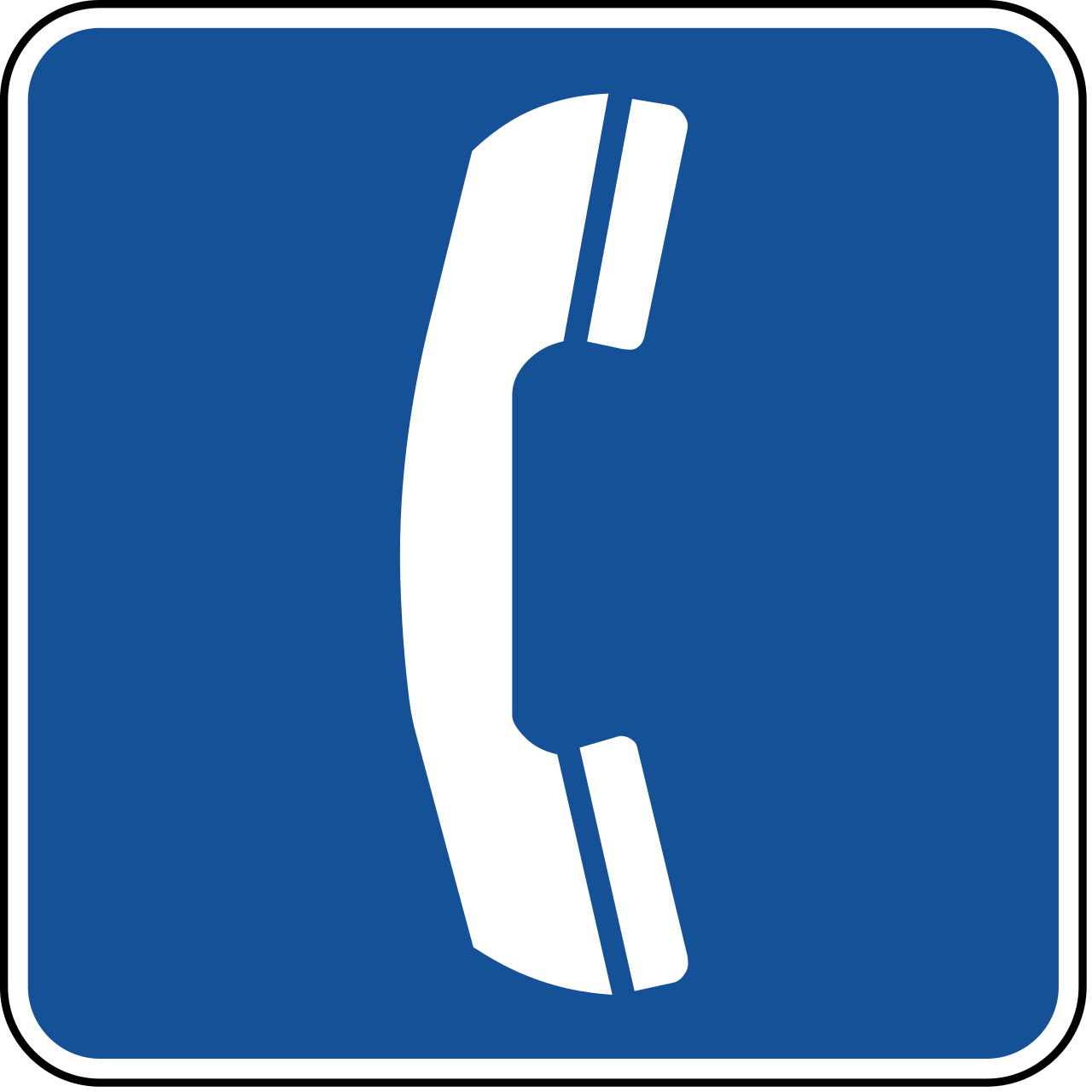
Blue motorist service sign indicating the availability of a public emergency telephone along the highway.
This sign indicates:
A) Phone service ahead
B) Emergency line available
C) Cell phone shop ahead
31.
As you drive on the expressway, make sure:
A) you cut off vehicles behind you when you change lanes.
B) to signal all lane changes.
C) your directional signal goes off before you change lanes.
32.
Warns drivers that two separate lanes moving in the same direction are merging into one. Drivers in the right lane must adjust speed and merge smoothly with existing traffic.
This road sign means:
A) Winding Road Ahead
B) Persons with Disabilities Parking
C) Merge
33.
On slippery roads, drivers should:
A) slow down.
B) increase their speed to avoid hydroplaning.
C) not drive faster than 25 MPH.
D) go faster.
34.
When changing lanes, you should:
A) check your mirrors, signal and change lanes.
B) signal, change lanes and check your mirrors.
C) signal, check your mirrors and blind spot in the direction you plan to move, then change lanes.
D) signal and change lanes.
35.
A driver approaching a flashing red traffic signal must:
A) merge to the left.
B) stop before the intersection.
C) carefully drive through the intersection without stopping.
D) slow down at the traffic signal.
36.
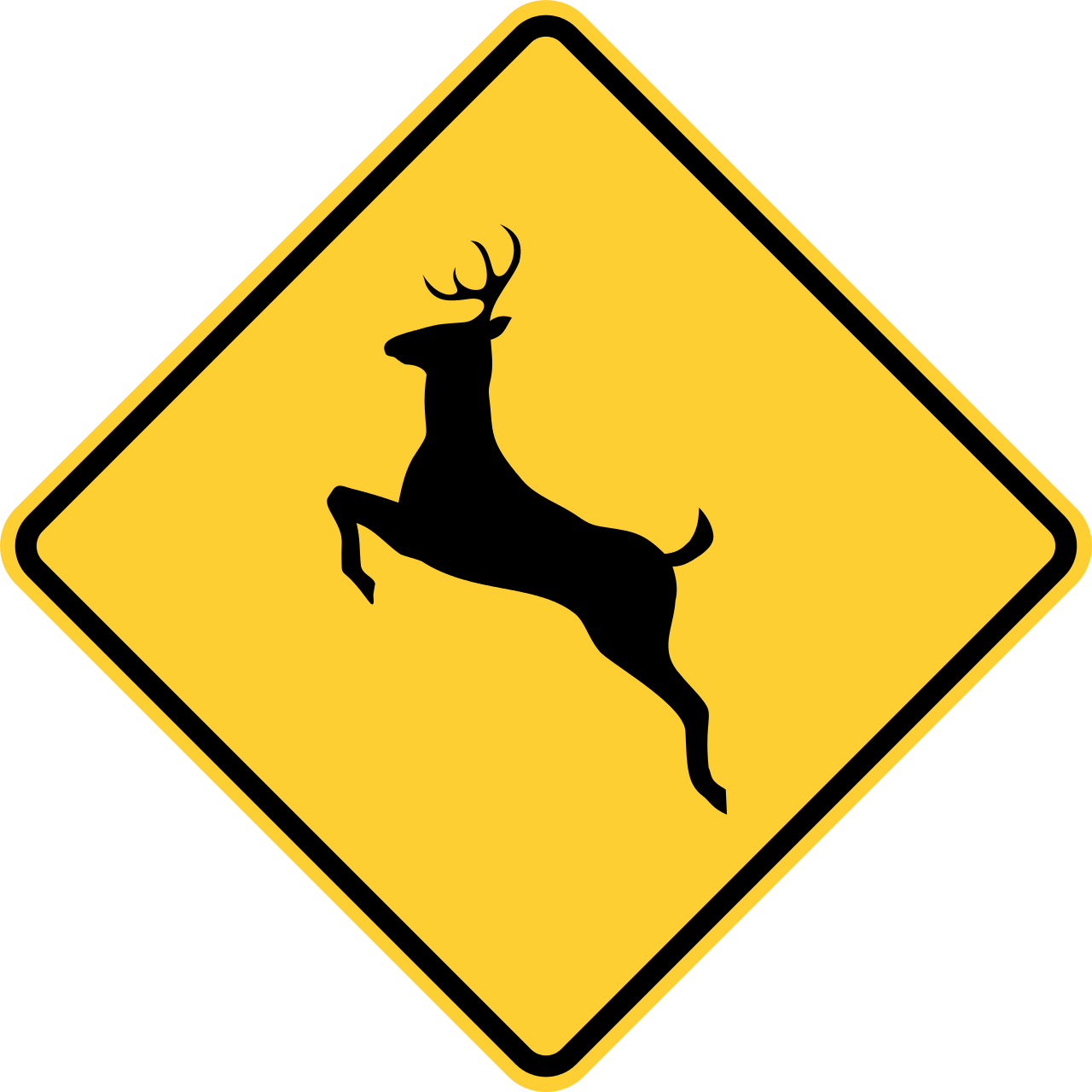
Wildlife and deer frequently cross in this area, especially at dawn and dusk. Scan the roadside and be prepared to brake safely.
When they see this road sign, drivers should:
A) drive carefully because the animal pictured on the sign is extremely rare in the area.
B) watch for this species crossing the road.
C) park in the zoo area.
37.
When driving near light rail vehicles, drivers should:
A) never drive around lowered crossing gates.
B) expect trains on any track at any time.
C) always obey signs and traffic signals.
D) All of the above.
38.
The following symptoms are associated with drowsy driving:
A) You continue to yawn.
B) You don’t remember driving the last few miles.
C) All of the above.
39.
When you drive near parks and playgrounds, you should expect children:
A) not to cross unless they are with an adult.
B) to know when it is safe to cross.
C) to stop at the curb before crossing the street.
D) to suddenly run into the street.
40.
Alerts drivers to a major crossroads intersection ahead. Watch for vehicles entering or crossing the roadway.
This road sign means:
A) U-turns are prohibited
B) You may proceed only if the way is clear
C) You are about to enter a one-way street the wrong way
D) Do not pass
41.
When you need to enter a freeway exit ramp:
A) don't slow down on the freeway itself. Wait until you are in the deceleration lane.
B) pass slower vehicles on the right.
C) slow down before entering the exit ramp.
D) don't slow down on the freeway itself, and maintain your speed once in the exit ramp.
42.
Warning signs normally are:
A) rectangles.
B) triangles.
C) diamond-shaped.
43.
What does it mean If an oncoming driver flashes headlights at you during a period of low visibility?
A) Your headlights are too bright. You should turn them off.
B) Your vehicle was difficult to see. You should turn on your headlights.
C) Your headlights are too bright. You should use parking lights instead.
44.
Hydroplaning is a situation in which:
A) your tires throw water to the rear, causing problems for the vehicles behind.
B) the tires of the car ahead cause sheets of water to splash on your vehicle.
C) one of your tires goes flat, causing the others to skid.
D) your tires ride up on a thin surface of water, losing contact with the pavement, and resulting in sudden loss of control
45.
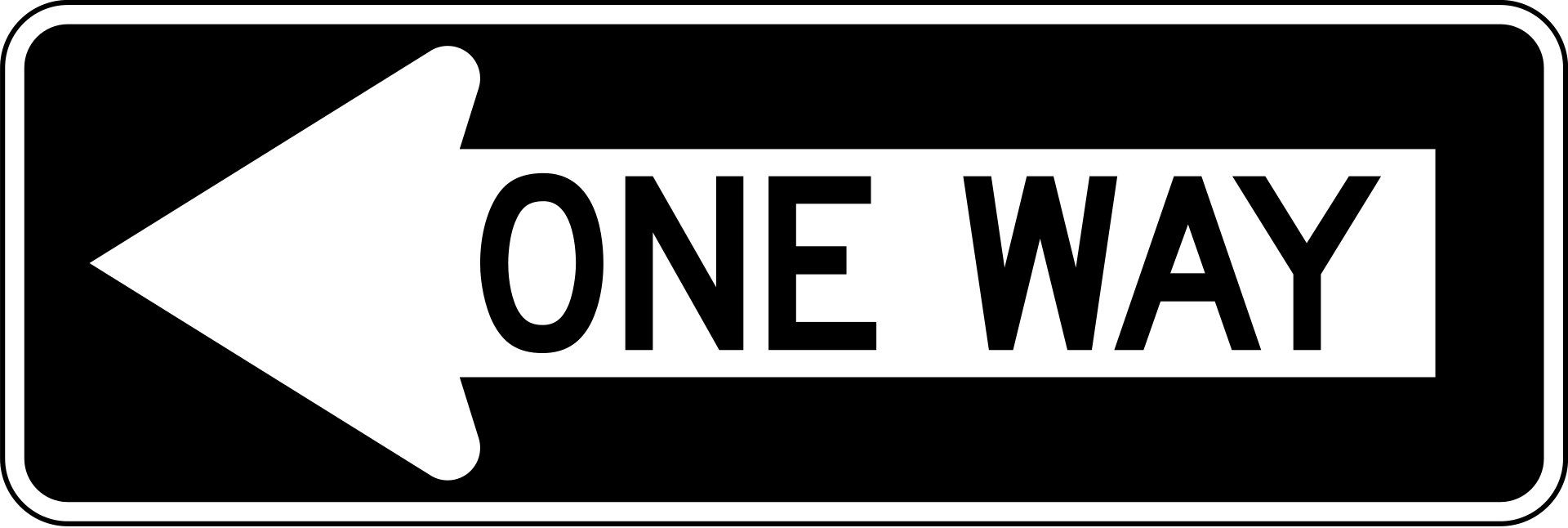
Traffic flows only in the direction indicated by the arrow. Never drive in the opposing direction.
The ‘One Way’ sign means that:
A) only vehicles turning left may travel in the direction of the arrow.
B) there is only one road that turns left at the intersection.
C) drivers may travel only in the direction of the arrow.
46.
When approaching someone using a white cane, you should proceed with caution because:
A) the pedestrian might be using a guide dog.
B) the pedestrian might be blind.
C) the pedestrian is deaf.
D) the pedestrian is blind.
47.
When driving on major highways you should:
A) be ready to react to road hazards.
B) stay alert.
C) keep your eyes moving.
D) All of the above.
48.
A broken white line:
A) means passing or crossing is prohibited in that lane.
B) separates two lanes traveling in the same direction.
C) marks the right edge of the roadway.
49.
Before turning, you should:
A) increase your speed.
B) sound your horn to alert the other drivers.
C) give the proper turn signal.
D) change lanes.
50.
When you make a left turn from a two-way road into a four-lane highway, you must:
A) enter the left lane, to the right of the center line.
B) enter the right lane, to the left of the center line.
C) go straight through the intersection, and then make the turn.
ANSWER KEY Check answers after completing the test.
1 B
2 D
3 A
4 C
5 A
6 C
7 C
8 B
9 B
10 A
11 B
12 B
13 B
14 C
15 C
16 B
17 A
18 A
19 C
20 D
21 D
22 A
23 C
24 B
25 C
26 B
27 C
28 A
29 A
30 A
31 B
32 C
33 A
34 C
35 B
36 B
37 D
38 C
39 D
40 C
41 A
42 C
43 B
44 D
45 C
46 D
47 D
48 B
49 C
50 A