DriveQuiz drivequiz.com

ME DMV PERMİT PRACTİCE TEST 9

Maine
Duration: 54 min
|
Questions: 60
Student Name:
Date:
Correct:      Incorrect:      Score:      
1.
If you remain in the back blind spot of a large vehicle:
A) you increase the chance of a crash.
B) the large vehicle will take much longer to stop.
C) you can reduce fuel consumption.
2.
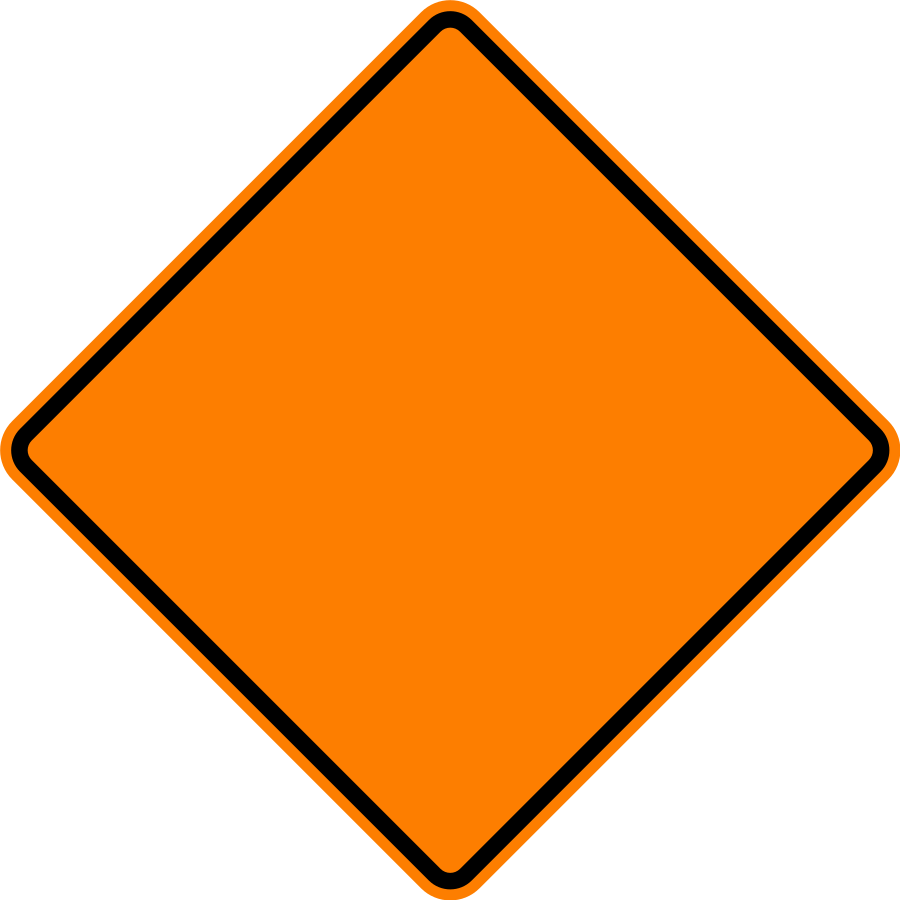
Yellow diamond-shaped signs always convey warnings about road hazards, changes in conditions, or upcoming requirements.
This road sign means:
A) Road construction ahead
B) Stop ahead
C) Do not enter
3.
Right turns are strictly prohibited at this intersection under all circumstances.
This road sign means:
A) Right turn is not permitted
B) Left turns are permitted
C) You may turn right after yielding the right-of-way to oncoming traffic
4.
You hear a siren close by but can not see where the emergency vehicle is. What do you do?
A) Keep driving until you are sure the emergency vehicle is headed toward you.
B) Stop immediately and activate your emergency flashers.
C) Pull over to the right side of the road and stop until you are sure the emergency vehicle is not headed toward you.
5.
Which of the following must you obey over the others?
A) Red light
B) Stop sign
C) Police officer
6.
When a pedestrian carrying a white cane is at the corner ready to cross the street in front of you, before making your right turn, you should:
A) use your horn to help the pedestrian cross the street.
B) turn off the ignition until the person crosses the street.
C) yield the right-of-way and wait until the pedestrian crosses the street.
7.
When passing another vehicle, you should:
A) assume the other vehicle will maintain a constant speed.
B) check your mirrors and blind spots.
C) drive at the same speed as the vehicle you are passing.
8.
Construction zone signs are generally:
A) rectangular with white red coloring.
B) triangular with black and yellow coloring.
C) diamond or rectangular with orange and black coloring.
9.
Drivers under 21 years of age are considered to be driving under the influence if their blood alcohol concentration (BAC) is:
A) .10% or higher.
B) .05% or higher.
C) .08% or higher.
D) .02% or higher.
10.
If you drive much slower than the posted speed limit you:
A) are a defensive driver.
B) might cause a crash.
C) always have the right of way.
D) are driving safely and can avoid tailgaters.
11.
What should you do if your vision through the windshield becomes blocked?
A) Pull your vehicle off the road and park it.
B) Turn on your emergency lights.
C) Open the side window so you can see.
D) All of the above.
12.
Prohibits drivers from making a 180-degree turn to travel in the opposite direction at this intersection or stretch of road.
This road sign means:
A) No left turn
B) No U-turn
C) Detour ahead
13.
Motorists are not required to yield to pedestrians when approaching or exiting a roundabout.
A) True
B) False
14.
What should drivers do in case of a brake failure?
A) Shift to a lower gear.
B) Tie a white cloth on the left door handle.
C) Brake lightly.
15.
When you approach a railroad crossing, but you do not see a train. You must stop:
A) if a stop sign is posted.
B) if the crossing lights are flashing.
C) if a crossing gate is lowered.
D) All of the above.
16.
You have been involved in a minor traffic collision with a parked vehicle and you can't find the owner. You must:
A) stay until the police arrive.
B) leave a note on the vehicle and report the accident with no delay.
C) wait for the owner to return.
D) call your insurance company within 14 days.
17.
A side road enters the highway from the right or left. Watch for traffic turning onto or crossing your lane.
This road sign means:
A) Merge
B) Side Road
C) Merging Traffic
D) All traffic must go straight ahead
18.
You reach an intersection that is not controlled at the same time as a driver on your right, and both of you prepare to go straight. Who has the right-of-way?
A) You.
B) No one.
C) The other driver.
19.
When driving in a construction zone you should:
A) slightly increase your speed.
B) come to a complete stop and check road conditions.
C) expect the unexpected.
20.
When you are involved in an accident, you should:
A) call the police.
B) help the injured.
C) stop immediately.
D) All of the above.
21.
Blind spots around a large vehicle are _________________ than the blind spots around a car.
A) larger and deeper
B) less dangerous
C) narrower and shorter
22.
Aggressive driving includes:
A) quick lane changes without a signal.
B) chasing or challenging other drivers.
C) All of the above.
23.
When driving in bad weather, drivers should:
A) decrease the following distance.
B) increase their speed to get to their destination more quickly.
C) increase the following distance.
D) None of the above.
24.
What does a red arrow on a traffic light mean?
A) You may proceed slowly through the intersection.
B) You must stop and then proceed when the way is clear.
C) You may turn in the direction of the arrow.
D) You must stop. Do not go in the direction of the arrow until a green light or arrow light goes on.
25.
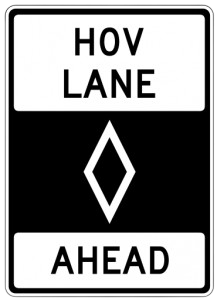
High-Occupancy Vehicle (HOV) diamond lane ahead. Only vehicles carrying the minimum required number of passengers (usually 2 or more) may use this lane.
This road sign indicates that:
A) a lane is reserved for certain purposes or certain vehicles.
B) buses and car pools may not travel in the restricted lane.
C) vehicles cannot go straight ahead. Cars must turn either to the right or left.
26.
To drive defensively you should:
A) always put one car length between you and the car ahead.
B) keep your eyes moving to look for possible hazards.
C) look only at the car in front of you while driving.
27.
Your vehicles braking distance will be much longer:
A) when driving at night.
B) on interstate highways.
C) on wet, icy or gravel roads.
D) All of the above.
28.
Warns of an upcoming STOP sign that may not be immediately visible. Begin slowing down to prepare for a complete stop.
This road sign means:
A) Railroad Warning
B) Stop Sign Ahead
C) Lane ends
D) Stop if necessary
29.
Slow down and give right-of-way to all oncoming vehicles, cyclists, and pedestrians. Stop completely if necessary before entering the intersection or merging.
This road sign means:
A) Yield
B) Look both ways before crossing the intersection
C) Crossroads ahead
30.
Blocking an intersection during rush hour traffic is not permitted:
A) under any circumstances.
B) unless you entered the intersection on a green light.
C) unless you have the right-of-way.
31.
It is legal to make a left turn at a red light after stopping if:
A) you are traveling on a two-way street and turning onto a two-way street.
B) you are traveling on a one-way street and turning onto another one-way street.
C) you yield to all other traffic at the intersection before proceeding.
32.
ABS is the acronym for:
A) Anti-Braking System
B) Average-Beam System
C) Anti-Locking Brake System
33.
When driving on a roadway with a single broken white line:
A) you may cross the broken white line to change lanes.
B) you may change lanes only if you are in the right lane.
C) you may not cross the broken white line.
34.
Drivers should always look carefully for motorcycles before changing lanes because:
A) motorcycles are not permitted to share traffic lanes.
B) motorcycles are smaller and harder to see.
C) motorcycles always have the right-of-way at intersections.
D) All of the above.
35.
When you back up:
A) always look through the rear window.
B) you should rely only on your rearview mirror.
C) do it as fast as possible.
36.
The road ahead is divided by a median strip or physical barrier into two separate one-way roadways. Keep to the right of the divider.
This sign means:
A) Divided highway ahead.
B) Divided highway ends.
C) Drivers will soon be on a roadway with two-way traffic.
37.
If your car becomes disabled on a highway, you should:
A) stop in the right lane.
B) park with all four wheels off the highway, if possible.
C) stop where you are.
38.
As you enter a roundabout you should slow down and:
A) yield to pedestrians and bicyclist crossing before entering the roundabout.
B) yield to any vehicle coming from your left in the roundabout.
C) All of the above.
39.
If a tire suddenly goes flat while you are driving, you should:
A) pump the brake pedal 5-7 times until the vehicle stops.
B) slow down gradually do not apply the brake.
C) apply the brake firmly and stop.
40.
To drive defensively, you must:
A) avoid scanning the road ahead.
B) keep one hand on the steering wheel.
C) keep your eyes moving.
41.
When driving at night, drivers should:
A) always use their high beams.
B) increase their following distance.
C) look directly into the oncoming headlights of approaching vehicles.
42.
On roadways, bicyclists are considered:
A) a distraction.
B) defensive drivers.
C) vehicles.
43.
Speed limit signs are:
A) service signs
B) regulation signs (regulatory signs)
C) warning signs
44.
Roads with double solid yellow lines in the center indicate that passing is:
A) not allowed in either direction.
B) allowed only in your direction of travel.
C) allowed in both directions.
45.
A solid yellow line next to a broken yellow line means that vehicles:
A) next to the solid line may pass.
B) in both directions may pass.
C) next to the broken line may pass.
46.
You have stopped for a train at a railroad crossing. After the train passes, you must:
A) look to see if another train is coming, then cross the tracks if it is safe to do so.
B) watch for vehicles that must stop at railroad crossings (school buses, vehicles carrying hazardous materials, etc.).
C) All of the above.
47.
On slippery roads, drivers should:
A) leave more space in front of their vehicle.
B) increase their speed to avoid hydroplaning.
C) come to a complete stop.
48.
Select the most effective safety restraint(s) in a traffic crash.
A) Lap and shoulder belt only
B) Air bag only
C) Pumping brakes.
D) A combination of lap/shoulder belt and air bag.
49.
When driving behind a motorcycle, drivers must:
A) remembers that motorcyclists have the right to use a complete traffic lane.
B) pass the motorcycle in the same lane.
C) drive on the shoulder beside the motorcycle.
D) share the lane with the motorcycle.
50.
Right turns are strictly prohibited at this intersection under all circumstances.
This road sign means:
A) No left turn
B) No right turn
C) No U-turns
51.
When driving at night with no other vehicles ahead, a driver should use:
A) high beam lights.
B) low-beam lights.
C) parking lights.
52.
The effect that alcohol has on your judgment:
A) is greater if you were drinking hard liquor.
B) is less if you were only drinking wine.
C) is less if you were only drinking beer.
D) depends on the amount of alcohol in your blood.
53.
Distracted driving:
A) causes the driver to react more slowly to hazards.
B) is only dangerous for inexperienced drivers.
C) usually causes the driver to drive slower.
D) is never dangerous.
54.
You arrive at an intersection where you have a green light, but the path ahead is blocked, you should:
A) turn left and find another route.
B) stay out of the intersection until traffic clears.
C) enter the intersection and wait until traffic clears.
55.
When you get in a car to drive, the first thing you should do is:
A) check your rear view mirror.
B) adjust the steering wheel.
C) adjust your seat belt.
D) adjust your seat.
56.
If it safe to do so, you can pass a vehicle ahead when:
A) you are on a hill or curve.
B) there is a broken line on your side of the road.
C) there is a solid line on your side of the road.
57.
On slippery roads, drivers should:
A) slow down.
B) increase their speed to avoid hydroplaning.
C) not drive faster than 25 MPH.
D) go faster.
58.
Another road crosses the highway ahead. Look left and right for crossing or entering vehicles.
This road sign means:
A) A four-way intersection is ahead
B) Do not pass
C) A steep grade is ahead
59.
If you encounter an aggressive driver you should:
A) show them how to drive defensively.
B) speed up.
C) get out of their way.
60.
to indicate a pedestrian crossing.
A) indicates that you should drive with caution.
B) has the same meaning as a stop sign.
C) has the same meaning as a yield sign.
ANSWER KEY Check answers after completing the test.
1 A
2 A
3 A
4 C
5 C
6 C
7 B
8 C
9 D
10 B
11 D
12 B
13 B
14 A
15 D
16 B
17 B
18 C
19 C
20 D
21 A
22 C
23 C
24 D
25 A
26 B
27 C
28 B
29 A
30 A
31 B
32 C
33 A
34 B
35 A
36 A
37 B
38 C
39 B
40 C
41 B
42 C
43 B
44 A
45 C
46 C
47 A
48 D
49 A
50 B
51 A
52 D
53 A
54 B
55 D
56 B
57 A
58 A
59 C
60 C