Question 1:
If you remain in the back blind spot of a large vehicle:
A
you increase the chance of a crash.
B
the large vehicle will take much longer to stop.
C
you can reduce fuel consumption.
Large commercial trucks have extensive blind spots on all four sides called the 'No-Zone': you increase the chance of a crash. If you cannot see the truck driver in their side mirrors, they cannot see you.
Question 2:
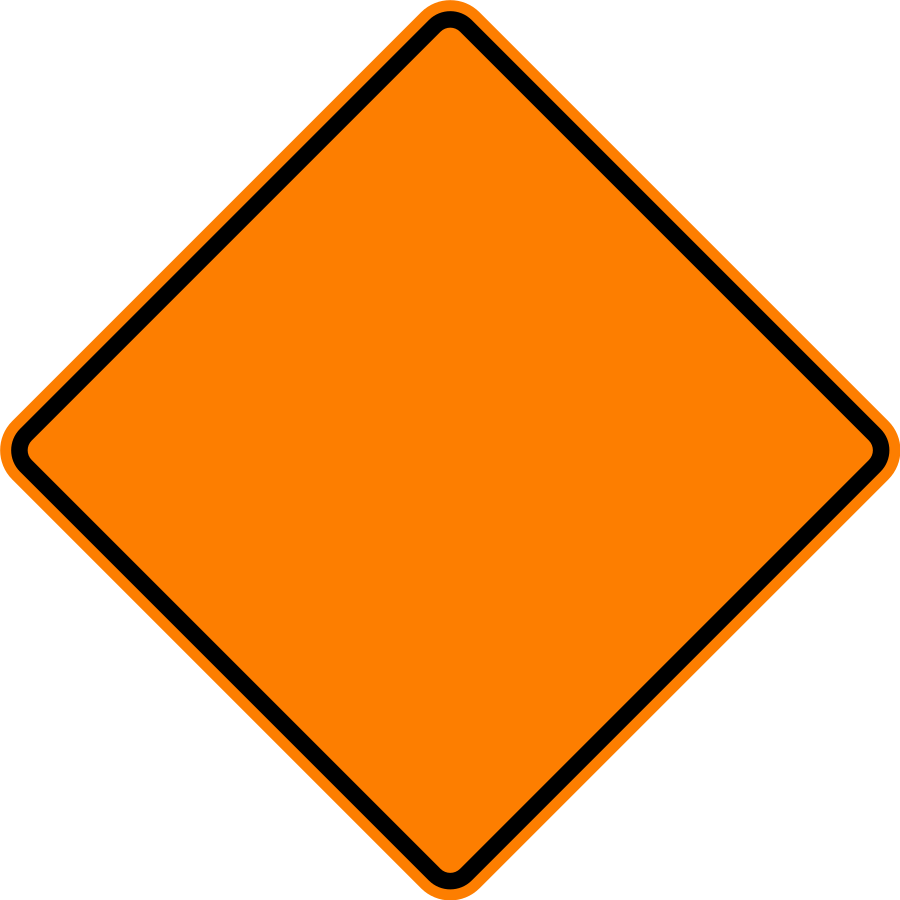 This road sign means:
A
Road construction ahead
B
Stop ahead
C
Do not enter
This traffic sign indicates: Road construction ahead. Observing and obeying all roadway signs ensures safe traffic flow and legal driving.
Question 3:
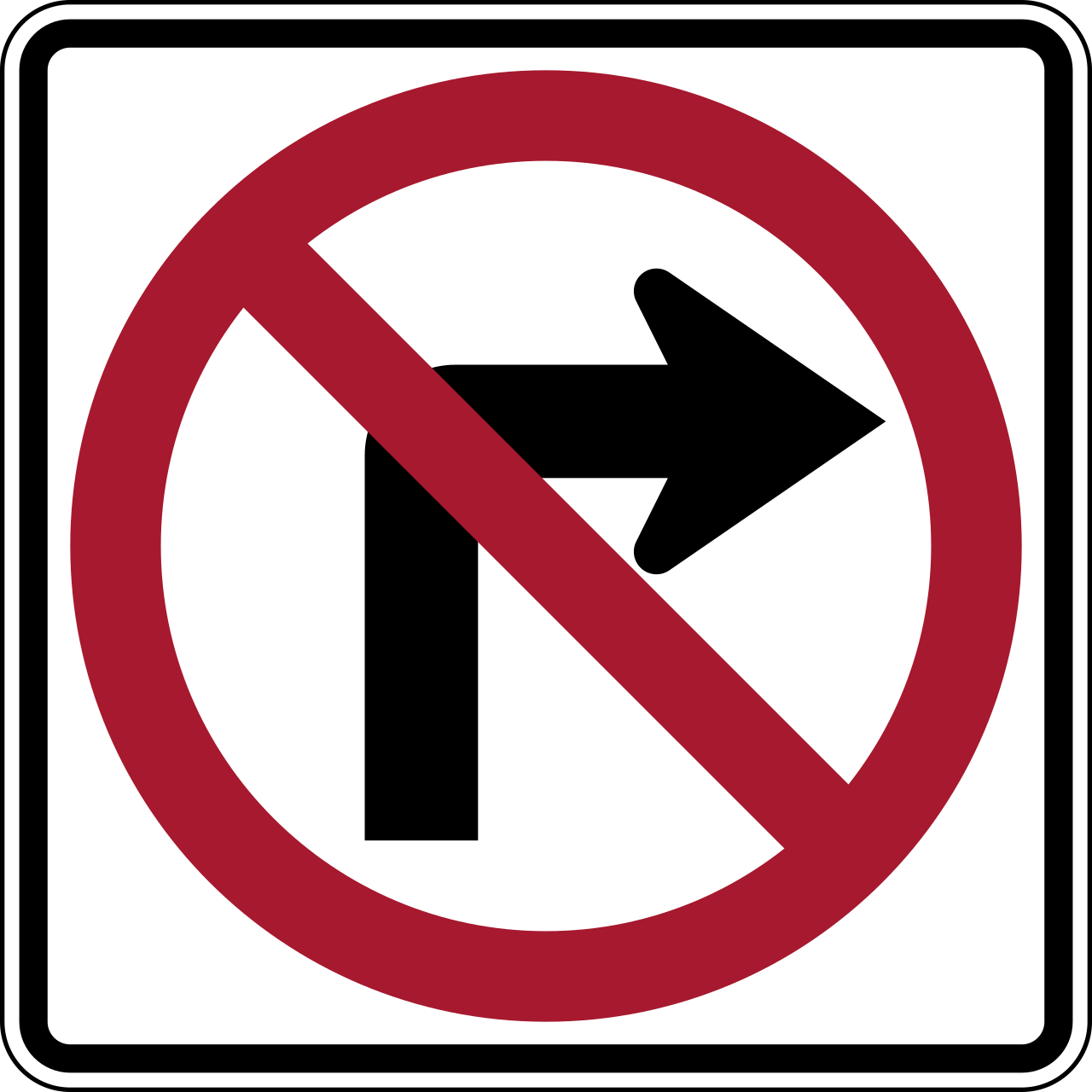 This road sign means:
A
Right turn is not permitted
B
Left turns are permitted
C
You may turn right after yielding the right-of-way to oncoming traffic
This traffic sign indicates: Right turn is not permitted. Observing and obeying all roadway signs ensures safe traffic flow and legal driving.
Question 4:
You hear a siren close by but can not see where the emergency vehicle is. What do you do?
A
Keep driving until you are sure the emergency vehicle is headed toward you.
B
Stop immediately and activate your emergency flashers.
C
Pull over to the right side of the road and stop until you are sure the emergency vehicle is not headed toward you.
When sharing the road with other vehicles: pull over to the right side of the road and stop until you are sure the emergency vehicle is not headed toward you. Giving large vehicles and vulnerable users adequate clearance prevents dangerous accidents.
Question 5:
Which of the following must you obey over the others?
A
Red light
B
Stop sign
C
Police officer
The correct driving rule is: Police officer. Following standard DMV road rules and practicing defensive driving ensures safety for all road users.
Question 6:
When a pedestrian carrying a white cane is at the corner ready to cross the street in front of you, before making your right turn, you should:
A
use your horn to help the pedestrian cross the street.
B
turn off the ignition until the person crosses the street.
C
yield the right-of-way and wait until the pedestrian crosses the street.
Drivers must always yield the right-of-way to pedestrians crossing at intersections and crosswalks: yield the right-of-way and wait until the pedestrian crosses the street. Stop and allow them to clear the lane safely.
Question 7:
When passing another vehicle, you should:
A
assume the other vehicle will maintain a constant speed.
B
check your mirrors and blind spots.
C
drive at the same speed as the vehicle you are passing.
Defensive driving guidelines state that: check your mirrors and blind spots. Anticipating road hazards and communicating maneuvers keeps traffic predictable and safe.
Question 8:
Construction zone signs are generally:
A
rectangular with white red coloring.
B
triangular with black and yellow coloring.
C
diamond or rectangular with orange and black coloring.
The correct driving rule is: diamond or rectangular with orange and black coloring. Following standard DMV road rules and practicing defensive driving ensures safety for all road users.
Question 9:
Drivers under 21 years of age are considered to be driving under the influence if their blood alcohol concentration (BAC) is:
A
.10% or higher.
B
.05% or higher.
C
.08% or higher.
D
.02% or higher.
Under state DUI and traffic safety laws: .02% or higher. Alcohol degrades judgment, slows reaction times, and distorts depth perception.
Question 10:
If you drive much slower than the posted speed limit you:
A
are a defensive driver.
B
might cause a crash.
C
always have the right of way.
D
are driving safely and can avoid tailgaters.
For safe speed and stopping control: might cause a crash. Adjusting speed to match visibility and road traction prevents loss of steering grip.
Question 11:
What should you do if your vision through the windshield becomes blocked?
A
Pull your vehicle off the road and park it.
B
Turn on your emergency lights.
C
Open the side window so you can see.
D
All of the above.
All of the listed points are essential driving requirements: Pull your vehicle off the road and park it; Turn on your emergency lights; Open the side window so you can see. Practicing each ensures compliance with DMV safety laws.
Question 12:
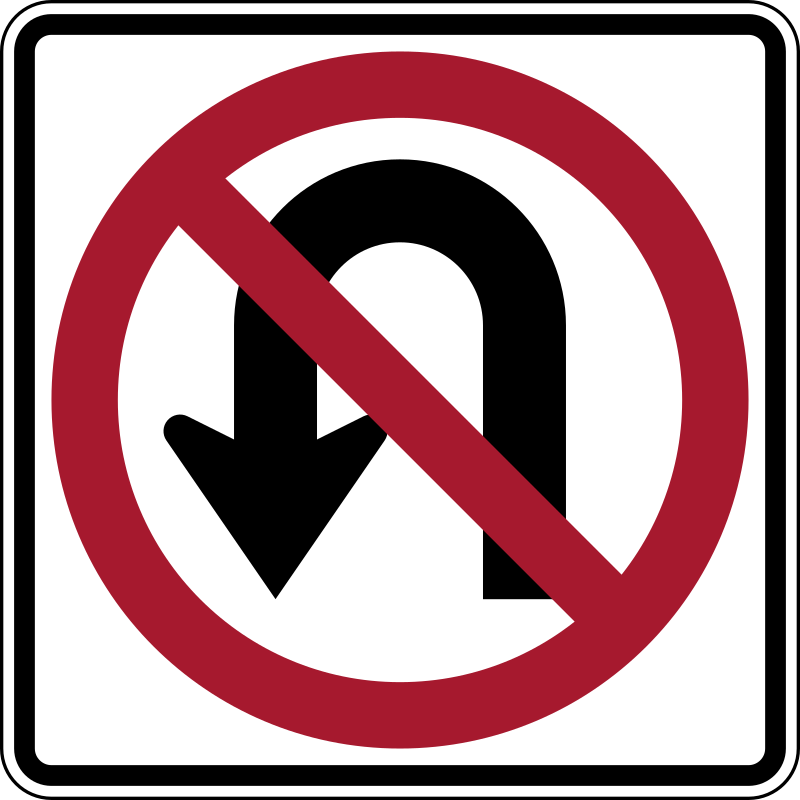 This road sign means:
A
No left turn
B
No U-turn
C
Detour ahead
This traffic sign indicates: No U-turn. Observing and obeying all roadway signs ensures safe traffic flow and legal driving.
Question 13:
Motorists are not required to yield to pedestrians when approaching or exiting a roundabout.
A
True
B
False
Vehicles entering a roundabout must yield right-of-way to circulating traffic already inside: False. Wait for a safe gap before entering.
Question 14:
What should drivers do in case of a brake failure?
A
Shift to a lower gear.
B
Tie a white cloth on the left door handle.
C
Brake lightly.
The correct driving rule is: shift to a lower gear. Following standard DMV road rules and practicing defensive driving ensures safety for all road users.
Question 15:
When you approach a railroad crossing, but you do not see a train. You must stop:
A
if a stop sign is posted.
B
if the crossing lights are flashing.
C
if a crossing gate is lowered.
D
All of the above.
All of the listed points are essential driving requirements: if a stop sign is posted; if the crossing lights are flashing; if a crossing gate is lowered. Practicing each ensures compliance with DMV safety laws.
Question 16:
You have been involved in a minor traffic collision with a parked vehicle and you can't find the owner. You must:
A
stay until the police arrive.
B
leave a note on the vehicle and report the accident with no delay.
C
wait for the owner to return.
D
call your insurance company within 14 days.
The correct driving rule is: leave a note on the vehicle and report the accident with no delay. Following standard DMV road rules and practicing defensive driving ensures safety for all road users.
Question 17:
 This road sign means:
A
Merge
B
Side Road
C
Merging Traffic
D
All traffic must go straight ahead
This traffic sign indicates: Side Road. Observing and obeying all roadway signs ensures safe traffic flow and legal driving.
Question 18:
You reach an intersection that is not controlled at the same time as a driver on your right, and both of you prepare to go straight. Who has the right-of-way?
A
You.
B
No one.
C
The other driver.
According to standard right-of-way regulations: The other driver. Yielding appropriately prevents intersection collisions and maintains safe traffic flow.
Question 19:
When driving in a construction zone you should:
A
slightly increase your speed.
B
come to a complete stop and check road conditions.
C
expect the unexpected.
The correct driving rule is: expect the unexpected. Following standard DMV road rules and practicing defensive driving ensures safety for all road users.
Question 20:
When you are involved in an accident, you should:
A
call the police.
B
help the injured.
C
stop immediately.
D
All of the above.
All of the listed points are essential driving requirements: call the police; help the injured; stop immediately. Practicing each ensures compliance with DMV safety laws.
Question 21:
Blind spots around a large vehicle are _________________ than the blind spots around a car.
A
larger and deeper
B
less dangerous
C
narrower and shorter
The correct driving rule is: larger and deeper. Following standard DMV road rules and practicing defensive driving ensures safety for all road users.
Question 22:
Aggressive driving includes:
A
quick lane changes without a signal.
B
chasing or challenging other drivers.
C
All of the above.
All of the listed points are essential driving requirements: quick lane changes without a signal; chasing or challenging other drivers. Practicing each ensures compliance with DMV safety laws.
Question 23:
When driving in bad weather, drivers should:
A
decrease the following distance.
B
increase their speed to get to their destination more quickly.
C
increase the following distance.
D
None of the above.
The correct driving rule is: increase the following distance. Following standard DMV road rules and practicing defensive driving ensures safety for all road users.
Question 24:
What does a red arrow on a traffic light mean?
A
You may proceed slowly through the intersection.
B
You must stop and then proceed when the way is clear.
C
You may turn in the direction of the arrow.
D
You must stop. Do not go in the direction of the arrow until a green light or arrow light goes on.
The correct driving rule is: you must stop. Do not go in the direction of the arrow until a green light or arrow light goes on. Following standard DMV road rules and practicing defensive driving ensures safety for all road users.
Question 25:
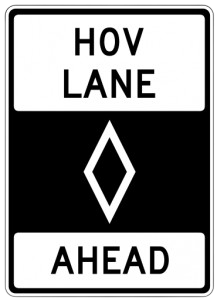 This road sign indicates that:
A
a lane is reserved for certain purposes or certain vehicles.
B
buses and car pools may not travel in the restricted lane.
C
vehicles cannot go straight ahead. Cars must turn either to the right or left.
This traffic sign indicates: a lane is reserved for certain purposes or certain vehicles. Observing and obeying all roadway signs ensures safe traffic flow and legal driving.
Question 26:
To drive defensively you should:
A
always put one car length between you and the car ahead.
B
keep your eyes moving to look for possible hazards.
C
look only at the car in front of you while driving.
The correct driving rule is: keep your eyes moving to look for possible hazards. Following standard DMV road rules and practicing defensive driving ensures safety for all road users.
Question 27:
Your vehicles braking distance will be much longer:
A
when driving at night.
B
on interstate highways.
C
on wet, icy or gravel roads.
D
All of the above.
For safe speed and stopping control: on wet, icy or gravel roads. Adjusting speed to match visibility and road traction prevents loss of steering grip.
Question 28:
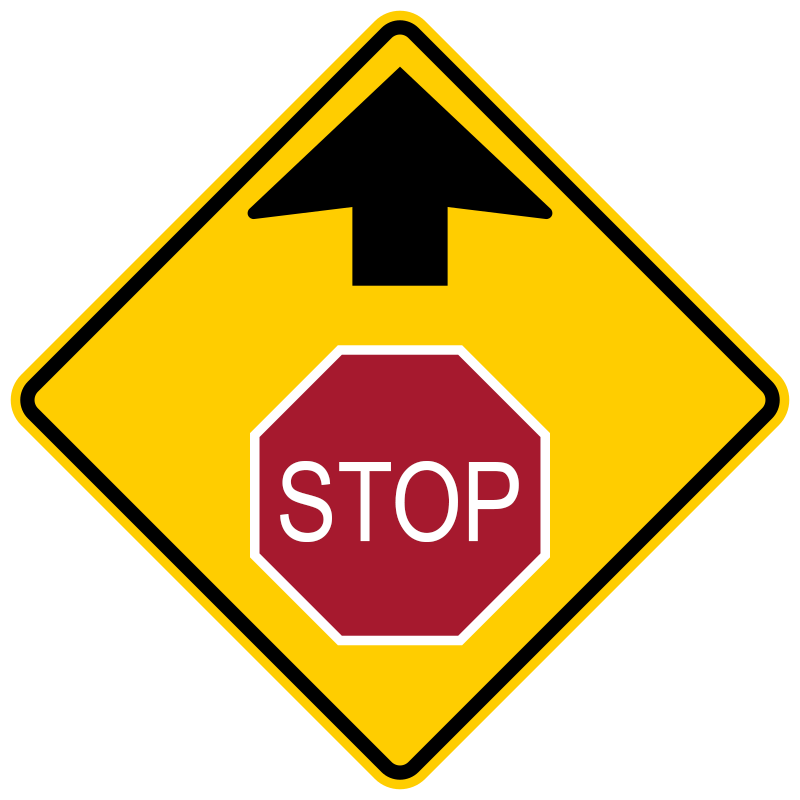 This road sign means:
A
Railroad Warning
B
Stop Sign Ahead
C
Lane ends
D
Stop if necessary
This traffic sign indicates: stop Sign Ahead. Observing and obeying all roadway signs ensures safe traffic flow and legal driving.
Question 29:
 This road sign means:
A
Yield
B
Look both ways before crossing the intersection
C
Crossroads ahead
A triangular Yield sign requires drivers to slow down and give right-of-way to other traffic: yield. Proceed only when there is a safe opening.
Question 30:
Blocking an intersection during rush hour traffic is not permitted:
A
under any circumstances.
B
unless you entered the intersection on a green light.
C
unless you have the right-of-way.
According to standard right-of-way regulations: under any circumstances. Yielding appropriately prevents intersection collisions and maintains safe traffic flow.
Question 31:
It is legal to make a left turn at a red light after stopping if:
A
you are traveling on a two-way street and turning onto a two-way street.
B
you are traveling on a one-way street and turning onto another one-way street.
C
you yield to all other traffic at the intersection before proceeding.
When turning left across traffic lanes: you are traveling on a one-way street and turning onto another one-way street. You must yield to all oncoming vehicles and crossing pedestrians before completing the turn.
Question 32:
ABS is the acronym for:
A
Anti-Braking System
B
Average-Beam System
C
Anti-Locking Brake System
The correct driving rule is: Anti-Locking Brake System. Following standard DMV road rules and practicing defensive driving ensures safety for all road users.
Question 33:
When driving on a roadway with a single broken white line:
A
you may cross the broken white line to change lanes.
B
you may change lanes only if you are in the right lane.
C
you may not cross the broken white line.
The correct driving rule is: you may cross the broken white line to change lanes. Following standard DMV road rules and practicing defensive driving ensures safety for all road users.
Question 34:
Drivers should always look carefully for motorcycles before changing lanes because:
A
motorcycles are not permitted to share traffic lanes.
B
motorcycles are smaller and harder to see.
C
motorcycles always have the right-of-way at intersections.
D
All of the above.
The correct driving rule is: motorcycles are smaller and harder to see. Following standard DMV road rules and practicing defensive driving ensures safety for all road users.
Question 35:
When you back up:
A
always look through the rear window.
B
you should rely only on your rearview mirror.
C
do it as fast as possible.
The correct driving rule is: always look through the rear window. Following standard DMV road rules and practicing defensive driving ensures safety for all road users.
Question 36:
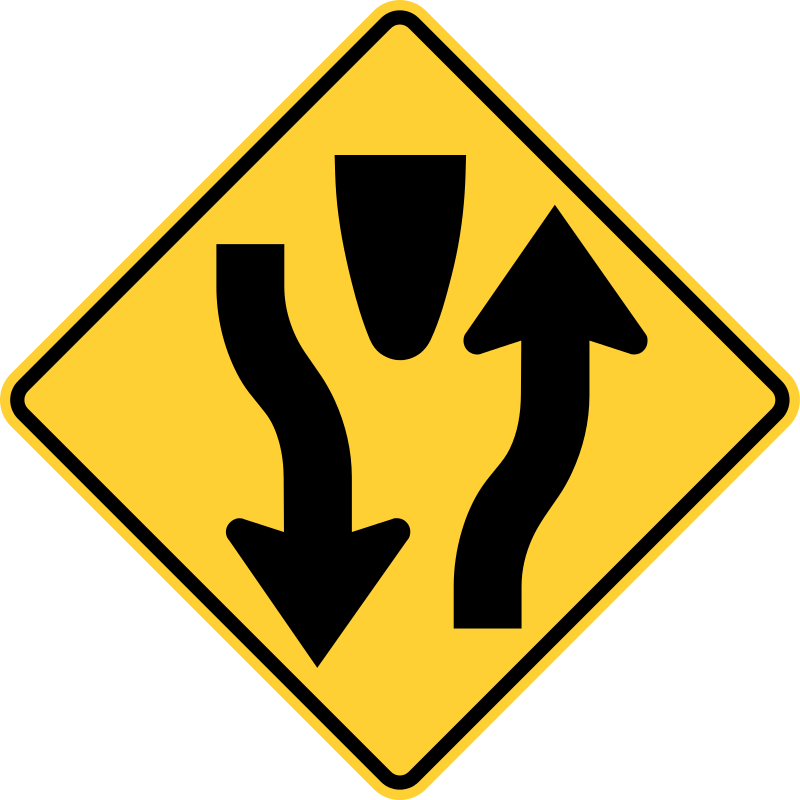 This sign means:
A
Divided highway ahead.
B
Divided highway ends.
C
Drivers will soon be on a roadway with two-way traffic.
This traffic sign indicates: Divided highway ahead. Observing and obeying all roadway signs ensures safe traffic flow and legal driving.
Question 37:
If your car becomes disabled on a highway, you should:
A
stop in the right lane.
B
park with all four wheels off the highway, if possible.
C
stop where you are.
Defensive driving guidelines state that: park with all four wheels off the highway, if possible. Anticipating road hazards and communicating maneuvers keeps traffic predictable and safe.
Question 38:
As you enter a roundabout you should slow down and:
A
yield to pedestrians and bicyclist crossing before entering the roundabout.
B
yield to any vehicle coming from your left in the roundabout.
C
All of the above.
Safe navigation at intersections requires following all established rules: yield to pedestrians and bicyclist crossing before entering the roundabout; yield to any vehicle coming from your left in the roundabout. Always yield right-of-way properly to prevent collisions.
Question 39:
If a tire suddenly goes flat while you are driving, you should:
A
pump the brake pedal 5-7 times until the vehicle stops.
B
slow down gradually do not apply the brake.
C
apply the brake firmly and stop.
The correct driving rule is: slow down gradually do not apply the brake. Following standard DMV road rules and practicing defensive driving ensures safety for all road users.
Question 40:
To drive defensively, you must:
A
avoid scanning the road ahead.
B
keep one hand on the steering wheel.
C
keep your eyes moving.
The correct driving rule is: keep your eyes moving. Following standard DMV road rules and practicing defensive driving ensures safety for all road users.
Question 41:
When driving at night, drivers should:
A
always use their high beams.
B
increase their following distance.
C
look directly into the oncoming headlights of approaching vehicles.
The correct driving rule is: increase their following distance. Following standard DMV road rules and practicing defensive driving ensures safety for all road users.
Question 42:
On roadways, bicyclists are considered:
A
a distraction.
B
defensive drivers.
C
vehicles.
The correct driving rule is: vehicles. Following standard DMV road rules and practicing defensive driving ensures safety for all road users.
Question 43:
Speed limit signs are:
A
service signs
B
regulation signs (regulatory signs)
C
warning signs
For safe speed and stopping control: regulation signs (regulatory signs). Adjusting speed to match visibility and road traction prevents loss of steering grip.
Question 44:
Roads with double solid yellow lines in the center indicate that passing is:
A
not allowed in either direction.
B
allowed only in your direction of travel.
C
allowed in both directions.
Defensive driving guidelines state that: not allowed in either direction. Anticipating road hazards and communicating maneuvers keeps traffic predictable and safe.
Question 45:
A solid yellow line next to a broken yellow line means that vehicles:
A
next to the solid line may pass.
B
in both directions may pass.
C
next to the broken line may pass.
The correct driving rule is: next to the broken line may pass. Following standard DMV road rules and practicing defensive driving ensures safety for all road users.
Question 46:
You have stopped for a train at a railroad crossing. After the train passes, you must:
A
look to see if another train is coming, then cross the tracks if it is safe to do so.
B
watch for vehicles that must stop at railroad crossings (school buses, vehicles carrying hazardous materials, etc.).
C
All of the above.
All of the listed points are essential driving requirements: look to see if another train is coming, then cross the tracks if it is safe to do so; watch for vehicles that must stop at railroad crossings (school buses, vehicles carrying hazardous materials, etc.). Practicing each ensures compliance with DMV safety laws.
Question 47:
On slippery roads, drivers should:
A
leave more space in front of their vehicle.
B
increase their speed to avoid hydroplaning.
C
come to a complete stop.
For safe speed and stopping control: leave more space in front of their vehicle. Adjusting speed to match visibility and road traction prevents loss of steering grip.
Question 48:
Select the most effective safety restraint(s) in a traffic crash.
A
Lap and shoulder belt only
B
Air bag only
C
Pumping brakes.
D
A combination of lap/shoulder belt and air bag.
The correct driving rule is: A combination of lap/shoulder belt and air bag. Following standard DMV road rules and practicing defensive driving ensures safety for all road users.
Question 49:
When driving behind a motorcycle, drivers must:
A
remembers that motorcyclists have the right to use a complete traffic lane.
B
pass the motorcycle in the same lane.
C
drive on the shoulder beside the motorcycle.
D
share the lane with the motorcycle.
Motorcycles can stop rapidly and are easily hidden in vehicle blind spots: remembers that motorcyclists have the right to use a complete traffic lane. Always allow an increased following distance of at least 3 to 4 seconds.
Question 50:
This road sign means:
A
No left turn
B
No right turn
C
No U-turns
This traffic sign indicates: No right turn. Observing and obeying all roadway signs ensures safe traffic flow and legal driving.
Question 51:
When driving at night with no other vehicles ahead, a driver should use:
A
high beam lights.
B
low-beam lights.
C
parking lights.
The correct driving rule is: high beam lights. Following standard DMV road rules and practicing defensive driving ensures safety for all road users.
Question 52:
The effect that alcohol has on your judgment:
A
is greater if you were drinking hard liquor.
B
is less if you were only drinking wine.
C
is less if you were only drinking beer.
D
depends on the amount of alcohol in your blood.
Under state DUI and traffic safety laws: depends on the amount of alcohol in your blood. Alcohol degrades judgment, slows reaction times, and distorts depth perception.
Question 53:
Distracted driving:
A
causes the driver to react more slowly to hazards.
B
is only dangerous for inexperienced drivers.
C
usually causes the driver to drive slower.
D
is never dangerous.
The correct driving rule is: causes the driver to react more slowly to hazards. Following standard DMV road rules and practicing defensive driving ensures safety for all road users.
Question 54:
You arrive at an intersection where you have a green light, but the path ahead is blocked, you should:
A
turn left and find another route.
B
stay out of the intersection until traffic clears.
C
enter the intersection and wait until traffic clears.
According to standard right-of-way regulations: stay out of the intersection until traffic clears. Yielding appropriately prevents intersection collisions and maintains safe traffic flow.
Question 55:
When you get in a car to drive, the first thing you should do is:
A
check your rear view mirror.
B
adjust the steering wheel.
C
adjust your seat belt.
D
adjust your seat.
The correct driving rule is: adjust your seat. Following standard DMV road rules and practicing defensive driving ensures safety for all road users.
Question 56:
If it safe to do so, you can pass a vehicle ahead when:
A
you are on a hill or curve.
B
there is a broken line on your side of the road.
C
there is a solid line on your side of the road.
The correct driving rule is: there is a broken line on your side of the road. Following standard DMV road rules and practicing defensive driving ensures safety for all road users.
Question 57:
On slippery roads, drivers should:
A
slow down.
B
increase their speed to avoid hydroplaning.
C
not drive faster than 25 MPH.
D
go faster.
For safe speed and stopping control: slow down. Adjusting speed to match visibility and road traction prevents loss of steering grip.
Question 58:
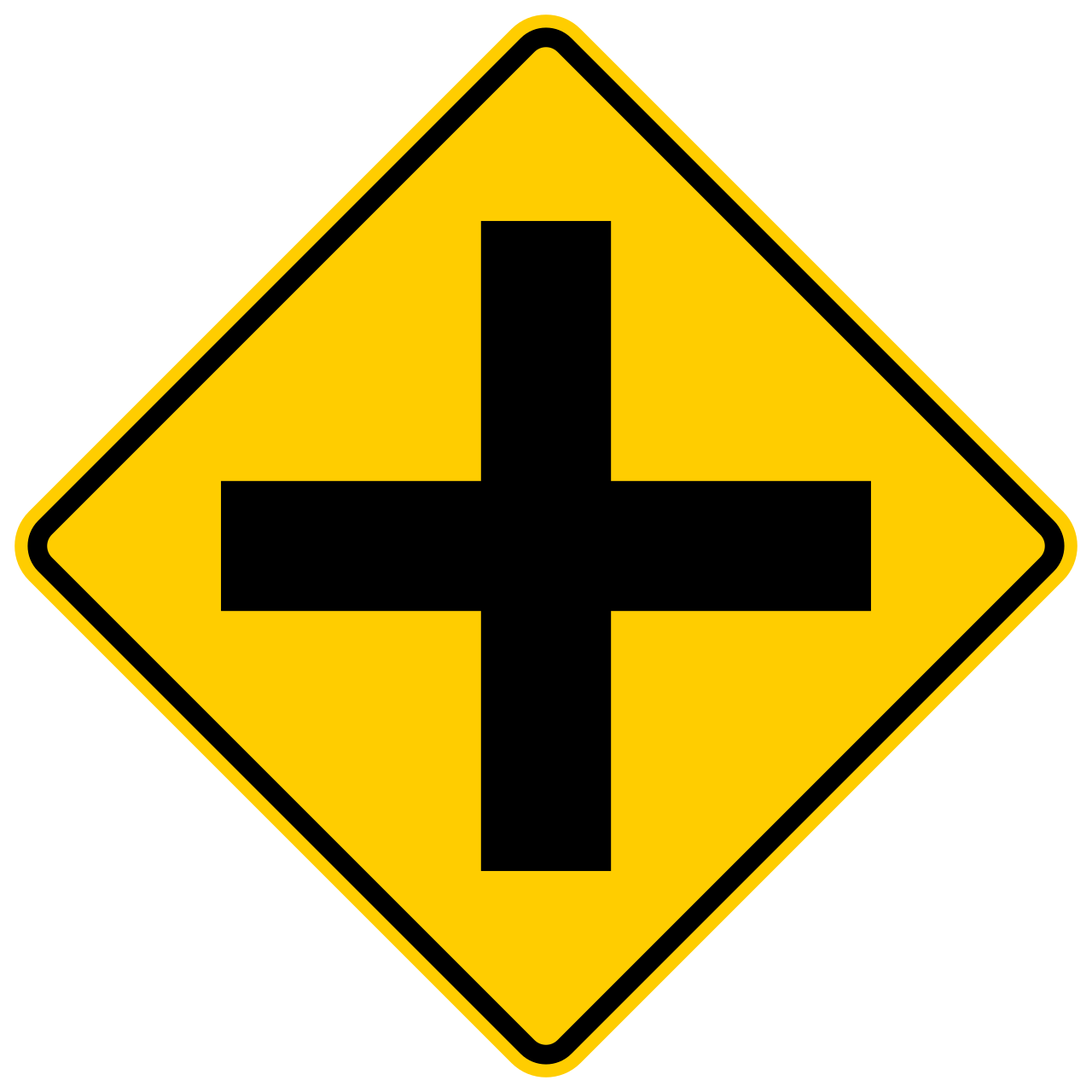 This road sign means:
A
A four-way intersection is ahead
B
Do not pass
C
A steep grade is ahead
This traffic sign indicates: A four-way intersection is ahead. Observing and obeying all roadway signs ensures safe traffic flow and legal driving.
Question 59:
If you encounter an aggressive driver you should:
A
show them how to drive defensively.
B
speed up.
C
get out of their way.
The correct driving rule is: get out of their way. Following standard DMV road rules and practicing defensive driving ensures safety for all road users.
Question 60:
to indicate a pedestrian crossing.
A
indicates that you should drive with caution.
B
has the same meaning as a stop sign.
C
has the same meaning as a yield sign.
Drivers must always yield the right-of-way to pedestrians crossing at intersections and crosswalks: has the same meaning as a yield sign. Stop and allow them to clear the lane safely.