Question 1:
You want to turn left at an intersection ahead. A car reaches the intersection from the opposite direction and moves straight ahead. You:
A
can turn left. You have the right of way.
B
must wait for the car to go through before you turn.
C
may not enter the intersection to prepare for your left turn if the light is green.
According to standard right-of-way regulations: must wait for the car to go through before you turn. Yielding appropriately prevents intersection collisions and maintains safe traffic flow.
Question 2:
Double solid lines on the roadway mean:
A
you cannot pass.
B
you can not go across the lines except to turn left to enter or leave the highway.
C
All of the above.
All of the listed points are essential driving requirements: you cannot pass; you can not go across the lines except to turn left to enter or leave the highway. Practicing each ensures compliance with DMV safety laws.
Question 3:
 This road sign means:
A
No right turn
B
Divided highway ends
C
Lane ends
D
Two way Traffic
This traffic sign indicates: Lane ends. Observing and obeying all roadway signs ensures safe traffic flow and legal driving.
Question 4:
When approaching a railroad crossing that has no warning signals (such as electric flashing lights or gates) a driver should look, listen and slow down.
A
False
B
True
The correct driving rule is: True. Following standard DMV road rules and practicing defensive driving ensures safety for all road users.
Question 5:
When a driver has their left arm and hand extended upward, the driver plans to:
A
go straight ahead.
B
turn right.
C
turn left.
D
come to a stop.
The correct driving rule is: turn right. Following standard DMV road rules and practicing defensive driving ensures safety for all road users.
Question 6:
When driving in heavy rain, drivers should use:
A
parking lights.
B
low beam headlights.
C
high beam headlights.
For safe speed and stopping control: low beam headlights. Adjusting speed to match visibility and road traction prevents loss of steering grip.
Question 7:
Two motorcyclists are allowed to:
A
ride side-by-side in a single lane.
B
share the lane with another vehicle.
C
race on empty roads.
The correct driving rule is: ride side-by-side in a single lane. Following standard DMV road rules and practicing defensive driving ensures safety for all road users.
Question 8:
At intersections where two or more drivers stop at STOP signs at the same time and they are at right angles:
A
the driver on the left must yield to the driver on the right.
B
the driver who is late for work has the right-of-way.
C
the driver on the right must yield to the driver on the left.
The correct driving rule is: the driver on the left must yield to the driver on the right. Following standard DMV road rules and practicing defensive driving ensures safety for all road users.
Question 9:
If you are feeling drowsy while driving, the best thing to do is to:
A
get some coffee.
B
pull over and take a break.
C
try to fight it.
Under state DUI and traffic safety laws: pull over and take a break. Alcohol degrades judgment, slows reaction times, and distorts depth perception.
Question 10:
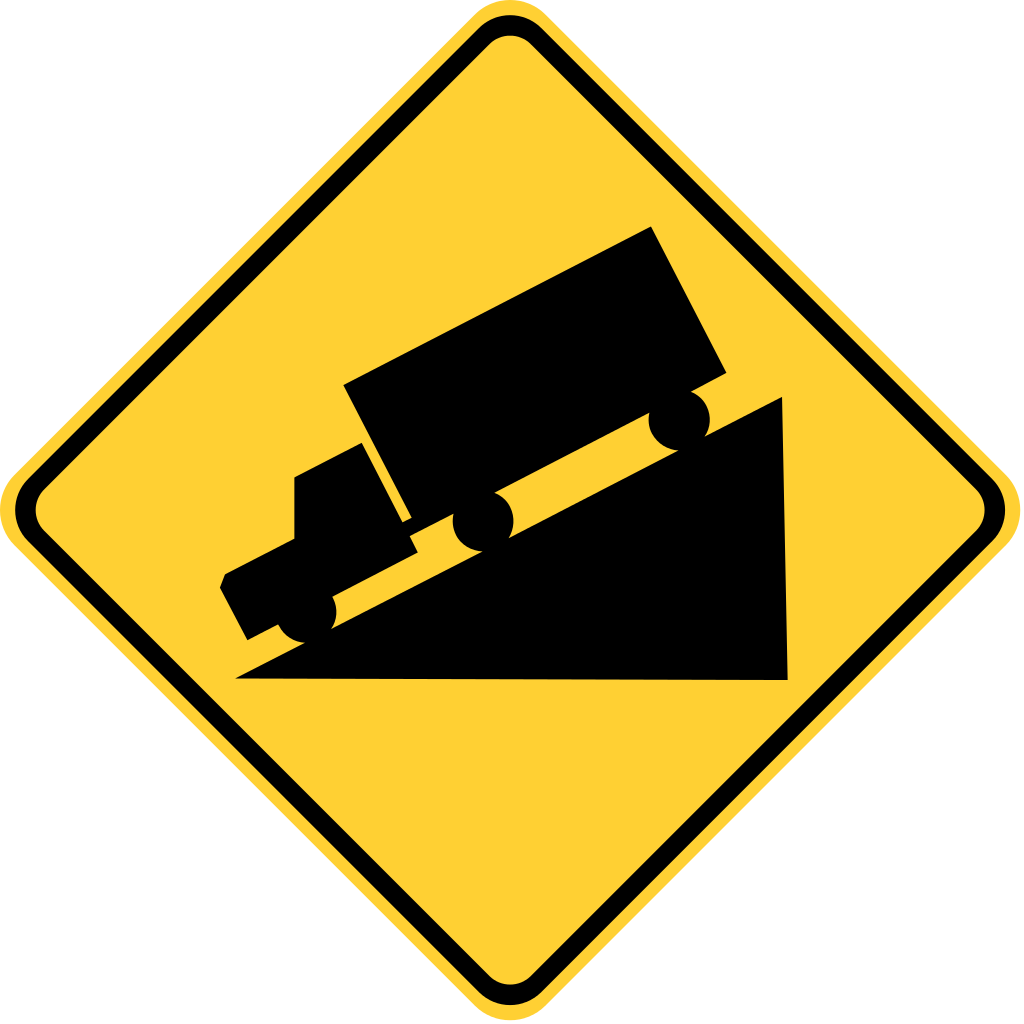 This road sign means:
A
Trucks have the right-of-way
B
Hill
C
Trucks merging from the right
This traffic sign indicates: Hill. Observing and obeying all roadway signs ensures safe traffic flow and legal driving.
Question 11:
If the vehicle you are driving starts to skid, you should:
A
brake lightly.
B
turn off the ignition.
C
stay off the brakes.
The correct driving rule is: stay off the brakes. Following standard DMV road rules and practicing defensive driving ensures safety for all road users.
Question 12:
When a school bus is stopped with its red lights flashing:
A
drivers only need to stop if children are present.
B
drivers don't need to stop unless they are in a school zone.
C
drivers may not pass while the red lights are flashing.
D
you never need to stop.
When a school bus displays flashing red lights and extended stop sign: drivers may not pass while the red lights are flashing. Traffic in both directions must come to a full stop on undivided roads until children are clear.
Question 13:
When approaching a blind person walking with a white cane or guide dog, drivers should yield the right-of-way.
A
False
B
True
According to standard right-of-way regulations: True. Yielding appropriately prevents intersection collisions and maintains safe traffic flow.
Question 14:
Parking is not allowed:
A
on the road side of a parked vehicle.
B
in a tunnel.
C
All of the above.
Under standard parking and curb regulations: All of the above. Following parking distance clearances keeps roadways unobstructed and emergency lanes accessible.
Question 15:
When preparing to exit an expressway, drivers should start reducing their speed:
A
about halfway through the deceleration lane.
B
immediately upon entering the deceleration lane.
C
at least 100 feet before entering the deceleration lane.
For safe speed and stopping control: immediately upon entering the deceleration lane. Adjusting speed to match visibility and road traction prevents loss of steering grip.
Question 16:
Because many crashes happen when a vehicle is turning left, drivers should:
A
slow down gradually while checking the rear view mirror.
B
move into the left lane of a multilane road.
C
yield to oncoming vehicles, bicyclists and pedestrians.
D
All of the above.
All of the listed points are essential driving requirements: slow down gradually while checking the rear view mirror; move into the left lane of a multilane road; yield to oncoming vehicles, bicyclists and pedestrians. Practicing each ensures compliance with DMV safety laws.
Question 17:
A common mistake that drivers make is driving without adequate rest.
A
False
B
True
The correct driving rule is: True. Following standard DMV road rules and practicing defensive driving ensures safety for all road users.
Question 18:
You are considered to be driving under the influence when your blood alcohol concentration (BAC) is ____ or more.
A
0.05%
B
0.08%
C
0.8%
In nearly all US states, drivers age 21 and older are legally intoxicated with a Blood Alcohol Concentration (BAC) of 0.08% or higher.
Question 19:
 This sign is a:
A
regulatory sign.
B
warning sign.
C
guide sign.
This traffic sign indicates: warning sign. Observing and obeying all roadway signs ensures safe traffic flow and legal driving.
Question 20:
Your brake lights tell other drivers that you:
A
are changing lanes.
B
are slowing down or stopping.
C
are making a turn.
D
have your emergency brake on.
The correct driving rule is: are slowing down or stopping. Following standard DMV road rules and practicing defensive driving ensures safety for all road users.
Question 21:
Slowing down just to look at collisions or anything else out of ordinary:
A
causes traffic congestion.
B
improves traffic flow.
C
helps prevent rear-end collisions.
The correct driving rule is: causes traffic congestion. Following standard DMV road rules and practicing defensive driving ensures safety for all road users.
Question 22:
If another car has stopped in an adjacent lane in the same direction of travel, you should:
A
speed up and pass the vehicle on the right.
B
pass the car on the left.
C
be careful in case the other vehicle has stopped for a pedestrian.
D
tap your horn to let the other driver know you are passing.
The correct driving rule is: be careful in case the other vehicle has stopped for a pedestrian. Following standard DMV road rules and practicing defensive driving ensures safety for all road users.
Question 23:
This road sign means:
A
Right lane ends
B
Highway entrance ramp ahead
C
Left lane widens
This traffic sign indicates: Right lane ends. Observing and obeying all roadway signs ensures safe traffic flow and legal driving.
Question 24:
When children are close, what should you do before you back out of a driveway?
A
Rely on your mirrors.
B
Get out of the car and check behind the car.
C
Look through your back window for children.
The correct driving rule is: Get out of the car and check behind the car. Following standard DMV road rules and practicing defensive driving ensures safety for all road users.
Question 25:
A steady yellow light means that a ______ light will soon appear.
A
steady green
B
steady red
C
flashing yellow
D
flashing green
According to standard right-of-way regulations: steady red. Yielding appropriately prevents intersection collisions and maintains safe traffic flow.
Question 26:
One broken line indicates:
A
You can pass other vehicles and change lanes, if it is safe.
B
You can not pass other vehicles or go across the line.
C
You can change lanes, but only when traffic conditions or obstructions in the road make it necessary.
The correct driving rule is: you can pass other vehicles and change lanes, if it is safe. Following standard DMV road rules and practicing defensive driving ensures safety for all road users.
Question 27:
 This road sign means:
A
Wrong Way
B
Merging Traffic
C
Curve ahead
This traffic sign indicates: Curve ahead. Observing and obeying all roadway signs ensures safe traffic flow and legal driving.
Question 28:
 This road sign means the road you're driving on:
A
turns sharply to the left and then right
B
turns to the right and then the left
C
turns only to the left
This traffic sign indicates: turns to the right and then the left. Observing and obeying all roadway signs ensures safe traffic flow and legal driving.
Question 29:
When following a motorcycle, drivers do not need to allow as much distance as when following a car.
A
True
B
False
Motorcycles can stop rapidly and are easily hidden in vehicle blind spots: False. Always allow an increased following distance of at least 3 to 4 seconds.
Question 30:
Which of the following must you obey over the others?
A
A flashing red light.
B
A stop sign.
C
A steady red light.
D
A police officer.
The correct driving rule is: A police officer. Following standard DMV road rules and practicing defensive driving ensures safety for all road users.
Question 31:
A few drinks after work before driving home:
A
should be avoided because they impair your judgement.
B
should be avoided unless you really need them.
C
are acceptable as far as they are part of your daily routine.
D
have no effect on your driving ability.
The correct driving rule is: should be avoided because they impair your judgement. Following standard DMV road rules and practicing defensive driving ensures safety for all road users.
Question 32:
If you arrive at an uncontrolled intersection at the same time as another vehicle:
A
the car on the left has the right-of-way.
B
the car on the right should yield to the car on the left.
C
the car on the left should yield to the car on the right.
D
any vehicle already in the intersection should yield to the car on the right.
At an uncontrolled intersection or 4-way stop where vehicles arrive at the same time: the car on the left should yield to the car on the right. The driver on the left must always yield to the driver on the right.
Question 33:
Signs containing information about hazardous conditions are known as _____ signs.
A
regulatory
B
guide
C
information
D
warning
The correct driving rule is: warning. Following standard DMV road rules and practicing defensive driving ensures safety for all road users.
Question 34:
You may pass another vehicle:
A
when there is a solid yellow line on your side.
B
on a curve or a hill.
C
on the shoulder of the highway.
D
None of the above.
None of the provided options represent the legal or safe driving procedure. Always consult official DMV handbook guidelines for this scenario.
Question 35:
When merging onto an interstate highway, drivers should:
A
always stop before entering the highway.
B
select a safe gap and merge into the lane of traffic.
C
turn on their emergency flashers right before merging.
Defensive driving guidelines state that: select a safe gap and merge into the lane of traffic. Anticipating road hazards and communicating maneuvers keeps traffic predictable and safe.
Question 36:
If you miss your exit on a freeway, do NOT:
A
continue on the freeway and find an alternative route.
B
turn around or back up.
C
get back on the freeway in the opposite direction and return to the exit you want.
Defensive driving guidelines state that: turn around or back up. Anticipating road hazards and communicating maneuvers keeps traffic predictable and safe.
Question 37:
Before turning left, it is important to:
A
swing to the right side of your lane.
B
sound your horn to warn the other drivers.
C
yield to oncoming vehicles.
D
flash your headlights to alert the other drivers.
The correct driving rule is: yield to oncoming vehicles. Following standard DMV road rules and practicing defensive driving ensures safety for all road users.
Question 38:
Doing all you can to prevent crashes is called:
A
Anti-Collision Driving
B
Crash-Prevention Driving
C
Defensive Driving
D
ABS Driving
The correct driving rule is: Defensive Driving. Following standard DMV road rules and practicing defensive driving ensures safety for all road users.
Question 39:
There are two traffic lanes in your direction. You are driving in the left lane and many vehicles are passing you on the right, and the driver behind you wishes to drive faster. You should:
A
stay in your lane and maintain your current speed.
B
drive onto the left shoulder to let the other driver pass.
C
move over into the right lane when safe to do so.
Defensive driving guidelines state that: move over into the right lane when safe to do so. Anticipating road hazards and communicating maneuvers keeps traffic predictable and safe.
Question 40:
When driving on a wet road:
A
as you drive faster, your tires may lose traction.
B
you must be aware that the pavement gets even more slippery when it's been raining for long periods of time.
C
you should follow the vehicle ahead of you more closely.
D
as you decrease your speed, the road becomes more slippery.
For safe speed and stopping control: as you drive faster, your tires may lose traction. Adjusting speed to match visibility and road traction prevents loss of steering grip.
Question 41:
_________________ your mirrors when you prepare to change lanes.
A
Never depend on
B
Never use
C
Always rely on
The correct driving rule is: Never depend on. Following standard DMV road rules and practicing defensive driving ensures safety for all road users.
Question 42:
When entering a crowded freeway, to merge into traffic you should:
A
yield to vehicles already on the freeway.
B
use the acceleration lane to adjust your speed to the same speed as freeway traffic.
C
check your blind spots.
D
All of the above.
Defensive driving best practices include: yield to vehicles already on the freeway; use the acceleration lane to adjust your speed to the same speed as freeway traffic; check your blind spots. Staying alert and maintaining spacing prevents unexpected hazards.
Question 43:
When making a turn, drivers must _____ their speed.
A
reduce
B
maintain
C
increase
D
double
For safe speed and stopping control: reduce. Adjusting speed to match visibility and road traction prevents loss of steering grip.
Question 44:
Regulatory signs are:
A
white.
B
yellow.
C
green.
The correct driving rule is: white. Following standard DMV road rules and practicing defensive driving ensures safety for all road users.
Question 45:
Hydroplaning is usually caused by:
A
excessive rain.
B
excessive stops.
C
excessive speed.
D
sudden turns.
The correct driving rule is: excessive speed. Following standard DMV road rules and practicing defensive driving ensures safety for all road users.
Question 46:
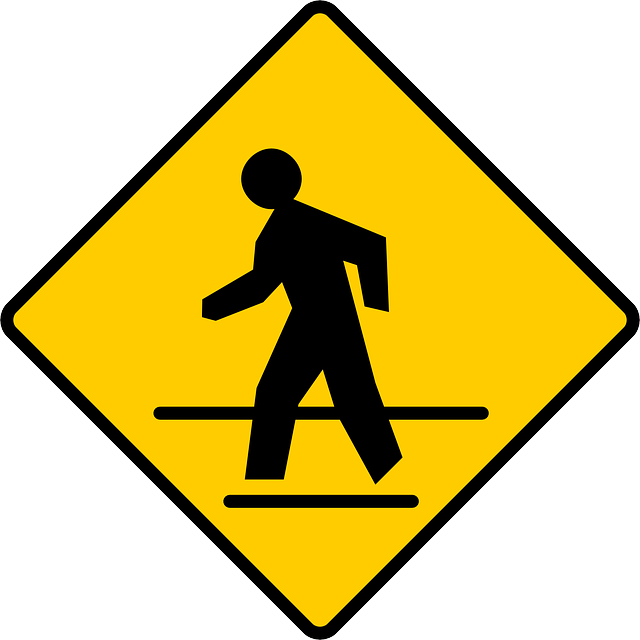 This road sign means:
A
Pedestrian crossing
B
School zone
C
School crossing
This traffic sign indicates: Pedestrian crossing. Observing and obeying all roadway signs ensures safe traffic flow and legal driving.
Question 47:
Drivers can proceed through an intersection with a stop sign, but no stop line or crosswalk:
A
after slowing down to at least 15 MPH before proceeding.
B
after coming to a complete stop, when it is safe to proceed.
C
after stopping at least 50 feet prior to the intersection.
D
after slowing down to ensure there is no cross-traffic.
Drivers must always yield the right-of-way to pedestrians crossing at intersections and crosswalks: after coming to a complete stop, when it is safe to proceed. Stop and allow them to clear the lane safely.
Question 48:
A motorist arriving at the intersection must yield the right of way to motorists who arrived before him.
A
True
B
False
According to standard right-of-way regulations: True. Yielding appropriately prevents intersection collisions and maintains safe traffic flow.
Question 49:
If a tire suddenly blows out while you are driving, you should:
A
apply the brakes firmly.
B
slow down gradually and brake lightly.
C
pump the brakes rapidly.
The correct driving rule is: slow down gradually and brake lightly. Following standard DMV road rules and practicing defensive driving ensures safety for all road users.
Question 50:
When approaching an intersection with a traffic control signal that is not working, drivers should:
A
stop as you would if there were stop signs in all directions, yield the right-of-way, then enter the intersection.
B
speed up and proceed through the intersection.
C
try not to stop if the intersection is clear.
According to standard right-of-way regulations: stop as you would if there were stop signs in all directions, yield the right-of-way, then enter the intersection. Yielding appropriately prevents intersection collisions and maintains safe traffic flow.
Question 51:
The golden rule of driving is to:
A
treat others the way you want to be treated.
B
put on your emergency flashers when driving at night.
C
drive faster than the vehicle behind you.
The correct driving rule is: treat others the way you want to be treated. Following standard DMV road rules and practicing defensive driving ensures safety for all road users.
Question 52:
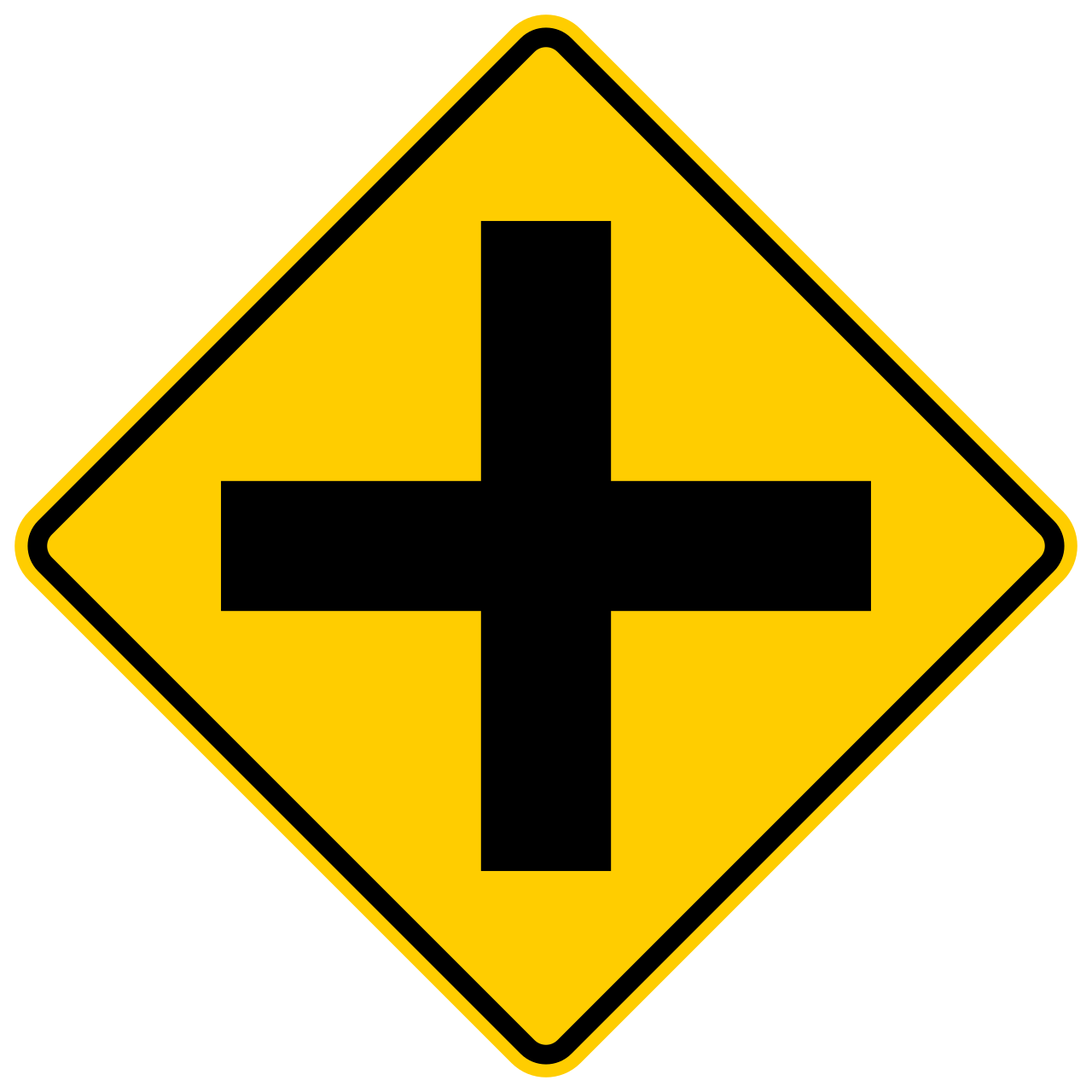 This road sign means:
A
You must turn right
B
Railroad crossing
C
Crossroad ahead
D
4-way stop
This traffic sign indicates: Crossroad ahead. Observing and obeying all roadway signs ensures safe traffic flow and legal driving.
Question 53:
A driver cuts off another vehicle, or threatens another motorist or a pedestrian. These are examples of:
A
excessive driving
B
road rage
C
defensive driving
Drivers must always yield the right-of-way to pedestrians crossing at intersections and crosswalks: road rage. Stop and allow them to clear the lane safely.
Question 54:
Drivers are required to yield to pedestrians in a crosswalk.
A
True
B
False
Drivers must always yield the right-of-way to pedestrians crossing at intersections and crosswalks: True. Stop and allow them to clear the lane safely.
Question 55:
A large vehicle is backing up to unload goods. You should:
A
enter one of the blind spots and wait.
B
try to pass close behind.
C
be patient and wait until the large vehicle has completed its backup maneuver.
The correct driving rule is: be patient and wait until the large vehicle has completed its backup maneuver. Following standard DMV road rules and practicing defensive driving ensures safety for all road users.
Question 56:
This road sign means:
A
Narrow bridge
B
Yield right-of-way
C
Freeway on ramp
D
Roadway narrows or lane ends
This traffic sign indicates: Roadway narrows or lane ends. Observing and obeying all roadway signs ensures safe traffic flow and legal driving.
Question 57:
How many drinks of alcohol does the human body generally get rid of each hour?
A
2 drinks.
B
1 drink.
C
4 drinks.
D
3 drinks.
Under state DUI and traffic safety laws: 1 drink. Alcohol degrades judgment, slows reaction times, and distorts depth perception.
Question 58:
Blind spots are:
A
Areas to the side or rear of a vehicle that are easy to spot.
B
areas of the road that cannot be seen even when looking into mirrors.
C
traffic control devices.
The correct driving rule is: areas of the road that cannot be seen even when looking into mirrors. Following standard DMV road rules and practicing defensive driving ensures safety for all road users.
Question 59:
A driver approaching a flashing red traffic signal must:
A
merge to the left.
B
stop before the intersection.
C
carefully drive through the intersection without stopping.
D
slow down at the traffic signal.
This traffic sign indicates: stop before the intersection. Observing and obeying all roadway signs ensures safe traffic flow and legal driving.