
DriveQuiz drivequiz.com

ME DMV PERMİT PRACTİCE TEST 10

Maine
Duration: 54 min
|
Questions: 60
Student Name:
Date:
Correct:      Incorrect:      Score:      
1.
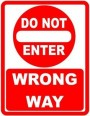
Alerts drivers to a major crossroads intersection ahead. Watch for vehicles entering or crossing the roadway.
This road sign means:
A) U-turns are prohibited
B) You may proceed only if the way is clear
C) You are about to enter a one-way street the wrong way
D) Do not pass
2.
If a pedestrian is in the middle of the street when your signal light changes to green, you should:
A) proceed unless the pedestrian is in your lane.
B) proceed because you have the right-of-way.
C) wait until the pedestrian crosses the street before proceeding.
3.
Fatigue increases the risk of:
A) falling asleep while driving.
B) hitting a roadblock.
C) missing an exit.
4.
When driving in winter, you should NOT:
A) use snow tires on all four wheels of your vehicle.
B) use cruise control.
C) drive on interstate roads.
D) check your vehicle's antifreeze level and windshield washer fluid.
5.
Prohibits drivers from making a 180-degree turn to travel in the opposite direction at this intersection or stretch of road.
This road sign means:
A) No left turn
B) No U-turn
C) Detour ahead
6.
Come to a complete stop before the stop line, crosswalk, or intersection. Look left, right, and left again, and proceed only when it is safe and right-of-way is clear.
This road sign means:
A) Drive with caution and be ready to stop
B) Slow down or stop
C) You must come to a complete stop
7.
Right turns are strictly prohibited at this intersection under all circumstances.
This road sign means:
A) No left turn
B) No right turn
C) No U-turns
8.
You should use turn signals to indicate your intention with sufficient time to allow other drivers to see the signal:
A) if it’s raining.
B) AFTER you move.
C) BEFORE you move.
9.
You are driving in the left lane and want to change to the right lane. Before changing lanes, you should check your mirrors, signal and:
A) look over your left shoulder.
B) look over both shoulders for vehicles in front of you.
C) accelerate slightly before looking around your vehicle.
D) look over your right shoulder.
10.
Before changing lanes or attempting to pass another vehicle, you should:
A) signal your intention before changing lanes.
B) check your blind spots and, mirrors.
C) All of the above.
11.
If your car goes into water, you should:
A) wait for water to rush in and let it out in small breaths through your nose.
B) call the fire department immediately.
C) remove yourself before it starts to sink.
12.
What should you do if a vehicle is approaching head-on in your lane?
A) Pull over to the left and use your emergency lights to stop the other driver.
B) Decrease speed, pull over to the right and sound your horn to warn the other driver.
C) Turn off the ignition if your vehicle has power steering.
13.
What should you do if your headlights suddenly go out?
A) Brake immediately and activate your emergency lights.
B) Use your emergency lights, parking lights or directional signals.
C) Ease your foot off the gas pedal and brake gently.
14.
Drivers should use high beam headlights when:
A) following another vehicle.
B) when they come within 50 feet of an oncoming vehicle.
C) there are no oncoming vehicles approaching.
15.
If an aggressive driver cuts you off, you should:
A) sound your horn.
B) look towards the left side of the road.
C) stay calm and get out of the aggressive driver's way.
D) call the police immediately.
16.
From top to bottom, traffic lights are:
A) green, red and yellow.
B) green, yellow and red.
C) red, yellow and green.
17.
On two-lane, two-way streets or highways, you should start left turns close to the center line.
A) True
B) False
18.
Which of the following is true about the Anti-Locking Brake System?
A) It prevents skidding.
B) It allows drivers to steer during an emergency braking situation.
C) All of the above.
19.
Warning signs are normally:
A) blue.
B) yellow.
C) red.
D) green.
20.
If one of your tires blows out, you should:
A) apply your brakes gently and steer smoothly where you want to go.
B) pump your brakes and steer where you want to go.
C) apply your brakes immediately.
D) hold the steering wheel tightly, slowly take your foot off the gas pedal and steer smoothly where you want to go.
21.
Drivers may continue carefully through a yellow light if:
A) there are no pedestrians crossing.
B) they are turning right.
C) they already are within the intersection.
D) an emergency vehicle is crossing your lane.
22.
A steep downhill grade is ahead. Trucks and heavy vehicles should downshift to a lower gear to prevent brake overheating.
This road sign means:
A) Watch for trucks entering from the side
B) Merging traffic
C) Steep hill
23.
When exiting a highway, you should slow down:
A) when you first see the exit sign.
B) before moving into the exit lane.
C) once you have moved into the exit lane.
D) once you see the toll booth.
24.
Alcohol causes:
A) poor judgment.
B) loss of concentration.
C) reduced perception.
D) All of the above.
25.
After parking, are you allowed to open a door on the road side of your vehicle?
A) Yes, always.
B) Yes, but only if it does not interfere with bicyclists and other traffic.
C) No, never.
26.
If you continually pass the other vehicles on a road with one lane in each direction, you will:
A) help prevent the chances of a crash occurring due to traffic congestion.
B) get to your destination much faster.
C) increase your chances of being involved in an accident.
27.
Blind spots are:
A) Dangerous intersection where the maximum speed limit is 15 MPH or less.
B) At night, the darkest areas of a road, where emergency flashers should be used.
C) Areas to the side or rear of a vehicle that the driver cannot see with use of mirrors.
28.
What does BAC stand for?
A) Blood Alcohol Commission
B) Blood Alcohol Concentration
C) Blood Alcohol Content
29.
Drivers may pass on a two-lane roadway marked with a single solid yellow line on their side of the center line.
A) False
B) True
30.
Excessive speed:
A) helps you to maneuver around obstacles.
B) saves time so you can get to your destination more quickly.
C) increases the likelihood of serious bodily injuries and death.
31.
When changing lanes:
A) slow down and check your left mirror.
B) look over your shoulder to make sure no one is in the blind spot.
C) change lane before checking the inside rearview mirror.
32.
Tailgating:
A) cannot result in a traffic citation.
B) helps reduce traffic congestion.
C) is a defensive driving tecnique.
D) can frustrate other drivers and make them angry.
33.
A defensive driver:
A) never drives below the speed limit.
B) knows when it is safe to pass other vehicles.
C) considers what other drivers might do and is always prepared to act.
34.
Yellow diamond warning that pedestrians may be crossing ahead. Exercise caution and yield.
This road sign means:
A) School zone ahead
B) Pedestrians must not cross here
C) Pedestrian crossing ahead
35.
If you stop along the road at night:
A) turn on your emergency flashers and leave your low beams on.
B) turn off your emergency lights and leave your high beams on.
C) turn on your headlights only.
D) turn off all your lights.
36.
Paved road surface ends and transitions to gravel, dirt, or unpaved roadway. Reduce speed and prepare for reduced traction.
This road sign warns drivers that:
A) the road surface ahead changes to a low-type surface or earth road.
B) vehicles must leave the pavement immediately.
C) the dirt on the side of the road is soft.
37.
When pedestrians are in a crosswalk, drivers should:
A) pull over to the right and stop.
B) go ahead because drivers have the right-of-way.
C) wait for them to cross.
38.
When taking medication while driving, you should:
A) follow other vehicles closely.
B) consult your physicians and/or pharmacist regarding any prescription medication and its possible effects on driving.
C) drive 20 MPH below the posted speed limit.
39.
A red arrow on a traffic light means:
A) You may not turn in the direction of the arrow until a green light or arrow light goes on.
B) You may turn in in the direction of the arrow after coming to a complete stop.
C) You must stop and then proceed when the way is clear.
40.
When you are involved in an accident and your vehicle is blocking traffic, you should:
A) not move your vehicle under any circumstances.
B) wait for the police to arrive before moving your vehicle.
C) move your vehicle off of the travelled portion of the roadway, if possible.
D) None of the above.
41.
Two drivers reach an uncontrolled intersection at the same time. Who has the right of way?
A) The driver on the left.
B) No one.
C) The driver on the right.
42.
Night driving can be more difficult because:
A) the ratio of motorcyles to cars is much higher at night.
B) vehicle operators tend to drive faster at night.
C) speed limits do not apply at night.
D) visibility is reduced.
43.
The minimum drinking age in this State is ____ years.
A) 20
B) 21
C) 9
D) 18
44.
A pedestrian starts to cross in front of your vehicle. You should:
A) sound your horn and proceed with caution.
B) slow down.
C) speed up and pass in front of the pedestrian.
D) stop until the person is out of the crosswalk.
45.
If the entrance lane is too short to allow acceleration to expressway speed, you should:
A) stop and wait for a large space in traffic.
B) enter the expressway and accelerate quickly.
C) reduce your speed to 15 MPH or less and blend with traffic.
46.
An inattentive driver:
A) carries on an eye-contact conversation with a passenger while driving.
B) gazes at objects off the roadway while driving.
C) daydreams.
D) All of the above.
47.
After you stop for a school bus, you must:
A) turn off your engine.
B) pass the bus before the red lights stop flashing.
C) None of the above.
48.
The roadway ahead is narrowing or a lane is ending. Merge smoothly into the continuing lane.
This sign means:
A) divided highway ahead.
B) narrow bridge ahead.
C) road construction.
D) lane ends, merge left.
49.
When parking uphill on a road with a curb, turn the front wheels:
A) towards the curb.
B) parallel to the curb.
C) straight ahead.
D) away from the curb.
50.
Driving under the influence of any medication which impairs your driving ability is permitted:
A) under no circumstances.
B) if it is prescribed by a physician.
C) if you dont feel drowsy.
51.
To drive defensively, you must:
A) anticipate errors by other drivers.
B) assume that a driver who approaches a STOP sign on a side road is actually going to stop.
C) not check behind you through your mirrors.
52.
To pass a bicyclist traveling in the same direction on a two-lane road without bicycle lanes, you should:
A) continue driving straight, it is the bicyclist’s responsibility to get out of your way.
B) slow down and wait until there is no oncoming traffic, then pass the bicyclist leaving him or her sufficient space.
C) honk at the bicyclist to let him or her know you are about to pass.
D) not pass the bicyclist until you come to a traffic signal or stop sign.
53.
On what three conditions does your blood alcohol content (BAC) depend?
A) Your weight. How much alcohol you drink. How much time passes between drinks.
B) Your weight. The type of beverage you drink. How fit you are.
C) Your height. How much alcohol you drink. The type of beverage you drink.
54.
When passing another car, you have enough room to return to the driving lane when:
A) you cannot see the vehicle directly to your right.
B) you are at least 50 feet in front of the vehicle.
C) you can see both headlights of the car you passed in your rearview mirror.
55.
Drivers can not pass a vehicle on the left if:
A) they approach the top of a hill on a two-way road and can not see over it.
B) they can not safely return to the right lane before they reach a solid yellow center line for the right lane.
C) All of the above.
56.
The extra space in front of a large truck is needed for:
A) other drivers when merging onto a freeway.
B) the truck driver to stop the vehicle.
C) other drivers when they want to pass the truck.
57.
When following motorcycles, drivers should:
A) reduce the minimum following distance.
B) try to pass them as they have different braking capabilities than other motor vehicles.
C) keep more space in front of their vehicle.
58.
When driving near light rail vehicles, drivers should:
A) never drive around lowered crossing gates.
B) expect trains on any track at any time.
C) always obey signs and traffic signals.
D) All of the above.
59.
The roadway becomes particularly slippery during wet or rainy conditions. Reduce your speed, increase following distance, and avoid abrupt braking or steering.
This road sign means:
A) Winding road
B) Side road ahead
C) Slippery when wet
60.
Designated school crosswalk location. You must yield to all schoolchildren and pedestrians in the crossing.
At a school crossing, drivers should:
A) always stop, whether there’s a stop sign or not.
B) always sound their horn and stay alert.
C) watch for children and be ready to stop.
ANSWER KEY Check answers after completing the test.
1 C
2 C
3 A
4 B
5 B
6 C
7 B
8 C
9 D
10 C
11 C
12 B
13 B
14 C
15 C
16 C
17 A
18 C
19 B
20 D
21 C
22 C
23 C
24 D
25 B
26 C
27 C
28 B
29 A
30 C
31 B
32 D
33 C
34 C
35 A
36 A
37 C
38 B
39 A
40 C
41 C
42 D
43 B
44 D
45 A
46 D
47 C
48 D
49 D
50 A
51 A
52 B
53 A
54 C
55 C
56 B
57 C
58 D
59 C
60 C






